

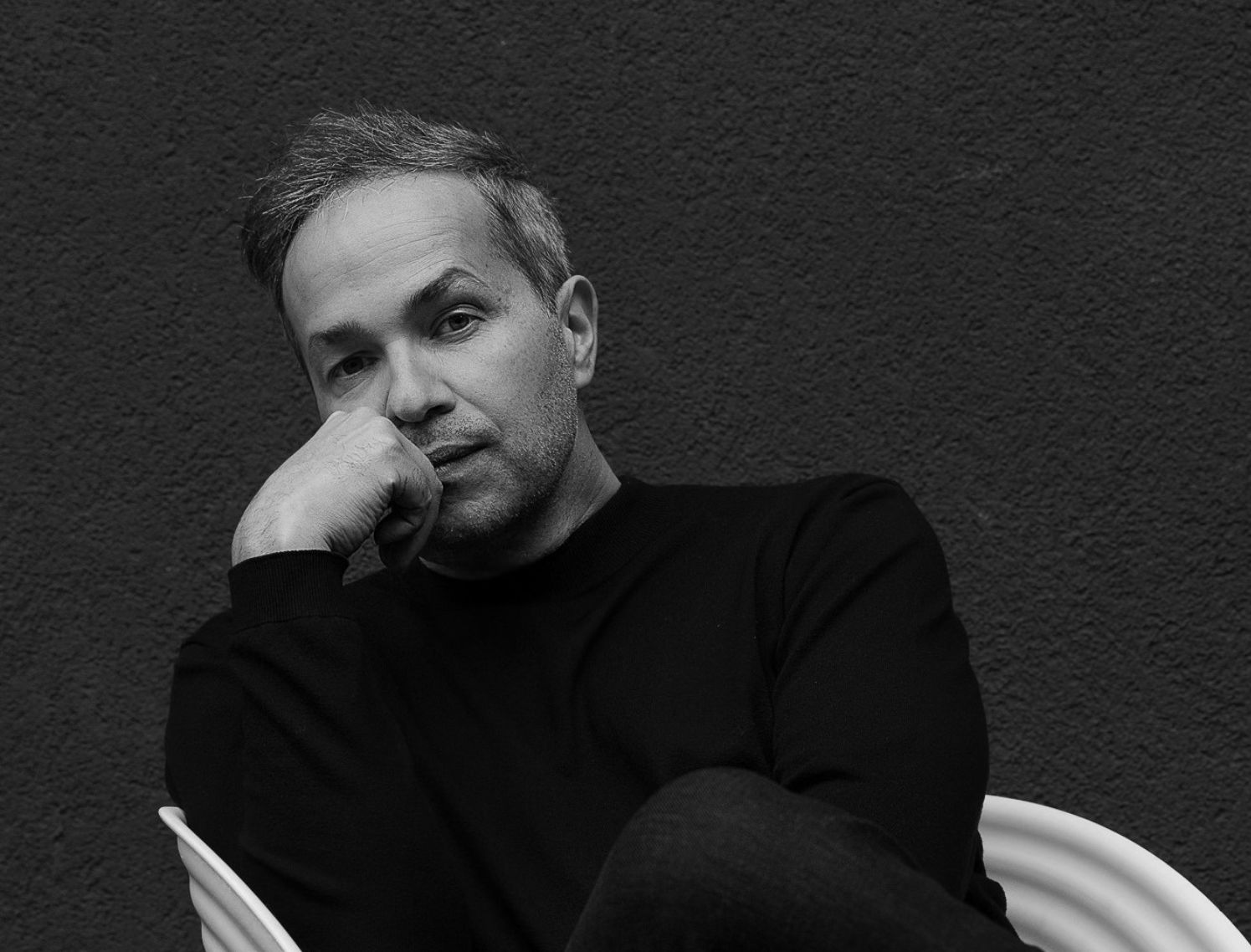
What inspired you to write your novel A Slight Loss of Loneliness?
I always wanted to write, but the vicissitudes of life meant that I got around to it relatively late. My first intention was to write an intimate, existential story about solitude, but in the end I opted for a more epic storyline, which I found more natural and easier to sustain. The novel isn’t about the Holocaust, as many have claimed. Actually, I avoided topics already written about as far as I could.
What does your book’s inclusion on the prestigious Books at Berlinale list mean to you?
Of course I’m happy about it. It’s the first Czech book to make the list, which certainly gratifies my ego. But it’s just a beginning, and it may not live up to expectations. Nothing may come of it.
What do you think makes your book so interesting?
I think it has an epic power, a quality which has lately lost ground in literary fiction to dramas of a more intimate, personal kind. Also, I would like to think that my book’s theme and point of view show originality.
While writing A Slight Loss of Loneliness, did it occur to you that it might be made into a film?
To write a novel with a film in mind would be a mistake. The fact is, though, many people told me right after reading it that it would be good on Netflix. But as I was saying, I’m just starting out, so maybe nothing will come of the film idea.
If the adaptation were to happen, who can you imagine in the main roles?
Naming names would be getting ahead of ourselves. Even so, as the author, I have pictures or models for the protagonists in my head, so they should be close to those. And thinking about this is a great way to procrastinate!
Do you have any ideas about who could compose the music for a film adaptation?
I was once a musician with very broad, somewhat snobbish tastes. If the film adaptation were to happen, I would be disappointed if the soundtrack were handled in the standard way – some poignant strings, a little piano in the higher register, and so on. The kind of thing that happened with the adaptation of All the Light We Cannot See, notwithstanding the fact that the original work won a Pulitzer. If I could choose, I would want the soundtrack to be different, up-to-date, electronic, but combined with classical instrumentation. If the choice were mine, I would team together Max Richter and Fred Again.
Is there a particular director you would like to entrust with your story?
We’re getting ahead of ourselves again. Having said that, I like directors with a broader view on things, who are about more than putting together a well-crafted story. Of directors who work here, I like the idea of Agnieszka Holland, for instance.
Is there a particular film, filmmaker or style that you would consider ideal inspiration for a film adaptation of A Slight Loss of Loneliness?
As I mentioned, I like creative artists whose filming of a story can give it deeper meaning. There are quite a few of them, and they tend to be from Europe rather than America. But I’m seeing a lot of powerful TV series right now. The work of Mike White, for instance, who happens to be American, appeals to me in every way.
What are your expectations for Czechia’s guest-of-honour role at the Frankfurt Book Fair, especially in terms of its significance for and contribution to Czech literature?
Small literatures don’t have it easy. I guess you could say that if an author isn’t connected to a larger literary scene or country, it’s practically impossible for them to break through. There are so many writers and books, and every country cherishes its authors. In this respect, we may have done better to stay in Austria-Hungary, an idea that wouldn’t sit well with the Czech revivalists. Seriously, though: Frankfurt is an important event that means a lot, and I believe that something will come of it for Czech literature. I will be glad of anything for anyone.
How is your book in translation received by German readers? Do you sense any difference compared with its Czech reception? Does its theme have a different resonance?
Yes, in many ways. Though their reputation may suggest otherwise, Germans are much warmer. And of course they are richer. Talking about books is good manners, in a social life that is very different from ours… But back to the book. They are very glad, I think, that I haven’t jumped on the same old bandwagon: the one that says Germans = bad, others = good. It seems to me that that eternal guilt remains in the back of their minds… and it’s still hard for them to come to terms with. What I’m saying to them is: Germans sent my ancestors to a concentration camp, but that’s not the fault of the Germans I see in front of me; I don’t blame you for anything.
The author was in conversation with Karolína Tomečková.