

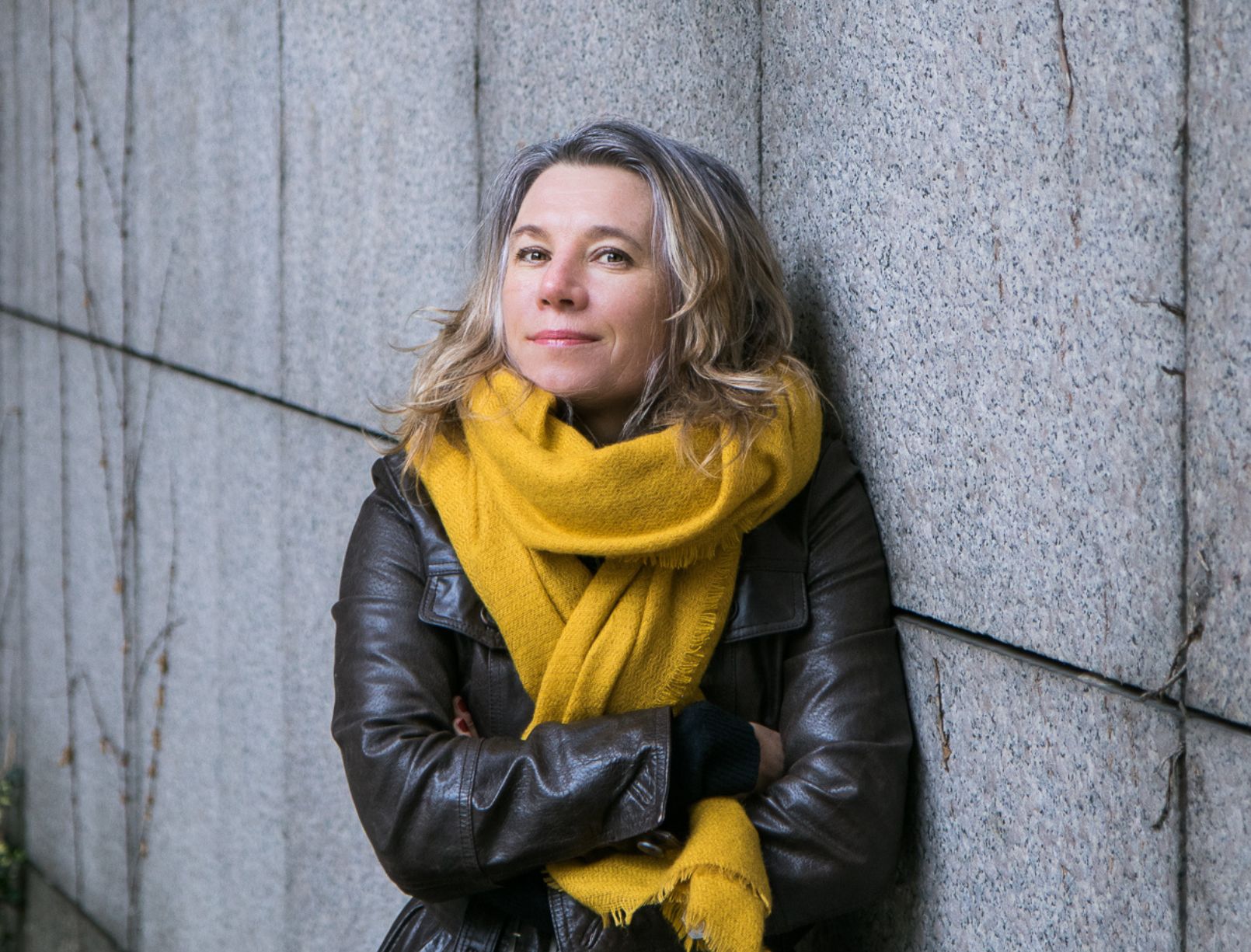
Bába Bedla was published in Czechia in 2021. Can you “get in the mood” for this book again today – and do you read it with different eyes now than you did when it was first published?
My book was published shortly before Russian troops invaded Ukraine. When I wrote it, I had no idea that I would often read it aloud to Ukrainian children who had to flee the war and come to us and attend Czech schools. There is a character in the book, a young Russian deserter who no longer wants to fight in the war, which gives the story greater significance in the current situation, something I could not have known when I wrote the book. Since it is a war story, parents and teachers have started buying the book for their children to explain to them what is actually going on around us, even though it is a story from World War II. I couldn't have known that when I was writing the book. It's great and interesting that I've been going to schools several times a month with the book for five years, now also to German schools.
Competition abroad is fierce. How do you think Czech books can appeal to young readers abroad?
We are a country where several cultural traditions have always converged; we have both Western and Eastern influences. Perhaps that is why we have a very special sense of black humor, irony, and the grotesque. Both have a long tradition in our literature, which is also reflected in current Czech books—for example, in the books by Jaroslav Rudiš, the comics by Lucie Lomová, or the novels by Jáchym Topol and Marek Toman. A sense of humor, especially black humor, is always irresistible.
The artistic design of the book is by Martina Trchová. How was it working with her? Are you considering another joint project?
Working with Martina is great because we are close friends and don't need to explain things to each other at length. We are on the same wavelength, which is a huge advantage. We are currently working on a comic about a little boy and his robotic doppelganger living together, but unfortunately it is very difficult to find time to work on the comic together because it is different from illustrating a book that has already been completed. I really hope it all works out. I also have the third part of “Bába Bedla” in mind, which will be called “Bába Bedla and the Child in the Net” and will be set in Japan.
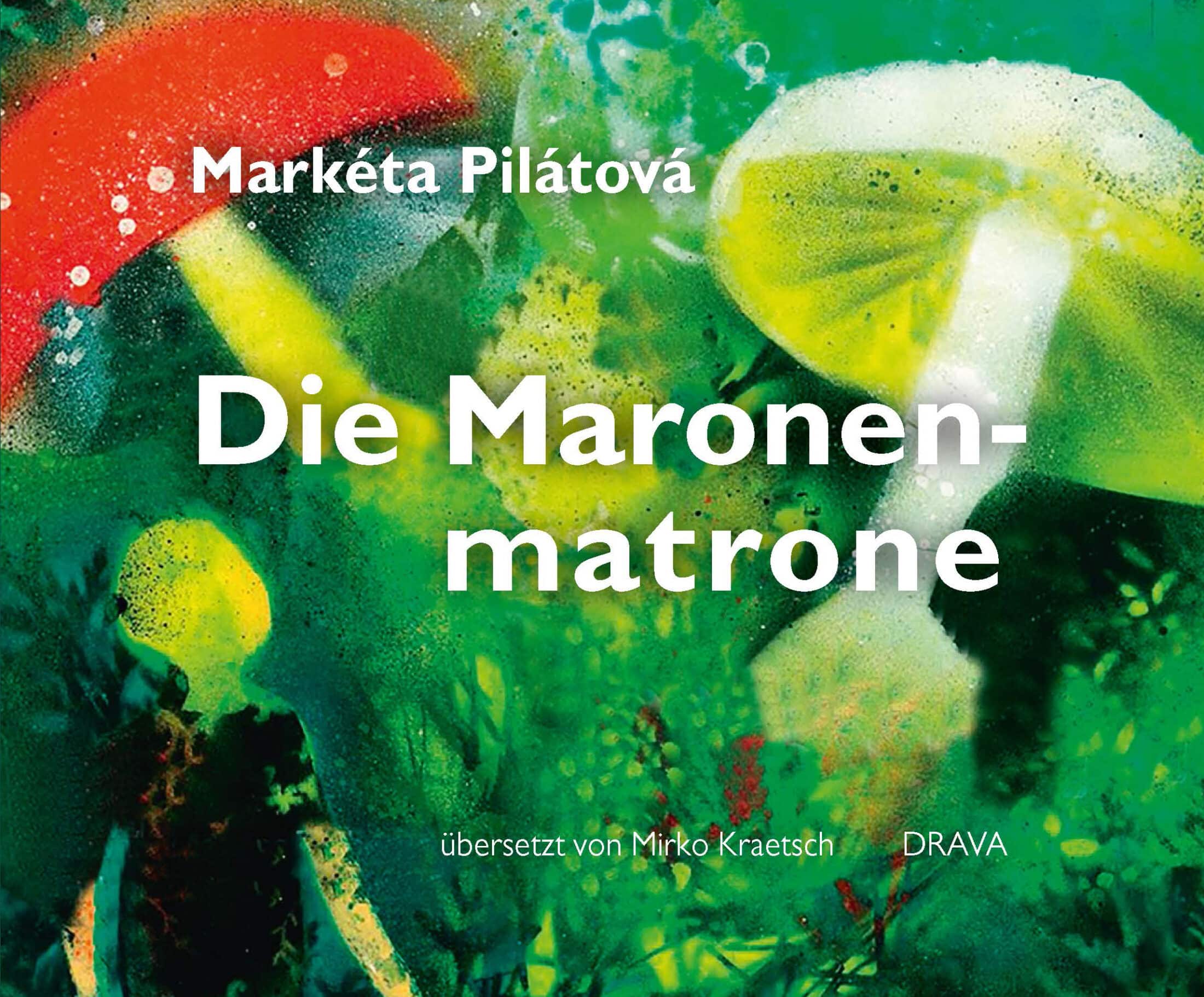
The Maronenmatrone deals with the topic of war, among other things. Do you feel that readers interpret the book differently in today's social and political context than they did when it was first published?
I believe that the story is much more relevant today due to the war in Ukraine. And when I read from the book in a class with children from Ukraine, it is often very emotional. At first, I was afraid of how they would react, whether it might traumatize them when a young Russian soldier shouts “Hands up!” in the book, but the opposite is true: they often ask questions and are happy when someone talks to them about their experiences.
In your experience, can books—especially those for children and young readers—strengthen empathy? Do you sense this, for example, in discussions at readings or in the feedback you receive on your books?
Books certainly strengthen empathy, but above all they can heal pain or at least alleviate its intensity by transporting you to a world completely different from your own. With the help of a story, they can convey certain experiences that otherwise could not be conveyed. Lately, I've been getting the best reactions to my books from kids in Ukraine again – they really identify with one of my heroines, for example, the little Japanese girl Kiko, who lives in the Czech Republic, doesn't speak Czech, and has to deal not only with the Czech language but also with Czech reality, which isn't easy for her. Today's children also travel much more and are more open to things that go beyond the Czech context; they are more open to otherness as such. I have the feeling that children find and appreciate this stepping outside the Czech environment in my books.
Last year, you were a guest at a literary scholarship program in Berlin. What did you gain from this experience? Has it had any impact on your writing or on the topics that currently interest you?
I am currently particularly interested in the Berlin area, where part of my new novel Ukradený Bauhaus (The Stolen Bauhaus) is set. It's about the photographer Lucie Moholy, who came from Prague but worked in Germany and England. That's why my stay in Berlin had a big influence on me and helped me to clarify the structure of the novel. When I write, I have to live in the environment where the novel is set for a while; I can't just write about something from my desk.
Magical realism is clearly present in your book and also appears in your latest novel, Hnízda (Nests). What appeals to you about this style of storytelling?
I don't think I'm capable of simply accepting reality as it is. I always feel that there's something more behind it, something we can't quite decipher, but which we know is there. And that's what interests me most about writing books—uncovering the mysterious, the enigmatic that surrounds us, that comes from reality but at the same time isn't quite real.
You are extremely active in the literary field. Can you tell us what you are currently working on?
I am currently working on the novel Ukradený Bauhaus (The Stolen Bauhaus), which I mentioned earlier, but whenever I write a novel, I also work on a children's book at the same time. So by the end of the month, I will be submitting a book that deals with the subject of death. It will be titled Loď, opička a kukátko (The Ship, the Monkey, and the Binoculars) and is set in the largest Czech cemetery in the world, located in Chicago.
Photo: David Konečný
The interview with author Markéta Pilátová was conducted by Karolína Tomečková.