

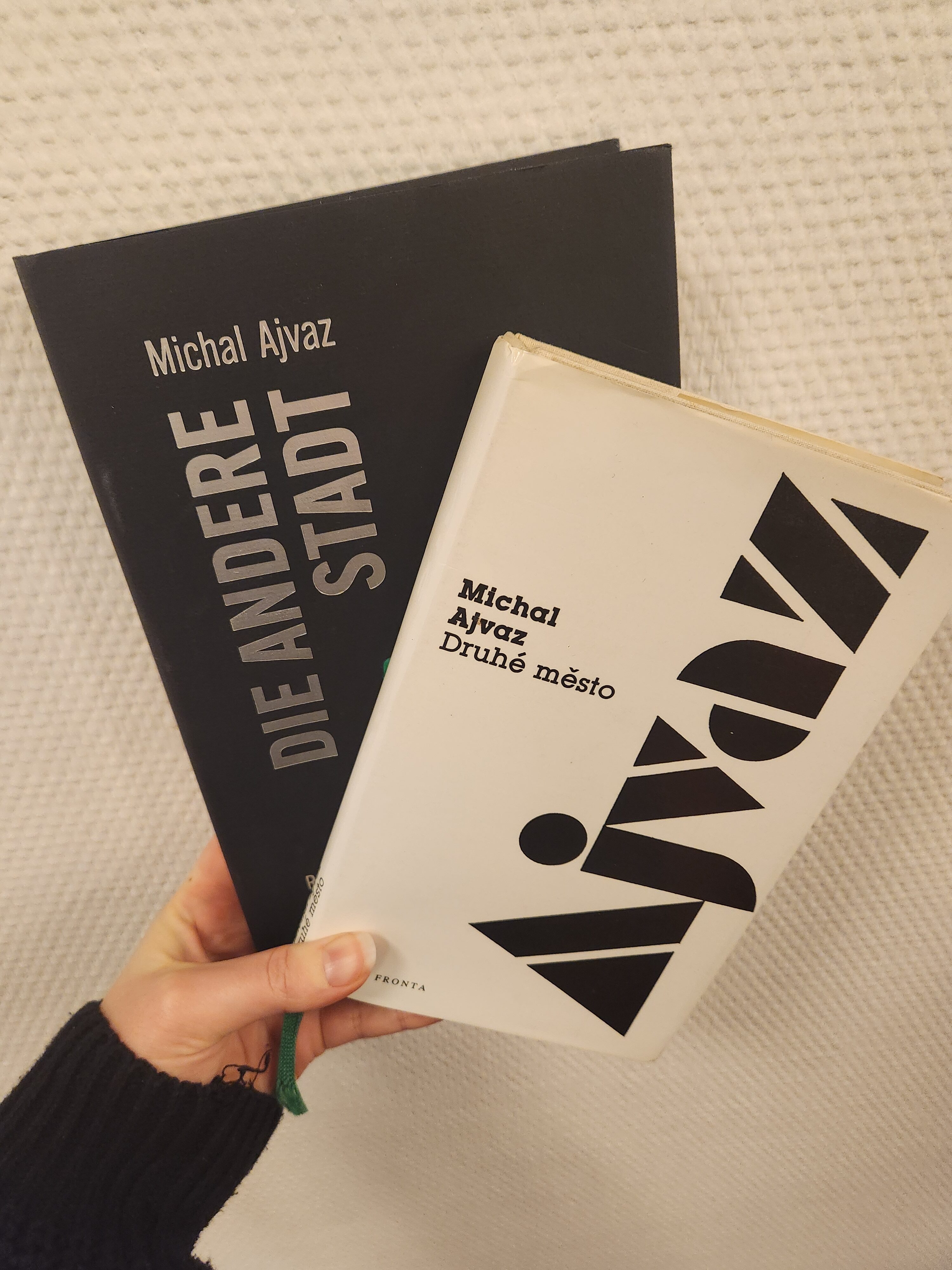
A green glowing tram travelling through Prague at night, moose living in the pedestals of statues on Charles Bridge, sharks hunting in the dark in the sky: ‘The Other City’ is a veritable cabinet of curiosities filled with bizarre characters and scenes. The protagonist enters this world when he finds a strange book in a foreign language in an antique bookshop and from then on wanders back and forth between normal Prague and the obscure, secret Prague.
It all reads like a dream, but Ajvaz emphasised that he does not draw his inspiration from his dreams. For him, real places are much more a source for his stories. In the case of ‘The Other City’, it was the snow-covered hill behind Prague Castle, which he explored during a quiet walk. The cafés and antique shops of Prague in the late 1980s also served as a model. Many places no longer exist today, but Ajvaz explained with a smile that he had predicted the future a little in some respects. Where only yellow and orange trams used to run through the Czech capital, today there are also green ones. And then there is that ‘small’ detail of the moving pictures in the newspapers. Who doesn't think of the magical world of Harry Potter?
Ajvaz has many fans on the international book market. He likes to highlight two countries in particular: In the USA, he was long considered a science fiction author and was assigned to the subcategory of ‘New Weird’, a literary hybrid genre combining science fiction, horror and romance, which he shared with Edgar Allen Poe, among others. In Japan, comparisons with magical storytelling and folk tales quickly come to mind. Here, ‘The Other City’ was compared to anime and manga stories.
In his own language, Ajvaz warned against the first edition, which unfortunately contained a few typos. This may not be a problem when reading, but it led to interpretation problems in some translations. For example, in Korean, a character does not slip through a hole, but through norms.
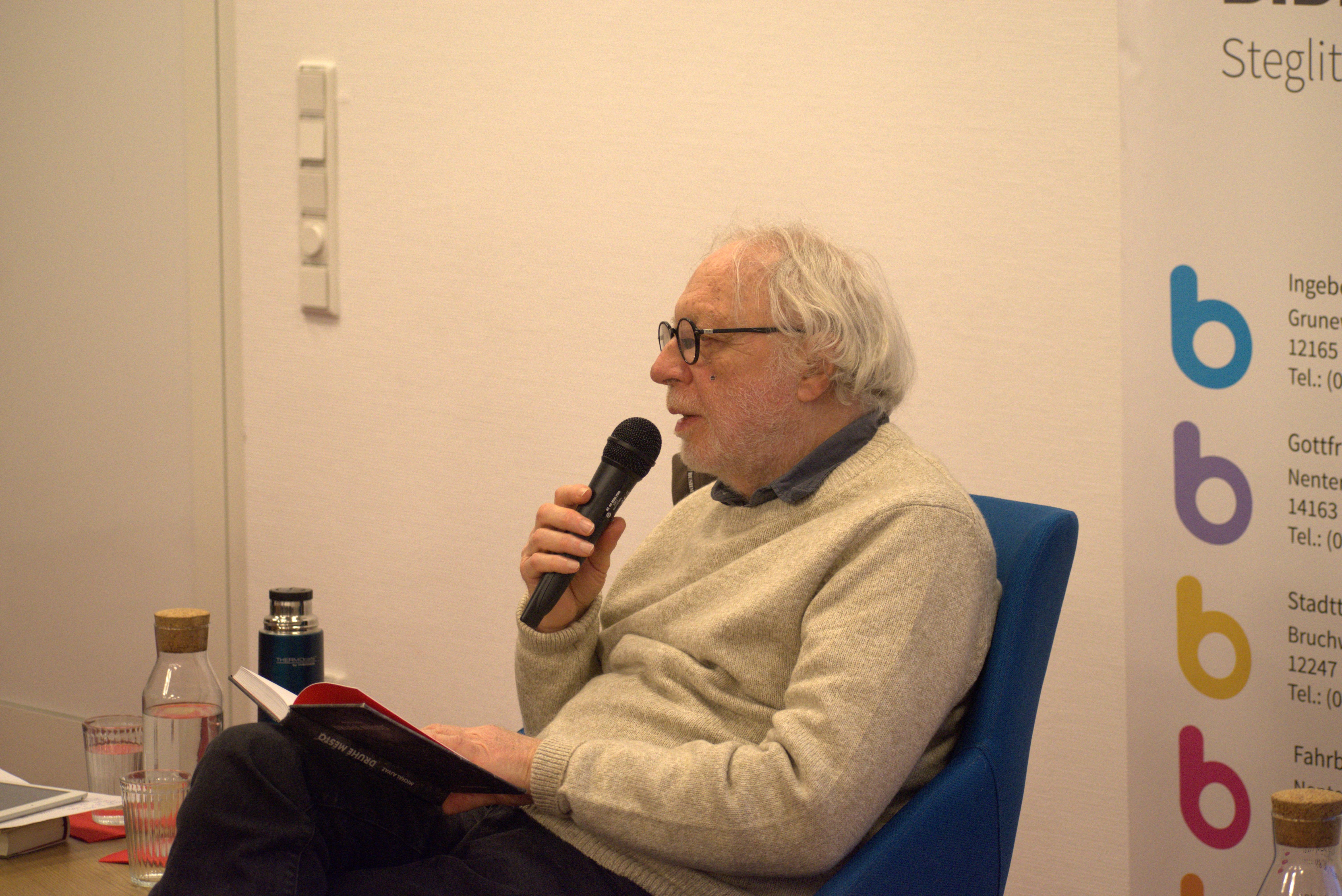
Michal Ajvaz sees his work as similar to that of a gardener: like flowers or vegetables, stories need to grow and flourish. Thoughts and emotions emerge from an empty head, from which stories and characters in turn emerge. His latest work, Passagen unter Glas (Passages Under Glass), will be published by Allee Verlag in March 2026, just in time for the Leipzig Book Fair. This brings the author full circle: his first and most recently published novel will then be available in German. The publication date has been chosen very deliberately, as the Leipzig Book Fair is an important setting in the story. He was inspired by the image of the many cosplayers who, like so many other fair visitors a few years ago, were surprised by snow in March, and he incorporated it into his story: in snowy Leipzig, his characters encounter Japanese demons trudging through the winter fog.