

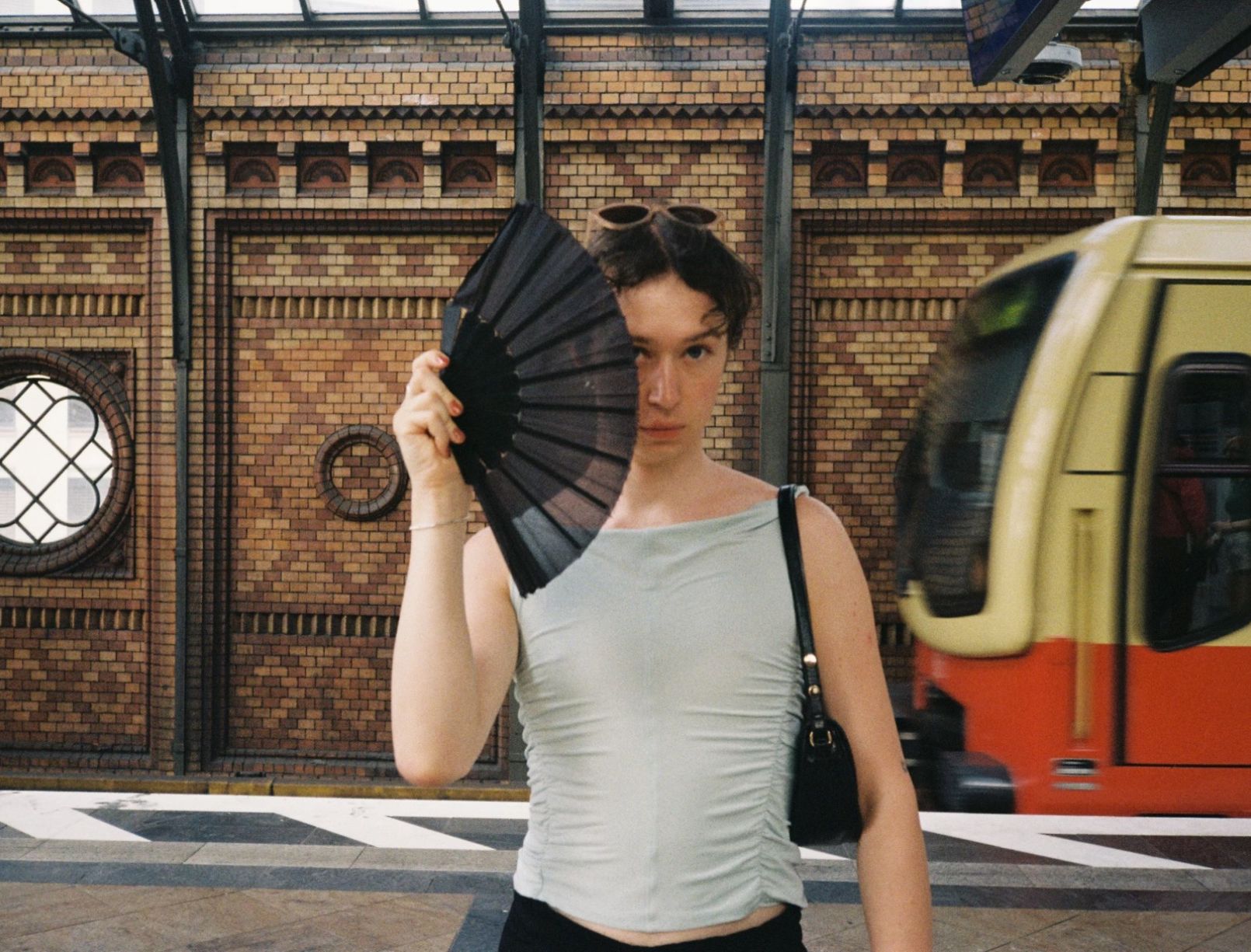
Marita, why do you think your book has garnered attention in Germany despite today’s fierce competition?
I think one reason might be that queer themes for children and young adults are underrepresented in literature, yet society is ready to gain a deeper understanding of trans experiences.
Germany may have a slight head start over the Czech Republic in terms of destigmatization and the more systematic exploration of social issues. At the same time, however, I don’t think the Czech Republic is “behind” in terms of the human dimension of the issue. Here, too, there are many people striving to create a safe and open space for children—whether they are teachers, booksellers, librarians, or artists. It is thanks to them that important topics find their way into schools, libraries, and families.
Based on my experience with extracurricular education, I can say that in Italy, for example, there are more books, resources, and institutions with a similar focus. However, the differences between countries are often not just a matter of the range of available titles, but rather a matter of systemic support. If there is room for improvement, I believe it lies primarily in long-term support for the people doing this work—so that they have sufficient resources, methodological materials, and social recognition.
In your opinion, is there anything that Czech books in particular can offer to young readers abroad?
I find novels and comics by Czech creators such as Štěpánka Jislová, Marek Torčík, and Jakub Stanjura appealing, as they draw on personal experiences set in the present day. In my opinion, they can easily resonate, at least in Europe.
In your portfolio, I was struck by the fact that you completed internships in Porto, Chicago, Paris, and Rome. What did these experiences give you, and how have they influenced your current style?
During all my internships, I naturally met people involved in literature and the arts, and I’d say they helped me think more broadly. In Porto, I spent time with young illustrators; in Paris, thanks to the artist Gérard Lo Monaco, I learned how to combine playfulness and professionalism; and in Rome, I discovered how to work with books and their themes.
In your book, you address the topic of the lives of non-binary and trans people. Do you think this topic is still underrepresented in Czech literature?
Absolutely. I’d love to be surrounded by local books, comics, and zines that tell diverse queer stories. There are plenty of those stories out there, but few have been brought to life.
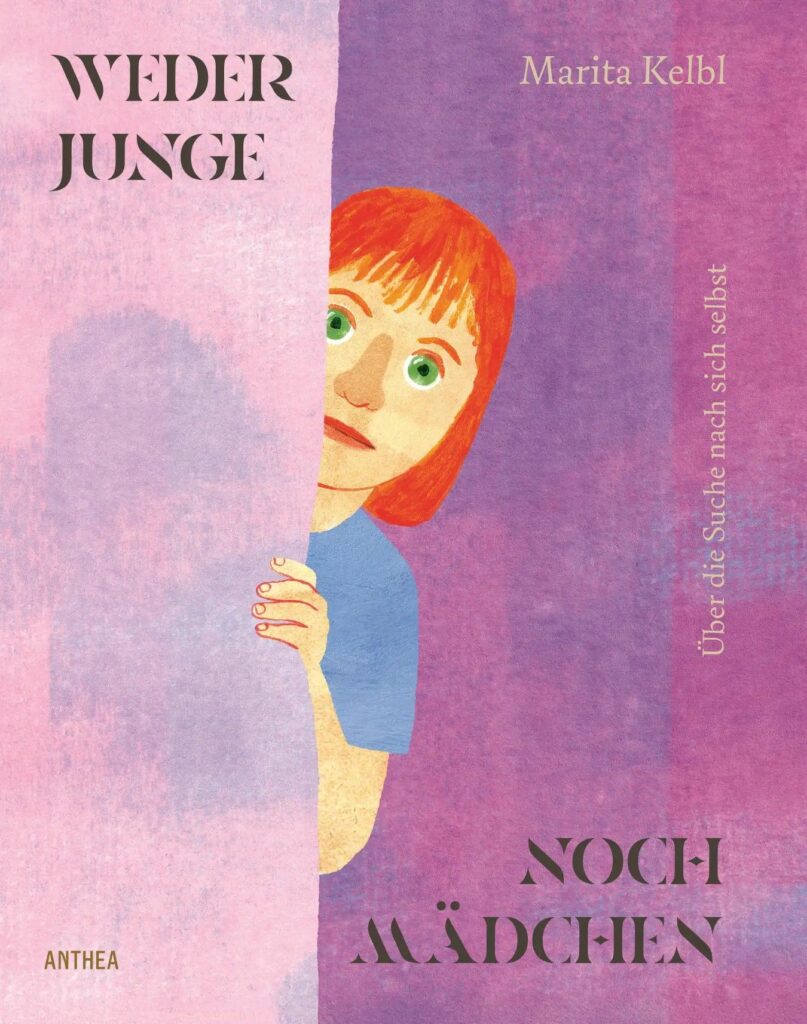
You work with colorful illustrations, often in pastel shades. Have you experimented with other artistic approaches (such as more minimalist, black-and-white ones)? What do you enjoy about the playful, colorful illustrations that are typical of your work?
Those colors just come to me. I choose them based on my feelings, which tell me how the project should come across. Drawing is minimalism to me. I create a solid foundation with a dark or black line, and then I play with the rest.
I’ve created perhaps only one original book in black and white; I really enjoyed it, and I can imagine coming across a project again where I’ll be able to forgo color.
Your book offers children a space to explore identity without the pressure of unambiguous answers. How do you think children grapple with the question “who am I” when society often offers them only two boxes to fit into? And how can literature create a safe space where a child can allow themselves not to know?
Children grapple with the question “who am I” exactly as you described. They choose from specific options. I believe that not only they, but everyone deserves the opportunity to transform themselves at any age and try out different aspects of what life has to offer.
What kind of feedback have you received about the book—from younger readers as well as from parents?
Above all, I feel a sense of appreciation that a book like this about trans people exists. Younger readers find confirmation of their place in society through these stories, and parents and everyone else who educates children have a tool to help them introduce queer topics.
Have you ever received a reaction like, “This is exactly what I needed”?
Sometimes I get a nice message from teenagers on Instagram or from parents and siblings of queer children. For example, I was delighted when the book inspired someone to try using a new name or nickname, or helped give them the courage to confide their wishes to one of their parents.
And what about your future plans: what topics do you want to continue exploring in literature and illustration?
I’d say I’m still interested in what shapes a person’s character, and one of those things is relationships—with parents, friends, partners, or even a neighbor. That’s what I’d like to focus on, at least as an illustrator.
Photo: Nikola Uhle
The interview with author Marita Kelbl was conducted by Karolína Tomečková.