Many have now grown accustomed to the fact that, in literary scenes as small (in scope) as Czech literature, a trend can be established by the publication of a mere two or three analogous texts. This is exactly what happened in the Czech literary scene between 2023 and 2024, when it seemed that those at the forefront of Czech prose were all emerging authors; that something like a ‘new voice’ was taking shape. Equally remarkable was the way that the authors who had brought about this ‘trend’ differed so strongly in their work. As authors, Marek Torčík, Alena Machoninová, Kristina Hamplová, Miroslav Hlaučo, and Emma Kausc have very little in common with one another, which serves to paint a general picture of Czech prose in the years 2020-2024 – one which appears fragmented, and in which it is difficult to locate any sort of definitive tendency. Granted, some through-lines between certain works of prose can be seen, but most of the time these similarities exist between little more than a handful of texts. This raises the question: to what extent should this resemblance be considered a trend – one that attests to something fundamental about Czech prose – and to what extent should it be seen as a simple coincidence. On the one hand this kind of ambiguity is beneficial, in that it attests to the richness and diversity of these creative exploits, but on the other hand it raises questions about how contemporary Czech prose should be discussed, how it should be understood, and how it should be presented.
The goal of the following article is just that: to accurately represent Czech prose from the years 2020-2024. Firstly, through the lens of literary prizes and events that have influenced its development, and secondly through specific texts that have stood out amongst ordinary literary production, either thanks to their aesthetic quality or by way of non-literary circumstances. These texts have been arranged into specific clusters which, in the subsections that follow, have at times been constructed somewhat ad hoc and do not have a unified framework: sometimes they follow a generational theme, other times the focus is on the through-lines between particular texts. The idea is to create a sort of map of the way that things seem to have been written during the period in question – which books were published, which ones excelled – so that Czech prose might be presented not only in its creative peaks, but also in its diversity and vibrancy.
Where to go for Czech prose?
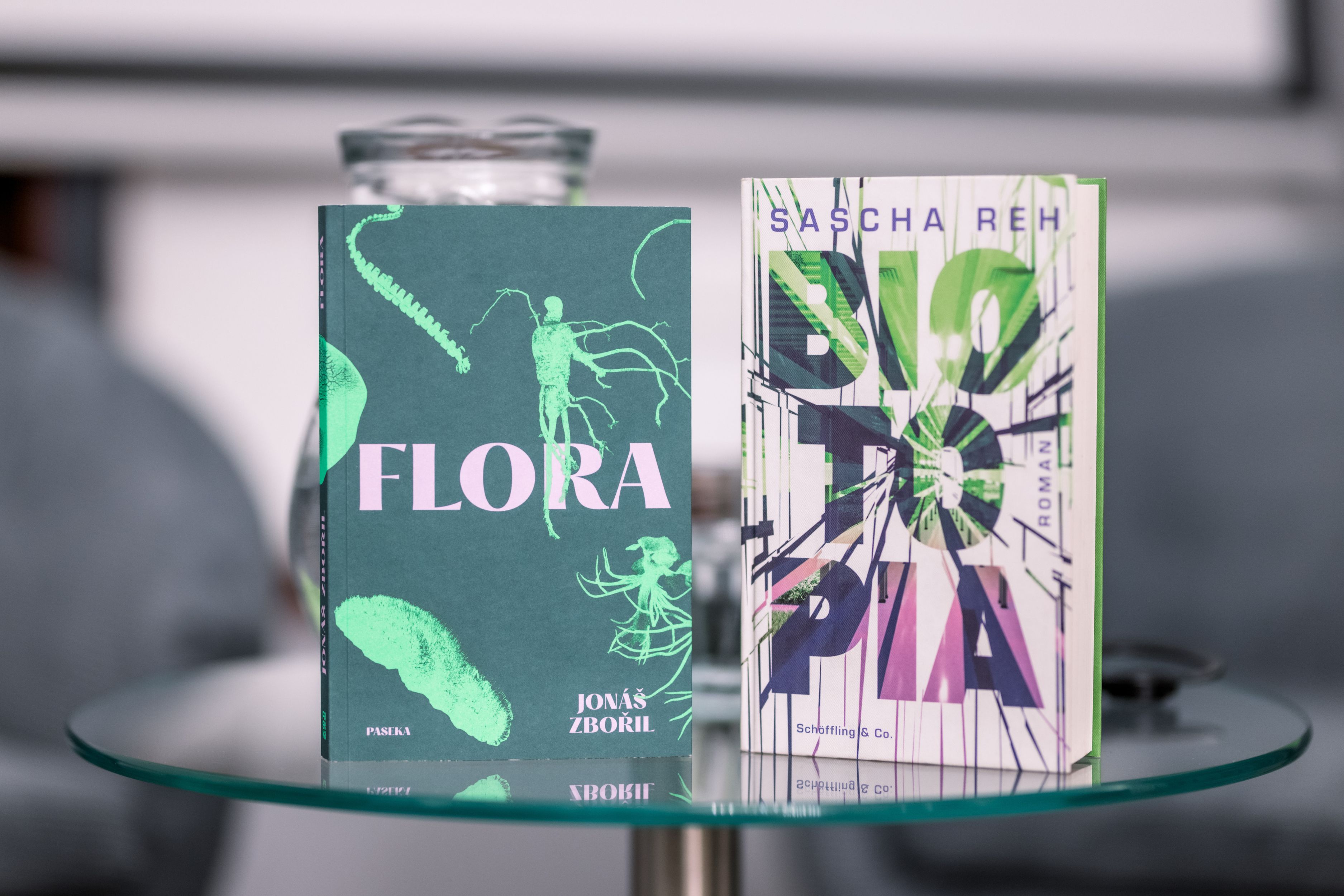
It should first be said that, during the period in question, Czech prose did rather well for itself. After years of Czech prose being constantly compared to Czech poetry, and being viewed, in light of this comparison, as not quite up to standard, we now find ourselves in a period in which modern Czech prose is not only alive and well, but also widely read, as has been seen in increased interest from foreign publishing houses. For example, Marek Torčík’s successful novel Memory Burn (Rozložíš paměť, 2023) has been published in twenty-five countries, Bianca Bellová’s successes have long been lauded abroad and, in German-speaking countries specifically, authors like Radka Denemarková or Jaroslav Rudiš, who in 2019 exchanged Czech for German in his prose writing, have been extremely successful. Authors like Pavla Horáková or Lucie Faulerová now have dozens of translations of their work, and interest in contemporary Czech prose among foreign publishers has not fallen – in fact, quite the opposite – as evidenced by Jonáš Zbořil’s Flora, for example, which shortly after its publication at the end of last year (2024) has already been translated into eleven languages.
The last few years have largely proven the editors of Czech literary journal Host right, who predicted a “boom in Czech literature” around the turn of the 2019-2020 new year. In fact, the eponymous publishing house Host (which at that time was still closely connected to the journal) has contributed significantly to the current readership popularity of Czech prose. In the period in question, they have published incredibly commercially successful Czech prose works that have still managed to hold on to their literary ambitions. Alena Mornštajnová, Kateřina Tučková, Petra Soukupová, Iva Hadj Moussa, and Jiří Hájíček, as well as the aforementioned Bianca Bellová, Radka Denemarková and Jakuba Katalpa, have all long belonged to the core group of authors associated with this publishing house.
In the long term, publishing Czech prose has evidently paid off for Host, so it is unsurprising that Czech novels, novellas, and short story collections have begun to crop up in the editorial plans of other publishing houses more frequently than before. Much of this has come from the Czech publishing house Argo, where authors such as Pavla Horáková, Josef Pánek, and Miloš Urban have published their books. Paseka – another Czech publishing house – have become a frequent collector of literary awards thanks to their representation of Czech prose, with their publications covering such names as A. Gravensteen, Anna Cima, Michal Kašpárek, and Zuzana Dostálová, as well as the aforementioned Marek Torčík and Miroslav Hlaučo. The publishing house Druhé Město has also been a rich source of original Czech prose, publishing the likes of Petr Stančík, Michal Ajvaz, Sylva Fischerová, Štěpán Kučera, and Dora Kaprálová. The publishing house Vyšehrad have established a series of Czech prose works by the name of Tvář, through which books by Jan Štifter, Hana D. Lehečková, and Jiří Klečka, for example, have been published. Of the other publishing houses currently working with Czech prose, Fra, Prostor, Malvern, Torst, Větrné mlýny, Akropolis, and Maraton should also be mentioned.
The comparative ease of publishing original Czech prose (unlike translated prose, a publishing house needn’t pay for expensive authors rights or translation costs) has led unfortunately to a situation in which some publishing houses have taken certain titles to the literary market without due editorial (and sometimes even orthographical) care, presumably with the idea of, so to speak, trying their luck. A readership hungry for new Czech literature has thus had something to reach for, at least, but the selection on offer has seemingly lacked stricter curatorial oversight. It is likely due to this that readers have tended to resort to familiar names, meaning many original prose titles found themselves in a similar position to Czech poetry collections: without much attention from the media, they may have sold a mere couple thousand copies or less. As a result of this, by the end of the period in question, the number of original Czech prose works in the editorial plans of Czech publishing houses has more or less plateaued.
The point of literary prizes
While the mainstream media have tended to focus increasingly on more successful books with greater readership appeal, less well-known books (or even debuts) have been able to garner attention mostly thanks to literary awards. In the period in question, the Magnesia Litera Awards (the largest and most notable Czech literary prize), though often seen to focus on ‘the best of the mainstream’, have nevertheless been awarded mostly to books that would otherwise have likely gone unnoticed by the wider public. In 2021 the Litera for Prose was awarded to Daniel Hradecký for his autobiographical prose trilogy Three Chapters (Tři kapitoly, 2020); in 2022, to Stanislav Biler for his novel Destruction (Destrukce, 2021); in 2023, to Viktor Špaček for his short story collection An Impeccable Life in Humility (Čistý, skromný život, 2022); in 2024, to Marek Torčík for his novel Memory Burn, and this year to J. A. Pitínský for his short story collection Household Goods (Domácí potřeby, 2023). The Book of the Year Prize was awarded to two prose titles in this period: Alena Machoninová’s Hella in 2024 and Miroslav Hlaučo’s Whitsun (Letnice, 2024) a year later (with the latter also succeeding in winning Debut of the Year Prize).
Attention of this kind has slowly begun to coalesce around the Magnesia Litera Awards partially due to the gradual disappearance, or rather, growing irrelevance of other literary awards. The Josef Škvorecký Prize was last awarded in 2016, and in 2022 the State Prize for Literature was subjected to heavy criticism due to their allegedly biased selection of jurors – the same year that Kateřina Tučková was awarded the prize for her novel The White Water (Bílá Voda, 2022). As such, with the exception of the Jiří Orten Award (which has specific rules and can only be awarded to authors under the age of thirty) the Magnesia Litera Awards were for a long time essentially the only prize that could bring new prose (or any other new literature) to the fore. The situation changed, however, in 2024 when a group of five literary journals (A2, Host, Prostor, Souvislosti, and Tvar) founded the Czech Literary Criticism Prize. In contrast to the Magnesia Litera Awards, this prize has placed a greater focus on the critical response to acclaimed (and unacclaimed) new literature and, besides their announcement of the “best book of the year”, as part of the prize they have also organised public debates with literary critics. In its first year running, the prize (in the prose category) was awarded to Emma Kausc for her debut novel Plot Disruption (Narušení děje, 2024).
The many faces of autofiction
Possibly the single most obvious and widely discussed trend that can be found in Czech prose from 2020 onwards is so-called ‘autofiction’, which some critics see as a problematic and loosely defined category. Simply put, Czech literature can be said to have grown accustomed to regarding any prose work based on the lived experience of its author as autofiction, though with the caveat that not all things written in the book must directly correspond to reality. In fact, an author and their protagonist sharing the same name is often the first sign of a work of autofiction, though this is not always the case. Importantly for the Czech understanding of the genre, many of the works identified as autofiction have engaged deeply with the economic and social circumstances of their protagonist’s background. The work of French writer Édouard Louis has become a sort of a benchmark for any autofiction defined in this way; his work, moreover, has been repeatedly likened to the most prominent Czech work of autofiction, Marek Torčík’s Memory Burn. Another work important to the emergence of interest in autofiction was My Struggle (Min kamp, 2009-2011), a series of novels by Norse writer Karl Ove Knausgård, though it left a much smaller mark on the Czech understanding of the genre.
Though the works of Édouard Louis have acted as a reference point for Czech notions of autofiction, Memory Burn is essentially the only noteworthy title to have corresponded in multiple aspects with Louis’ work. Marek Torčík’s autobiographically tinged novel also explores marginalised communities, and the protagonist of the book is, like the protagonists of Louis’ books, also a social outcast: as a gay man he experiences bullying in primary school; his mother is a poor working woman and his grandpa a destitute alcoholic. On the other hand, it should be noted that, in contrast to Édouard Louis, Marek Torčík includes a more vibrant palette of interpersonal relations and social bonds in his novel (one of the novel’s strongest narrative threads centres on the relationship between the protagonist and his mother) and does so, moreover, in a significantly more nuanced way. In contrast to the work of the famous French writer, which can often seem closer to a manifesto, Torčík’s book remains first and foremost an elaborate novel, in which the style of narration and choice of language both play an equally important role in the novel’s make-up.
In Czech literature – or rather, in Czech literary criticism – autofiction has been understood somewhat differently than would befit the etymology of the term (which would imply an autobiographically oriented work of literature with certain fictitious elements), and many works that could technically be described as autofiction were not placed into that category, most likely due to a lack of socio-political commentary. This is true of the works of Dora Kaprálová, for example; after her critically acclaimed collection Islands (Ostrovy, 2019), the author released Suffering and Other Genres (Utrpení a jiné žánry, 2022), a collection of short stories similarly characterised by the dreaminess and hypnotic observations of their autobiographical protagonist. In contrast to her previous book, which was formally quite unified, Dora Kaprálová experiments far more with the limits of short story writing in Suffering, with some stories even resembling stream of consciousness or prose poetry. Another author – Petr Borkovec – whose prose is similar in many ways to Kaprálová’s, published a pair of prose collections in a similar style: first the collection Petříček Sellier & Petříček Bellot (2019) and then a book by the name of To Pick Up a Stick (Sebrat klacek, 2021). Similarly to Dora Kaprálová, Borkovec makes use of distinctive observations, with a focus on extremely unique occurrences and (in particular) characters that the protagonist comes across. Moreover, Borkovec maintains a certain distinctive humour in his work, which he often makes use of in his descriptions of the Czech literary scene.
The topic of Czechia’s literary scene was approached, albeit far more scathingly, in Petra Hůlová’s novella Trump Card (Nejvyšší karta, 2023). The protagonist of this book is a writer and a feminist who ruminates on her own process of aging and waning interest from men, as well as the Czech cultural scene, even as far back as the 1990s. Petra Hůlová’s novel is autofiction in the full sense of the word – the author has evidently made use of autobiographical allusions to her own life, making it partially a roman-à-clef, though it’s impossible to draw a clear line between autobiographical and fictional elements.
Other significant works associated with autofiction include the novels Hella by Alena Machoninová (2023) and Plot Disruption by Emma Kausc (2024). Alena Machoninová, who until recently was active mostly as a translator and researcher in the field of Russian literature, has based her first novel around an investigation into the fate of Helena Frischerová, a Czech Jew, who has been made a central character once before in Jiří Weil’s novel Moscow—the Border (1937). In a fragmented, essayistically inclined text, Machoninová weaves together her own reflections on and findings about this woman, as well as about Russia, Moscow, literary translation, and Russian literature; at the same time, she describes her own position as a researcher and writer who, through nothing but old documents and memories, is attempting to understand a woman she could never have known. Emma Kausc’s Plot Disruption is an equally fragmented text in which the narrator, thirty-year-old Emma, explores her relationship with her missing partner, a photographer called Alyona. The text, packed with intertextual references and reflections on literature and other forms of art, plays out across multiple countries, as multiple storylines, touching upon a variety of themes, converge. Some of these themes (queer identity or the climate crisis, for example) could be described as supremely relevant, and through her novelistic examination of them, the author raises piercing questions on these topics, skilfully and without describing them from any predetermined ideological standpoint.
Both of these books have been described as autofiction, even though the socio-critical elements featured in both are nowhere near as prominent as in the works of Édouard Louis, for example (or even in Marek Torčík’s novel). As such, the autofiction status of both novels has become a source of doubt for literary critics; after all, even the authors themselves have described their novels as works of autofiction. This may have been due in part to the fact that both authors had long been moving in literary circles outside the Czech Republic and had thus interpreted autofiction differently. Alena Machoninová lived in Russia for many years and has translated many works of Russian literature, while Emma Kausc studied at university in London and evidently perceived autofiction primarily through the lens of English-language autofiction titles. Their novels and the debate surrounding them proves in any case that the concept of autofiction can be approached differently and with a variety of accents.
This idea was partially alluded to in David Zábranský’s much discussed novel Jů and Hele (Jů a hele, 2024). In this book, an author known for his controversial views and provocative literary works has put to the page his own diary from the period between May and September of 2021. Zábranský has seemingly decided to take the concept of autofiction a step further and publish an unadulterated novelistic autobiography, although the line between proverbial truth and poetic licence still remains hazy and, in reading it, one is forced to wonder to what extent the text is a diary and to what extent a stylised piece of prose. Throughout the novel, the writer exposits uncompromisingly, unpredictably, and unscrupulously about those close to him, about his literary process, about politics, and last but not least, about himself.
Furious literature
Thanks precisely to its ferocity, David Zábranský’s Jů and Hele forms a link between autofiction and another literary trend of recent years, which has not yet been given a label, however, and has not resonated quite as deeply. This trend is made up of novels or novellas founded in a grotesque, aggressive, polemical style of narration, such as Burnout by Petr Šesták (Vyhoření, 2023), Chocolate Blood by Radka Denemarková (Čokoládová krev, 2023), and The Most Beautiful City on Earth by Stanislav Biler (Nejkrásnější město na Zemi, 2024).
Radka Denemarková, who is at present likely the most successful Czech author internationally, based her novel Chocolate Blood on the life stories of three figures from the 19th century: Czech writer Božena Němcová, French writer George Sand, and capitalist John D. Rockefeller. The author takes carefully chosen episodes from their lives, which serve to demonstrate the destructiveness of capitalism, the disproportionate burdens faced by women, and the stagnation of social structures, and weaves them not only amongst themselves, but also amongst her own polemical, outspoken comments, with which she sets up parallels between the 19th century and the present day. In his striking novella Burnout, Petr Šesták, who had already garnered attention with his novel Continuity in the Park (Kontinuita parku, 2021), captures a glimpse of a metropolis from the perspective of a deliveryman delivering food on his bike. The protagonist must weave his way through omnipresent traffic, commenting on the cars’ pollution of the city ever more furiously, until his physical exhaustion and surging temper eventually lead him to commit an extreme act. The protagonist of Stanislav Biler’s novel The Most Beautiful City on Earth also wanders around a city (in this case Brno) that, in the novel, becomes a dystopian space, in which it is impossible to take children to school or even, due to omnipresent road traffic, to cross the street. In a stream of monologues from characters that the protagonist meets, a multitude of themes parade past, each closely connected left-leaning viewpoints. Even so, this polyphony does not lead to any sense of catharsis or enlightenment; Biler has clearly taken inspiration from the unfinished and unending wanderings of the land surveyor K. in Franz Kafka’s The Castle. In fact, the same could be said of Biler’s previous novel Destruction (2021), for which the author was awarded the Magnesia Litera Prize.
Both of these works by Biler have been described as dystopian. In Czech literature (and even internationally) authors of recent years have resorted to this genre often. Two well-received prose debuts from 2024 might at least partially be considered dystopian: Kristina Hamplová’s novella Lover/Fighter and Jonáš Zbořil’s novella Flora. Hamplová has divided her first book into four parts, taking her characters from 2014 all the way through to the dystopian future of 2031, with violence and street fights acting as the driving force of the plot. With deft narration that has been described as both controversial and brazen, the author fashions a love story between her protagonist and a mysterious girl called Kendra, at the same time commenting cleverly and sarcastically on the novella’s small-town setting. Jonáš Zbořil’s Flora, however, in contrast to the more frenetic plot of Lover/Fighter, is focused and restrained. In a book full of literary and cultural references, the author lays out, in laconic and yet highly symbolic language, the journey of a childless couple to a prohibited zone known as the Barrens. Here they come across a strange, non-human creature which they begin to care for. Onto a story full of blind spots and narrative silences the author projects his interest in liminal spaces, which had already manifested in his previous poetic work.
Another text that could be counted amongst the dystopias is Klára Vlasáková’s highly successful prose debut Cracks (Praskliny, 2020), which begins with the premise of a levitating sphere appearing on Earth without any clear purpose and investigates how people in a fully automated world, desperate for anything that could give their lives some meaning, might react to this. Even more successful than Cracks – from the point of view of both readership interest and critical reception – was the writer and screenwriter’s second prose work Bodies (Těla, 2023). In this novel, Vlasáková makes human (or rather primarily female) aging her central theme. Although some of the novel’s narrative threads also echo dystopian motifs and even the theme of artificial fertilisation, for example, it is more focused on expressing an intimate experience of corporeality, the kind that becomes a burden, overlooked by those around you.
Family (micro)dramas and the fringes of society
In the period in question, prose works focusing on interpersonal relationships (mostly family ties or intimate relationships) and usually dysfunctional ones, made up a significant part of Czech prose and were especially popular with readers. Petra Soukupová has been a frequent and meticulous chronicler of these kinds of relationships, publishing three novels between 2020 and 2024: Things Whose Time Has Come (Věci, na které nastal čas, 2020), No One Is Alone (Nikdo není sám, 2022), and Marta Doesn’t Want Kids (Marta děti nechce, 2024). In each one the author has proven her ability to convincingly construct utterly ordinary situations that arouse mutual antipathy or frustration in her characters, but at the same time cannot be prevented or simply brought to a close. Moreover, in the last novel mentioned, Soukupová dealt with the theme of voluntary childlessness, a theme that Czech readers have grown increasingly interested in recently, though before then Czech readers could access this topic only in translation.
Another author continually examining close interpersonal relationships is Petra Dvořáková, who in 2020 published her novella Crows (Vrány) about a young girl whose ambitions are continuously trampled by her own parents. Around two years later, the author published her novella The Garden (Zahrada, 2022) about a priest returning to ‘normal’ life, and about the difficulties that he and those around him face. Her novel Wild Cherry Trees (Pláňata, 2023), also published during the period in question, alternates between the perspectives of various members of a family, reflecting (among other things) the regime change of the 1980s and 1990s in Czechoslovakia, albeit primarily on the level of family dynamics.
A common element of novels depicting distorted family ties is the gradual uncovering of some dark period in the family’s history. It was this premise that the equally popular writer Viktorie Hanišová used as the basis for her novel Sunday Afternoon (Neděle odpoledne, 2022), in which the main cast are led by a carefully guarded family secret past the boundaries of common society.
Of course, those living on the fringes of society have long been frequent participants in works of literature, and not only Czech ones. Although characters such as these have in the past decade usually been depicted in pubs over pints of beer or glasses of cheap booze, and as such the stories told about them have often slipped into romanticised pub ramblings, between 2020 and 2024 this type of character has begun to find themselves in the context of far grittier narratives.
These include (besides other prose examples) Daniel Hradecký’s Three Chapters (2020) and Elsa Aids’ Preparing for Everything (Přípravy na všechno, 2020). Both books, whose protagonists teeter on the edge of complete poverty, falling into alcoholism (Three Chapters) or else apathy (Preparing for Anything), have been enthusiastically received by critics, predominantly for their methods of narration and precise, razor-sharp language; both authors originally established themselves as poets, in fact. The same is true for Pavel Kolmačka, who in 2023 published his second novel Canto Ostinato. A polished, meditative text on the approach of death, examining in depth the closest of interpersonal relations, it brought the author both the Czech State Prize for Literature and the Jaroslav Seifert Prize. In 2024, the poet Pavel Novotný also published his first prose work. In his novella Grandma (Babička), which is in fact the fourth work in a five-part planned series otherwise made up of poetry collections, the author reminisces in a truly unique way about members of his family and his own childhood, reflecting the period of late Czechoslovak normalisation.
Back in time and back to the Sudetenland
In the previous decade another important section of Czech literature has been made up by the popular genre of historical fiction. Thanks to the work of talented authors like Alena Mornštajnová, Kateřina Tučková, and Jakuba Katalpa, the most common subject matter of historical novels in this period was the story of the so-called ‘little man’ in the background of great historical events. The authors mentioned above have set most of their stories in historical periods such as the Second World War, the introduction of Stalinism, and Czechoslovak normalisation, using these periods to demonstrate how ordinary people (or at least those with no obvious political power) have been ruthlessly ground down by the tempestuous circumstances of their time.
In 2021 Alena Mornštajnová published her alternate history novel November (Listopád), in which she imagined what might have happened if the Velvet Revolution had been quashed and the communist regime had continued to rule Czechoslovakia. Then, in 2023 she abandoned historical subject matter for the first time in her adult work and wrote a book about the traumatic experiences of a young girl who was sexually assaulted as a child by her own grandfather. During the decade in question, the exceptionally approachable work of this author, based often on tried-and-tested narrative techniques and well-known thematic formulas, has been enormously popular amongst readers and Alena Mornštajnová’s novels have continued to sell hundreds of thousands of copies.
Another author who found popularity amongst readers was Jakuba Katalpa with her novel Zuzana’s Breath (Zuzanin dech, 2020). An author whose previous works were unique in their narrative inventiveness, richness of language, and polished writing style, in this her fifth book she has focused her narrative on three characters, with the bulk of the story revolving around the horrors of war that they have experienced. Although she has written about the holocaust in her previous works, in Zuzana’s Breath the author has abandoned narrative variety for the sake of narrating linearly and in a realistic style.
Kateřina Tučková’s The White Water was published in 2022, ten years after her novel The Last Goddess (Žítkovské bohyně, 2012) made her into one of the most popular writers in the Czech Republic. Similarly to Tučková’s first novel, The White Water weaves together several narrative threads, of which one takes place between 2007 and 2008, while the rest of the book is set pre-Velvet Revolution in a nunnery located in the titular border town of Bílá Voda (lit. “white water”). In this book, with a narrative punctuated by fictional transcripts of contemporary historical sources, investigation reports, and newspaper articles, the author has mapped out the lives of a group of Czech nuns throughout the period of normalisation, thereby following on from her previous books about the heavy burdens faced by extraordinary women in the past century under the communist regime.
Another of the more successful pieces of historical fiction in recent years is Karin Lednická’s trilogy The Leaning Church (Šikmý kostel; each work published in 2020, 2021, and 2024 respectively). While Alena Mornštajnová and Jakuba Katalpa have mostly set their stories in well-known historical periods, in her books Karin Lednická has written about the lesser-known history of the Karviná region. The first entry in the trilogy goes back as far as 1894; historical events that have been more thoroughly mapped out by other authors, such as the Second World War, the postwar resettlement of Germans from Czechoslovakia, or the Czechoslovak communist putsch, were more or less covered by the second and third entries in the trilogy. Although Lednická has somewhat simplified certain historical events for the sake of plot construction, and the third entry in particular unfolds a little mechanically, her prose has not fallen into the oft repeated patterns of historical narratives that have been in use in Czech historical fiction for some time now, and so in this genre of literature she has stood out. Lednická has built her extensive body of work around family sagas and has skilfully made use of a multitude of characters, whose lives encapsulate the countless hardships caused by historical developments in the Karviná region.
Simona Bohatá has also set the majority of her prose works in the period of normalisation, albeit with less of an eye to the course of great historical events, focusing significantly more on the lives of those on the periphery, often specifically those from Prague’s Žižkov district (which was, during the period of normalisation, a working class area with its own distinctive character) as she did in her novel Lucky Beny (Klikař Beny, 2021).
The former Sudetenland, now the Czech borderlands, is another favourite setting for Czech historical prose. This region has made frequent appearances, mostly thanks to the fact that many of the events that played out on a larger scale elsewhere in Europe can be found here, concentrated into one small space. In the Sudetenland, one tends to find multiple ethnic and linguistic groups and spheres of influence, which collided and competed with one another over the first half of the 20th century, all in one place. For this reason, many historical novels have depicted the rise of Nazism, the growth in power of the ethnic German or German-speaking population, and the subsequent acts of revenge (for either real or imagined historical injustices) committed during the period of postwar resettlement. Some of the most important and most popular authors in the period in question who have chosen the Sudetenland as a setting for their prose are, for example, Jan Štifter (Peacock Feast [Paví hody], 2022; The Land of Molten Bells [Krajina roztavených zvonů], 2024), Anna Strnadová (…It Was Enough To Just Say Jáchymov […stačilo jen říct Jáchymov], 2021; Life on a Spider’s Thread [Život na pavoučím vlákně], 2024), and Alice Horáčková (A House Divided: The Story of a Sudeten Family [Rozpůlený dům: Příběh sudetské rodiny], 2022).
In the 2010s, novels chronicling the lives of specific historical figures made up one of the most popular types of historical fiction. In the period in question, one novel that can be placed in this category is Magdaléna Platzová’s Life After Kafka (Život po Kafkovi, 2022), a fragmented narrative that focuses on the life of Felice Bauer, the well-known fiancée of Franz Kafka and silent addressee of Kafka’s letters. In her book, Platzová has written not only about the life story of this woman, but also about her own role as a researcher and writer fascinated by Bauer’s life and the broader historical context surrounding it.
In the last decade in particular, a slew of novels set during the Second World War have been published and, from the point of view of Czech literature, this historical period now seems somewhat played out. Even so, in the first half of the 2020s, two novels set in this period appeared, which have differed in many ways from the WW2 prose of previous years.
The protagonist of Alexander Staffa’s debut novel Violence (Násilí, 2023; it’s worth noting that Staffa has published his debut at the age of seventy-five) is an ethnic German from Czechoslovakia who enlists in an SS unit. While the horrors of war that subsequently take place have been seen many times before in other novels, the book’s method of narration is particularly noteworthy, full of silences and dialogues that, when read, often leave one uncertain as to who is speaking with whom, as well as exceptionally expressive language.
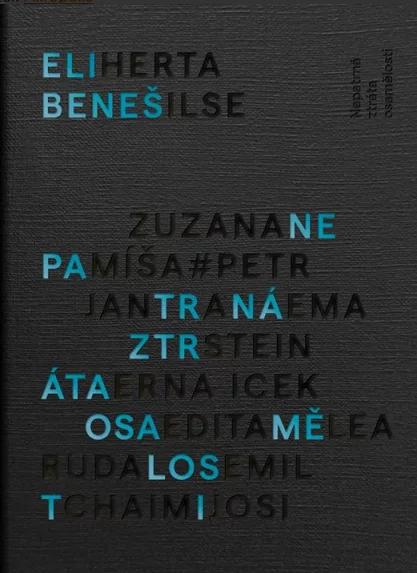
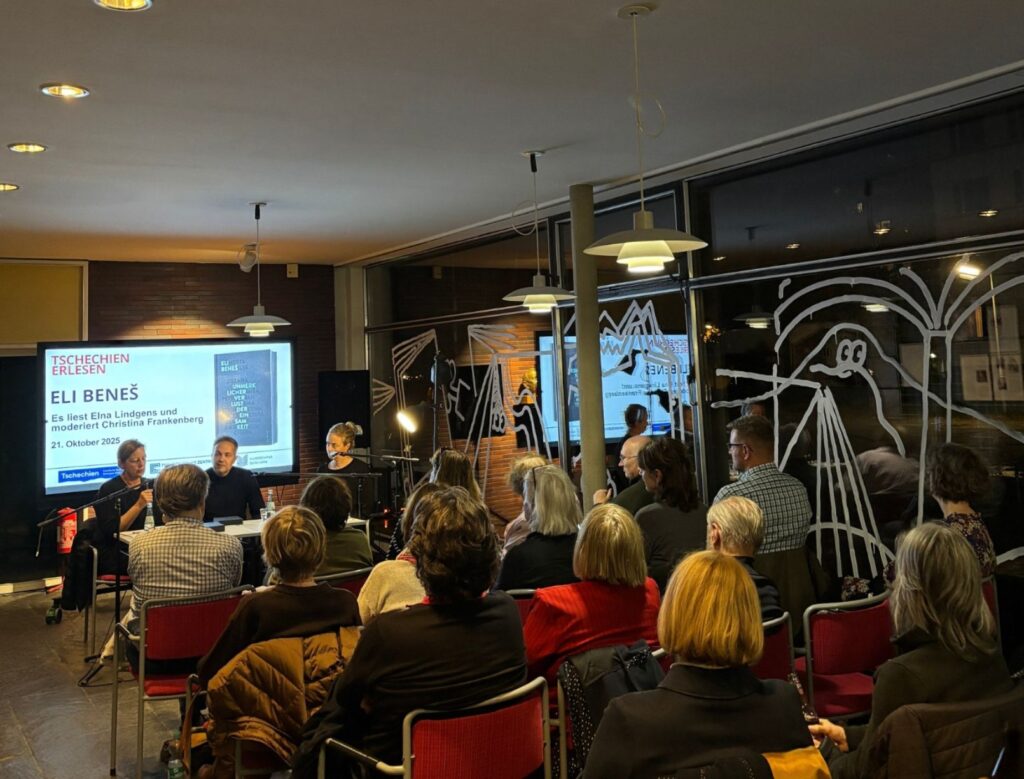
In contrast to this, Eli Beneš’s literary debut A Slight Loss of Loneliness (Nepatrná ztráta osamělosti, 2023; for which the author was awarded the Magnesia Litera Prize in the Discovery of the Year category a year later) is narrated from the point of view of a Jewish boy, who is released from a concentration camp in May of 1945 and attempts to return to ‘normal’ life. This focus on postwar everyday life and experience, which other WW2 novels include only tangentially, is unusually present in Beneš’s debut and is one reason why he has received such significant attention.
The 1990s as a period of Czech history have remained somewhat overlooked in the first half of the 2020s. This transformative historical period offers significant potential both from the point of view of themes and of readership interest, as can be seen thanks to the international success of authors from other countries with an experience of Soviet occupation. It has been more broadly explored, for example, in the autobiographical book The True Way Out (Skutečná cesta ven, 2023) by Patrik Banga, who recently became the first Roma author to receive the Magnesia Litera, in the category of Discovery of the Year. In his book he has written about his upbringing in the 1990s, years mired in racism, but also about his own escape from his ghettoised surroundings, styling himself somewhat as a ‘self-made man’.
Genre fiction and the fringes of genre
Authors who write genre fiction enjoy a good deal of popularity, especially from readers. It’s worth mentioning the work of Leoš Kyša here, an author who publishes several books annually (both under his given name and his pseudonym František Kotleta). Also popular at the moment is the four-part young adult fantasy series The Listener (Naslouchač) by Petra Stehlíková; in the period in question, the third and fourth entries – Nasterea and Urla – were published (in 2021 and 2024 respectively). In the genre of urban fantasy, the Project Kronos trilogy by Pavel Bareš has also garnered a significant amount of attention (the final entry Kronos’ Legacy [Kronův odkaz] was published in 2021). Besides this series, Bareš has also written two other genre novels: Meta in 2020 and Jimmy the Sloth and his Back-up Band (Lenochod Jimmy & jeho backup band) in 2023. Jakub Hussar’s incredibly ambitious sci-fi novels (0 TU: Volume I, 2021, 0 TU: Volume II, also 2021, and X-Tal, 2024) have also been extremely successful, laying out an exceedingly elaborate fictional universe with a detailed history.
In addition to this, so-called ‘serious’ literature has in recent years begun to be infiltrated by horror fiction, mostly thanks to books like Ignis fatuus by Petra Klabouchová (2024) and Hammering Nails by Vilém Koubek (Zatloukání hřebů, 2024). Importantly for these kinds of books, the gap between so-called highbrow literature and genre fiction has at least partially closed in recent years and, from time to time, one of these genre fiction titles receives widespread acclaim from literary critics who otherwise engage exclusively with so-called ‘serious’ literature (as was the case with the aforementioned novels by Petra Klabouchová and Pavel Bareš, for example).
Another contribution towards bridging the gap between highbrow literature and genre fiction has been made, of course, by the fact that ‘serious’ authors continue to draw on the techniques of genre fiction. Anna Bolavá rooted her novel The Narrator (Vypravěč, 2022) in horror stories (or sometimes fairytales), at the same time effortlessly and originally making use of the unreliable narrator as a literary device. Zuzana Říhová offers a more straightforward (though very sharply written) story in her book Through Pins or Needles (Cestou špendlíků nebo jehel, 2021). Similarly to Anna Bolavá, the author has drawn on horror techniques, rooting this novel about a married couple moving to the countryside in the fairytale story of Little Red Riding Hood.
Another author associated with the use of genre fiction techniques is Miloš Urban, whose novels are usually based on specific genres – like the gothic novel, murder mystery, or horror story – as well as on the author’s own historical research. This is true in the case of Meat Factory (Továrna na maso, 2022), a book set in the abattoirs of Holešovice, a district of Prague. Nevertheless, his novel Dr. Alz (2024) is founded on a completely different narrative principle: the protagonist and narrator is an old man suffering from Alzheimer’s syndrome, who we see mixing up his words and forgetting things, with his attempts to resist the pernicious disease leading to a variety of tragicomic situations.
Postmodernism: is it still relevant?
Across the metaphorical court from first-rate literary bestsellers stands prose that experiments with form and language, prose without any obvious narrative arc, which makes its own construction its central theme. In the context of Czech literary criticism, books of this type have been described as postmodern for many years, despite the fact that the authors in question have often based their books on radically different premises from one another and, additionally, not all of the authors labelled as postmodern have drawn on techniques associated with postmodernism.
On the list of such authors the names Michal Ajvaz, Jiří Kratochvil, Daniela Hodrová, and Václav Kahuda usually appear. All of the above have published new works in the period in question, although in the case of Václav Kahuda and Daniela Hodrová these were their final works. Václav Kahuda published his vast and narratively opulent novel The Ferry (Prám, 2022) shortly before his death in July of the following year. In the case of Daniela Hodrová, the publication of her final book and time of her death were even closer: her final prose work What’s Coming or Journey to The Magic Mountain (Co přichází aneb Cesta na Kouzelný vrch 2024) came out just a few weeks before the author’s passing, with the author even reflecting in her final work upon her own mortality.
Between 2020 and 2024 Jiří Kratochvil published four books, with the author himself describing his short story collection Stranglers of the Goddess Kali (Škrtiči bohyně Kálí, 2022) as his final collection of short stories, and thus a farewell to prose in general. By the following year, however, the author had already sent another two prose works to the presses, both novelistic in scope: A Pocket Novel for Pickpockets (Kapesní román pro kapsáře, 2023) and The Tramp or What The Halfwits Spoke Of (Klošár aneb Co si mamlasové povídali, 2023), both of which came first and foremost from Kratochvil’s own narrative playfulness. It must be pointed out, however, that after Kratochvil was awarded the Magnesia Litera in 2019 for his book Fox Into Lady (Liška v dámu) – and in 2023 added the State Prize for Literature to his extensive list of awards – interest in his work has unmistakably waned, and the aforementioned books received a rather quiet reception upon release, the same being true to a certain extent for his short story collection You Can’t Step Twice into the Same River (Nevstoupíš dvakrát do téže řeky, 2020).
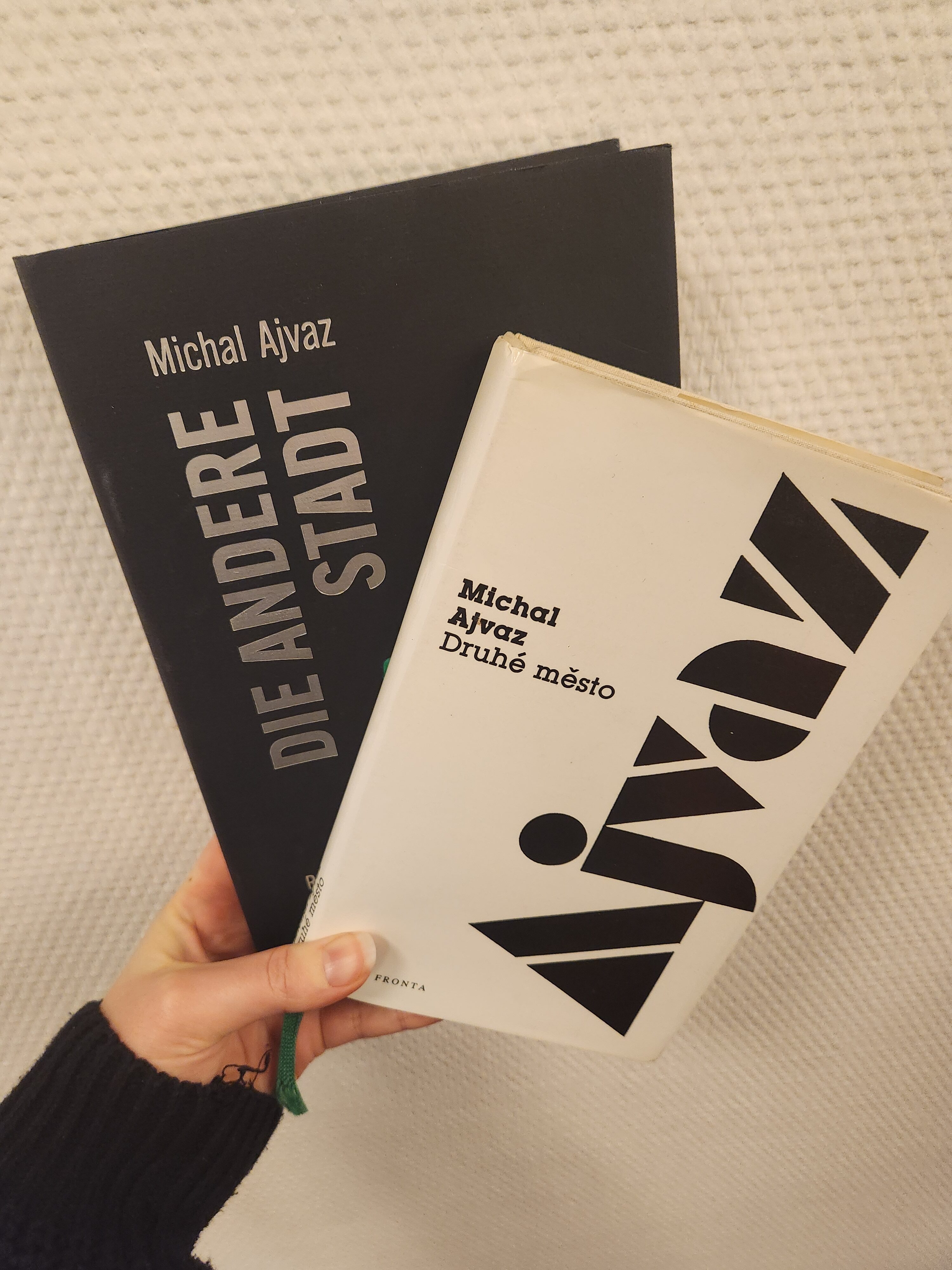
Things went differently in the case of Michal Ajvaz, however, who published, after his enormous, over seven-hundred-page novel Cities (Města) in 2019, a more than four-hundred-page novel called Passages (Pasáže) in 2024. Similarly to Jiří Kratochvil, Ajvaz has also kept to the tried-and-tested literary style and narrative techniques of his previous works. Several pervading storylines interweave throughout the novel, dealing with questions of art and creativity, attacking them from a variety of angles and through various means, but also touching upon things like artificial intelligence and the new perspectives that it can bring to the creative process. This book, which might be referred to as a truly postmodernist work, elicited a widespread and generally favourable critical response overall, and though the number of truly experimental narratives in Czech literature (which are still collectively and often inaccurately described by critics as postmodern) has noticeably declined in recent years, the sun has evidently not yet set on this chapter of Czech prose.
Miroslav Hlaučo has made a notable contribution to the more playful side of postmodernism with his debut novel Whitsun (2024). This incredibly successful book, which was picked up on by various reader opinion polls shortly after its publication, and for which the author was awarded two Magnesia Litera Awards (Book of the Year and Debut of the Year), is set at the beginning of the 20th century in a fictional Czech town. The novel is based on the premise that in this remote little backwater miracles still take place, but with the onset of the 20th century the town must submit to rationality and order, with the story depicting this process through grotesque and even carnivalesque narration.
Another author who has drawn on postmodern narrative techniques is Petr Stančík, who has in no way departed from his thriving, playful, hyperbolic style of writing, for which evocative description and exaggeration are more important than the logical development of the story, in any of his recent works. The author maintained this approach in his novel Pravomil (2021) about the life of Czech war hero Pravomil Raichl, presenting the life story of a real historical individual, albeit with a heavy dose of poetic license and stylisation. In a certain sense it can be said that, in his most recent novel Initiation by Darkness (Zasvěcení temnotou, 2024), the author seems to have already completely abandoned narrative logic: characters experience extreme trauma practically without any reaction, and the treasure hunt upon which the novel is founded serves entirely as a mechanism to get the sprawling, grotesque narrative underway.
Well-established names, well-established methods
Petr Stančík is a good example of a writer with a clearly defined authorial signature, a writing style from which they rarely diverge. Jiří Hájíček is another, an author whose novels are most often set in Southern Bohemia, leading to him frequently being described as a chronicler of Czech village life. After Hájíček concluded his “loose trilogy of moral disquiet” in 2016 with his novel The Rainstick (Dešťová hůl), he published his novel Sailing Ships on Labels (Plachetnice na vinětách, 2020). In contrast to his previous novels, which featured protagonists delving into the past in search of injustices committed by communist regime, this novel about a female university professor orients itself more towards the present. The same goes for his novel Dragon on a Dirt Road (Drak na polní cestě, 2024), in which Hájíček tells the tale of a small rural homestead being taken over by a powerful corporate group. Bianca Bellová is another author with a recognisable signature, though her books (usually novellas) take place across a variety of settings. In her short story collection These Fragments (Tyhle fragmenty, 2021) the author showcased her ability to alternate between different narrative perspectives and flesh out a variety of diverse characters and situations in a relatively small number of pages. Then, in her novella The Island (Ostrov, 2022), set during the early modern period of the Persian Empire, the author dealt uniquely with the theme of narratorial joy and freedom as shown through literature, as well as the power of storytelling. Ondřej Štindl followed up on his previous literary publications with his books Until You Get Dizzy (Až se ti zatočí hlava, 2020) and So Much Ash (Tolik popela, 2022): both novels stood on relatively simple foundations (specifically an ideological, or rather generational, conflict between two characters), but Štindl managed to redirect them towards surprising narrative reversals and conclusions. In the course of each story, characters that were initially at each other’s throats gradually find their way to an understanding of each other, though without the narrative losing its internal logic or plausibility, with both books additionally standing out due to their unmistakable narrative pace and linguistic rhythm.
And last but not least… short stories
In Czech literature, novels have long been more successful than short stories. This applies to both success amongst literary critics, who mostly pay attention to longer prose works, and amongst the juries of literary prizes, who usually place more value on lengthier tomes, as well as to the interest of the public, thanks to whom it is novels that are more commercially successful.
Nevertheless, despite novels being considerably more popular than short prose, short story collections continue to be published and some have even received substantial acclaim from critics: Viktor Špaček’s An Impeccable Life in Humility (2022), which focuses mostly on the lives of male outcasts, received the Magnesia Litera in 2023, as did J. A. Pitínský’s Household Goods two years later, a collection of short, sharply written, and narratively playful prose. The aforementioned Suffering and Other Genres by Dora Kaprálová also received a positive reception, as did Ondřej Škrabal’s Journey to the Billboard (Cesta k billboardu, 2022), a collection of witty short stories set in the global context that frequently makes notable use of real political or social causes. Jan Němec’s collection Lilliputin (2022) presented an interesting contribution to the medium of short prose: in a series of thematically linked stories the author comments on the war in Ukraine, both from the perspective of those following the war from afar and of those who are right at its epicentre. It should also be added that the book was published just months after war broke out and, as such, serves as a sort of experiment by the author into how events that have happened so close to the time of writing should be written about. The short story collection A Thousand Plateaus (Tisíce plošin, 2020) by Sylva Fischerová also received a good deal of attention. The book’s title (a reference to the well-known philosophical text by Gilles Deleuze and Félix Guattari), as well as the author’s academic background in ancient philosophy and literature, might indicate a text exceptionally demanding of the reader. But even if Fischerová experiments formally in her book, her stories are still based primarily in clear, grounded dialogues. Matěj Hořava’s Stopover (Mezipřistání, 2020) is a special case among short story collections. The short chapters of this fragmented book can be read as individual stories (in fact, some were even published as such) which come together to create a sort of panorama of the (autobiographical) narrator’s experiences during his time living in Georgia, where he works as a teacher, interwoven with echoes of his own past.
The present overview of Czech prose from 2020 to 2024 is selective and, by that metric, not comprehensive. Its main ambition is to review the most prominent publications – those books which were most discussed, and which resonated most within the Czech literary scene, or else acted as inspiration for other authors. If another person had put together this overview, the selection of books and their characterisations would undoubtedly differ. I maintain, however, that a different selection of books would still reflect a certain trajectory that can be traced across the period in question. Although this selection is (as was said at the very beginning of this text) particular, it is still able to indicate where it is that Czech prose writing is heading. In regard to autofiction, the strengthening trend among Czech authors of writing about relevant socio-political issues (which in fact concerns far more than just ‘autofiction’ titles) should be stressed. The aforementioned quartet of polemical books have all clearly aimed to address their readers directly about how our present socio-political situation should be viewed, which could also be said of those books working with dystopian themes, in fact. This distinct focus on the content of literary works has gone hand in hand with a clear departure from formalist games and narrative experimentation, which in the past two decades or so have been mostly exhausted and in the majority of cases are now simply being replicated. At the same time, the popularity of prose writers depicting crucial historical periods and turning points from the 20th century, which was strongest in the last decade or decade and a half, is to a certain extent waning. Other trends, however, persist: an interest in everyday banalities could be mentioned as the most obvious example. This all serves to affirm the thesis laid out in the introduction – that is, that Czech prose writing during the years in question has been not only excellent and ambitious, but also vibrant and manifold.
Author: Kryštof Eder
Translated from the Czech by Samuel Dix
Kryštof Eder (b. 1994) studied Czech studies and comparative literature at the Faculty of Arts, Charles University in Prague. He works as an editor at a publishing house and, as a literary reviewer, focuses primarily on contemporary Czech prose.
The article was peer-reviewed by Prof. PhDr. Petr Bílek, CSc. It was originally published on the website of the Czech Literary Centre.