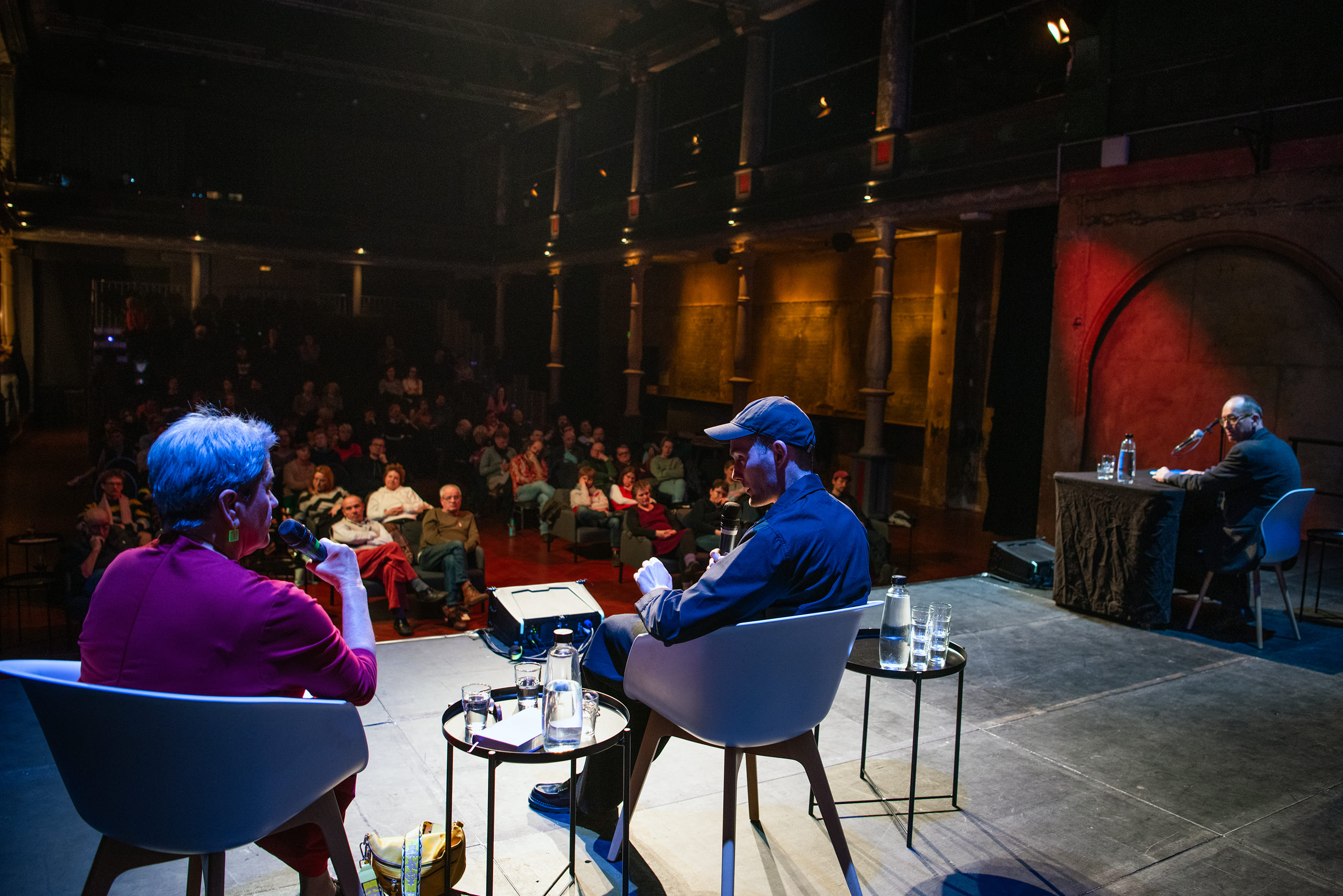
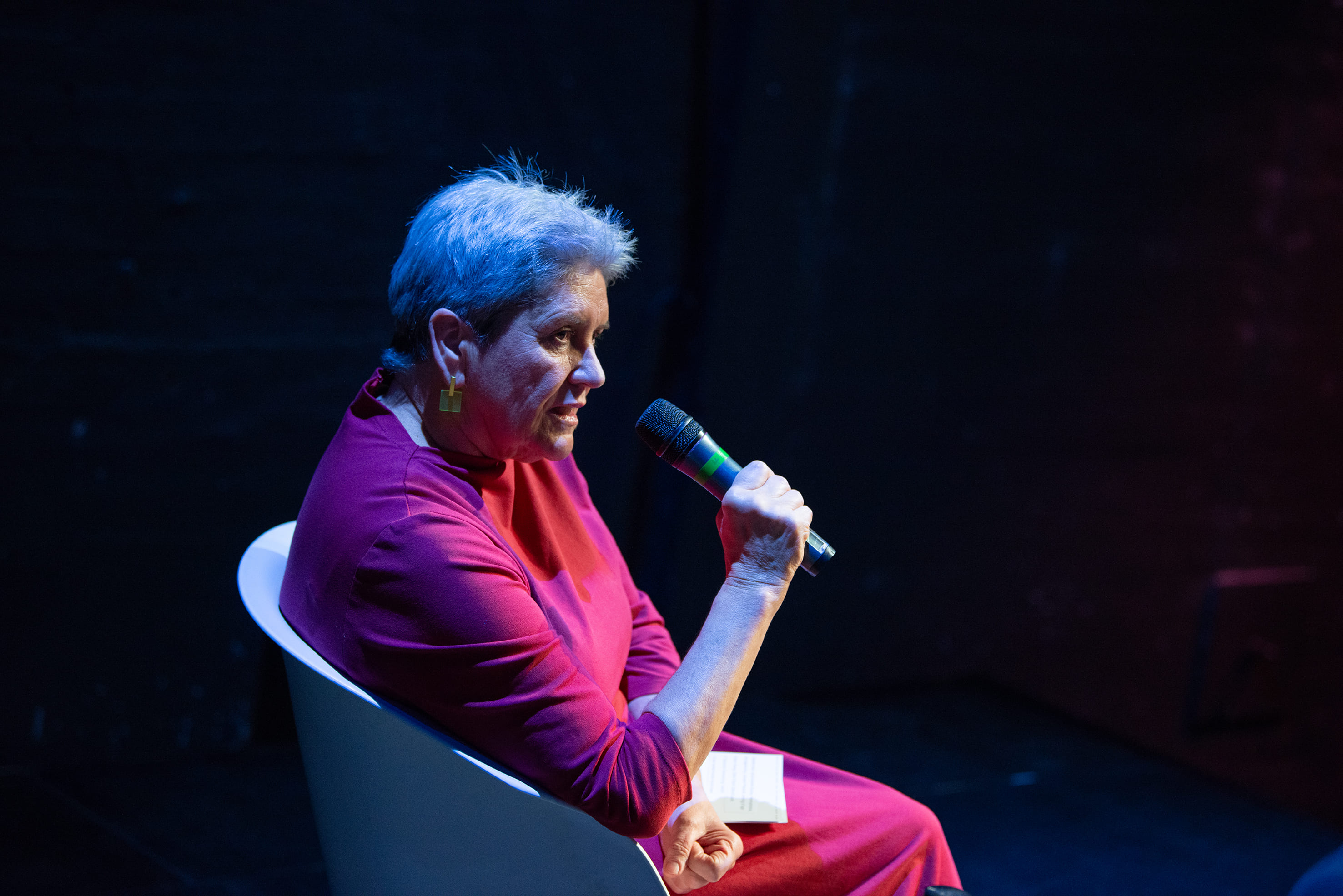
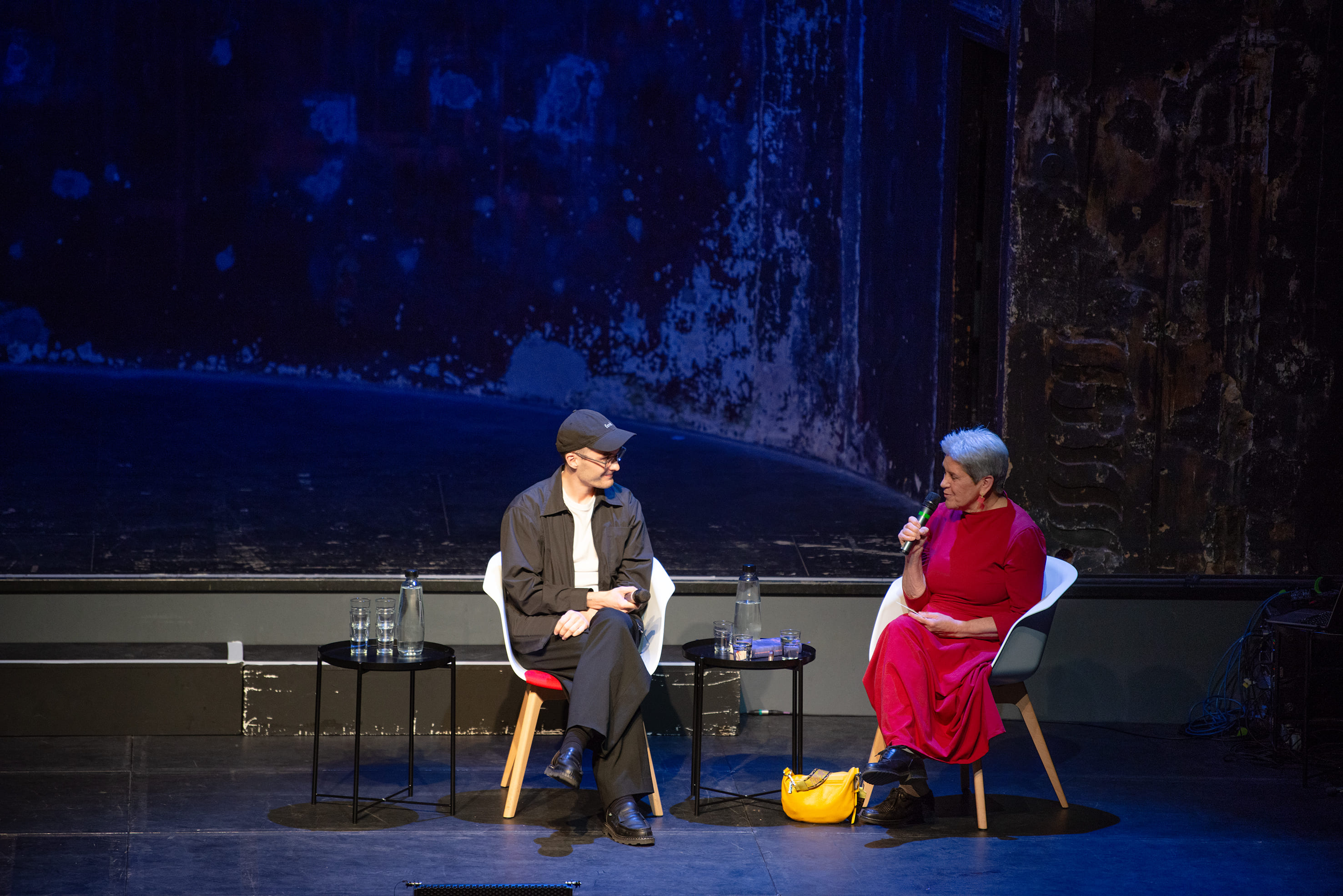
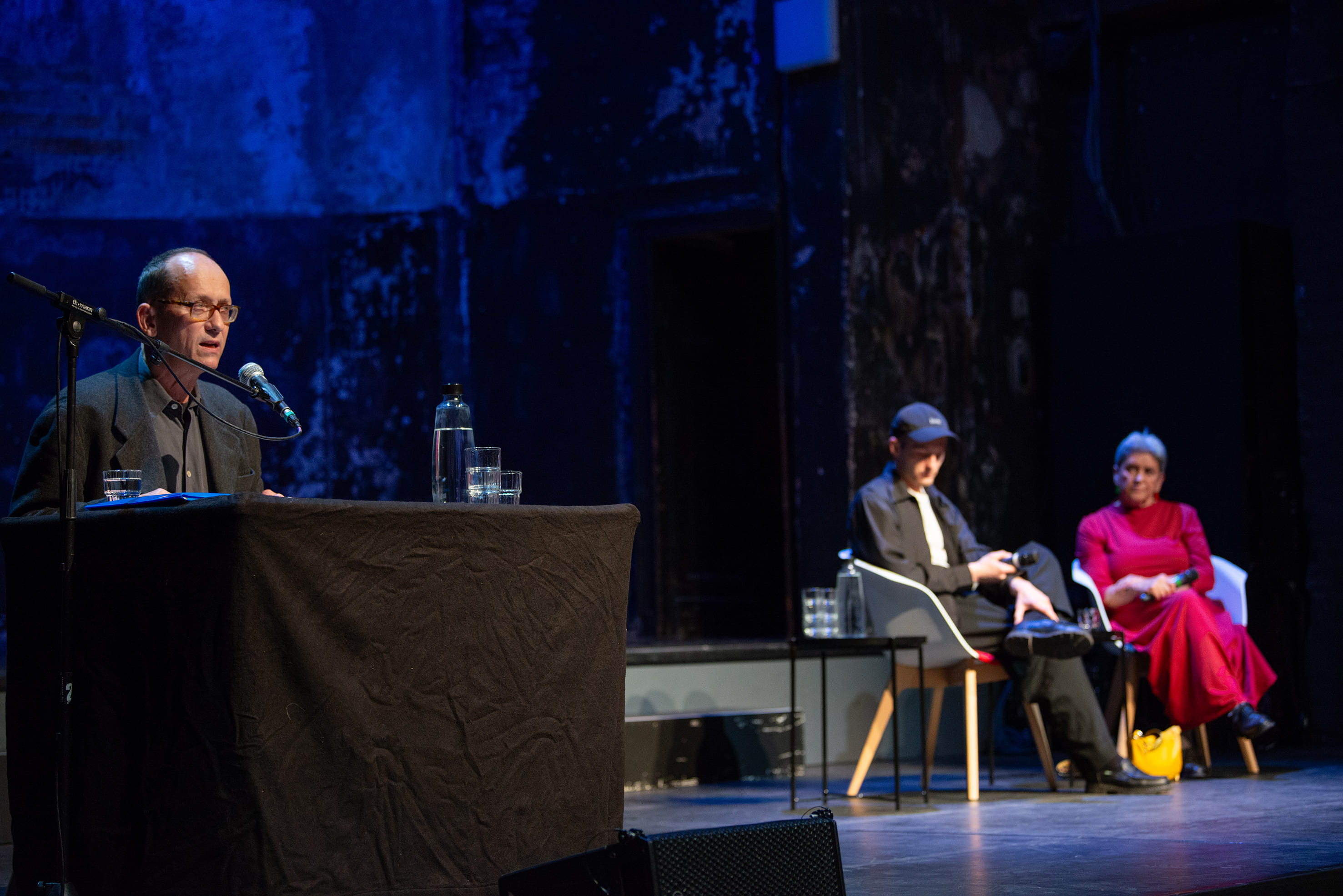
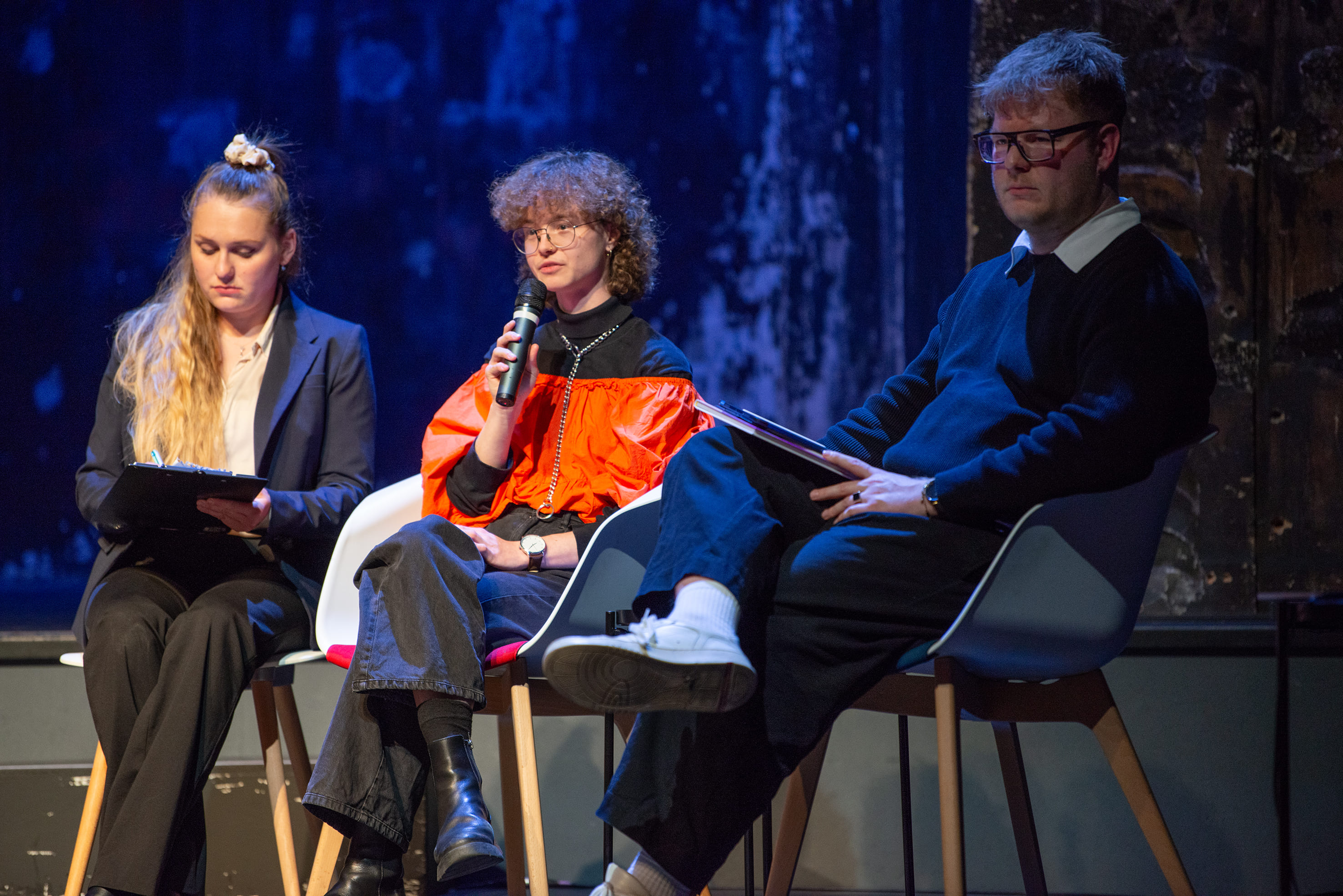
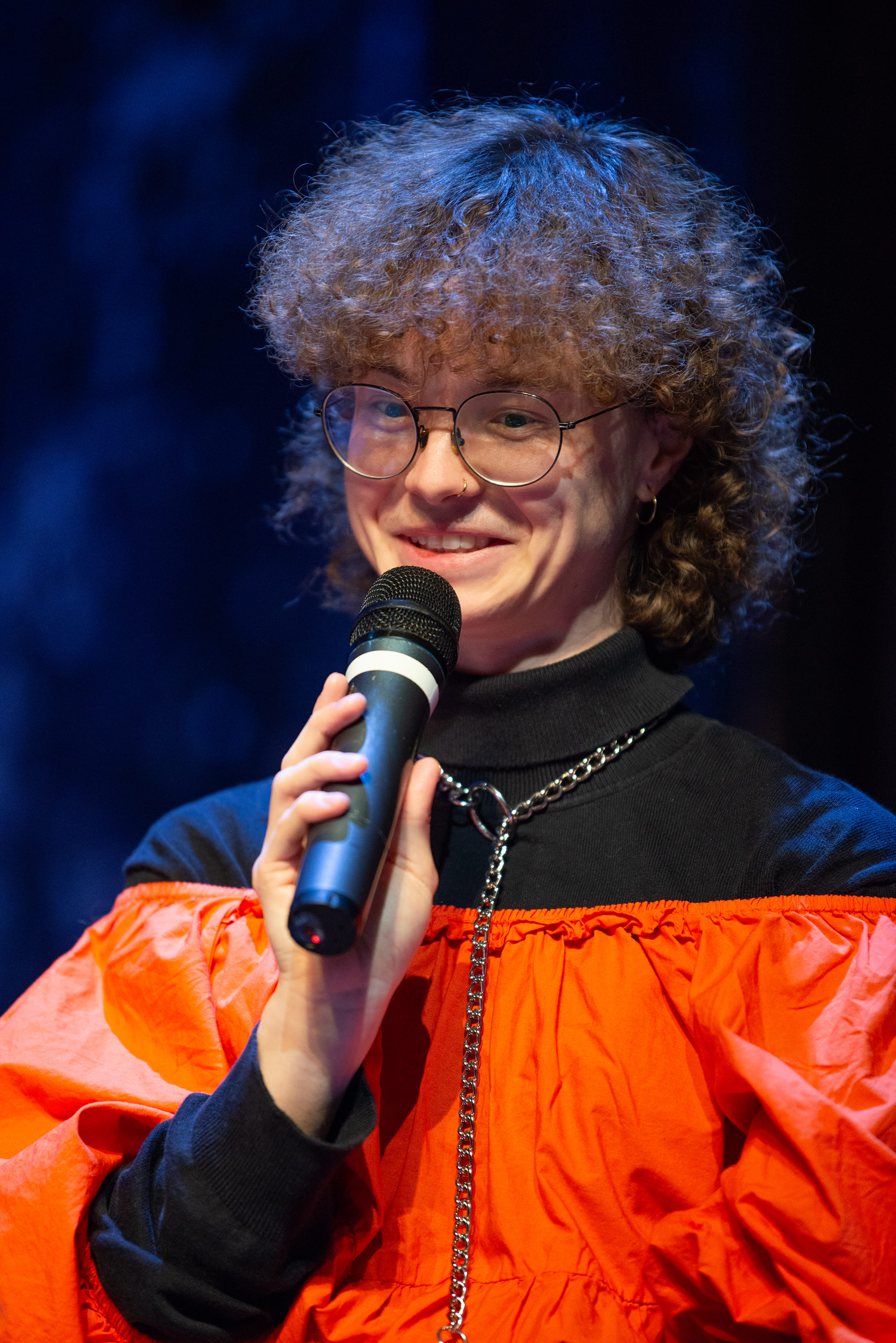
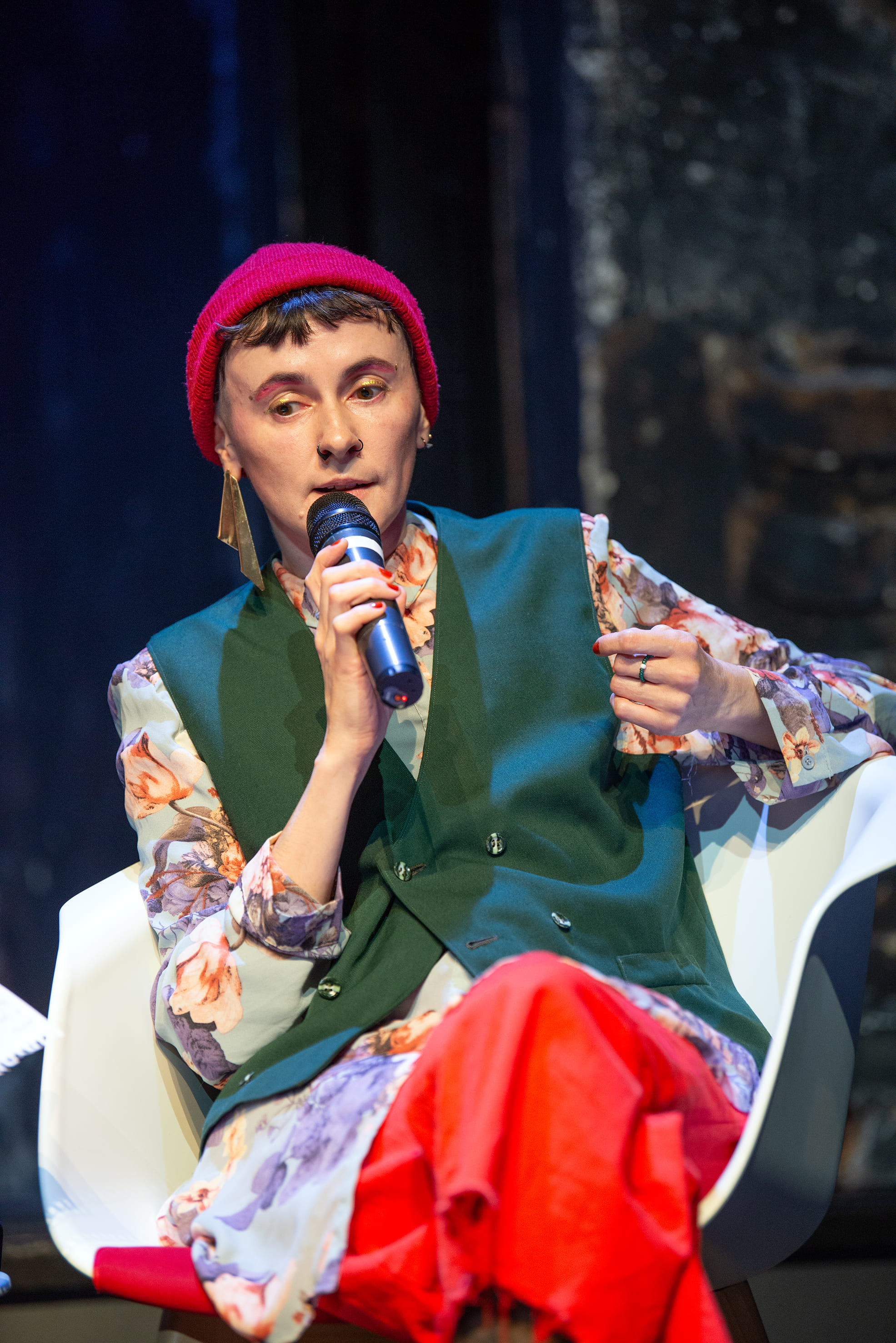
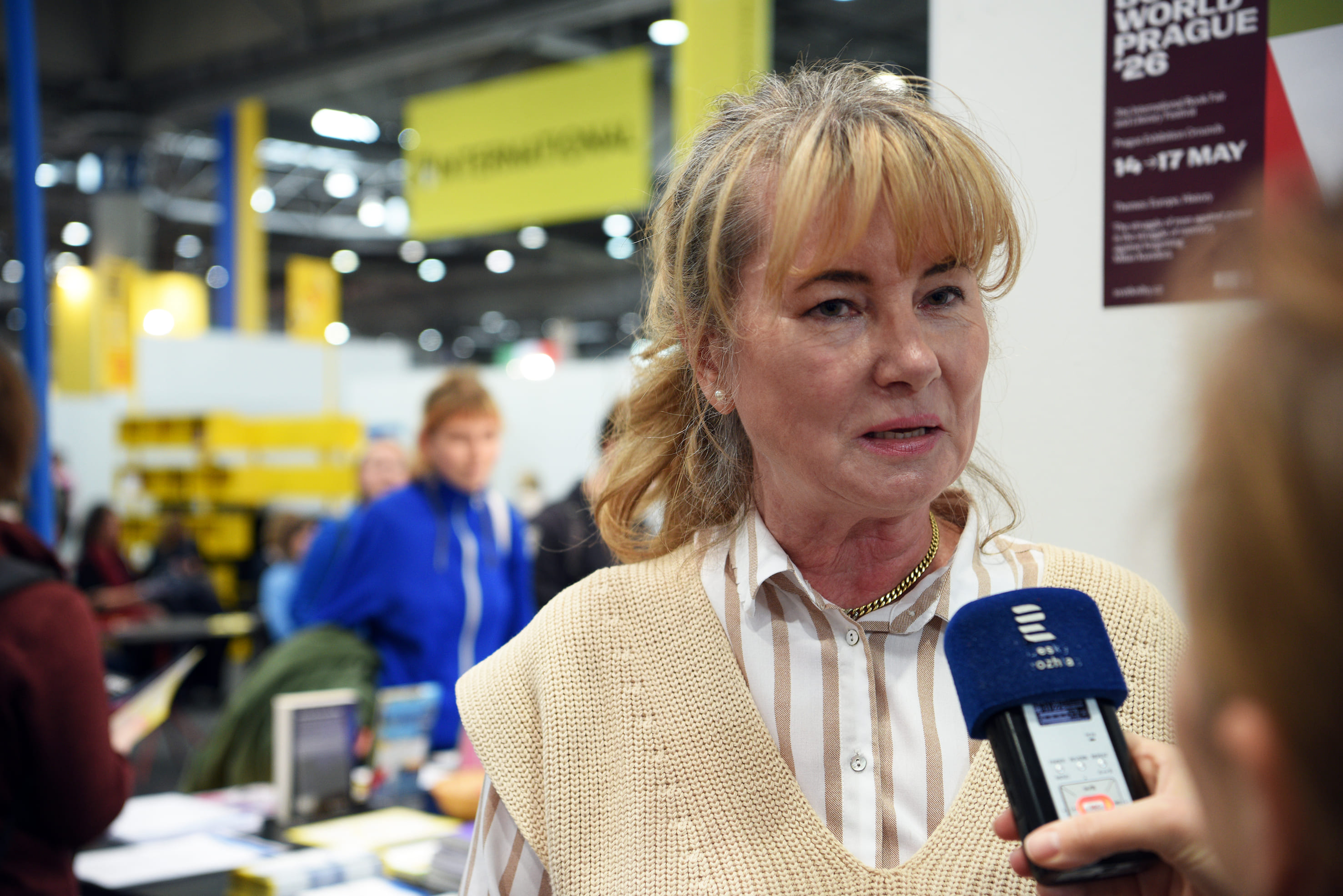
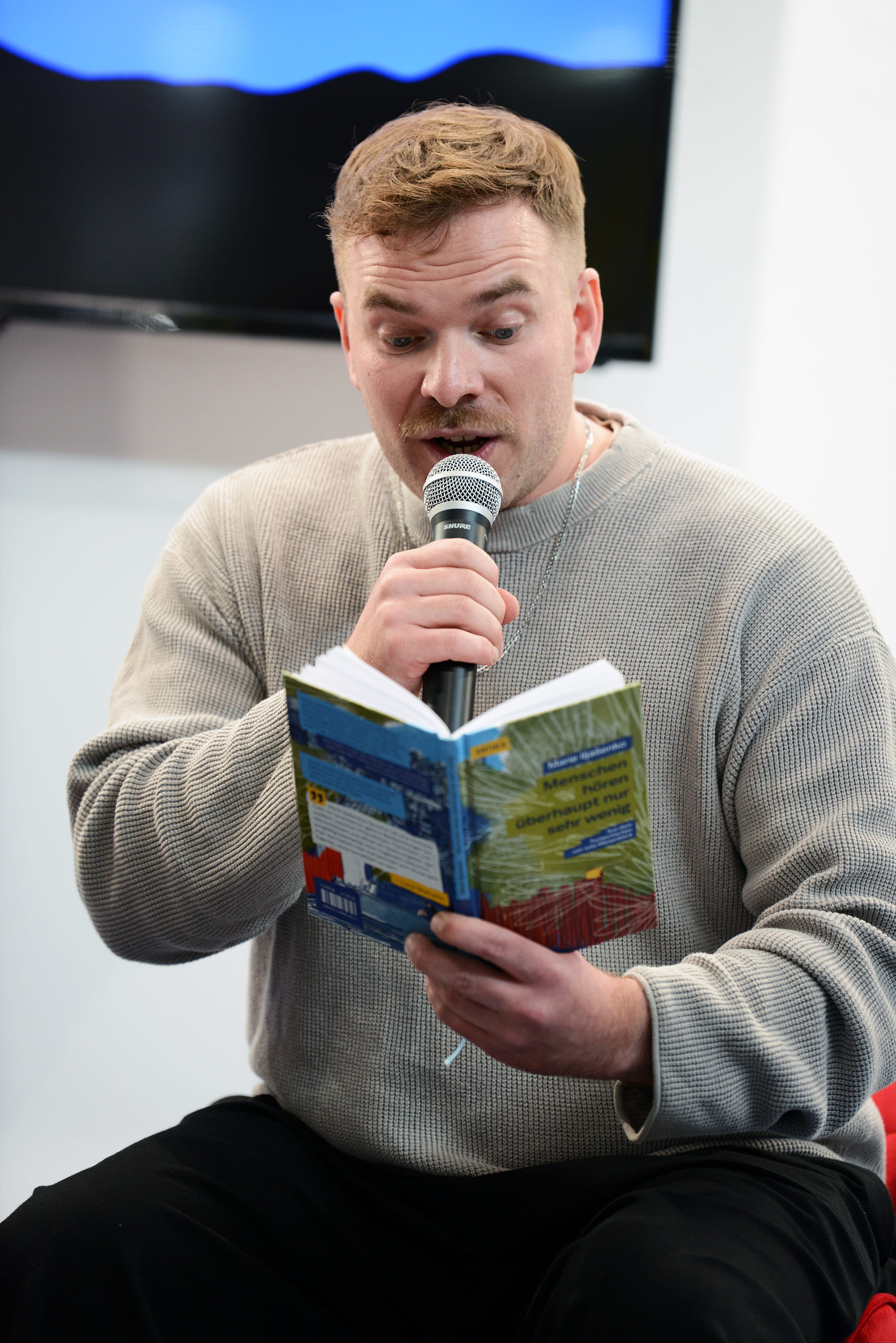
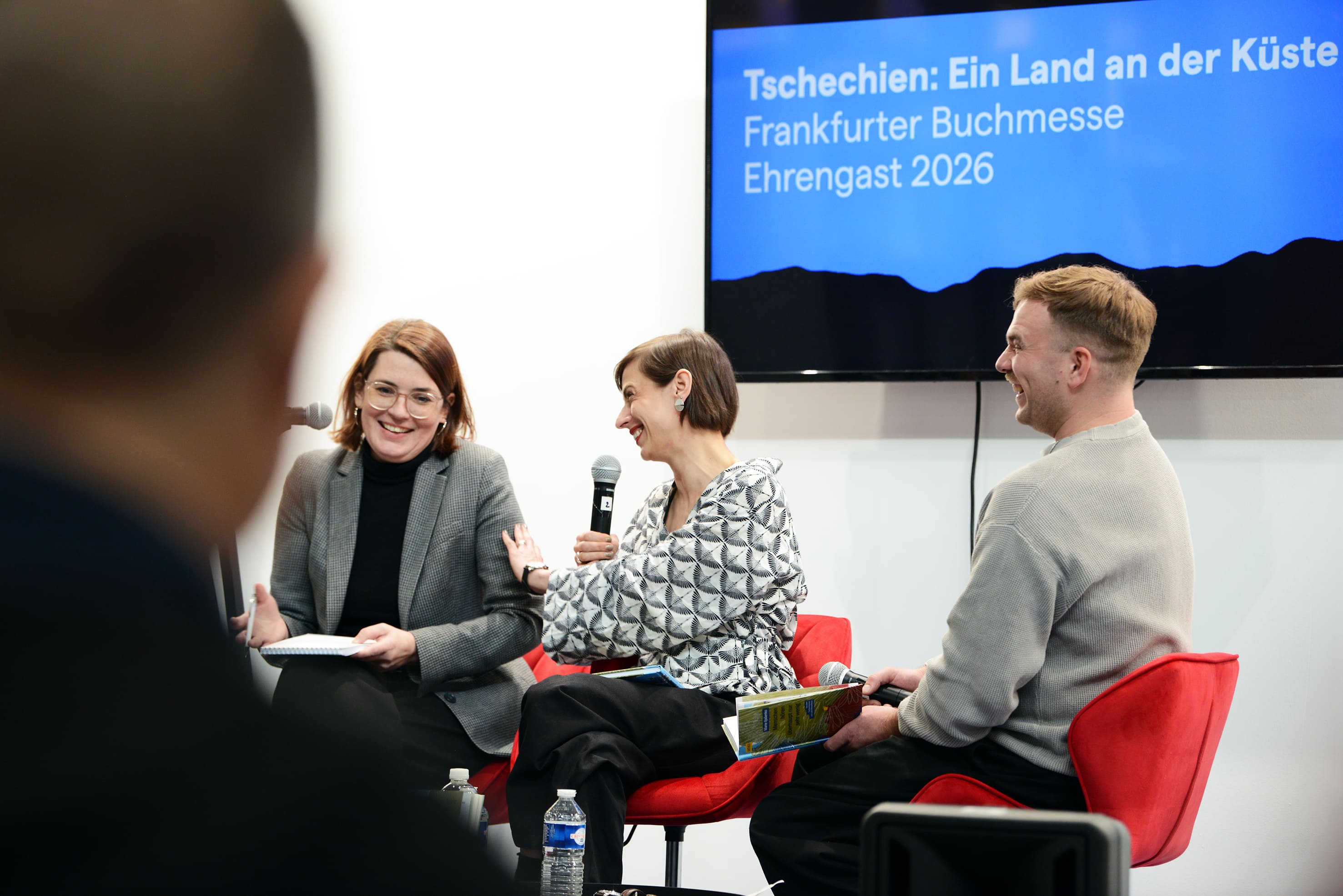
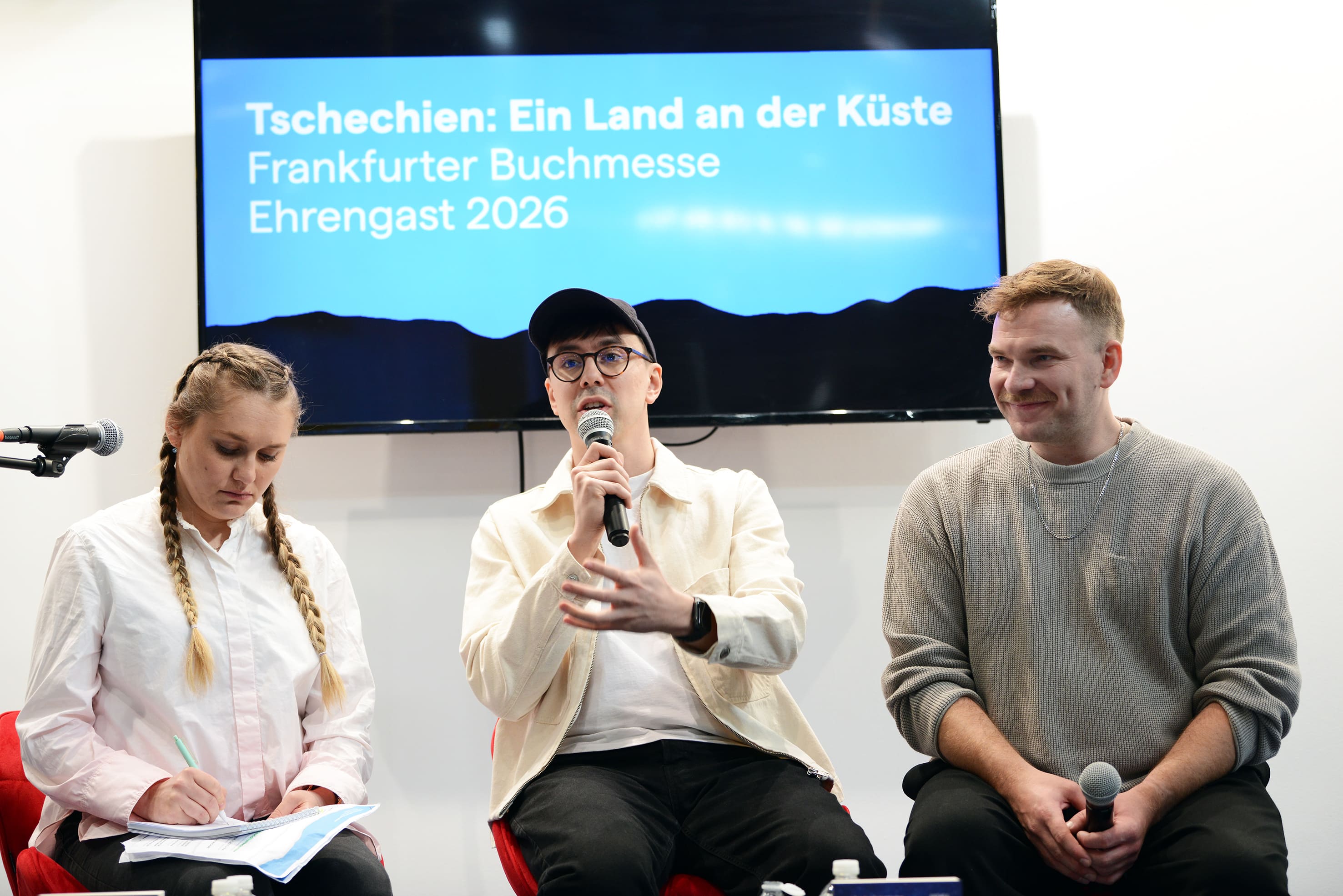
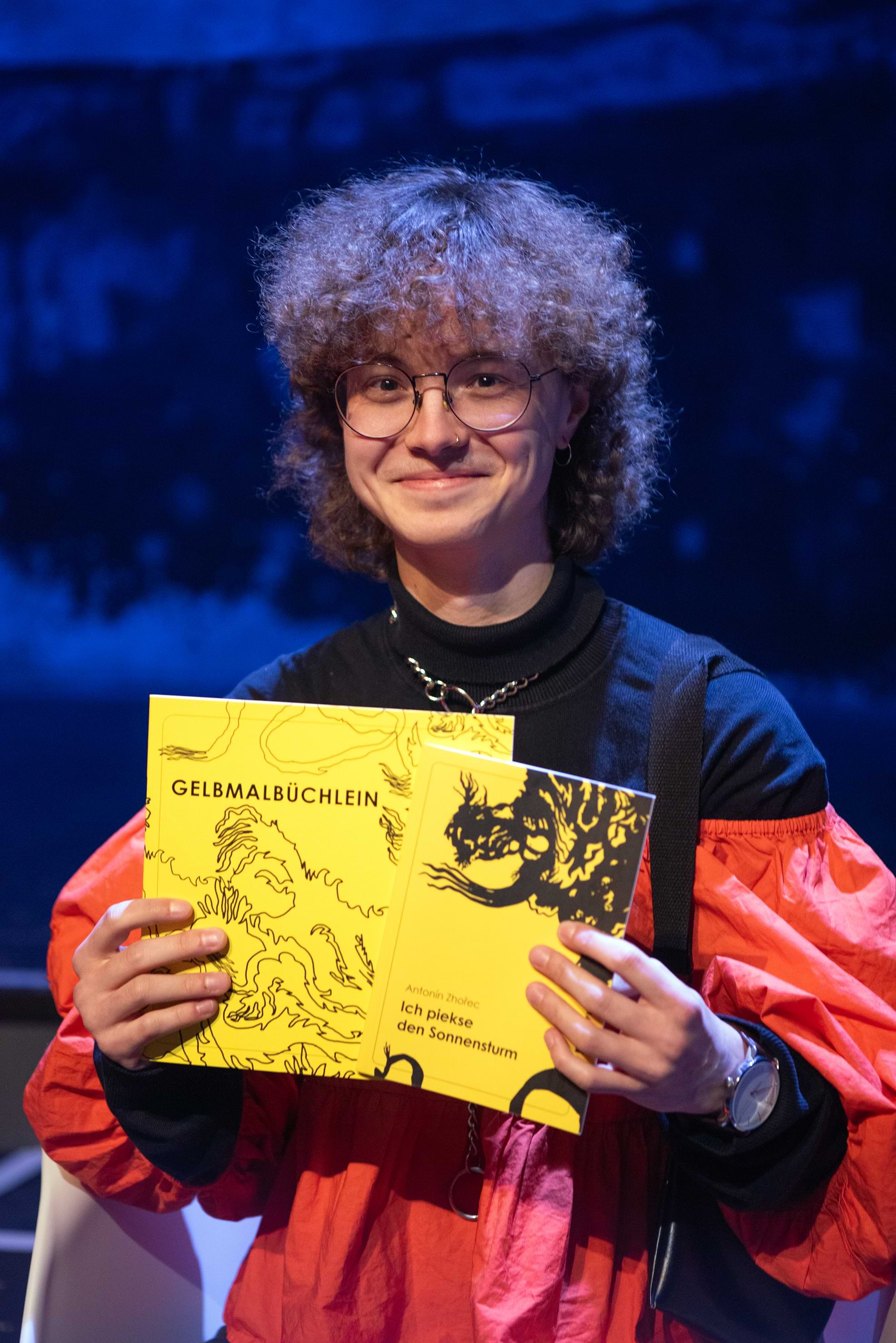
What happens when you "tap into" a solar storm? An interview with Antonín Zhořec

Antonín, what happens when you poke at a solar storm?

The sun will wane, and people will feel sunburns beneath their skin and embers beneath their feet. A blind man will cry out: “soleil, soleil.” The mangy sunbeams fall to the ground. That, I think, is how the poem in which the collection’s title verse appears would answer. A solar storm is a wild revelry, and nothing can be said with certainty; on every page of the collection, the revelry unfolds differently and not always pleasantly.

What does poetry mean to you?

Lately, for me, it mainly means the fear that I won’t be able to give it all the care I think it deserves and that I owe it. Fear stirs restlessness within me, and then I no longer have enough space inside myself to capture it; I’m caught in a vicious circle. But I believe I’ll find a way out of the circle, that I’ll discover a secret door or kick through a hatch in its floor. Then I’ll be able to capture and write it down anew. I wanted to write that I would catch poetry like a butterfly in a net—but it doesn’t work exactly like that; poetry needs to flutter freely, and when it wants to, it will fly to me and stay long enough for me to write it down on paper.

I think “surrealism” is an apt description of your poems. Is this a style you’ve found yourself in? Where do you draw your inspiration from?

The poems come to me on their own, so perhaps a more fitting question is what prompts them to come and why it’s precisely these poems that come. I often write down the most essential verses just before falling asleep or just before waking up; in that sense, the writing process is undoubtedly close to surrealism. The most crucial parts come from the fringes of dreams. If I were to stick to the idea of inspiration, my main inspiration is distancing myself from the waking state.

I feel that rather than inspiration, what is essential for me when writing is calm or restfulness. The poems draw their inspiration elsewhere; they settle within me almost fully formed. Perhaps they then grow further in their wording, taking on a more precise shape. Otherwise, however, I have the impression that they do not come directly from me and that I do not provide them with nourishment from the outside (inspiration). I am merely their scribe. When a poem passes by me and I am alert enough to notice it, I record it.

Do you have any literary role models? What do you like to read?

I read texts that aren’t afraid to break free, that are slightly chaotic, dense, and spontaneous. Texts that strive to avoid the mundane, dig beneath the surface, and take a subversive approach to “the world around us”—whatever that may mean. I like it when writing gets stuck in your throat and almost chokes you.

I don’t have a literary role model, but I’ll recommend a few books that have moved me in recent years (the ones that stuck in my throat and nearly choked me—I write this with warmth and respect for them). My most recent choking sensation was caused by The Suicide Museum of a Trans Girl by Hannah Baer, a cruel, crystalline, and both pathetically and unpathetically heart-wrenching read. I also gladly let myself be choked by The Book of Blood by Kim De l’Horizon, a work that provokes, caresses with language, shatters the world and reassembles it, wails honestly and deeply, breaks down values and builds new ones, but above all embraces you if you let it. It helps you find a tiny little spot in a world that offers no space of its own. Then there’s Carlos A. Aguilera’s Theory of the Chinese Soul, about which I don’t even know what to write—that book is an opium-induced trip, in the best sense of the word. And from Czech literature, Ladislav Klíma’s The Suffering of Prince Sternenhoch still haunts me to this day; it’s best read aloud while snuggled up with a partner in bed (that’s practically how I read the whole thing), provided you have a sufficiently willing and madness-loving partner. Finally, lest I forget, I’m savoring Radka Denemarková’s Kobold. A spirited read, linguistically exhilarating. It reads like experiencing a snake bite.
The theme of physicality appears in the collection. Is physicality an important aspect of the collection for you, or is it just one theme among many? And when you write about the body and physical experience, is there something liberating about it for you?

Physicality! That is absolutely essential to me in the collection, at least in hindsight. When I was writing it, I didn’t think about it, but if I were to imagine the same collection now, with physicality (and all its forms) removed, it seems to me that what would remain would be a short, terse leaflet with a few tiger hairs stuck to it.

Rather than liberating, I’d say it’s inevitable when it comes to writing about physicality. Or through physicality. Or because of physicality. Mainly, I suppose, through physicality—I experience writing very physically; I often feel it settle into my body; it happens that I can’t fall asleep because I feel a poem inside me. I have no choice; in such moments I must write and bring the text to a reasonably finished form so that it, now more on paper than in my body, allows me to rest. All my poems come from the outside and through the body onto the paper, so the body takes root in them (just as poems take root in the body). It finds its way into some more, into others less, but I think that in the end, it’s in every poem.

As I was browsing through your collection, I was struck by how often the tiger motif appears in it. I immediately thought of Tracy’s Tiger (by William Saroyan), in which the tiger serves more as a symbolic companion to the main character. What is your tiger like? What does it represent in your collection?

The tiger is a massive, teeming, multi-toed, long-clawed nightmare (but not only that!). The tiger represents a profound experience of various kinds. I can only say this with significant hindsight since writing the collection; for a long time, I was unable to answer questions about the tiger, even though they’re the first to come up when people ask me about the collection. For a while, I even asked interviewers not to ask me about the symbolism or meaning of the tiger, because I would likely cause an awkward silence or come up with a terse answer that doesn’t begin to capture everything the tiger represents. Now I can simply sum it up as a profound experience. The essence of the tiger is also the reason why it is so elusive and changeable; a profound experience is fleeting and multifaceted.

In your collection, you work with languages other than Czech; you studied Spanish at Charles University. Do you also write in other languages?

I don’t write exclusively in other languages; I feel most at home in my native tongue. In other languages, I trust translation more than my own ability. However, there are certain phrases, terms, or nuances that Czech cannot capture quite as well at first glance, or whose sound is insufficient for what I’m trying to name, and another language offers a smoother solution; in such cases, I don’t shy away from using a foreign word if it fits into the poem. But it must not have a comprehensive Czech equivalent. If it does (and I notice it), I prefer to use that one. In my first collection, I was open to all linguistic elements that could find their way into my writing; in the upcoming second collection, I have deliberately limited myself to basic Czech and supplementary Spanish. The poems in the second collection are, in a way, more tightly knit and therefore require a more tightly knit linguistic approach.

You are active in the LGBTQIA+ community. How does this experience influence your work? Can it serve as a tool in the search for your own identity?

I don’t feel a clear-cut identity within myself; I label my different aspects using identity categories only when it’s necessary for interpersonal understanding—that is, outside of myself. I don’t feel any distinct identities or identity-based experiences within myself; I often even label my different aspects however suits me at the moment, when I’m among people who can laugh it off and understand me. But I certainly write just as queerly as I am queer myself, in a non-identity-based sense. For example, I perceive the decay of bodies, the intertwining of bodies, and the transformation of bodies as a fluid element, just as I perceive the grasping of emotions through animality.

So when it comes to the search for my identity, writing is not that tool for me. As for other people, I can’t say, but I would wish that, if my poetry were to be such a tool at all, it would be more of a tool for the joyful experience of one’s own existence in its most subversive, most elemental forms.
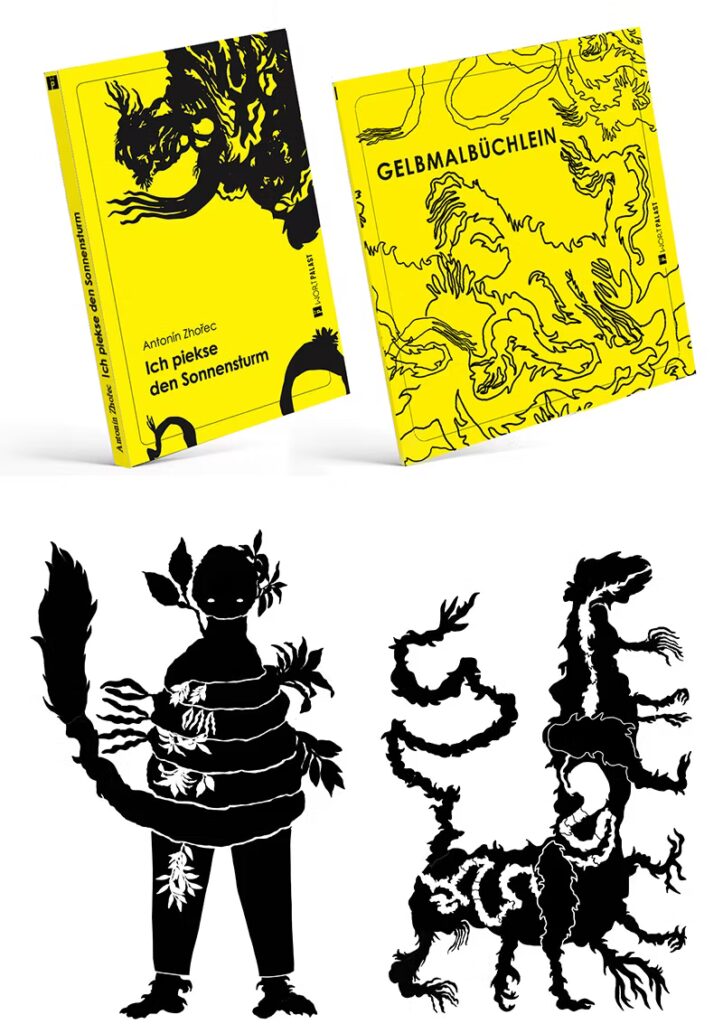
You also contributed to the visual design of the collection. Which came first—the poems or the visuals? Or was it the other way around? Or did both develop simultaneously? What set the direction?

The poems came first, and they all already had their final, edited wording when I started working on the illustrations. I wanted the illustrations not just to accompany the collection, but rather to expand it, to give the tiger new forms and dimensions. I think I succeeded in doing that only when I created the coloring pages

The coloring book is included in the collection. Is this a way to make it more interactive? To break through the passivity of the readership? Or is the reason something entirely different?

I think the collection would be incomplete without the coloring book; the coloring book is part of it, just as the collection is part of the coloring book. I don’t see either part as an accessory to the other. The collection might hold its own without the coloring book, but it wouldn’t be complete. I can’t be the only one poking fun at the solar storm if the teasing is to serve any purpose.

You recently appeared at a literary event in Berlin. What was it like? What was the audience’s reaction, and what impressions did you take away? Was this your first literary event abroad?

The reading in Berlin was enjoyable! I read alongside three young poets I know, so we had a great time together not only on stage but also off it. I appreciate the audience’s feedback; it was thoroughly kind. I remember that the audience appreciated the word “otherworldly,” which I used to describe my poems. I needed to say something specific and couldn’t find a suitable expression in my everyday vocabulary; this word was my last resort to avoid filler sounds. Actually, I usually do that—I make up words. At first, I was embarrassed when I couldn’t (and this happens to me often) name things using appropriate existing words, especially from a poet’s perspective. But now I don’t hold back when a word I’ve made up wants to come out of me. I don’t always realize in time that it’s made up, so there’s no way to hold it back. That’s my strongest experience from Berlin: the feedback that people don’t mind this makeshift naming, that they can even appreciate it. I do this kind of linguistic quirkiness in my poems as well, so I apply that feedback to them too, even though it probably wasn’t intended to go that far. And yes, the Berlin reading was my first literary event abroad; I’m truly grateful for the opportunity.

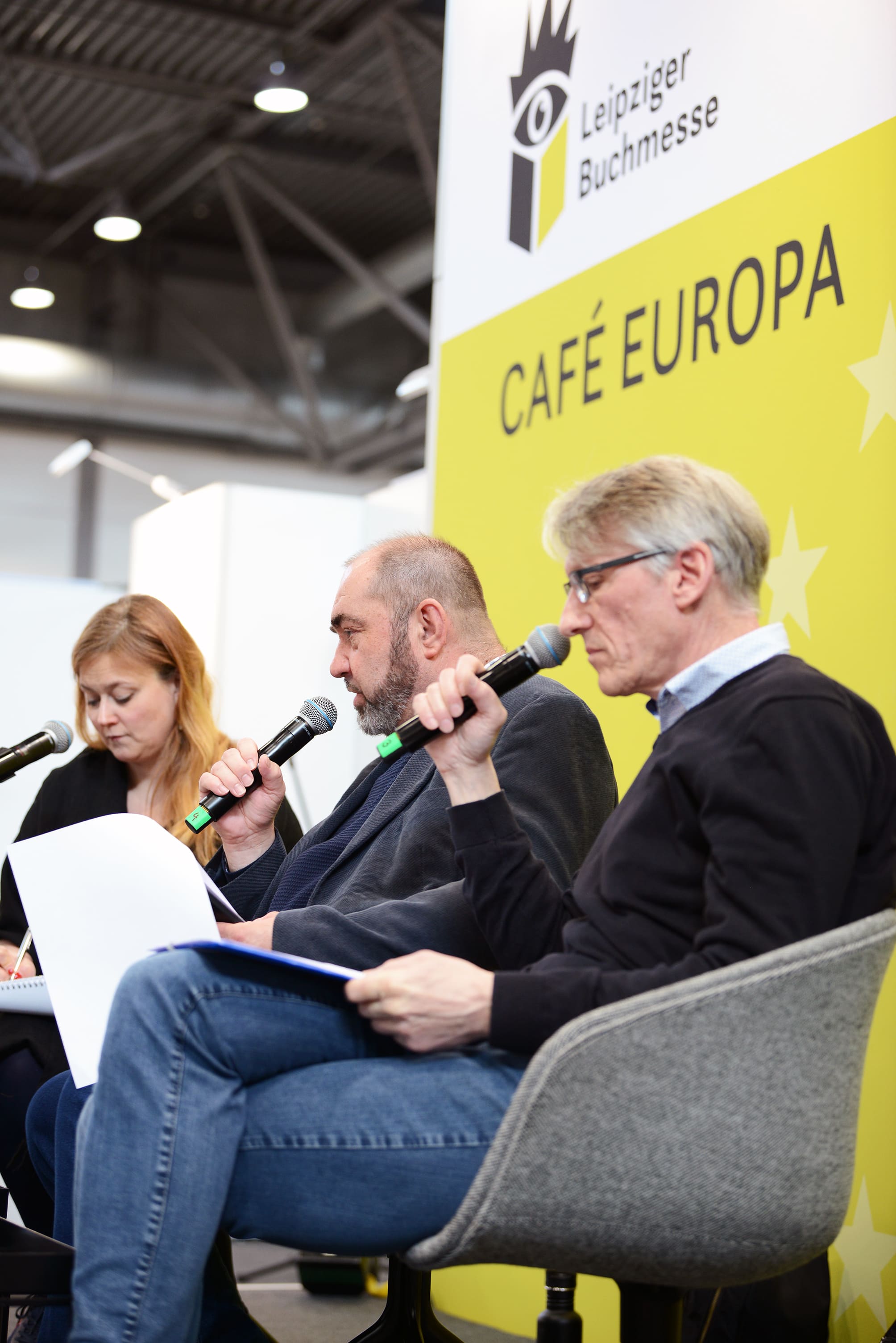
Last week you spoke at a literary event that was part of the Czech Republic’s participation in the Leipzig Book Fair—that’s a big deal. What do you think made your text stand out?

I’d guess it might have caught people’s attention because of its unruliness. It spreads out in all directions and doesn’t stray from any of the paths it sets out on, even if that path leads, for example, to a vivid image of disgust, pathos, a hard-to-grasp jumble of half-formed words, or feverish passion. At the same time, it manages to hold itself together in its disorder, because it is firmly gripped in the clutches of a tiger, fire, and the color yellow.


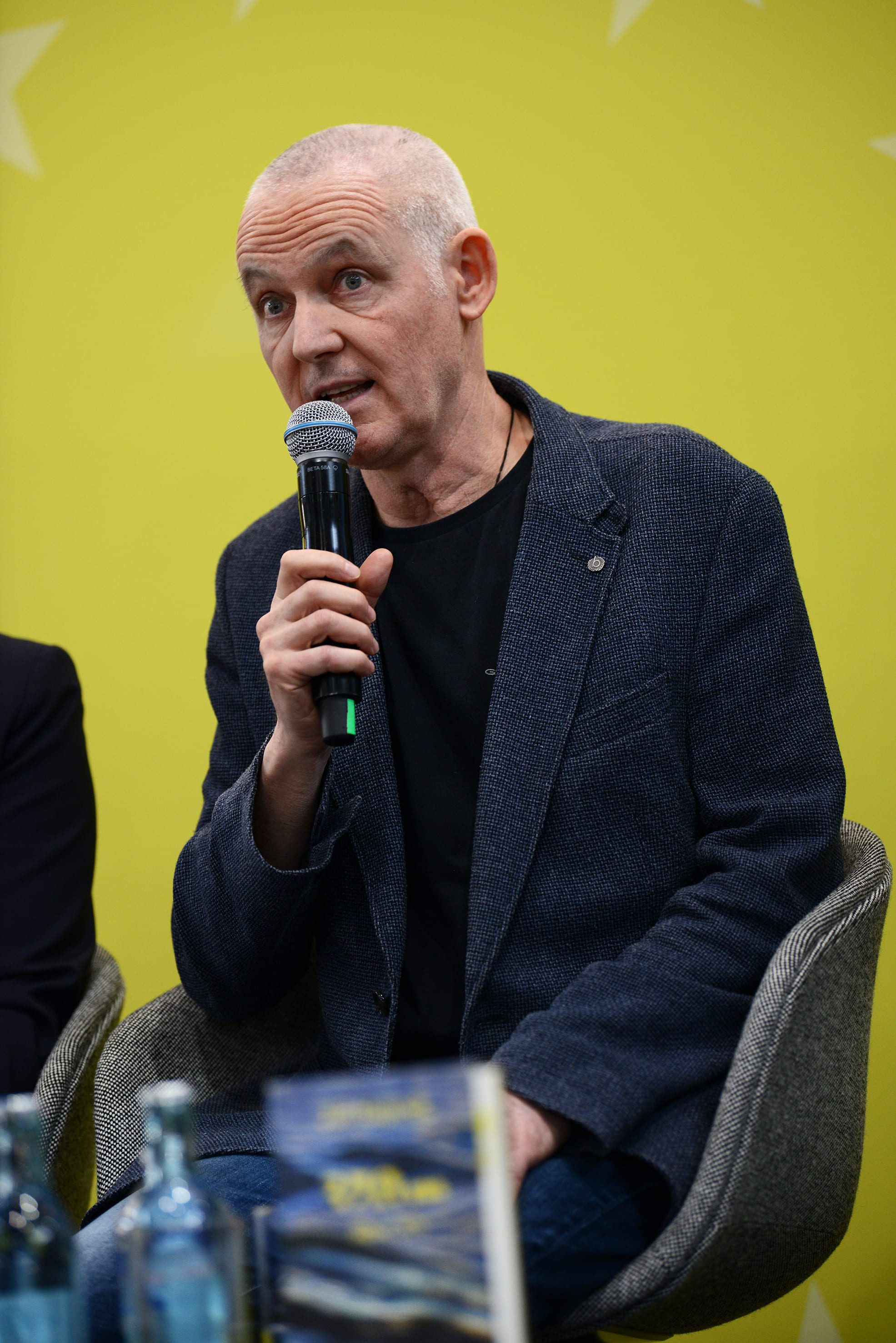
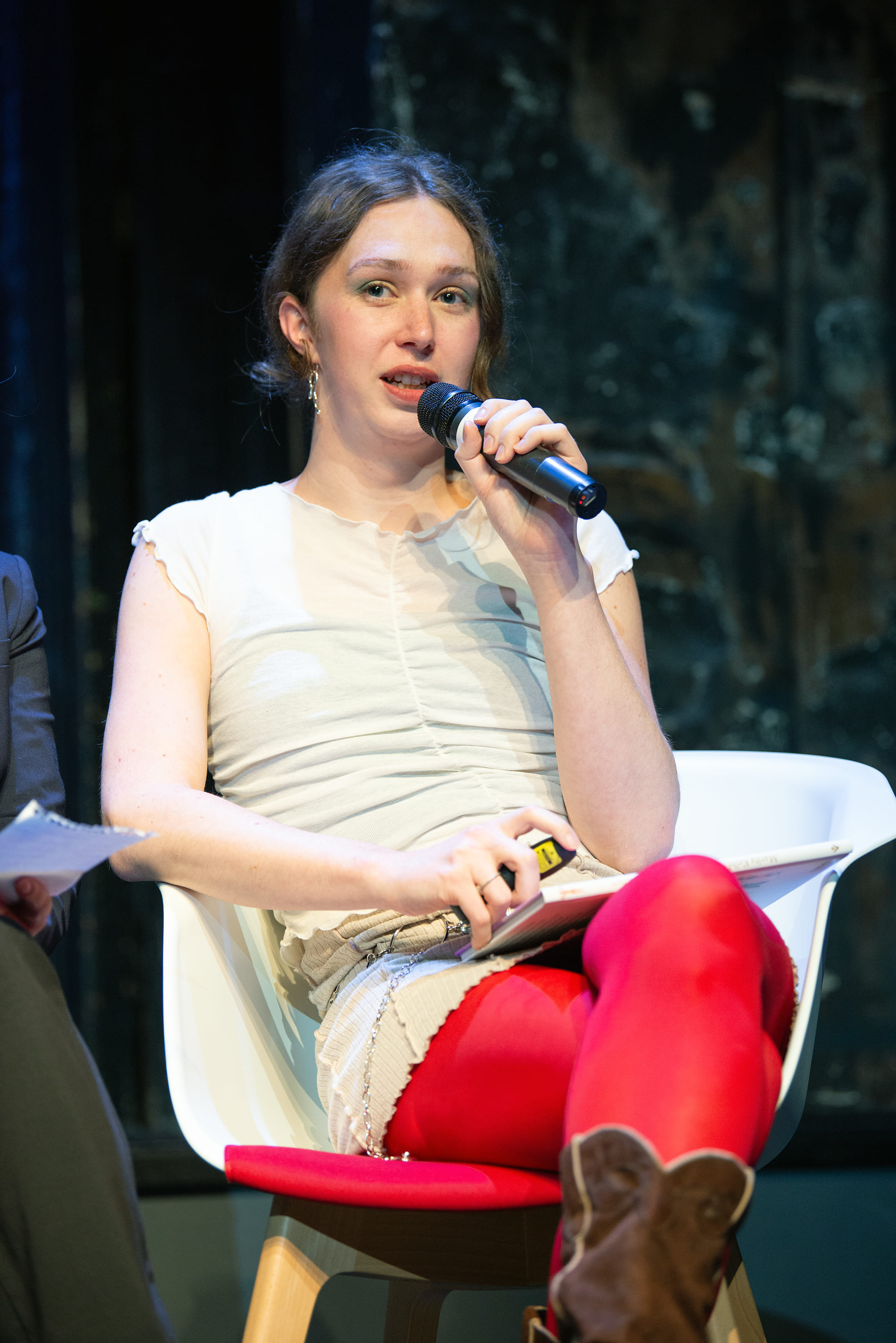
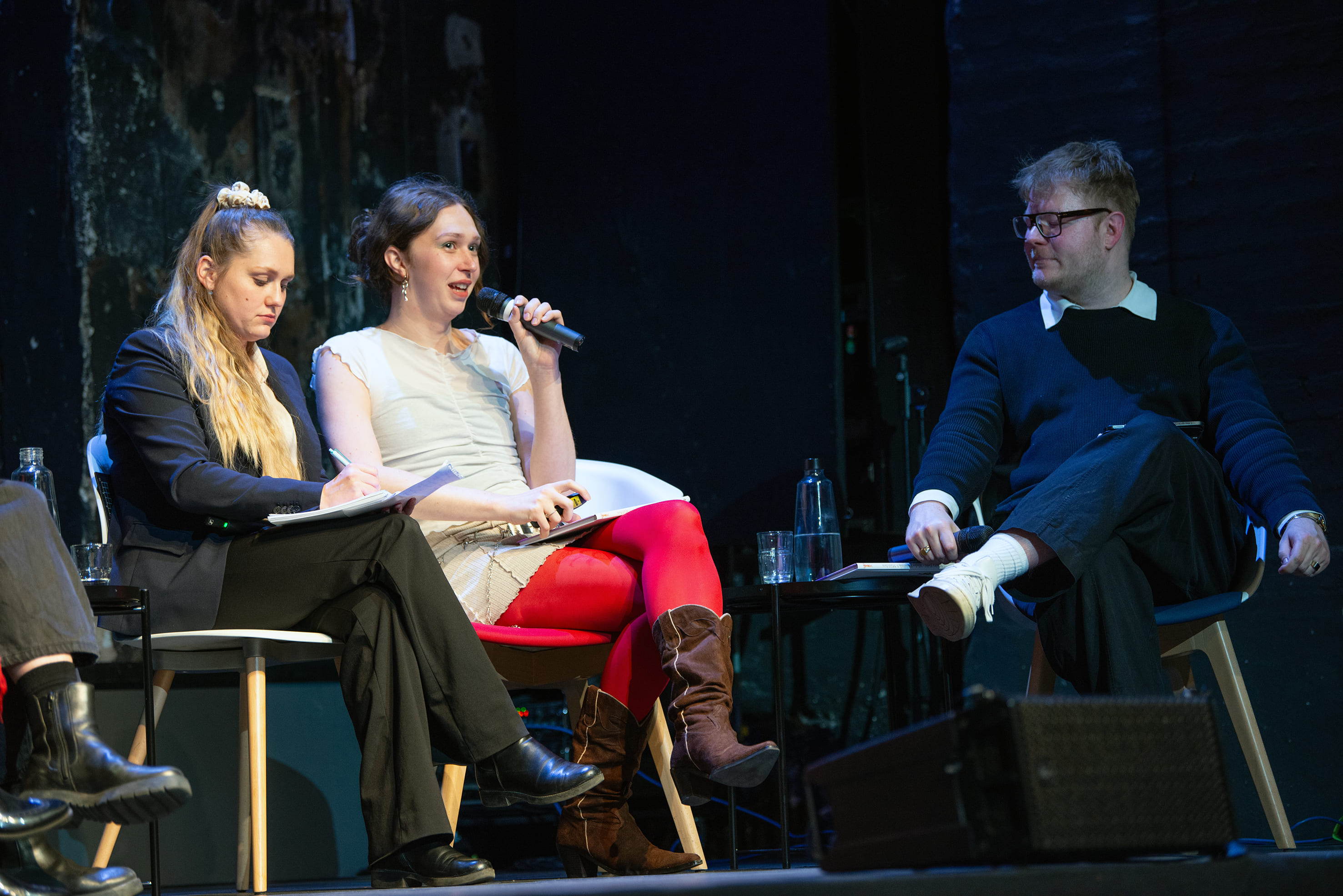
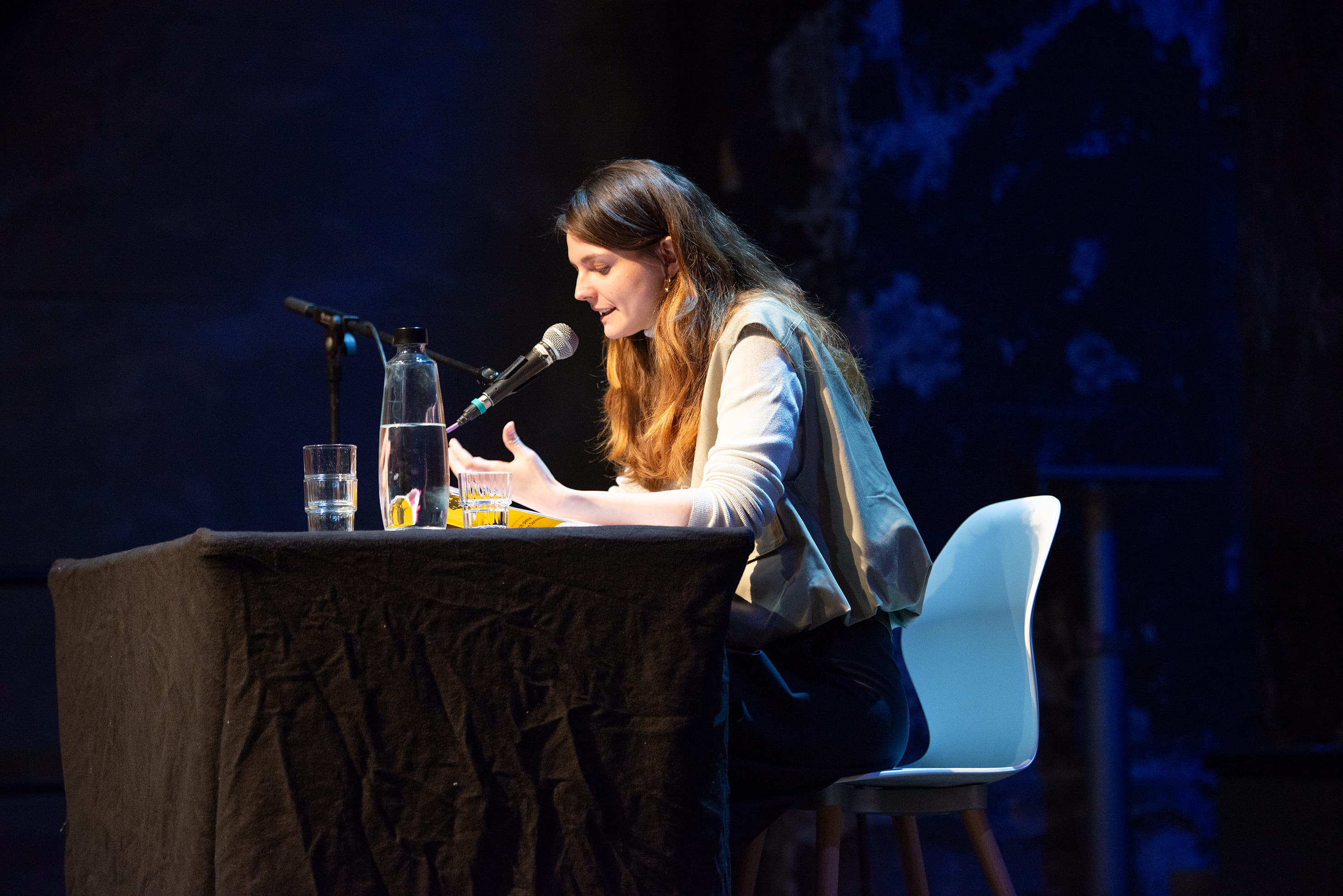
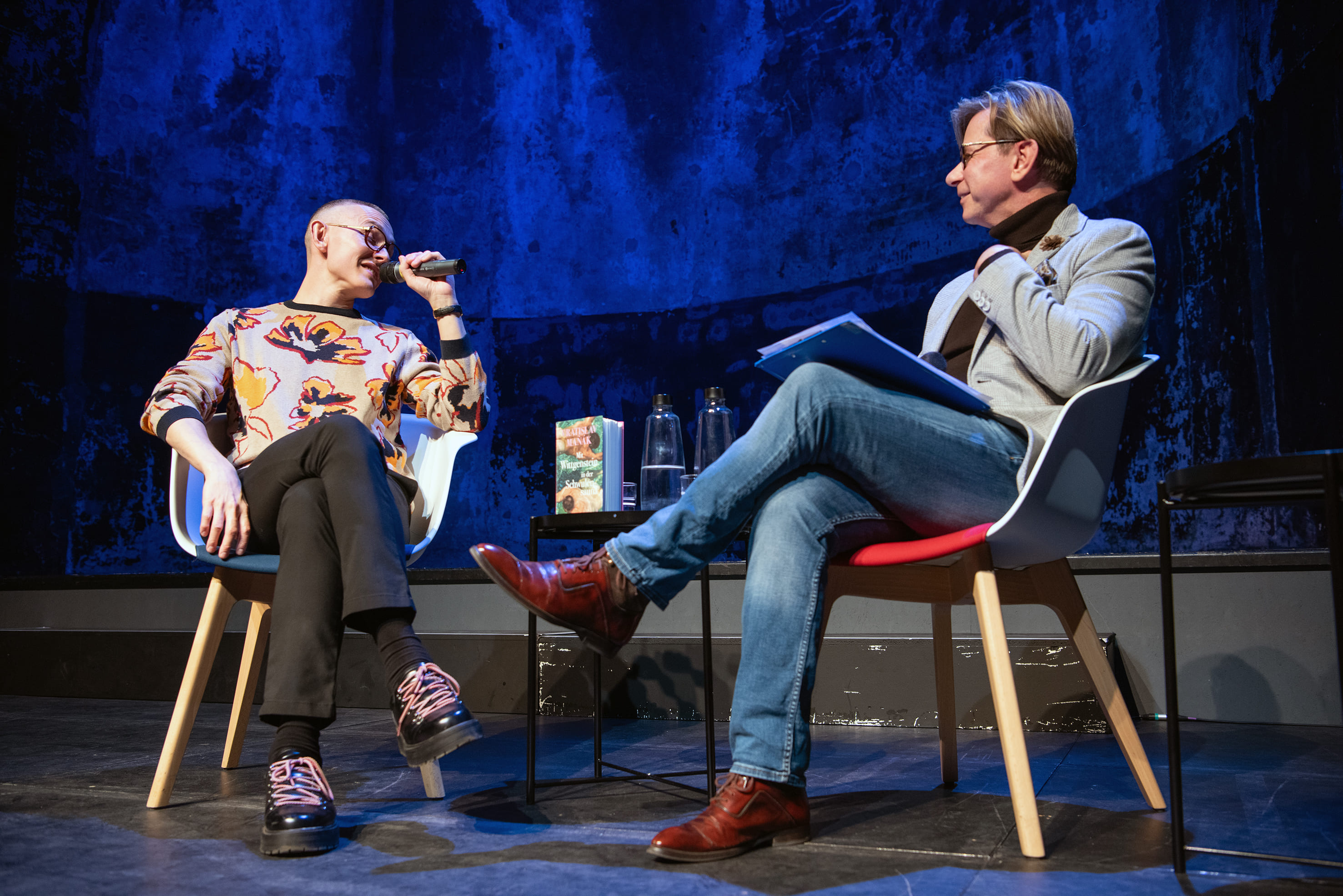
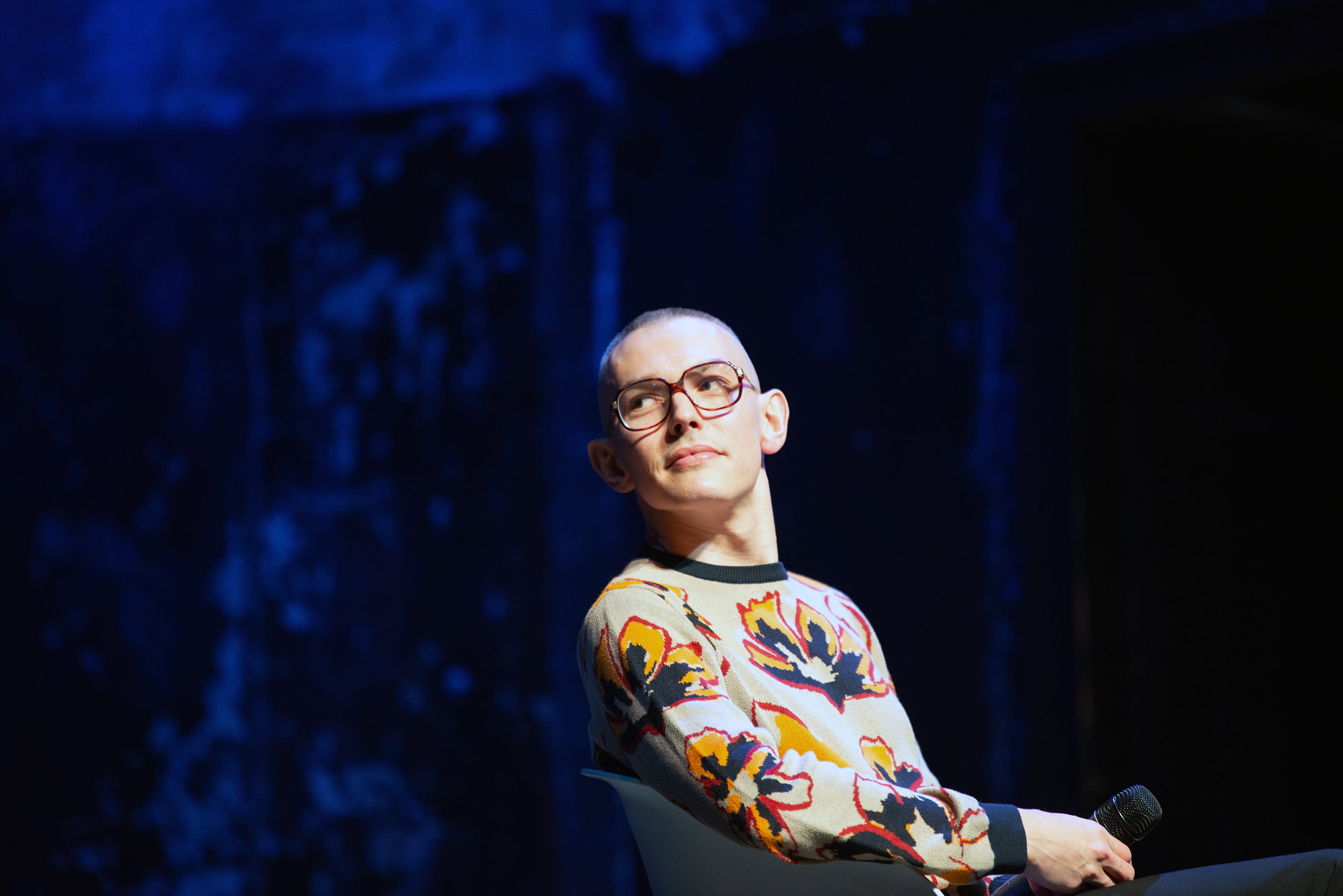
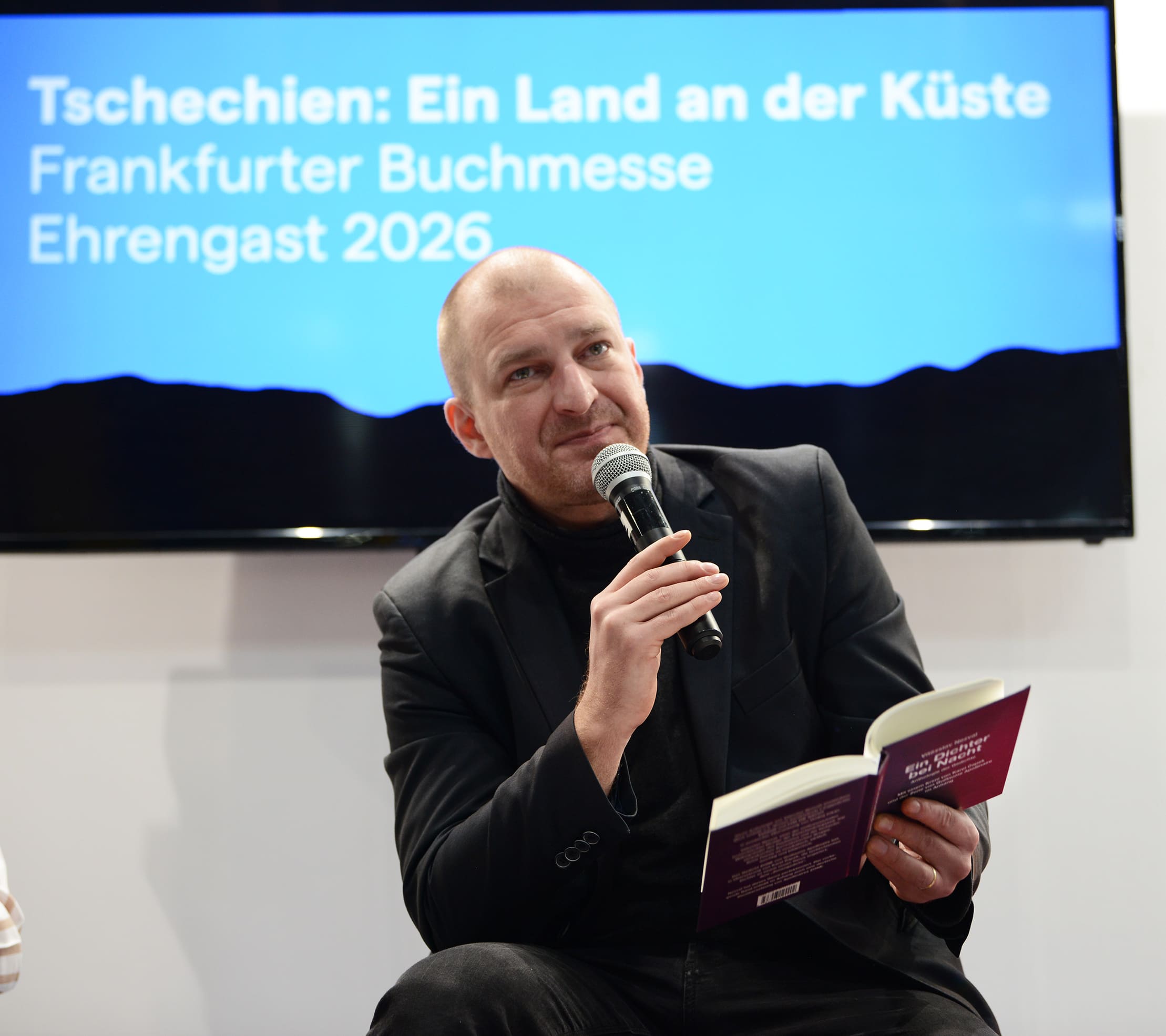
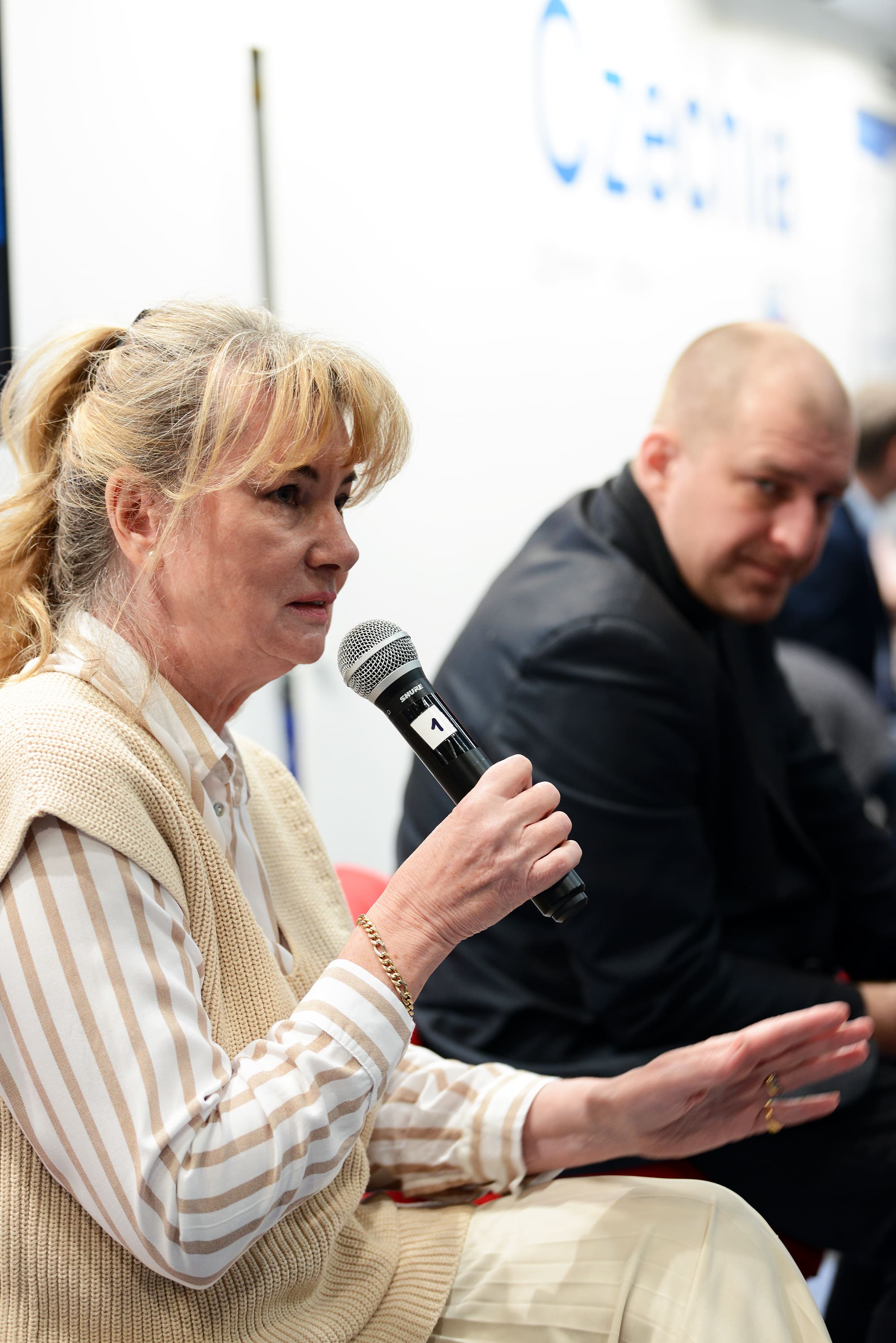
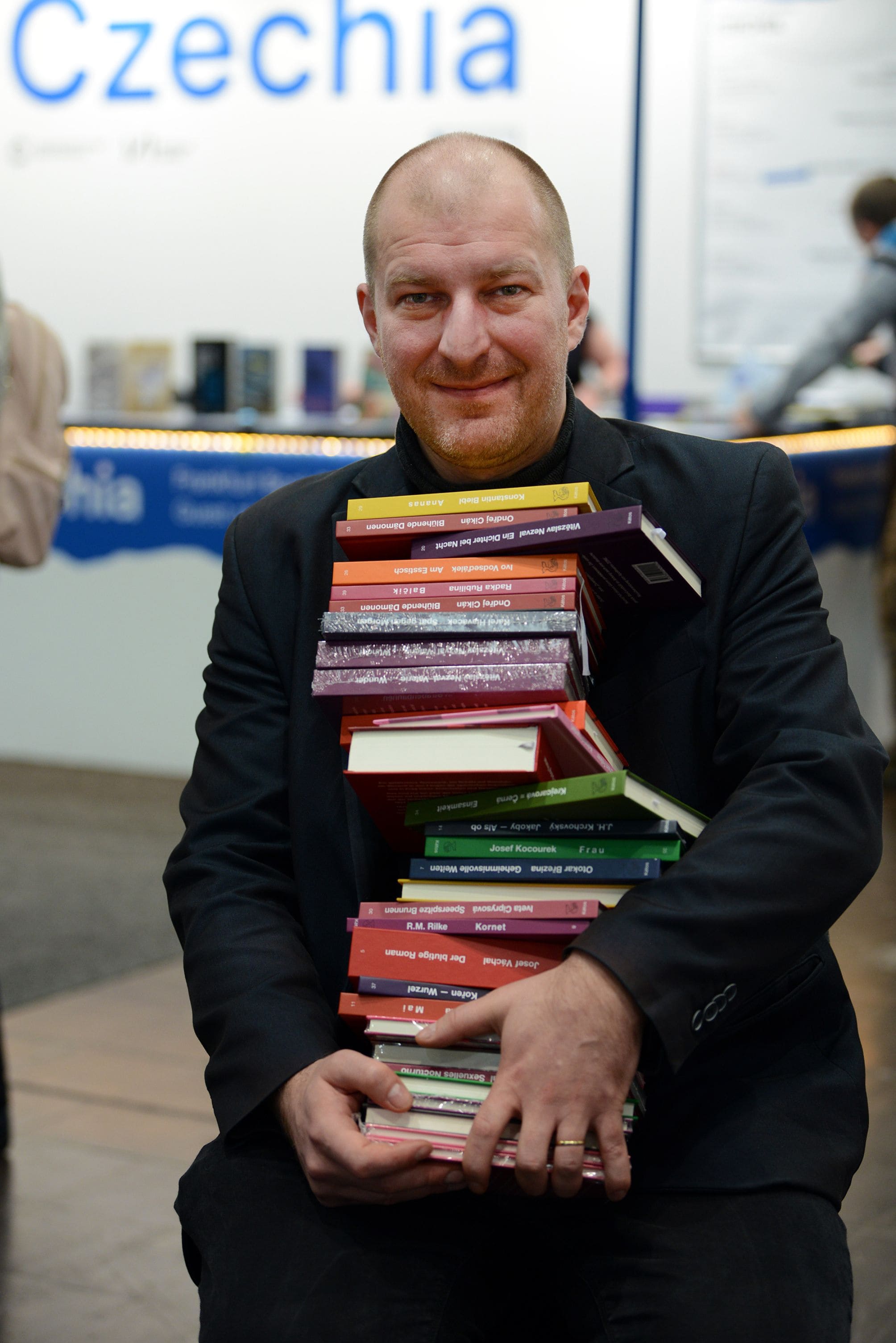
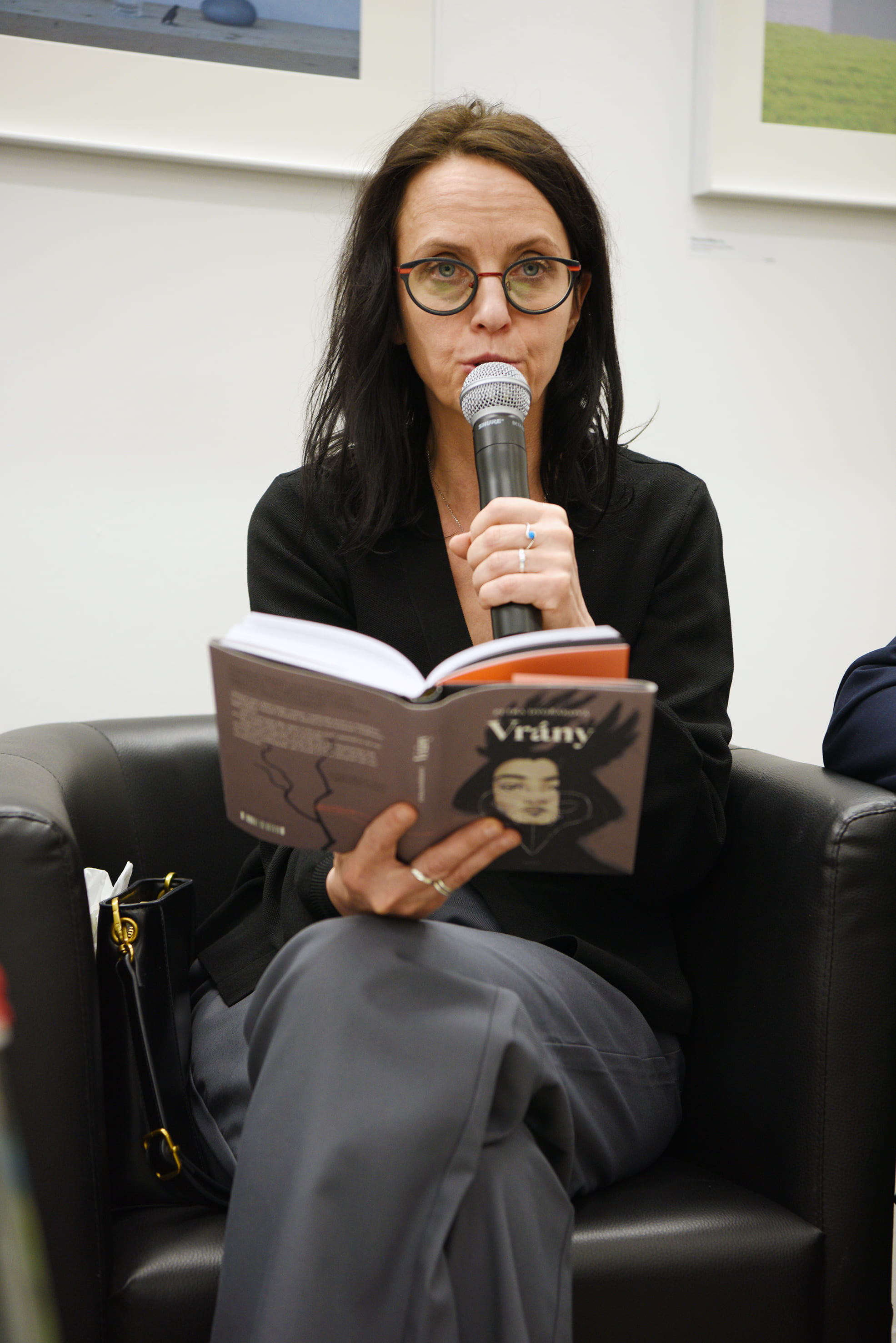
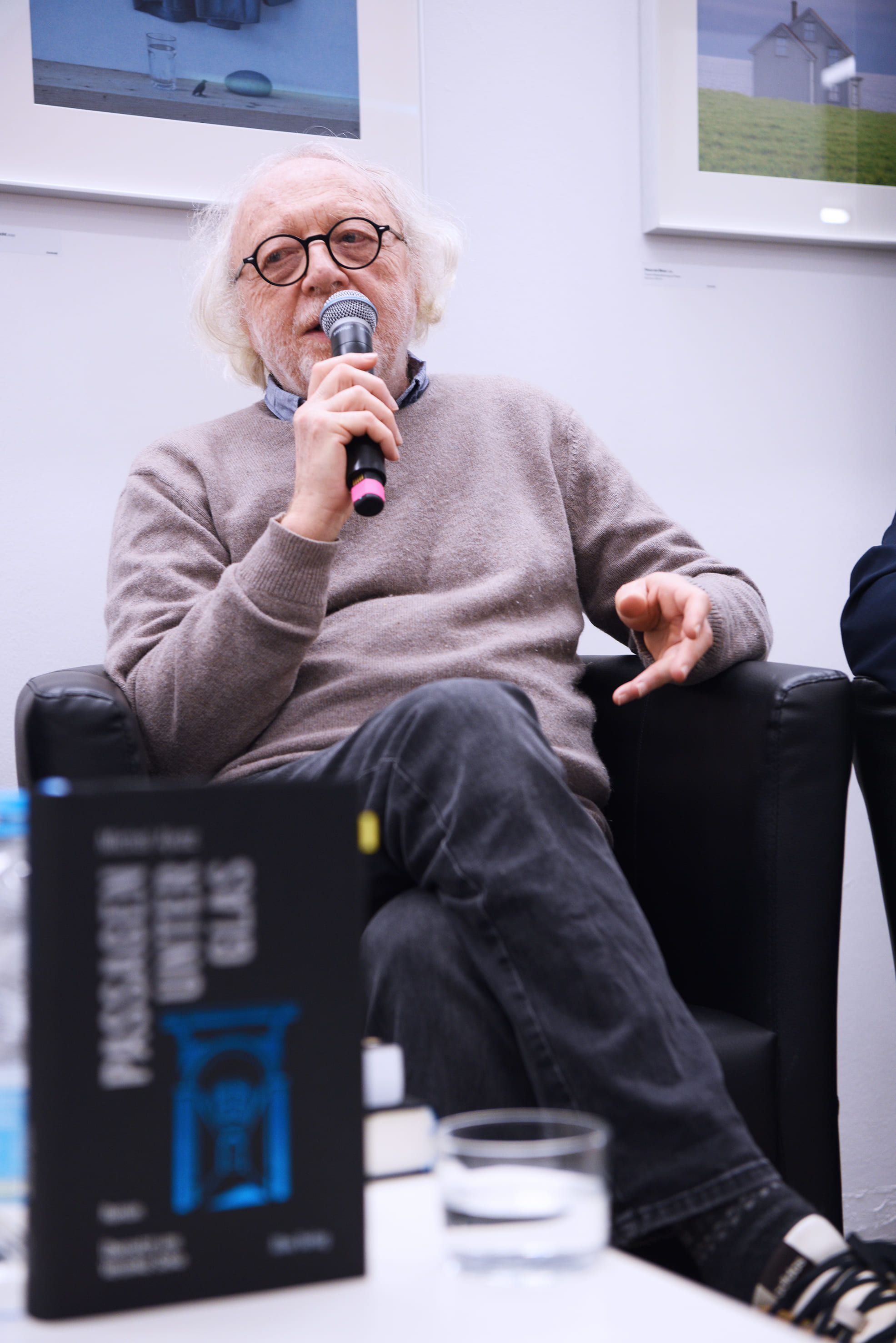
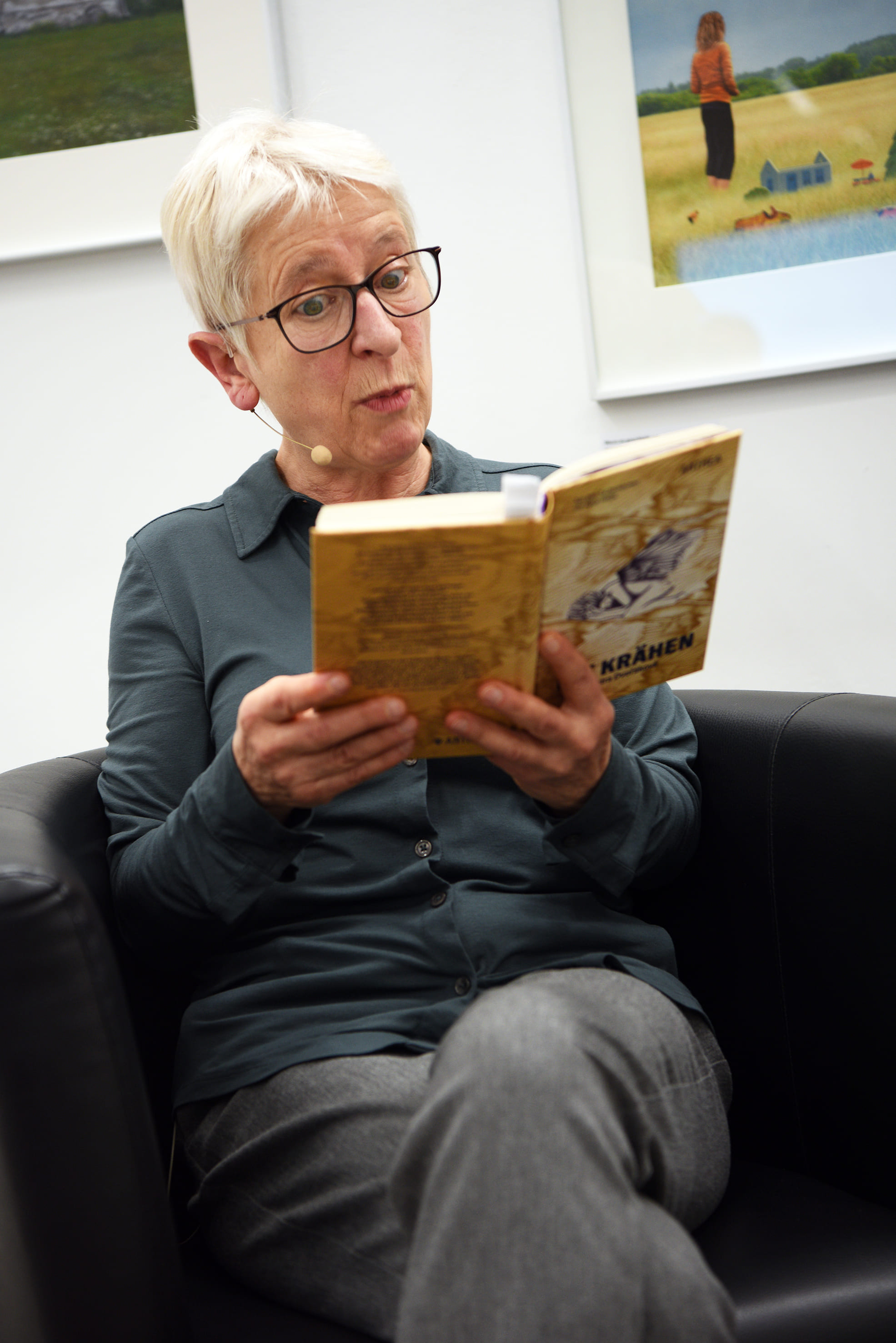
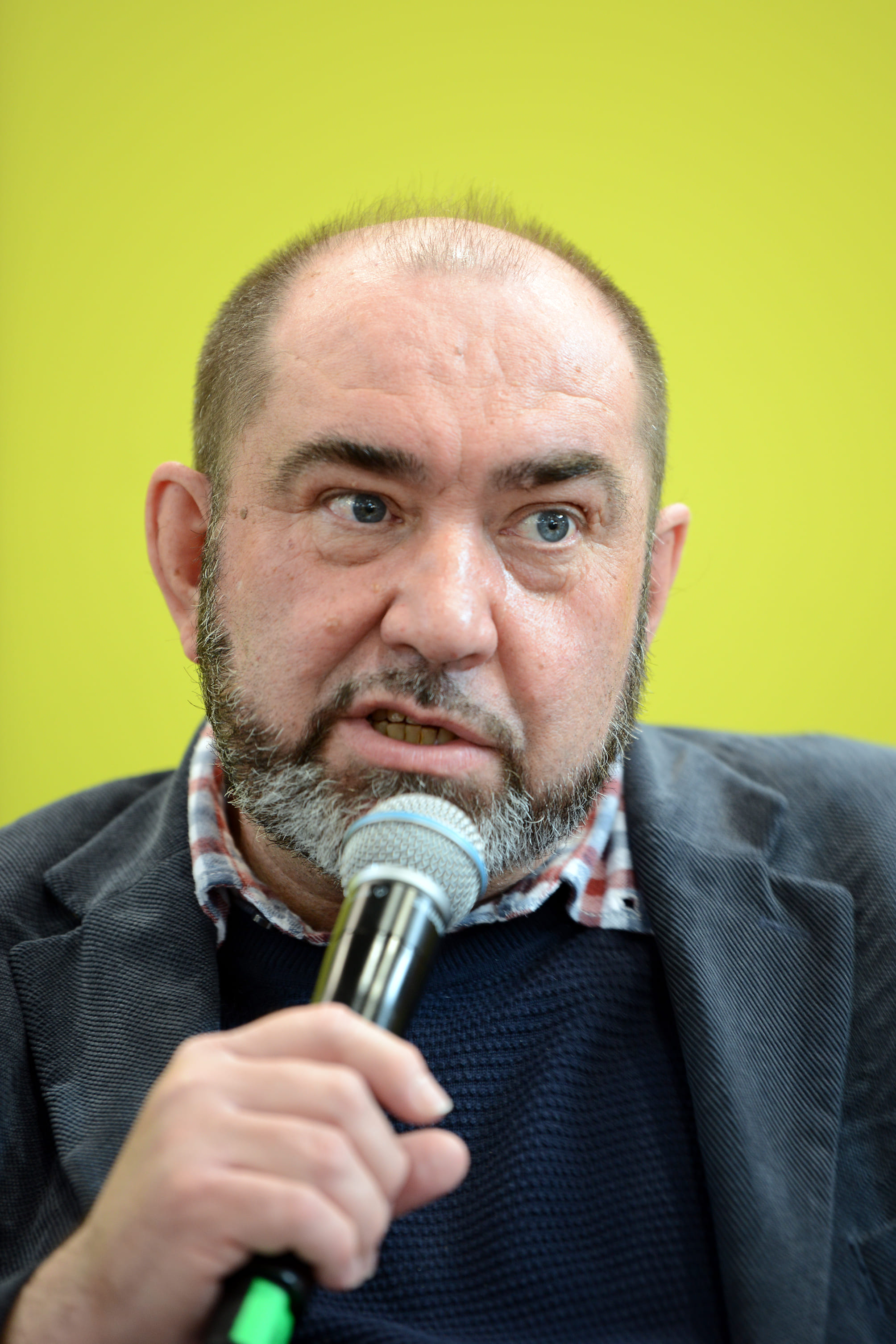
Photo: Sabine Felber, Literaturtest
The interview with author Antonín Zhořec was conducted by Karolína Tomečková and Annika Grützner.
Our translators: Mirko Kraetsch

What kinds of things can be expressed in Czech that are difficult or impossible to express in German?

As a linguist, I naturally say: In principle, I can express anything I want to in any language. It’s just that the means of expression differ from one language to another. Expressions that seem to have the same meaning actually have slightly different nuances. Or, for something I can express with a single word in one language, I might have to resort to a rather long-winded phrase in the other.

Does a character’s personality change when you translate them from Czech into German?

No. And if it does happen, then I’ve probably done something wrong. Or—which is no less bad—misunderstood something.

When you translate, do you tend to think in images, in meaning, or in words?

I translate texts. At first glance, they consist of “words,” but that focuses only on the surface. Words have—or acquire—meanings, and of course, the audience’s interpretation of the text also conjures up images. Ideally, I manage to convey all the nuances of meaning into the target language, but generally my goal is for the reader of the German text to form the same or at least very similar images, so that similar feelings are evoked. In short: I cannot translate one of these three aspects without the others.

What makes Czech humor particularly difficult to translate into German? Which Czech jokes don’t work at all in German?

Humor is generally difficult to translate. That’s because it often relies on allusions and misunderstandings. The reference point is frequently a regionally specific phenomenon—such as well-known figures from the past and present, historical events, pop culture, or everyday life—that is completely unknown in the context of the target language. This strips the joke of its foundation—and leaves me with a tough nut to crack.

Or the whole thing is based on a linguistic slip-up, which is then highly problematic. Because if I introduce a slip-up borrowed from the German language into a text set in a Czech context, it creates an imbalance. (I can’t rule out, however, that I’ve done it before.)

I don’t want to discuss content-related and/or stylistic aspects here, because that would immediately lead me into cliché-ridden territory. Clichés—especially those that the cultures of the source and target languages use about each other—are not irrelevant in translation (quite the contrary, one should be aware of them), but they are not suitable as categories.

What do you love about Czech that you miss in German?

The conciseness. A text translated from Czech (or Slovak) into German can be 25 to 30 percent longer. Slavic languages basically function like Latin—relationships between sentence components are made clear through endings. This also allows for much greater freedom in word order in Czech.

I also miss the ability in German to clearly indicate the correct pronunciation of a word.

How has translating changed your own German?

The German language is my tool. So I have to make sure to keep it well-maintained and ready for use. In other words: Aside from Czech and Slovak books, I read mainly literature written in German. But it’s just as important to read works translated into German. Both writers and translators are, after all, the authors of their German-language texts and thus an important source of inspiration for me.

What are your favorite words in German and Czech?

I have a soft spot for expressive terms. In German, I’m a big fan of the Saxon multifunctional groan “Ooohr näääj!”, which expresses a very high degree of disapproval. Unfortunately, you can’t fully capture its acoustic qualities on paper. (See also my comment on this above.) And of course, this exclamation is also accompanied by a corresponding pout.

In Czech, there are many terms with German roots that also tend to have an expressive quality. My favorite is “rambajs,” the term for deafening noise in the presence of people behaving chaotically (often in large groups). I picture a typical scene from Alemannic Carnival: discordantly played (brass) wind instruments plus percussion, combined with bizarre costumes and loud shouting.

What are you currently working on, and what will your next project be?

I’m currently editing Marek Toman’s novel České sklo, which will soon be published by Drava as Bohemian Glass.

At the same time, I’m working on the MYKO project, a kind of graphic novel that will be published by the Hamburg-based publisher Ankerwechsel. The premise is: “Mushrooms reporting for mushrooms about mushrooms,” in the form of the magazine MYKO, with one volume—ten brightly colored issues (illustrations by Daniela Olejníková), including two double issues—compiled into a single anthology. It features interesting facts about the world of mushrooms, historical and mycomythological content, as well as poems (the texts are by Jiří Dvořák). It’s a lot of fun, but also a dense collection of puzzles I have to solve.

And then I’ll also be getting involved in a Slovak project again: In his novel Sviňa (Sow), Arpád Soltész has taken up the case of the murder of investigative journalist Ján Kuciak and his partner Martina Kušnírová in February 2018, along with the political turmoil and mafia-like corruption in Slovakia (under the Robert Fico government), and turned the whole thing into a gritty, hard-boiled, hardcore text. The Berlin-based publisher Voland & Quist is releasing the book to shine a spotlight on these issues, which are unfortunately still relevant today.


Photo: Pavel Němec
The interview was conducted by Annika Grützner.
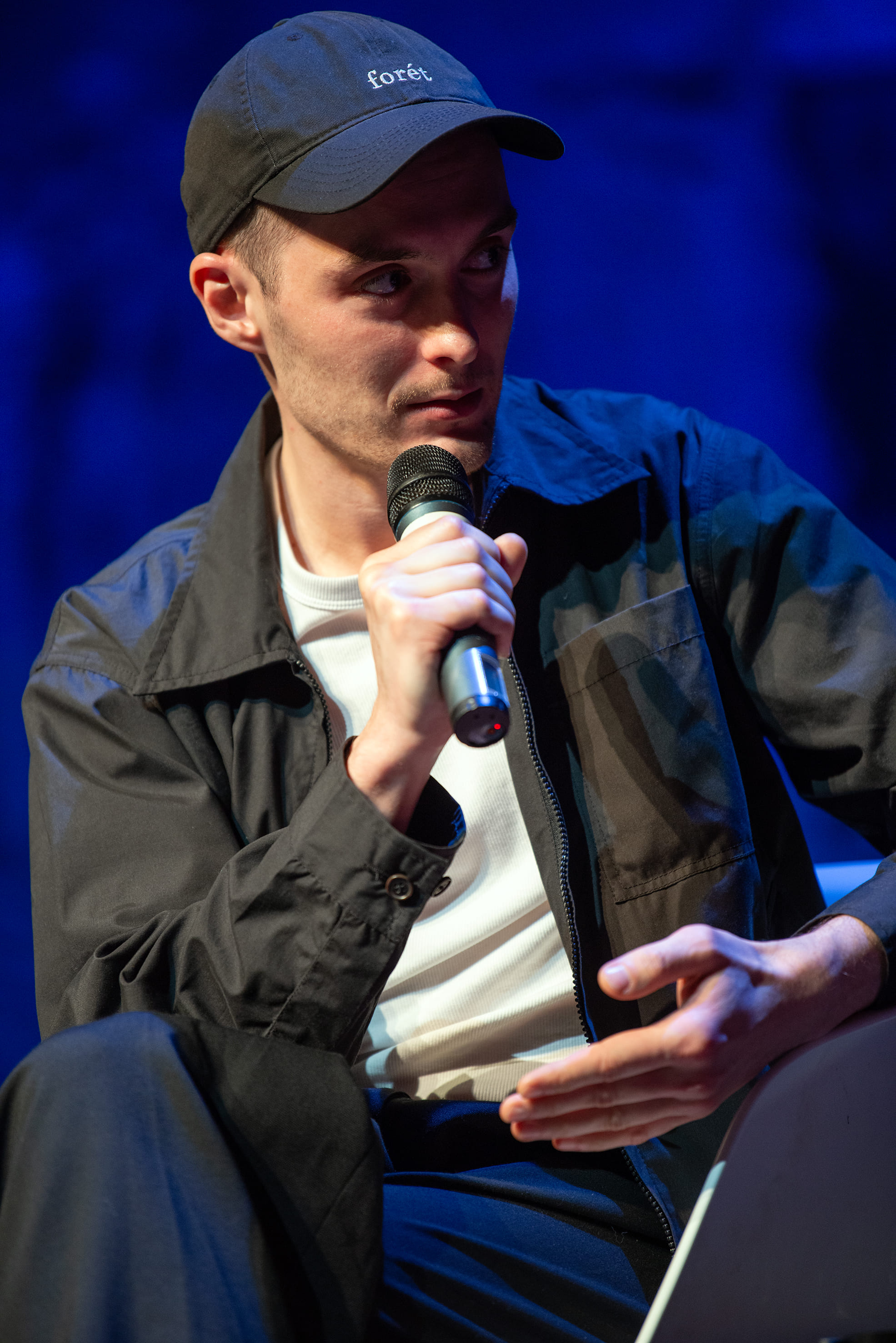
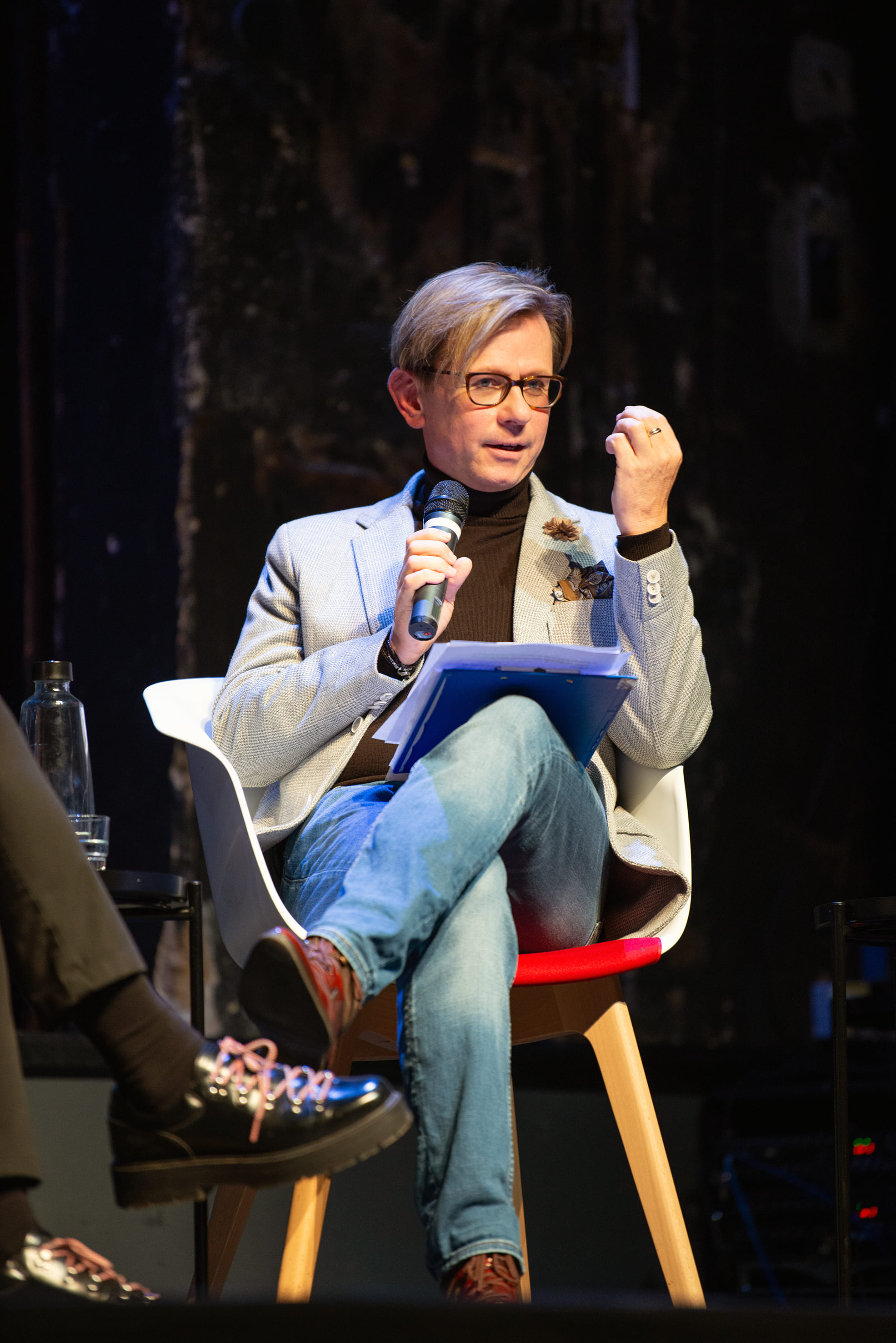
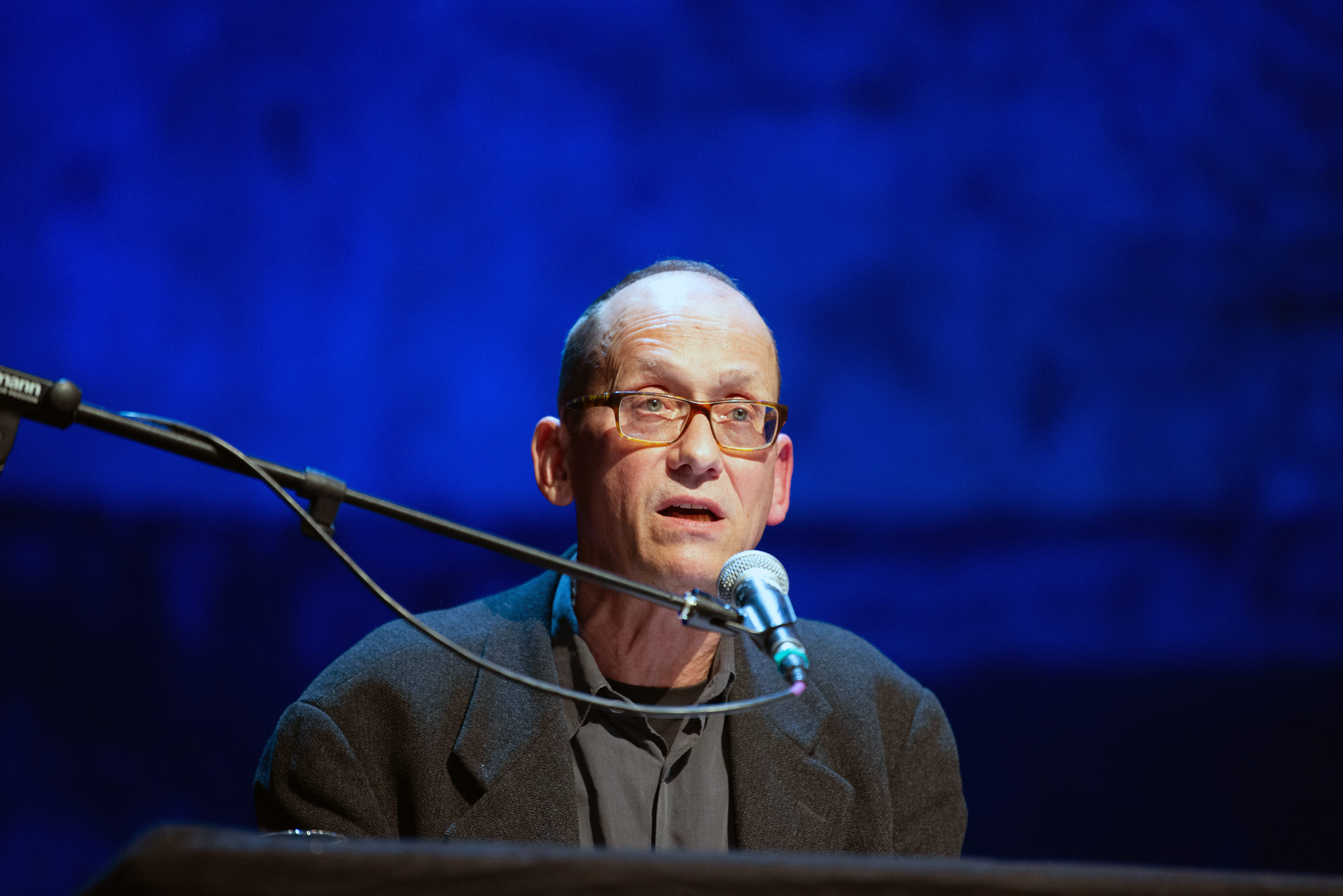
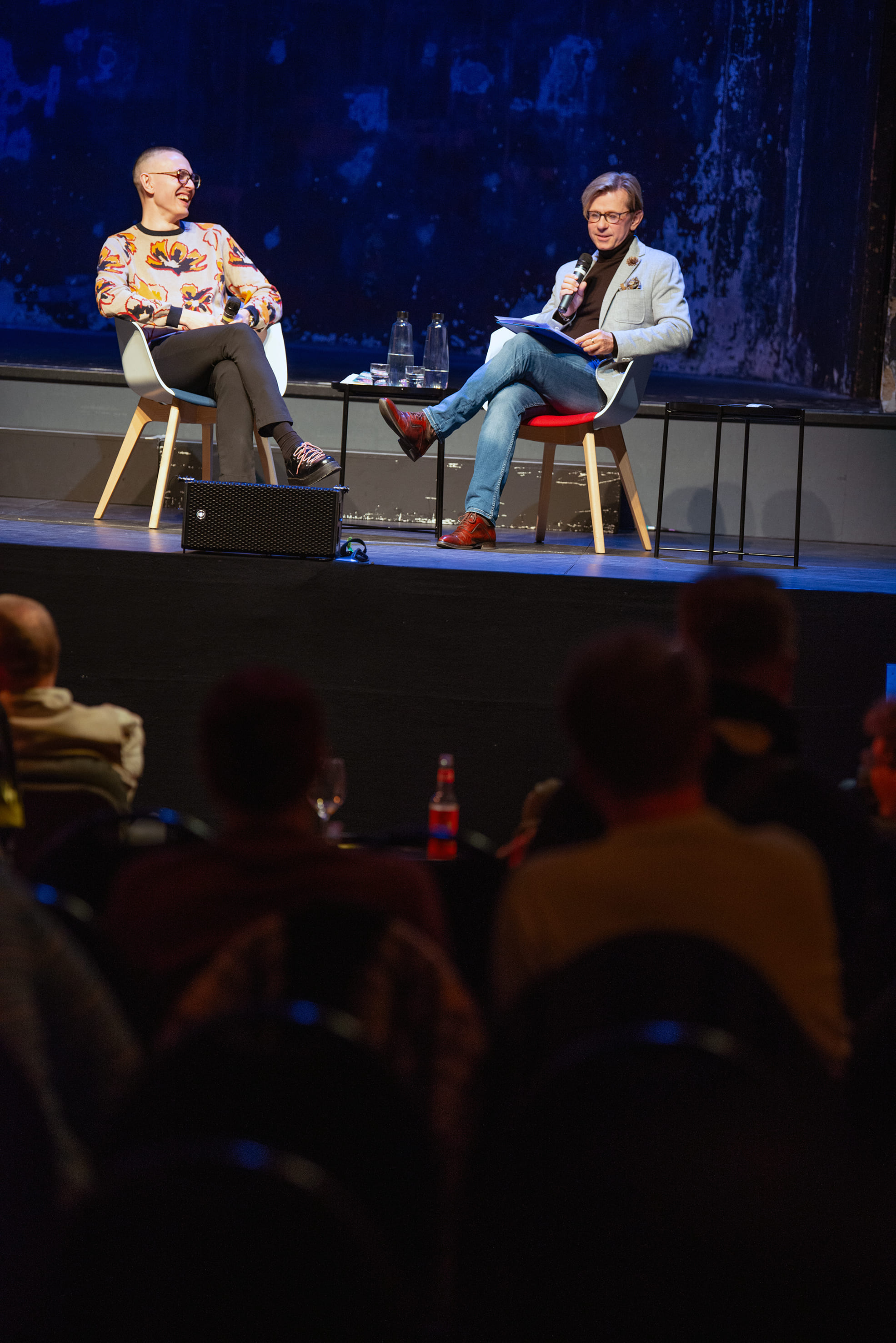
Photo Report: Leipzig Book Fair, Day Three

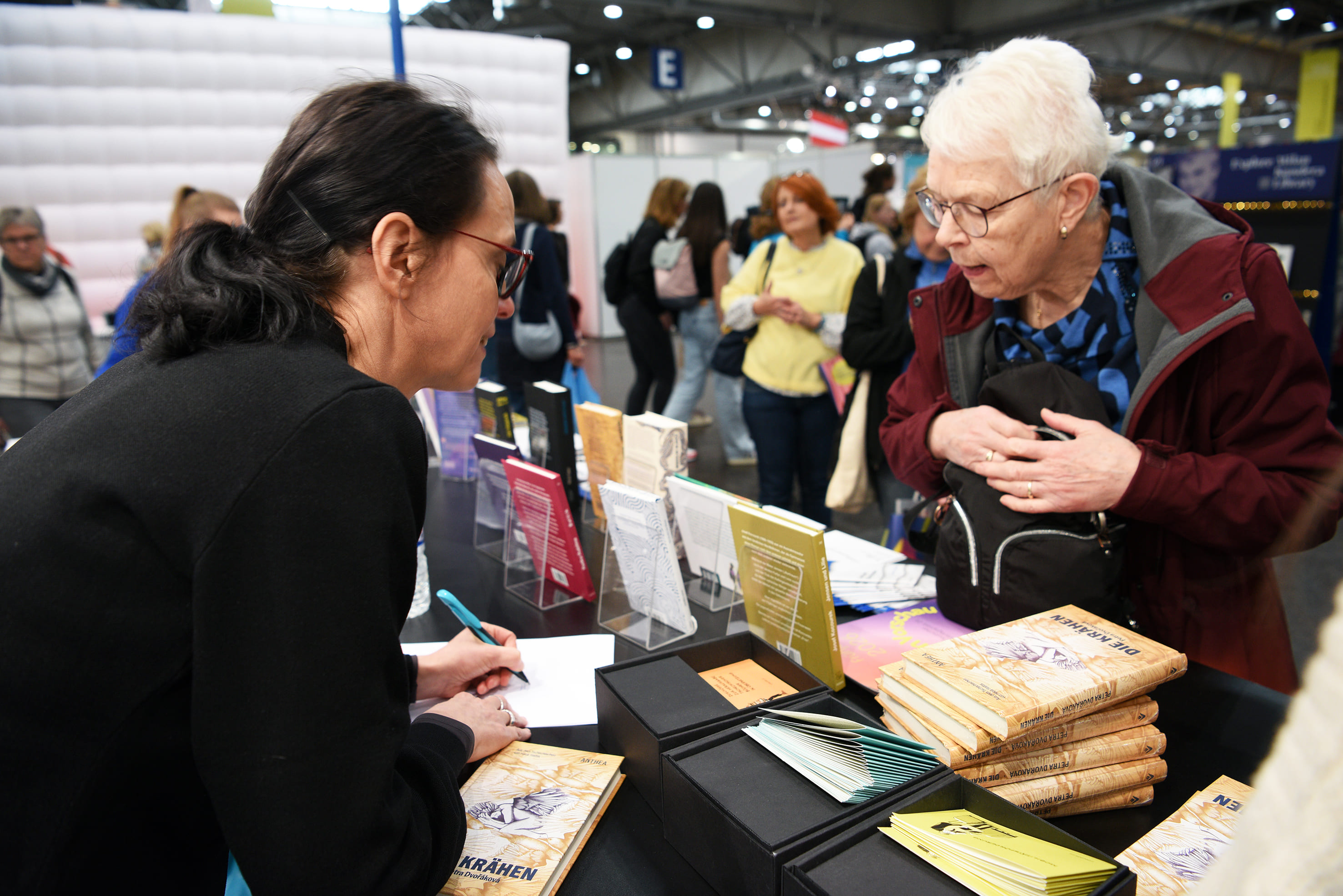
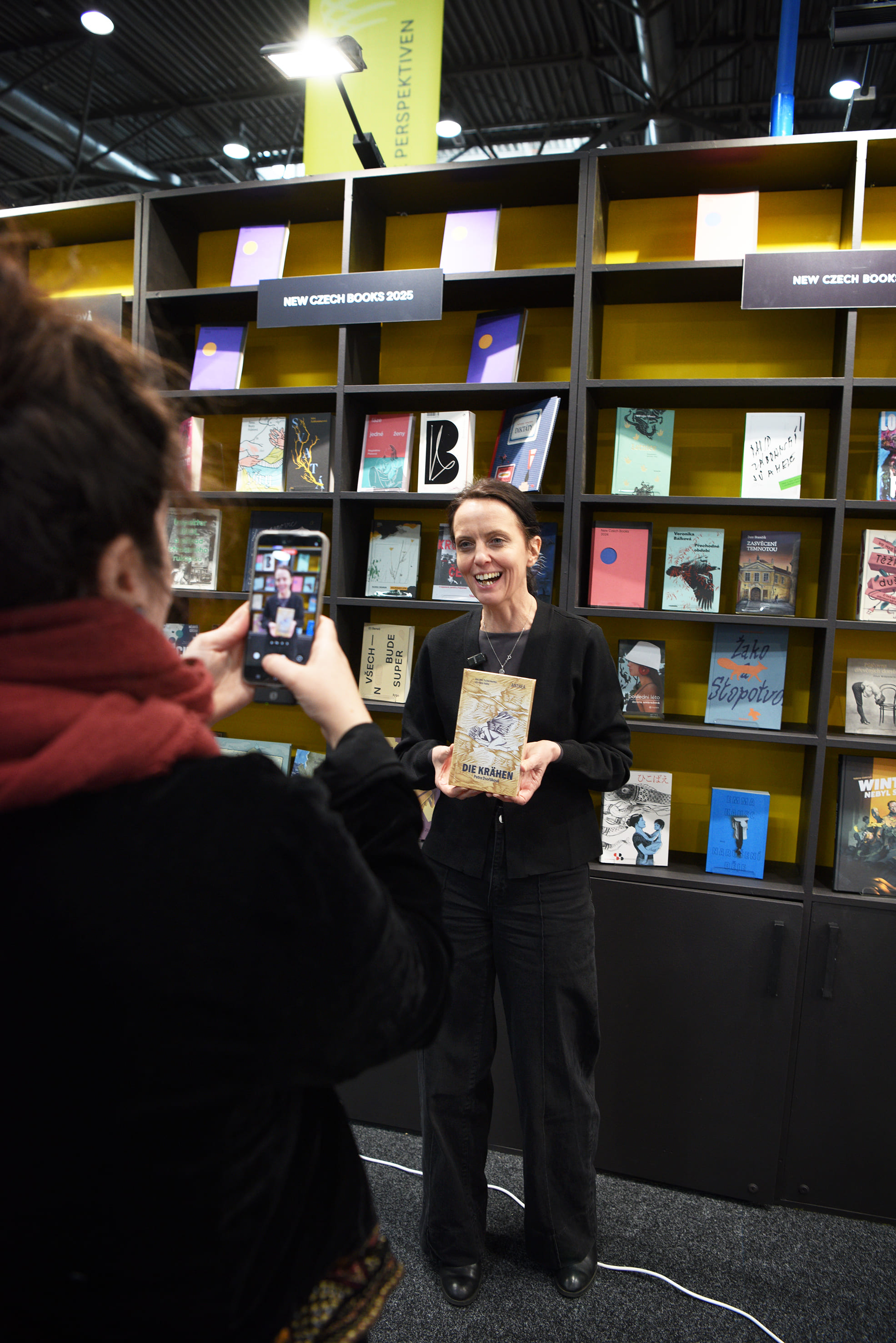
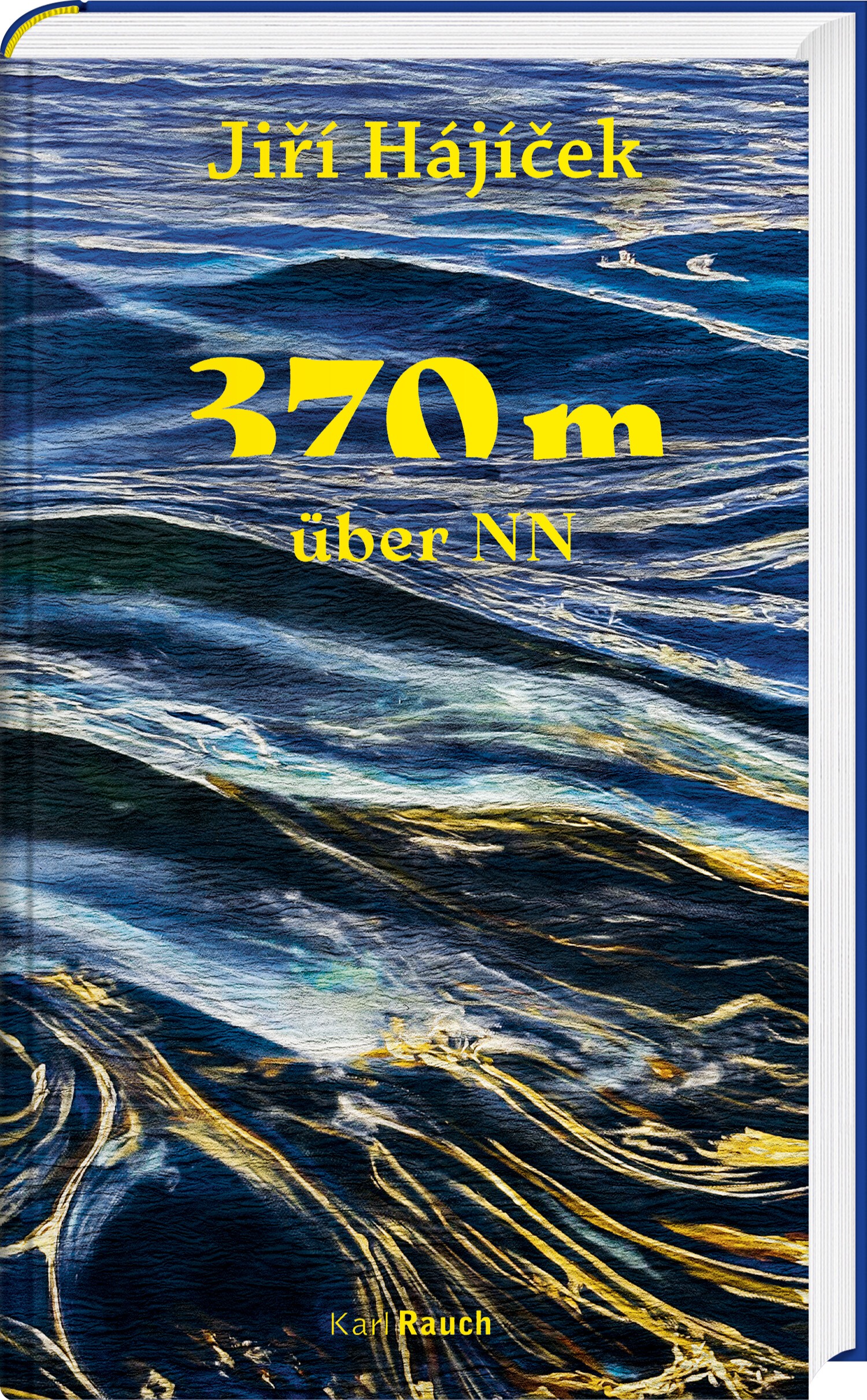
Petra Dvořáková presented her novel The Crows (Anthea Verlag, translated by Hana Hadas) for the second time at this year’s Leipzig Book Fair. Jiří Hájíček explores the theme of personal and familial trauma in his novel 370m Above Sea Level (Karl Rauch Verlag, translated by Kristina Kallert), in which the protagonist returns after years to the flooded landscape of her childhood to come to terms not only with the loss of her home but also with the event that once tore her family apart. The events were moderated by Christina Frankenberg and Maximilian Mengeringhaus; the translations were by Nella Nitrová and Rico Schote.

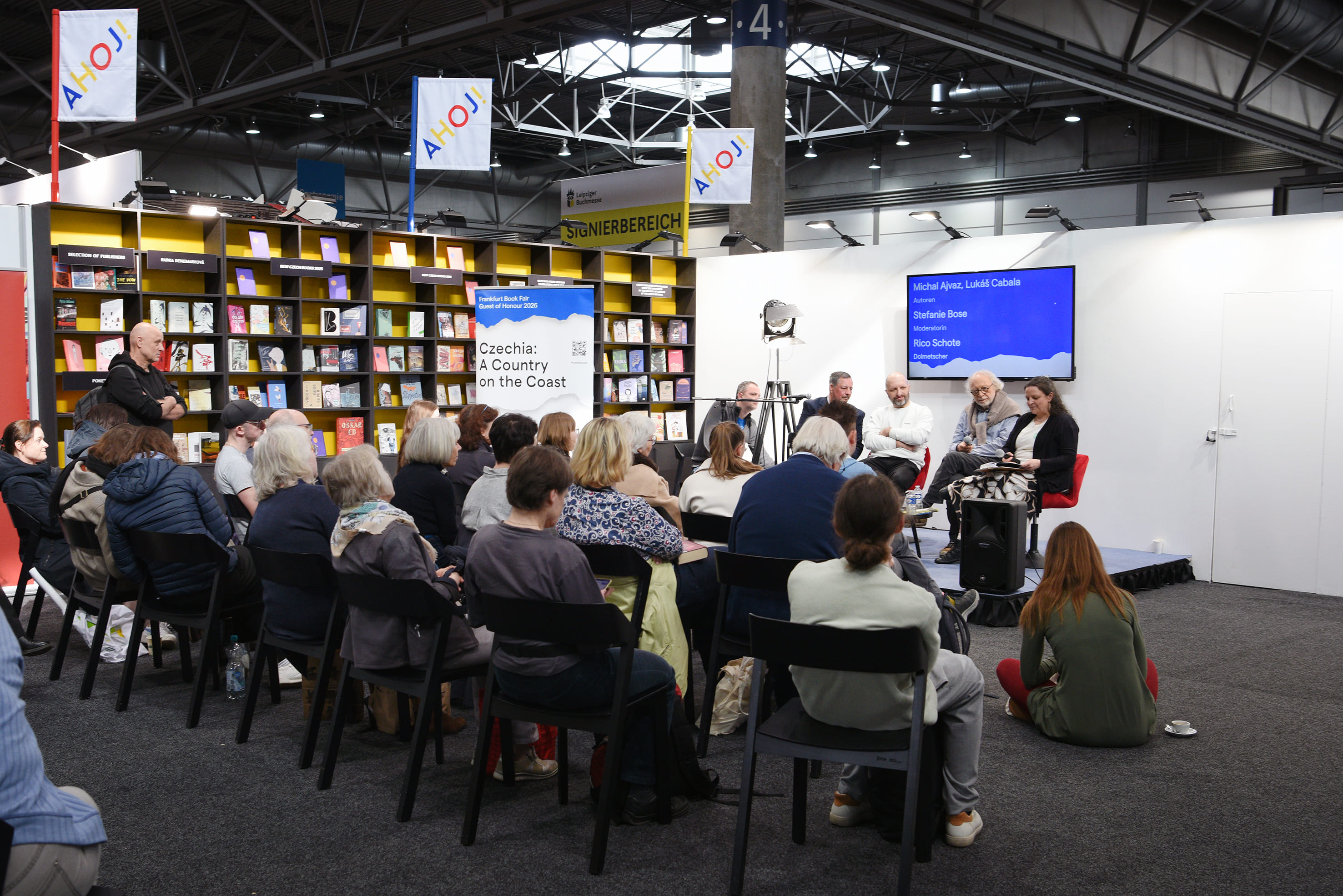
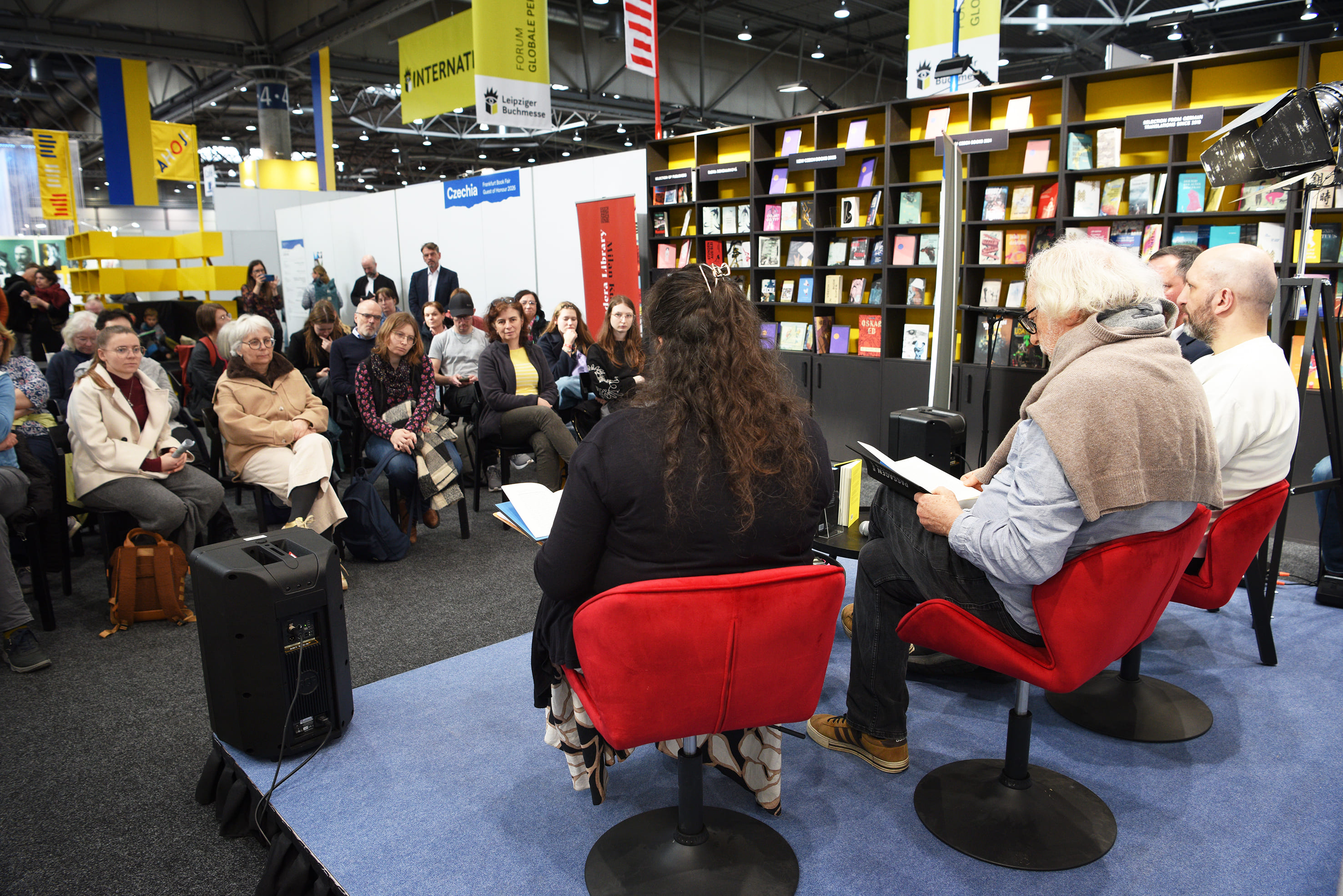
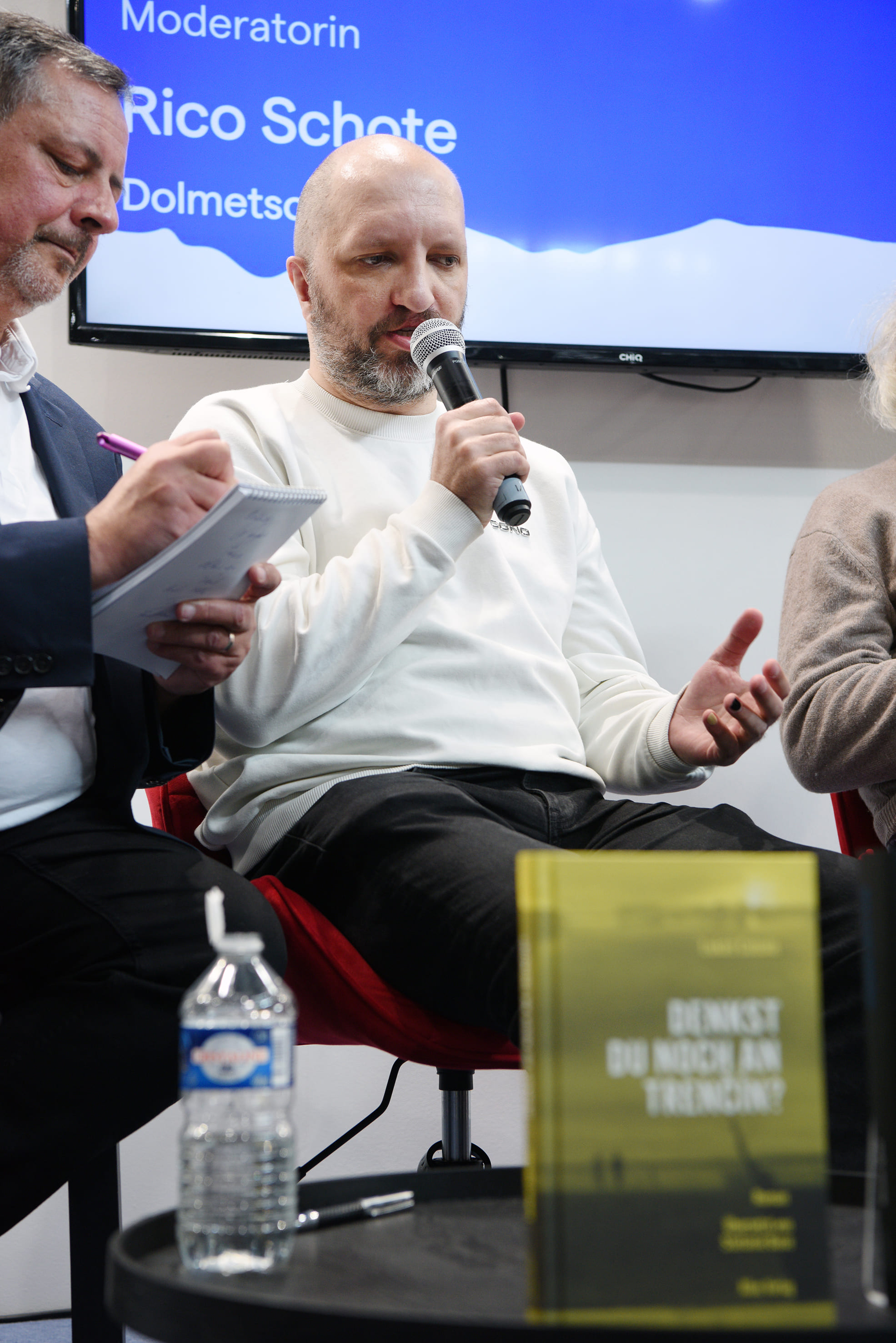
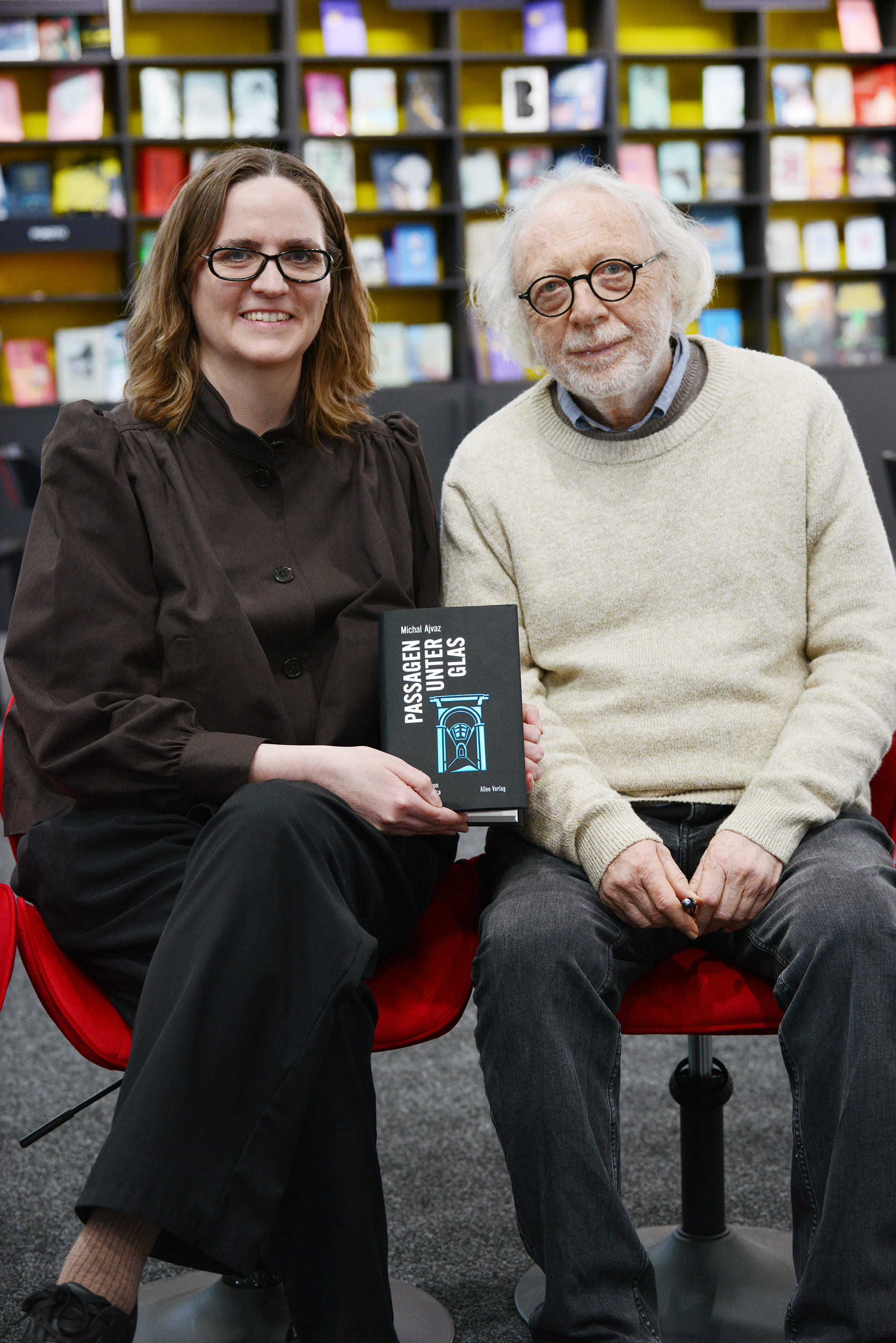
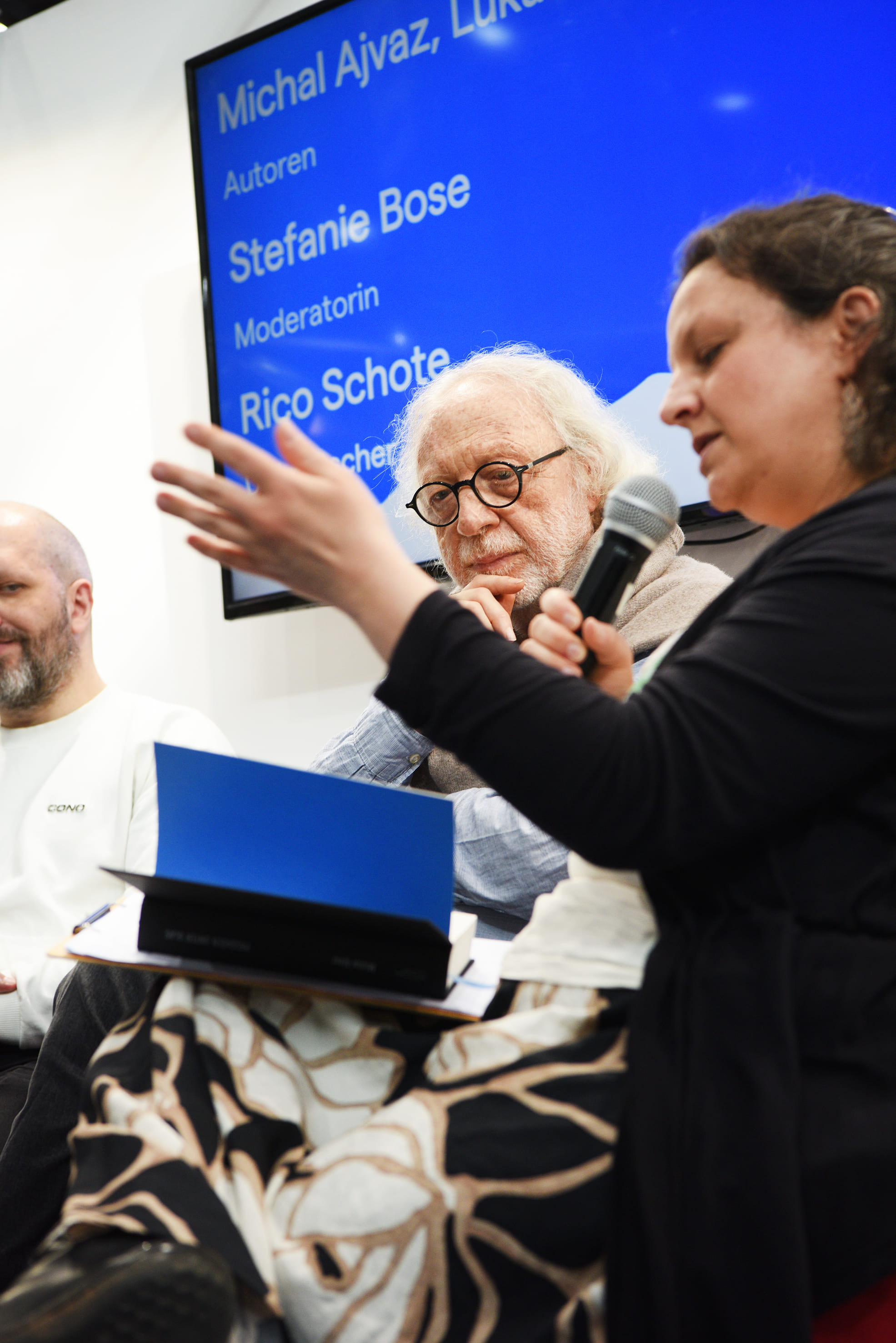
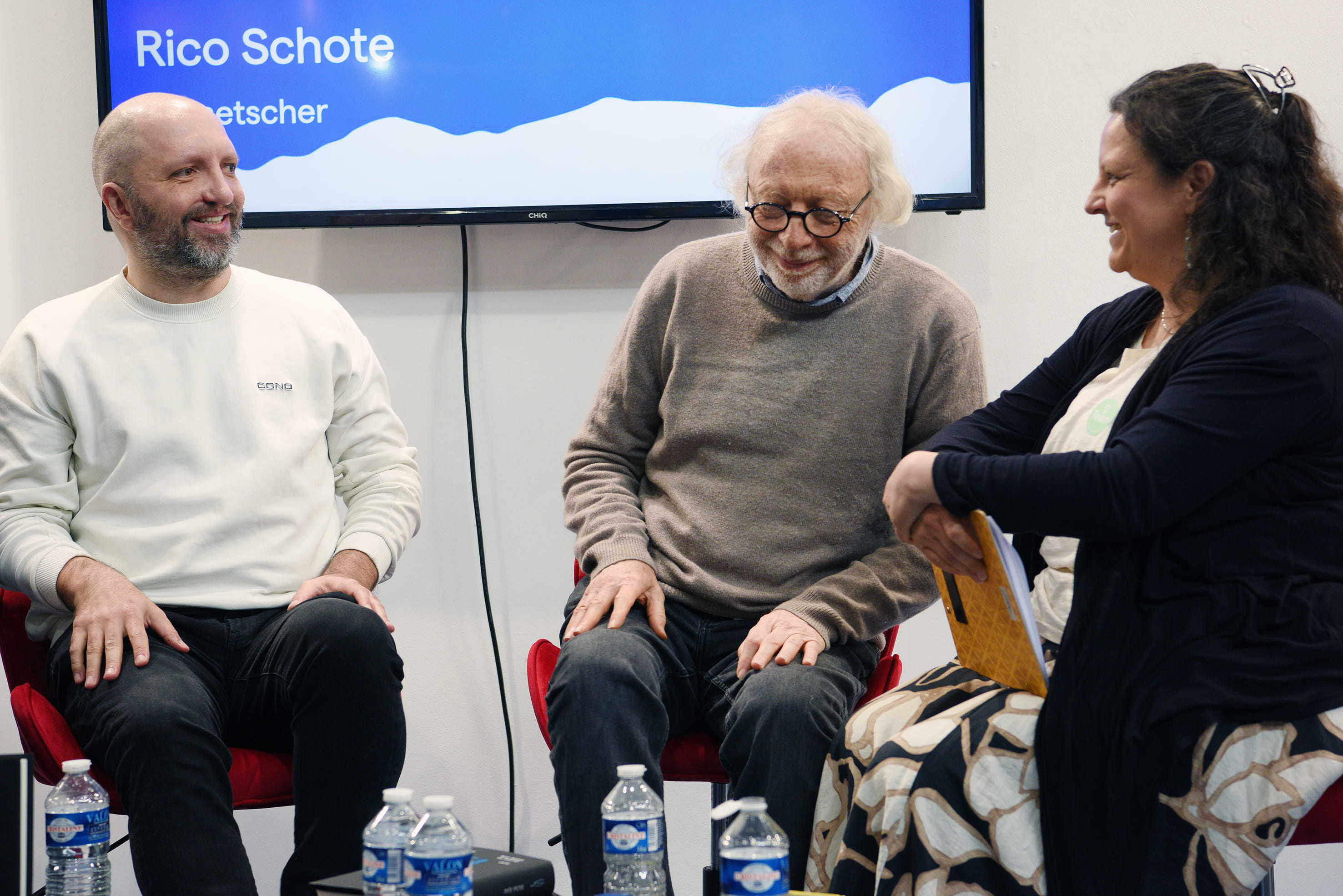
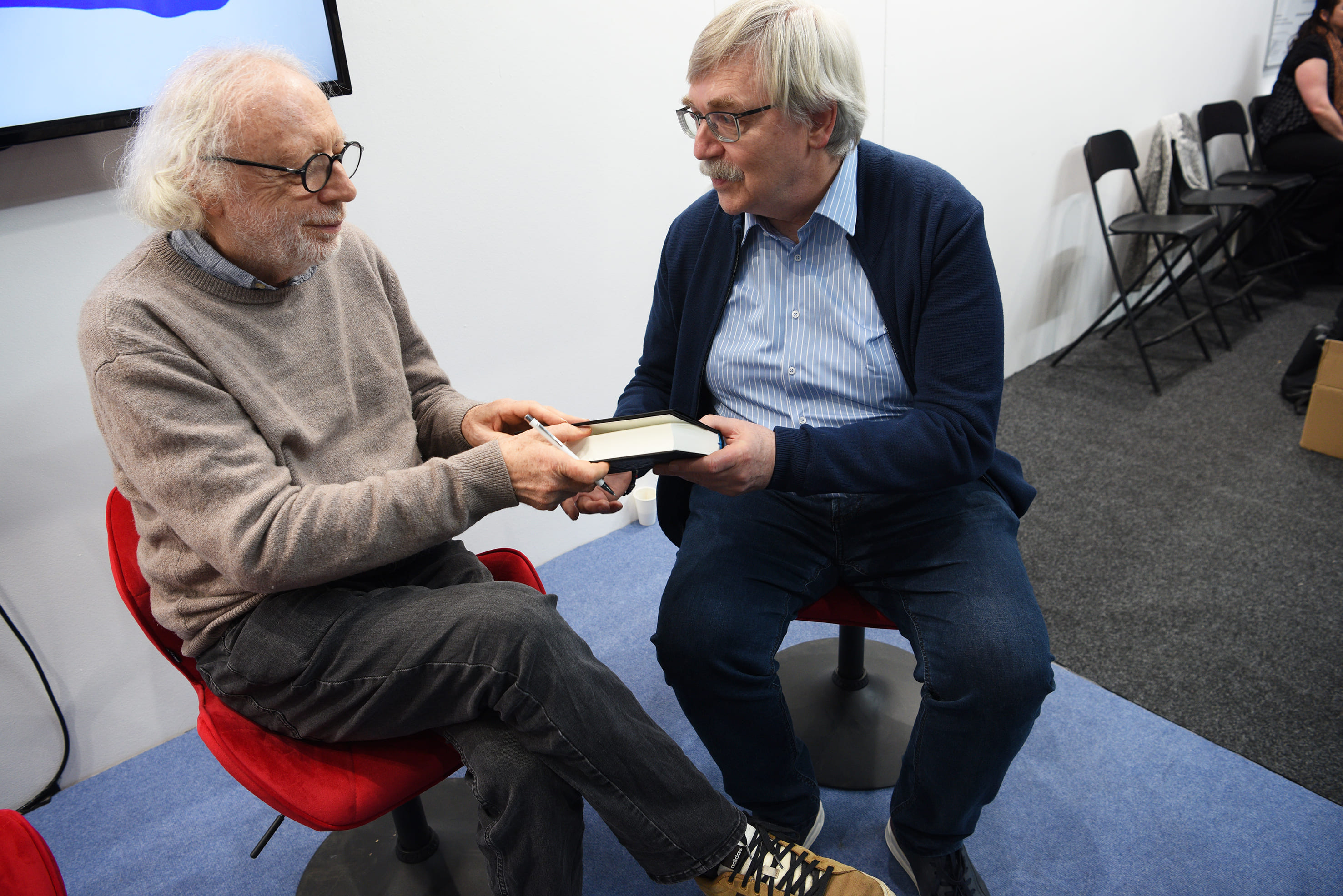
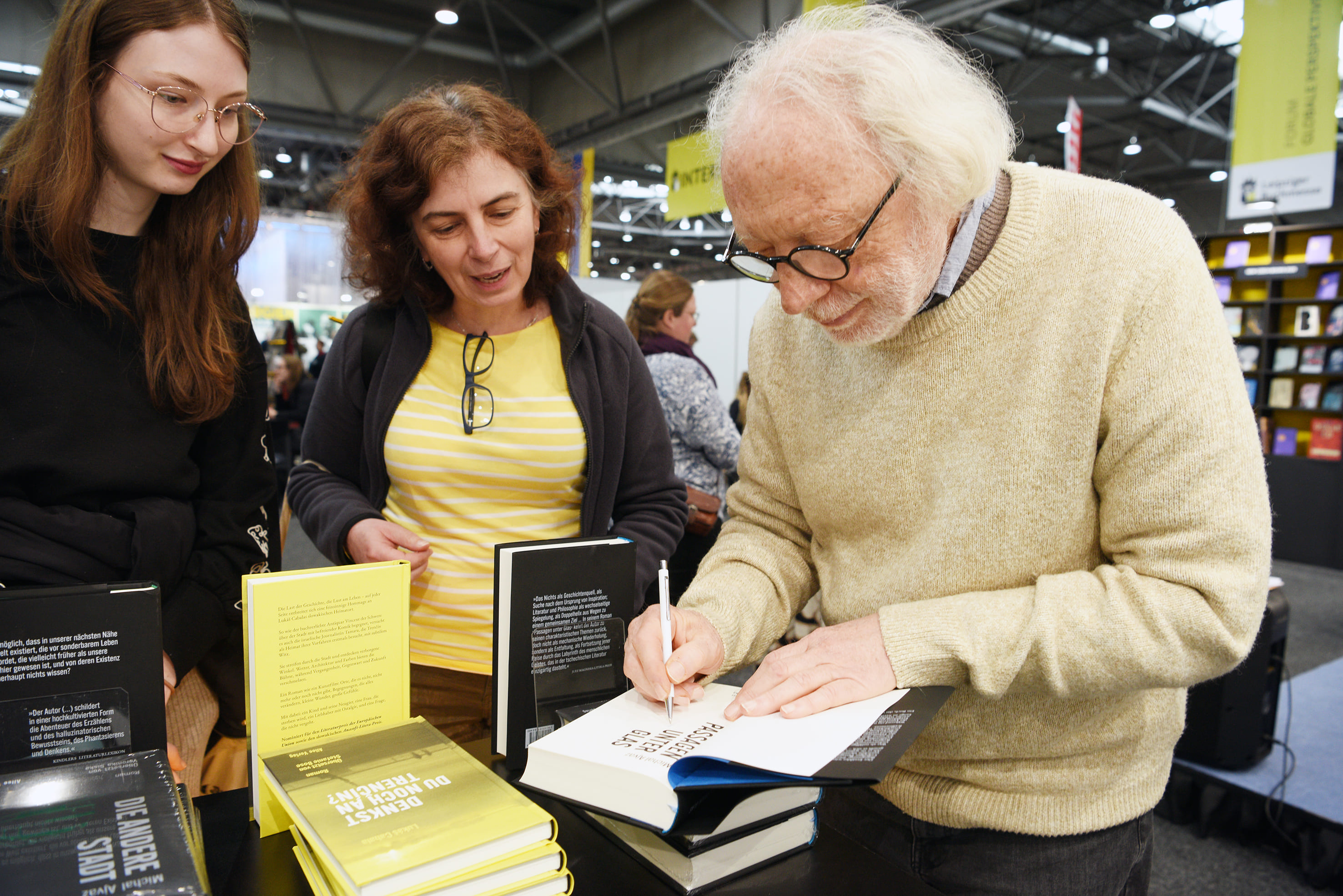
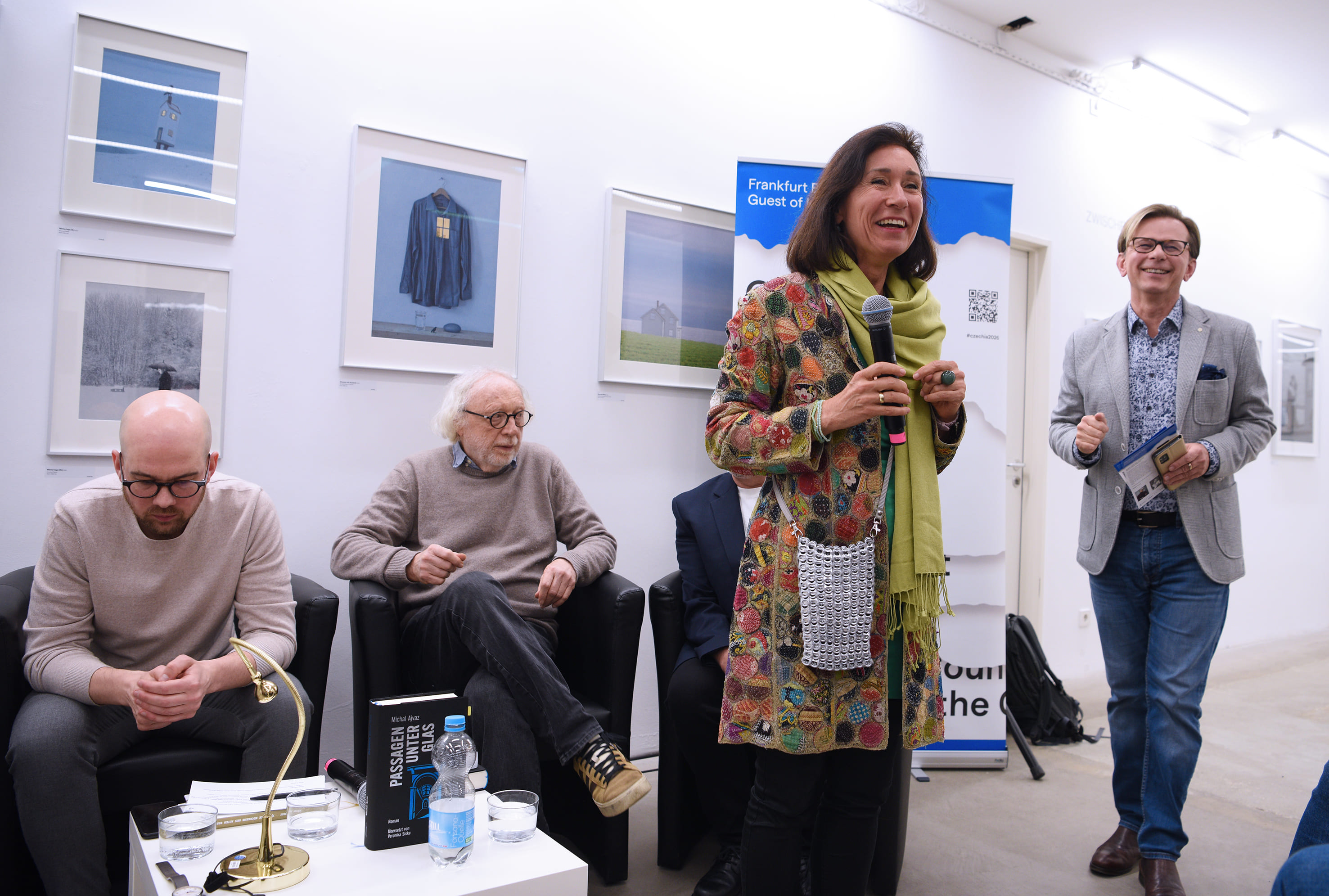
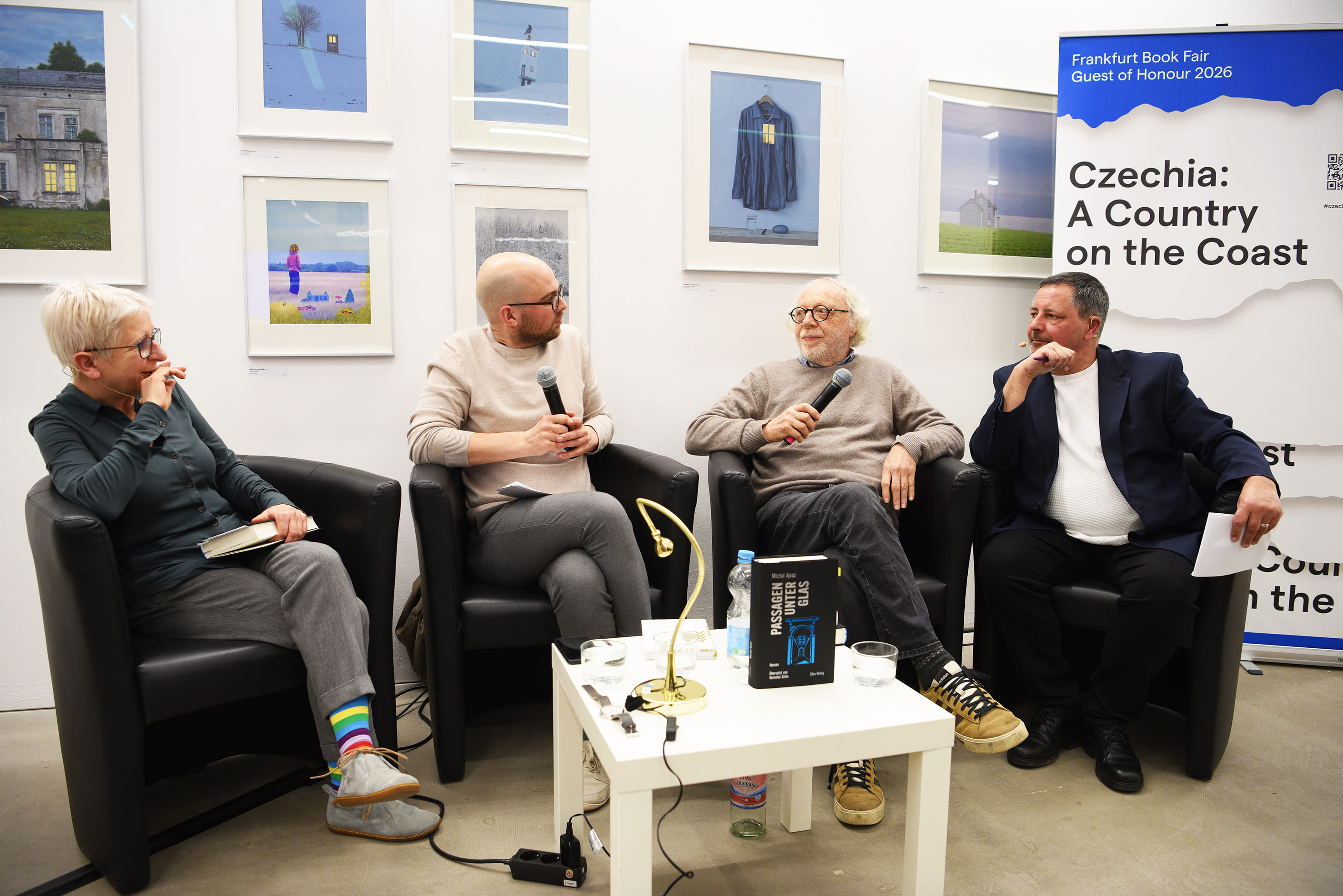
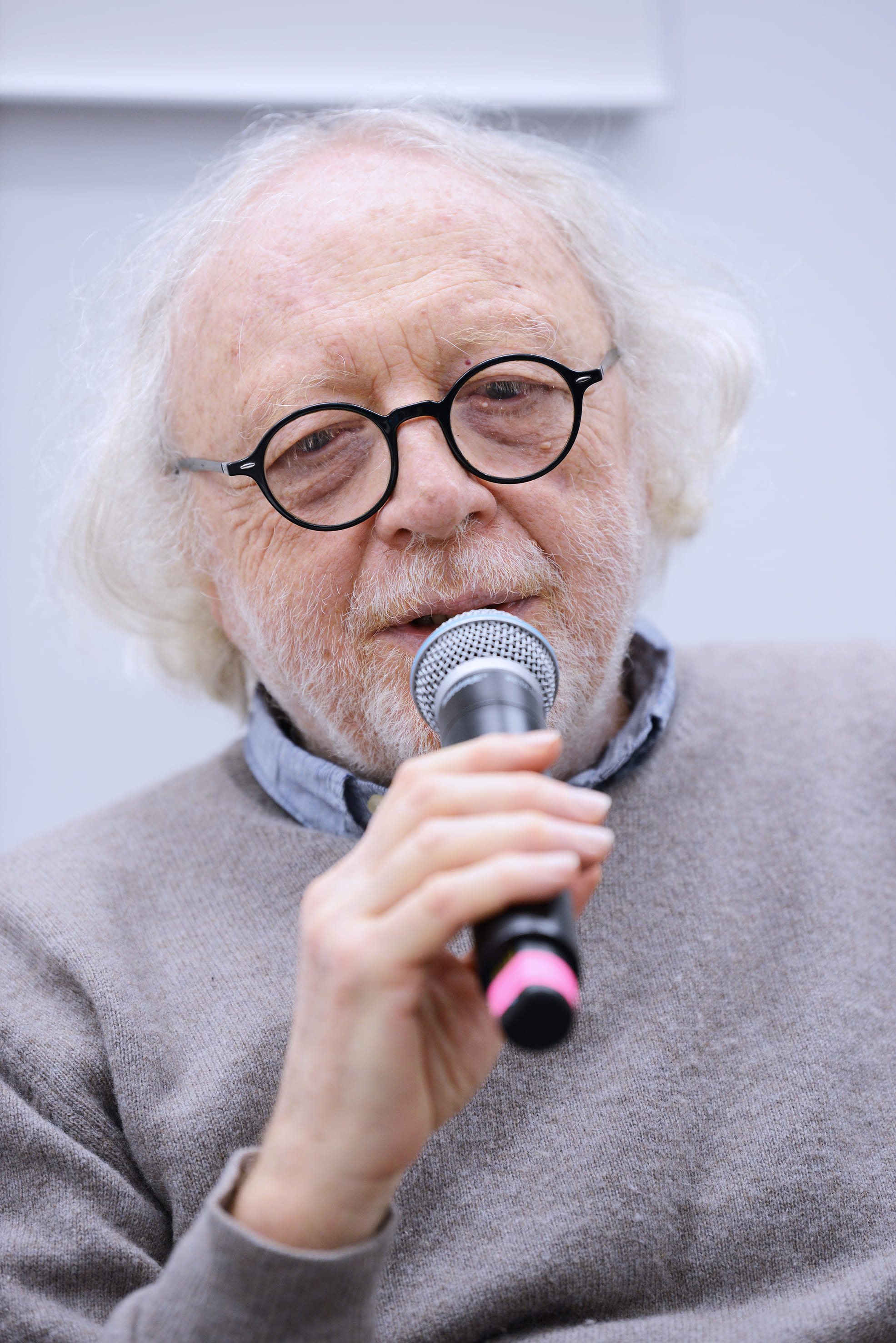
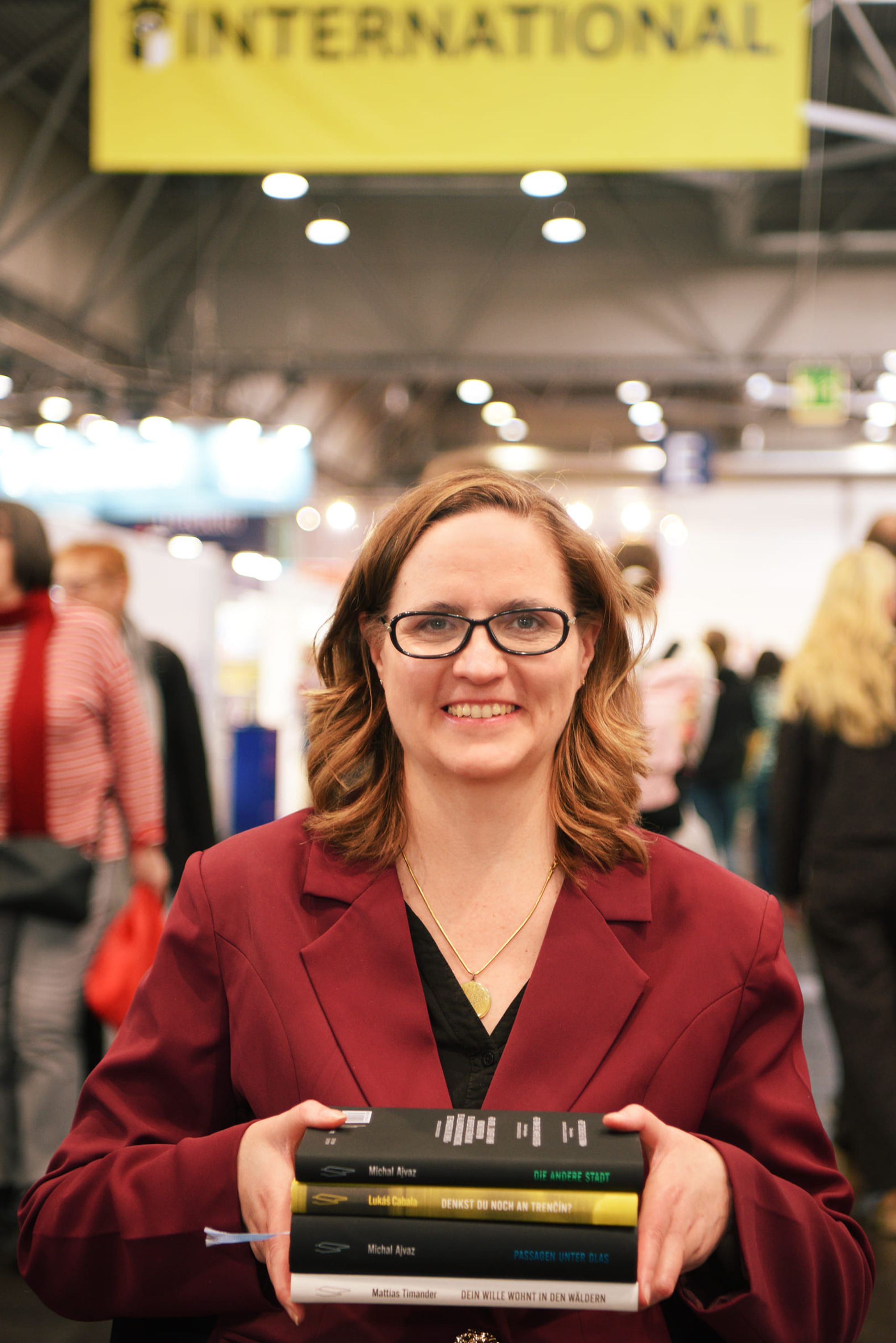
At the national booth, a discussion followed between Michal Ajvaz and Lukáš Cabala, moderated by Stefanie Bose and interpreted by Rico Schote. Ajvaz spoke about his novel Passages Under Glass (Anthea Verlag, translated by Veronika Siska), while Cabala presented the novel Do You Still Remember Trenčín? (Anthea Verlag, translation: Stefanie Bose), a poetic homage to his hometown, in which Trenčín transforms into a space where memories, fantasies, and unexpected human stories merge.

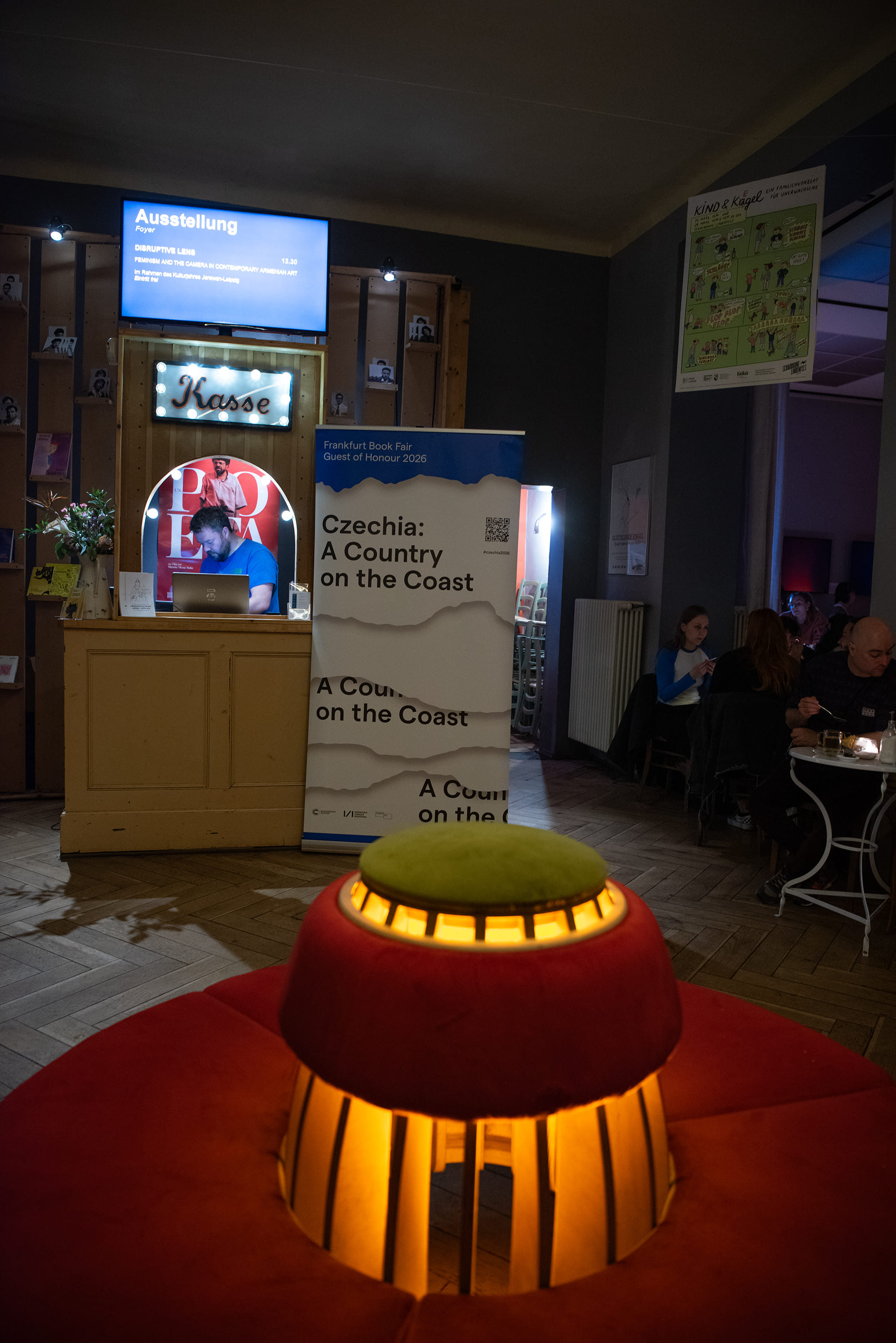
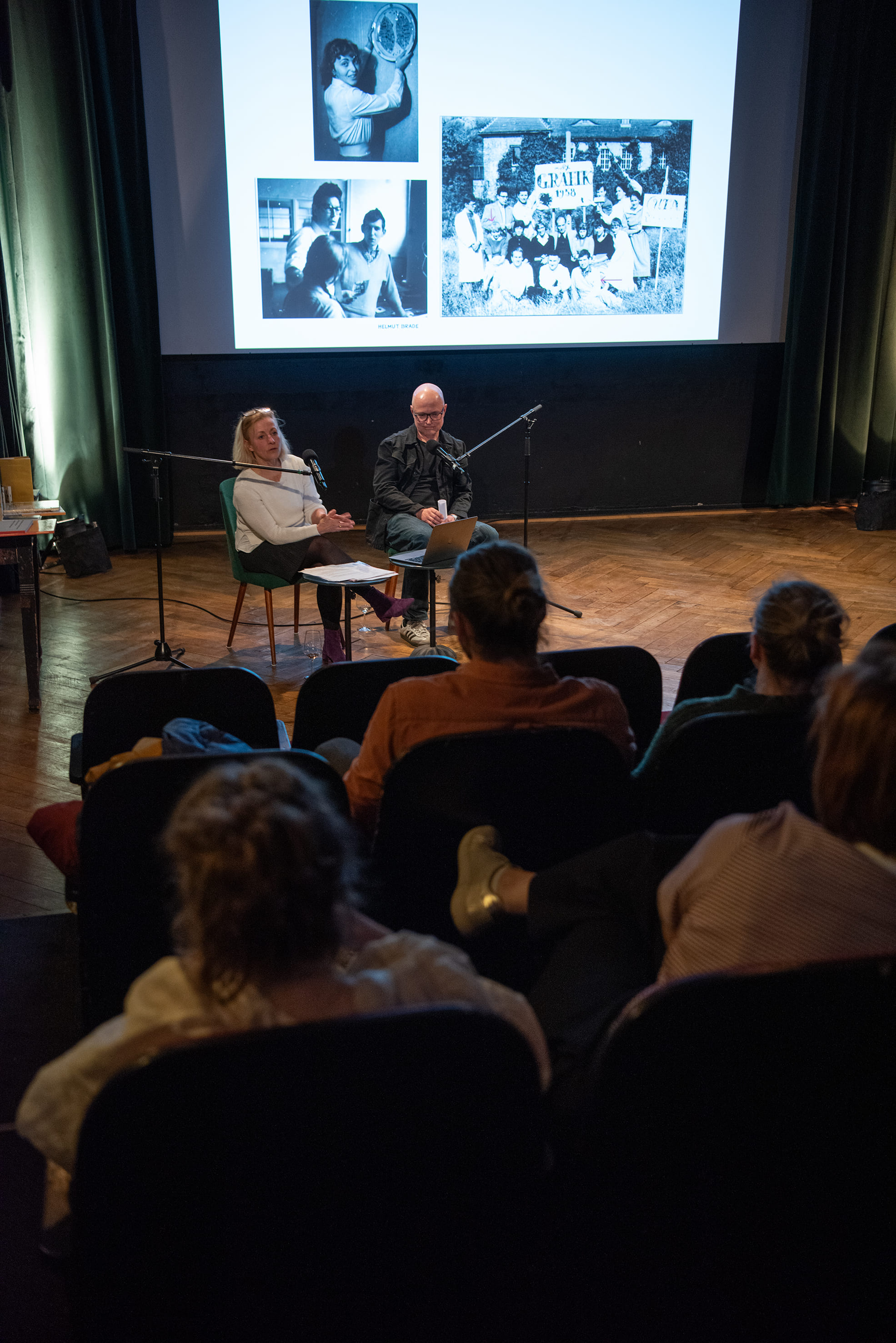
In the evening, we made our way to the impressive Schaubühne Lindenfels, where Barbara Šalamounová, together with Professor Volker Schlecht, reflected on the Czech-German artistic connections of her parents, Jiří Šalamoun and Eva Natus-Šalamoun. The event was a tribute to two outstanding figures in book illustration and graphic design, whose creative work and professional lives were closely tied to the Czech and German cultural spheres.

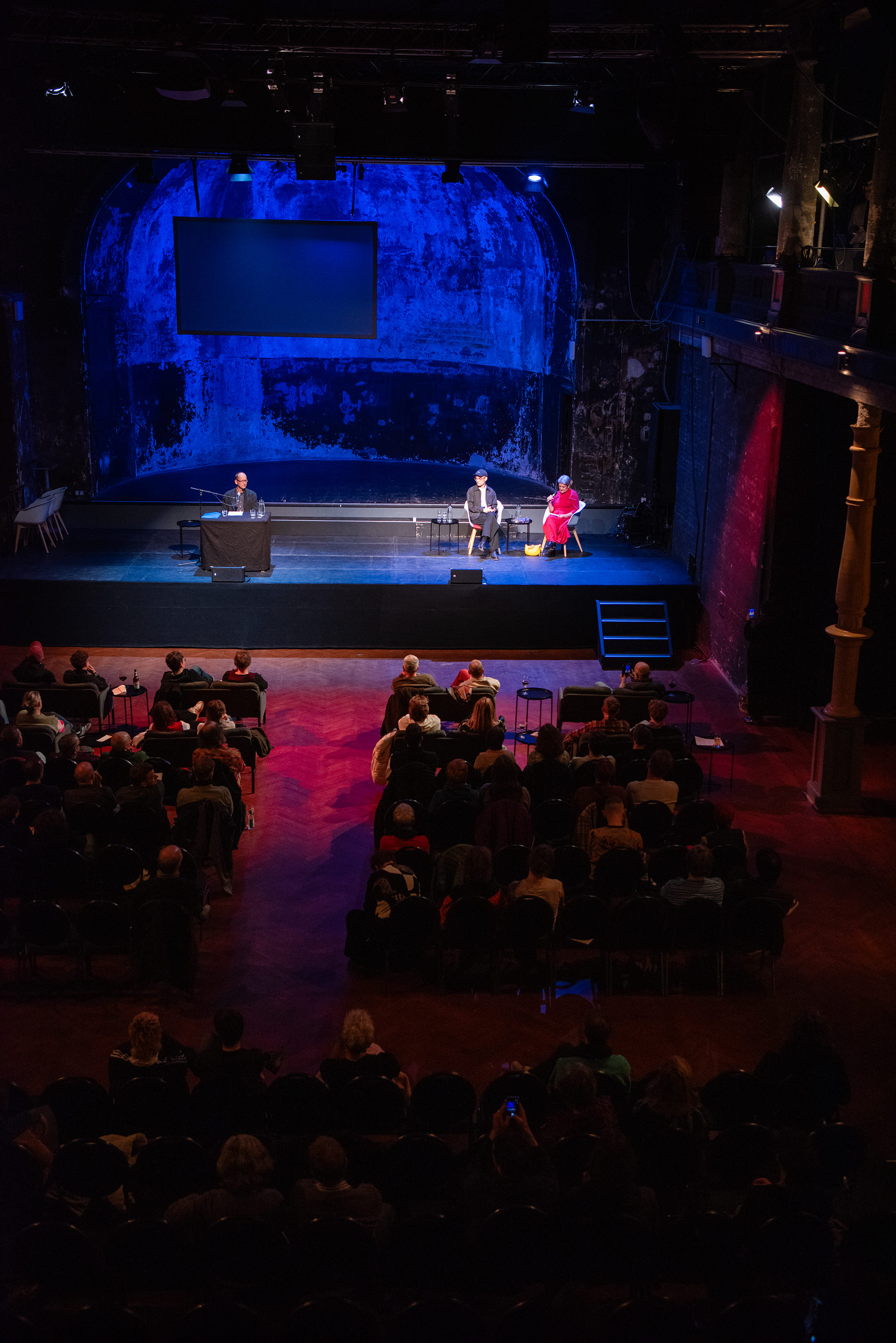
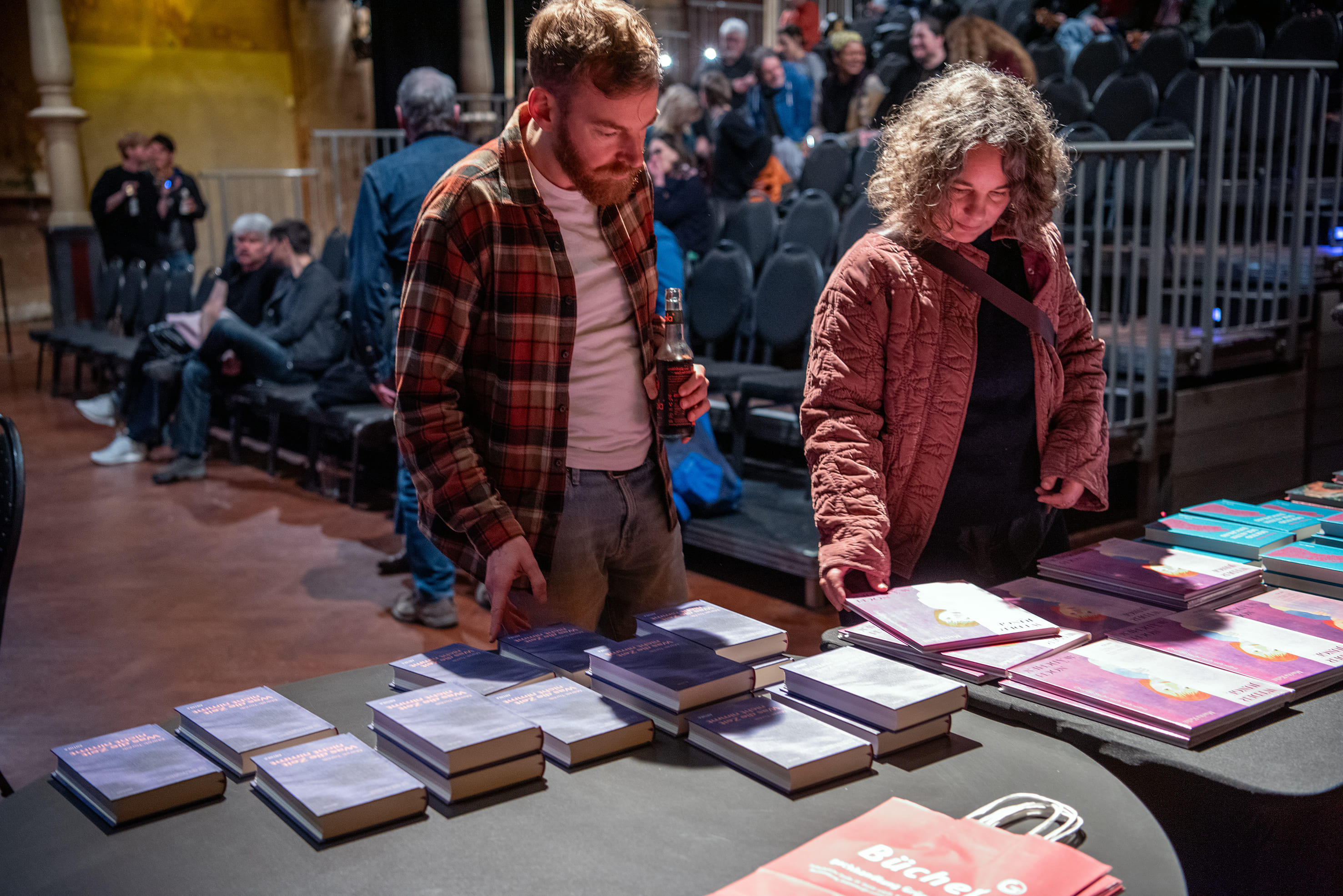
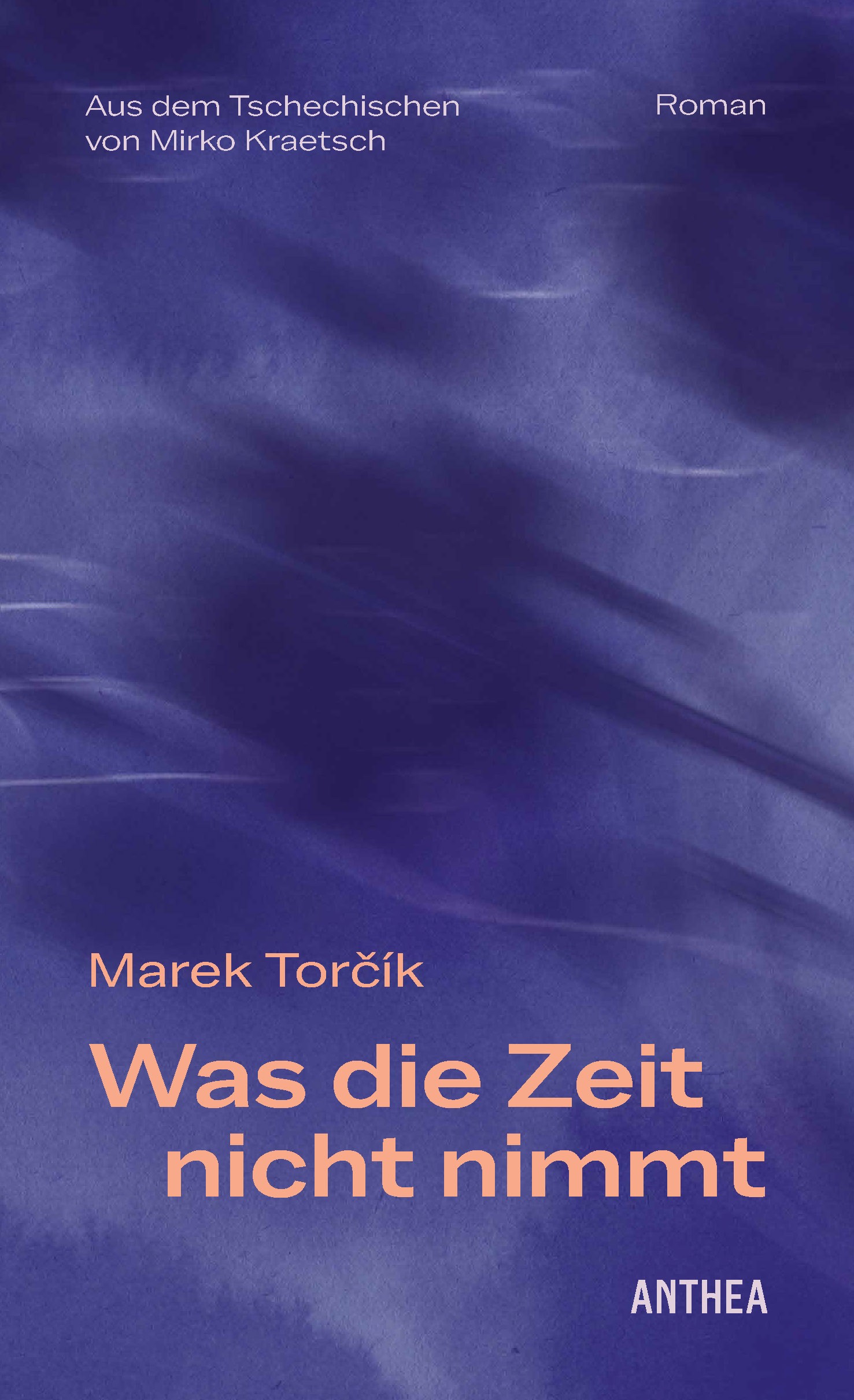
The Schaubühne Lindenfels also hosted the event Bodies, Words, Saunas which Marek Torčík opened with a presentation of his novel What Time Does Not Take (Anthea Verlag, translated by Mirko Kraetsch), one of the most striking Czech debuts of recent years. The event was moderated by Libuše Černá, and Stephan Wolf-Schönburg read excerpts from the book.

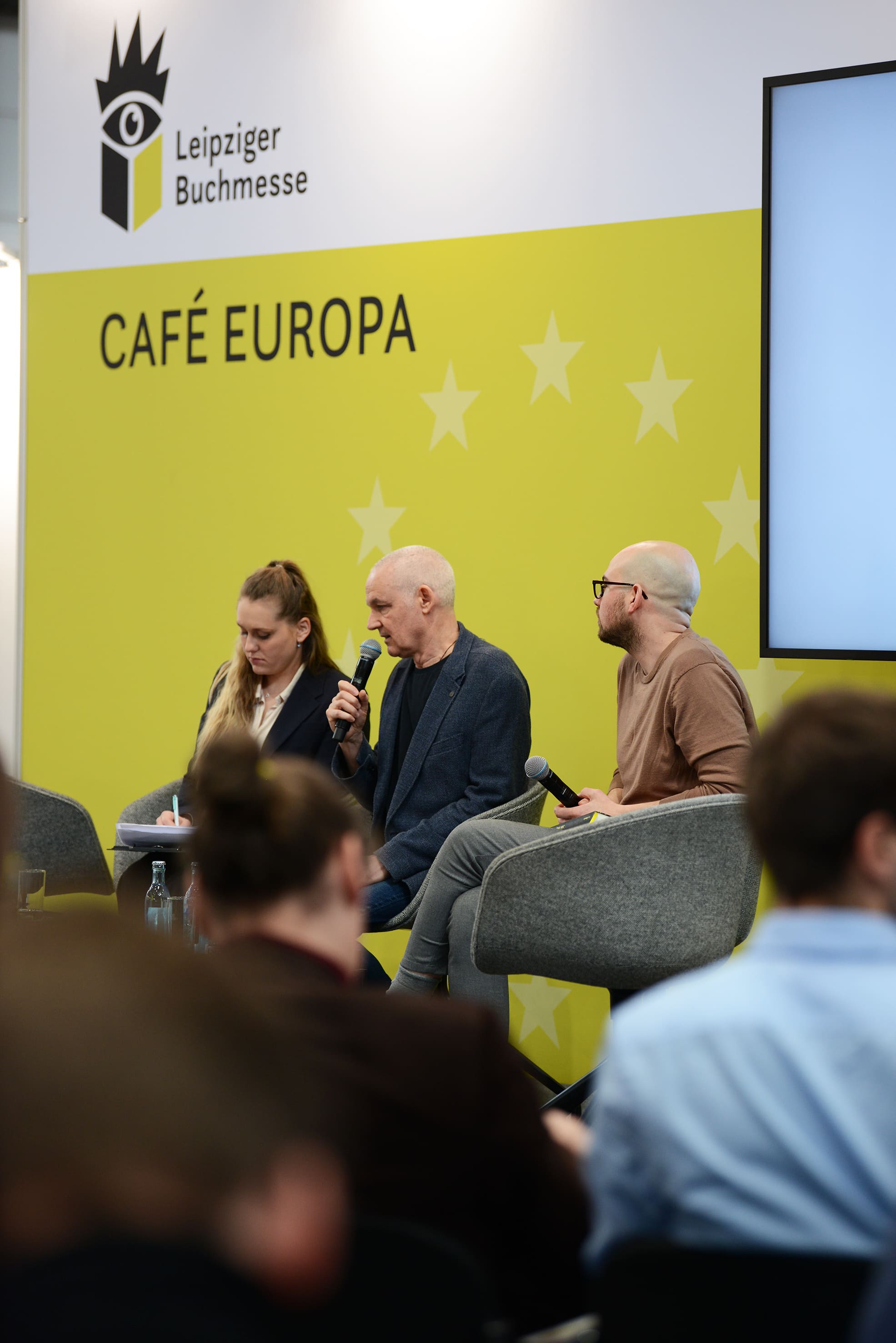
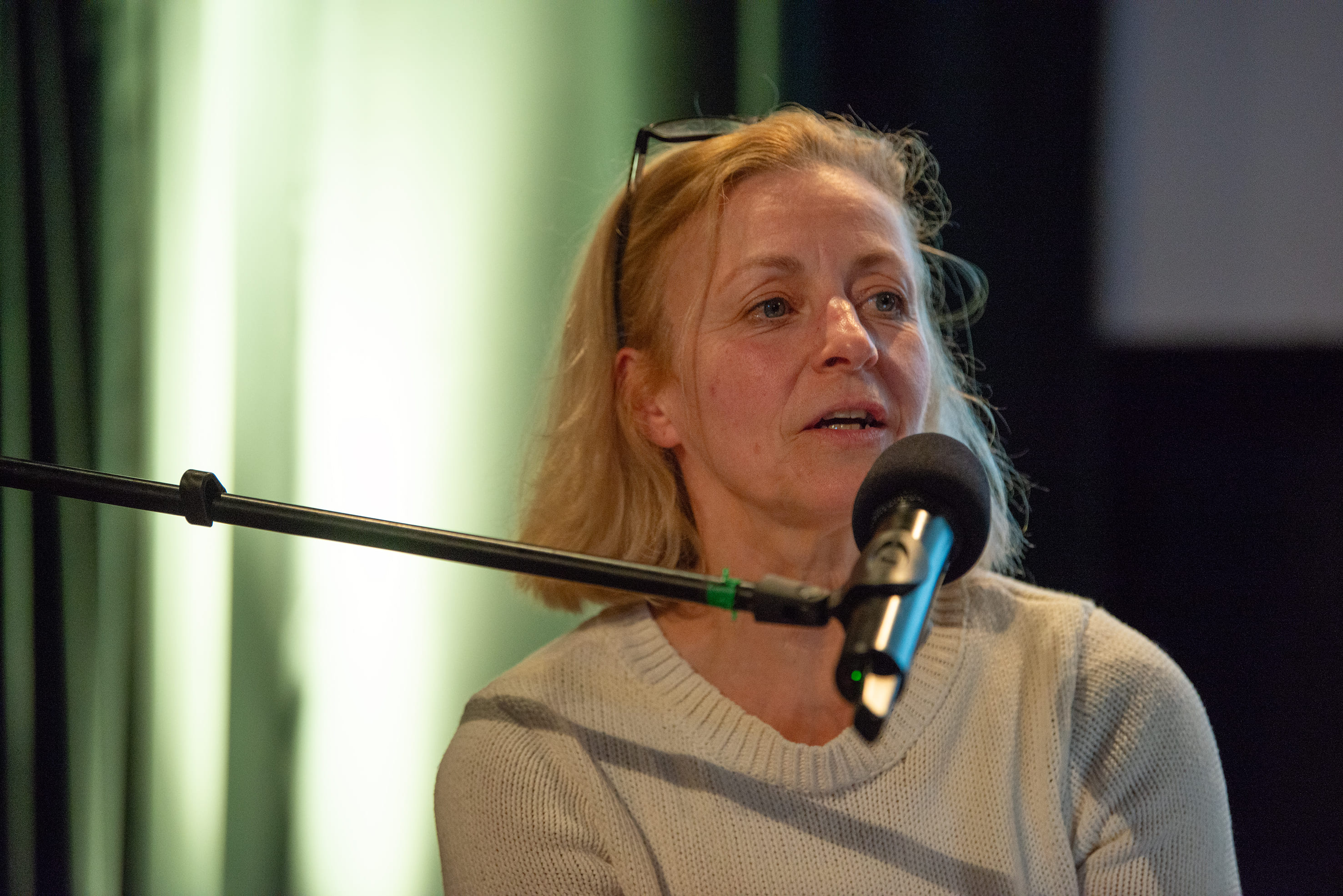
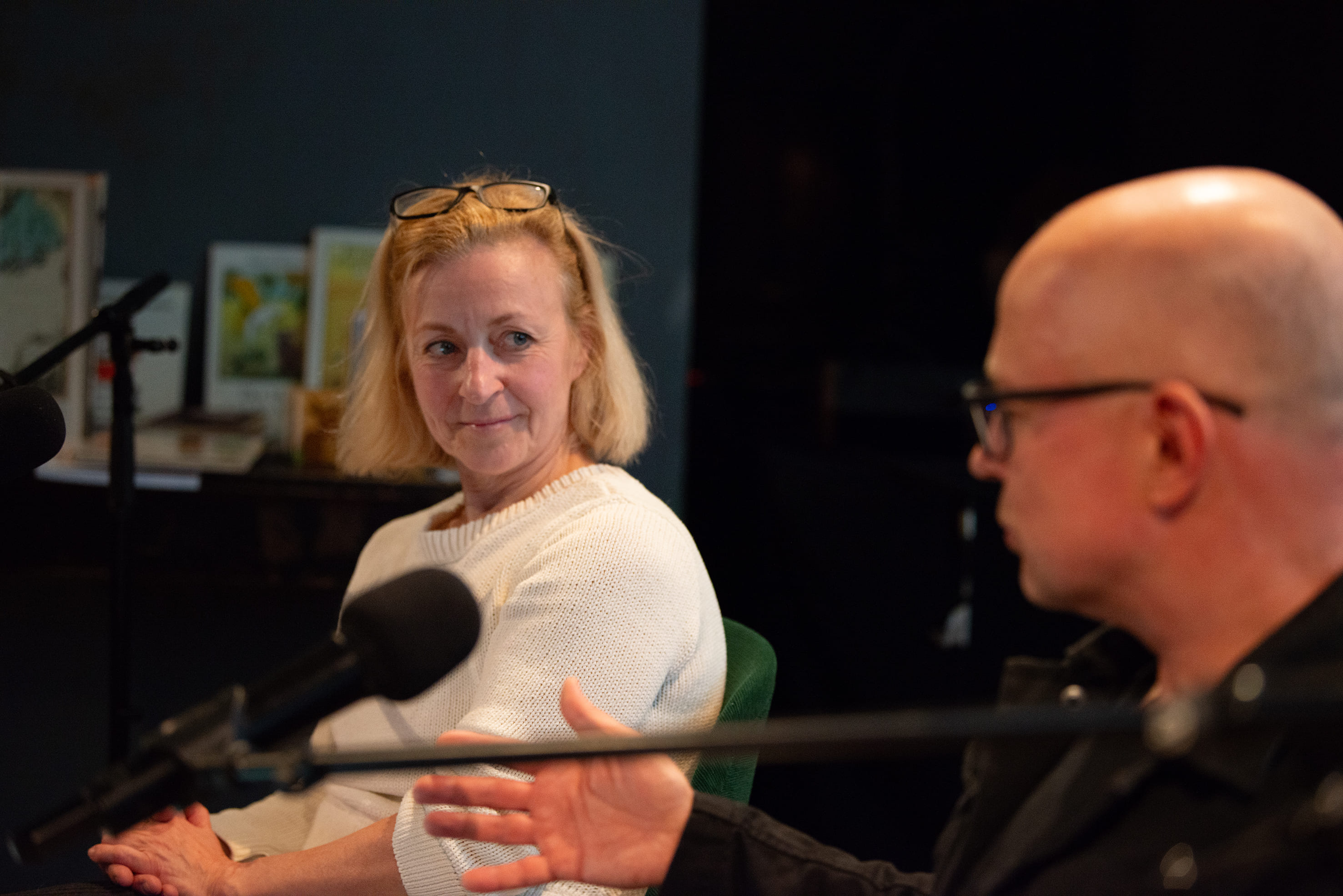
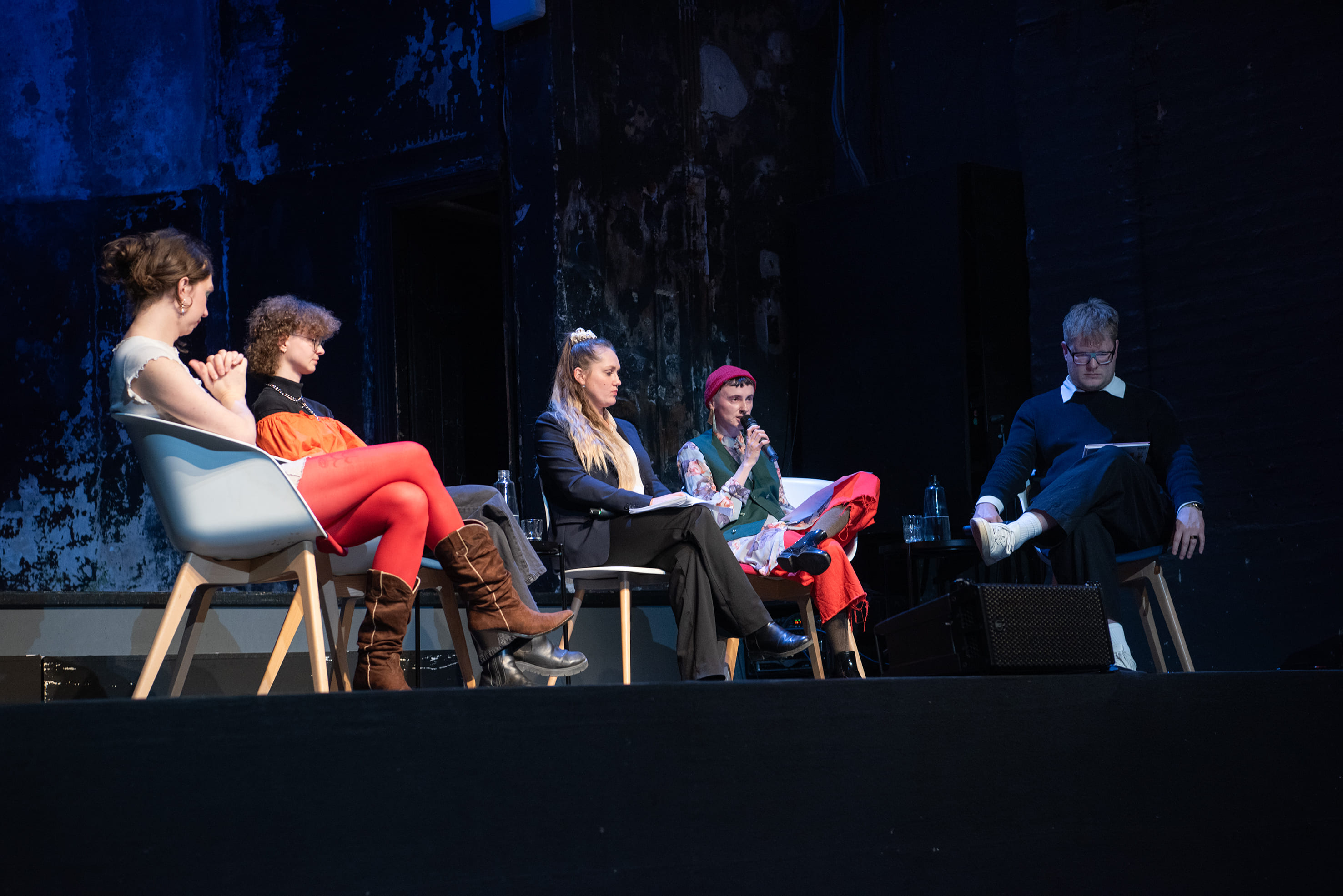
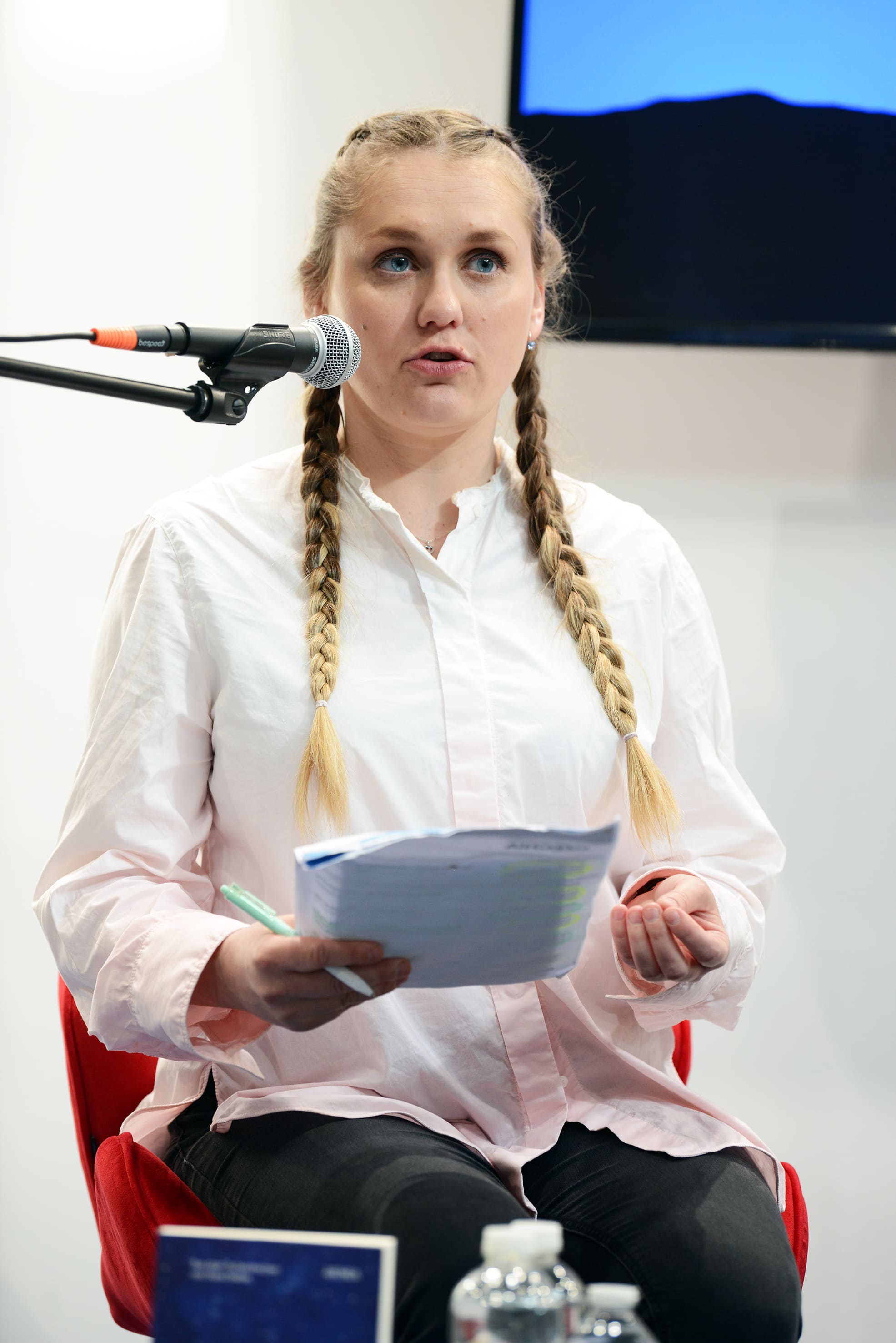
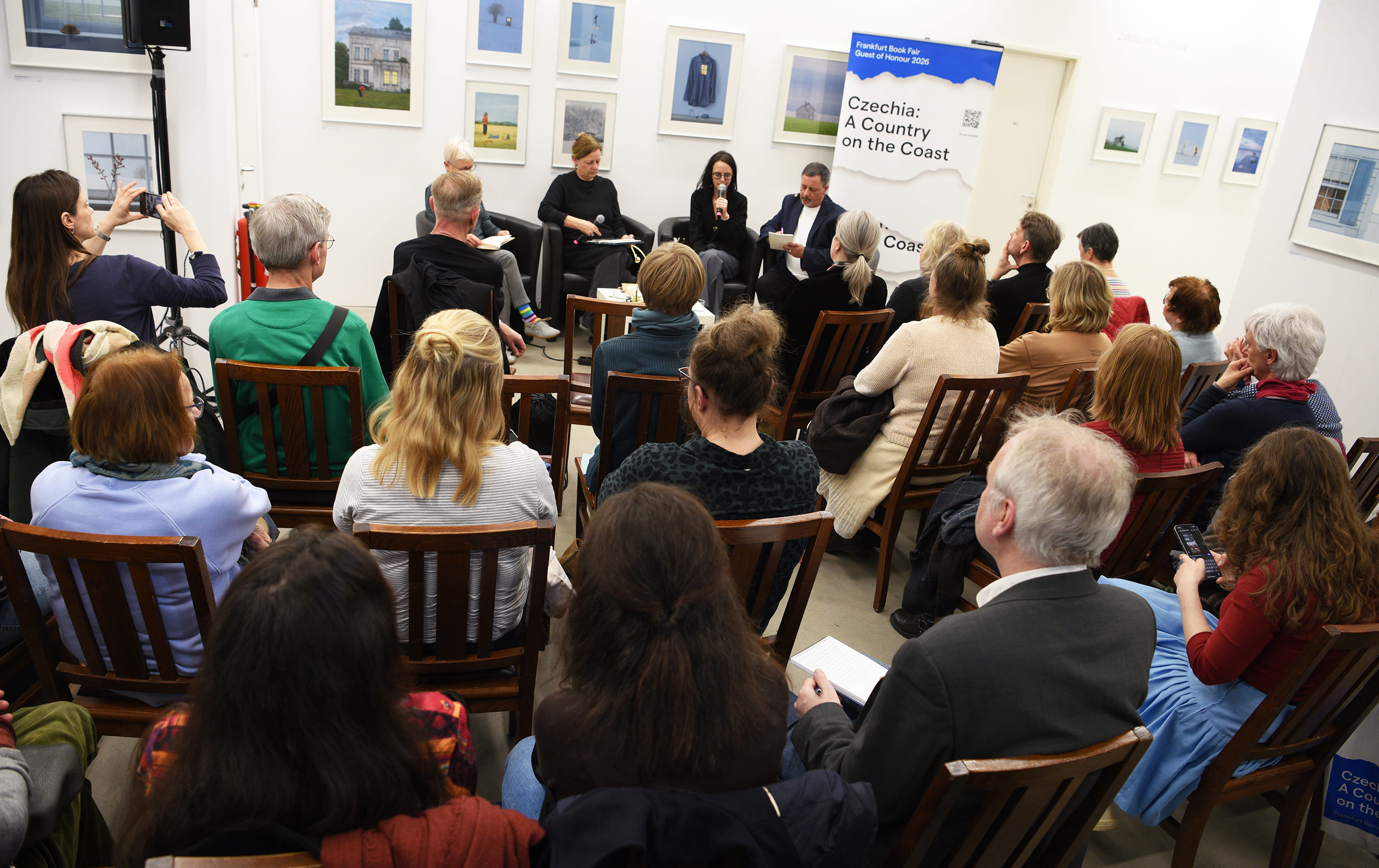
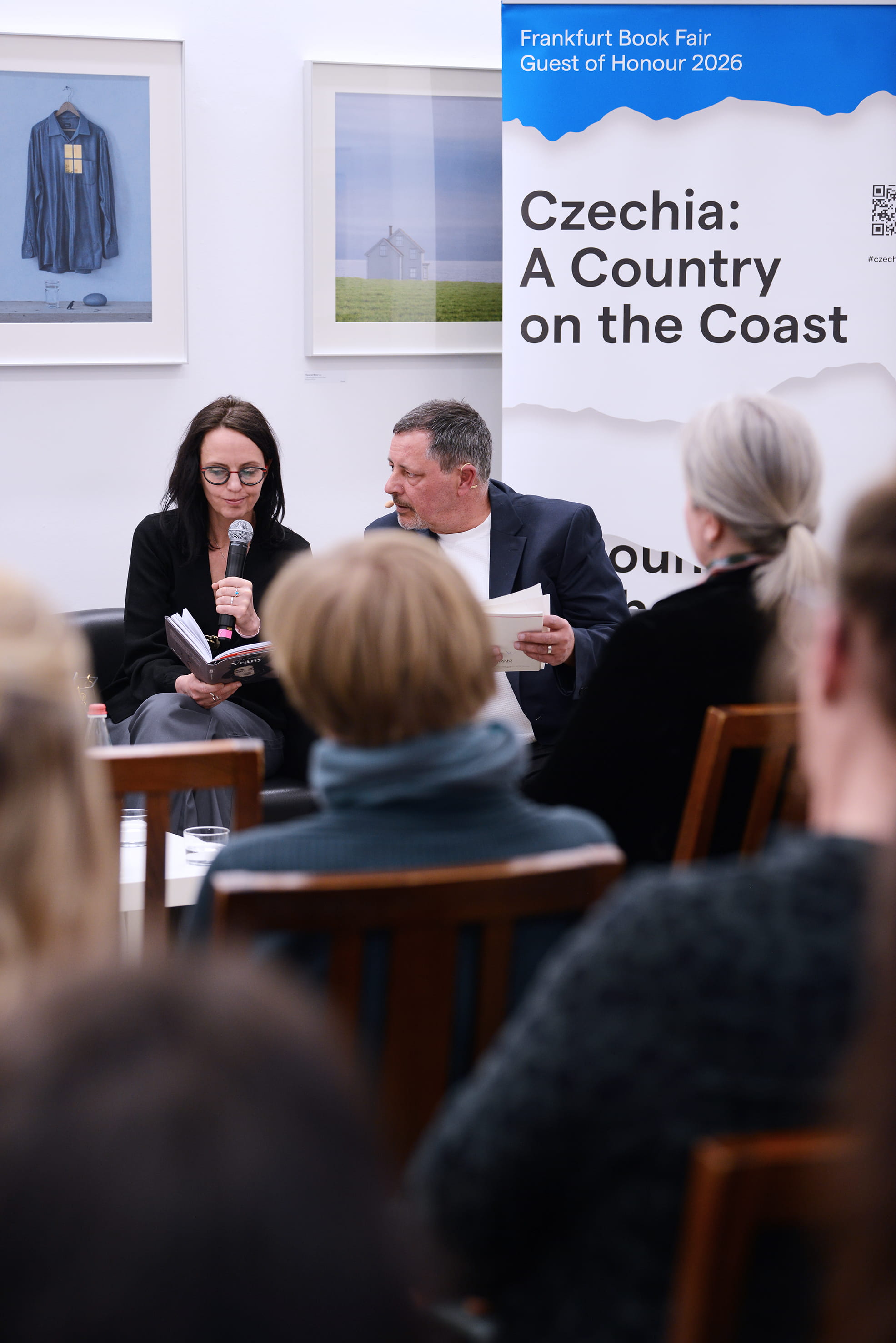
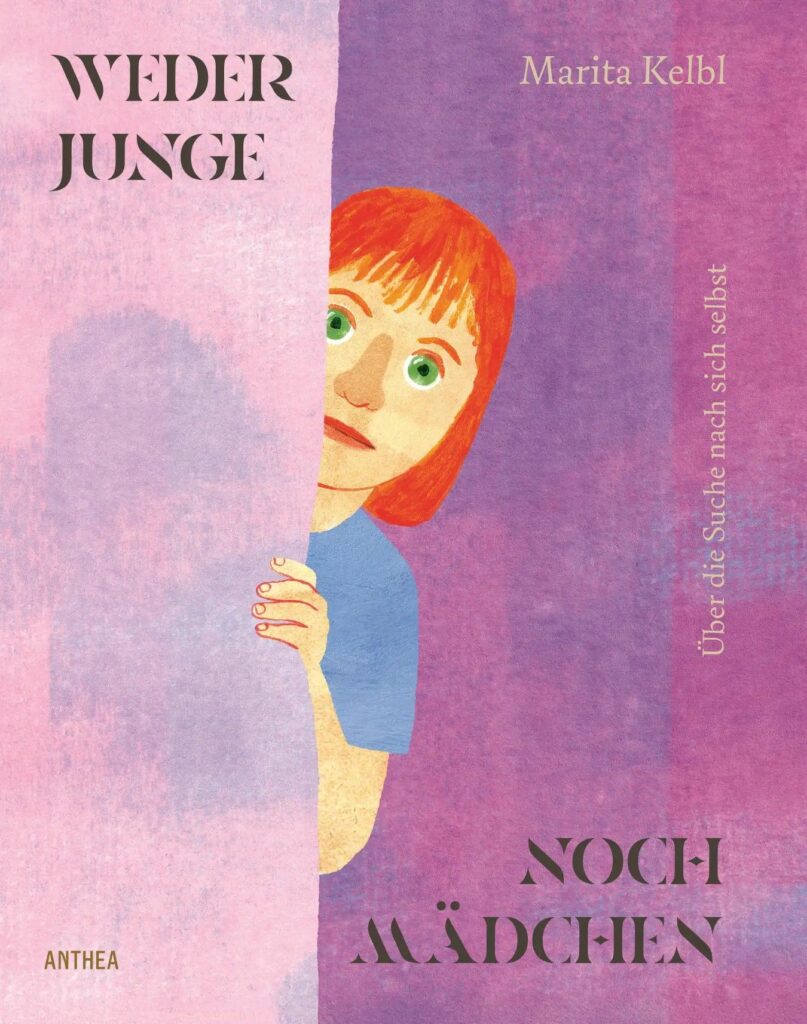
Marek Torčík was followed by Marita Kelbl with her book Neither Boy Nor Girl (Anthea Verlag, translated by Barbora Schnelle), Iryna Zahladko with her work How to Apply Makeup While Sick, and Antonín Zhořec with his poetry collection I Prick the Solar Storm. The discussion was moderated by Daniel Schmidt, and Laura Richter read excerpts from the works.

The evening concluded with Vratislav Maňák and his book With Wittgenstein in the Gay Sauna (Karl Rauch Verlag, translated by Lena Dorn). The event was moderated by Martin Krafl, and Stephan Wolf-Schönburg read excerpts from the book.

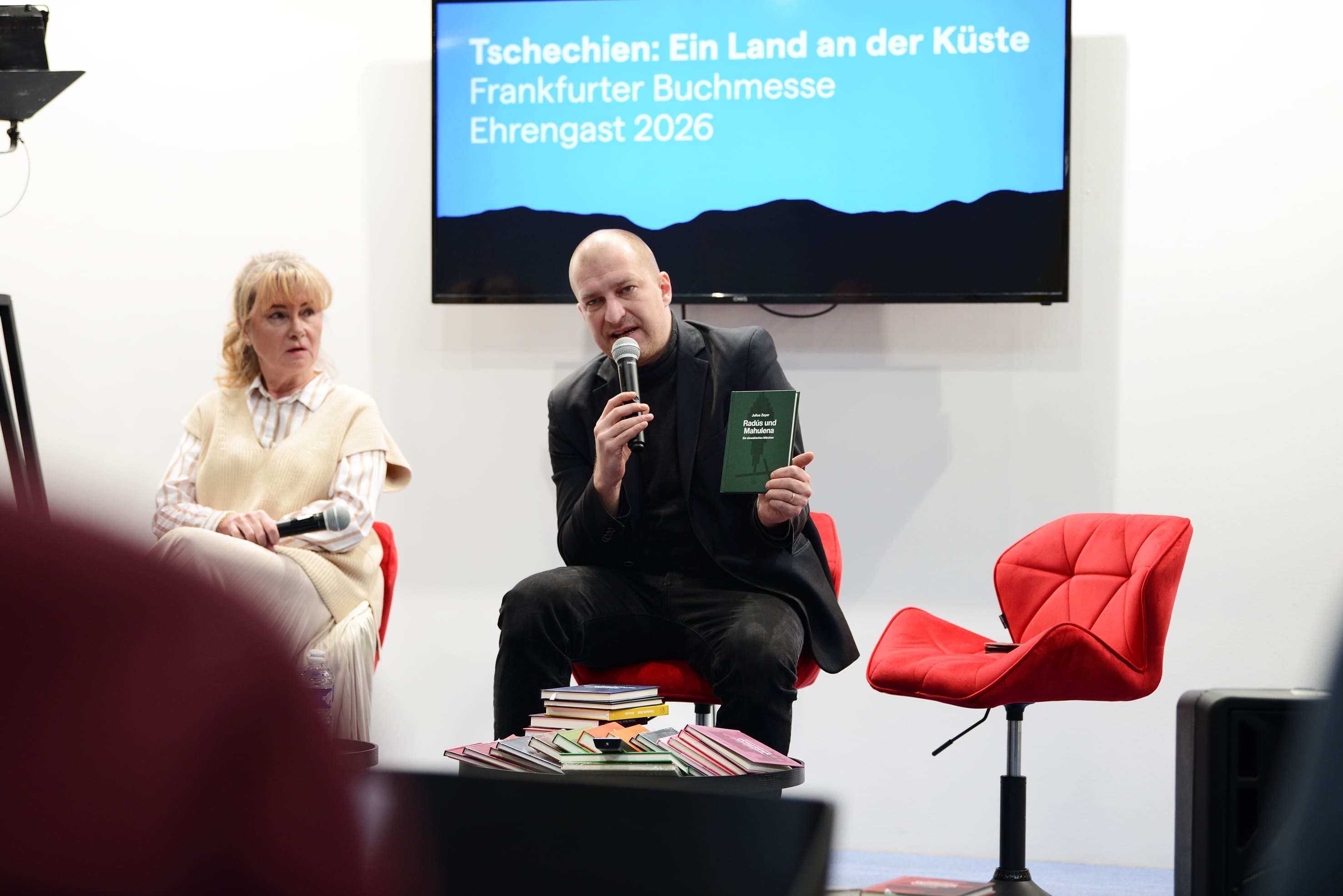
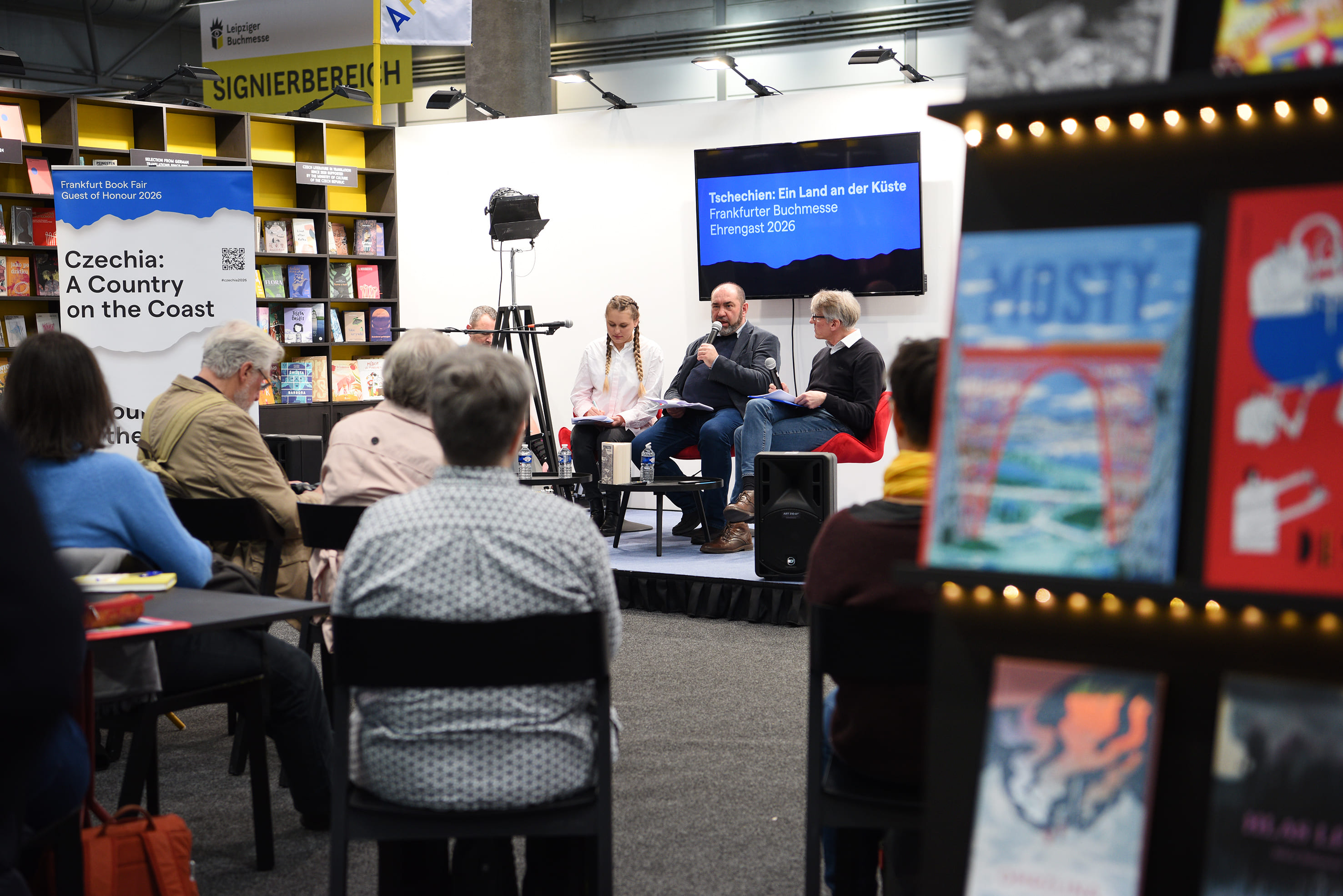
Pictures: Sabine Felber/Literaturtest

Photo Report: Leipzig Book Fair, Day Two

Danuše Siering and Ondřej Cikán (Ketos Verlag) discussed how to discover and present treasures of Czech literature to a German-speaking audience. The German translation of Miroslav Hlaučo’s novel Letnice (Pentecost) was also presented at the booth (Anthea Verlag, translation: Raija Hauck). The event was moderated by Mirko Schwanitz, with interpretation provided by Nella Nitrová.

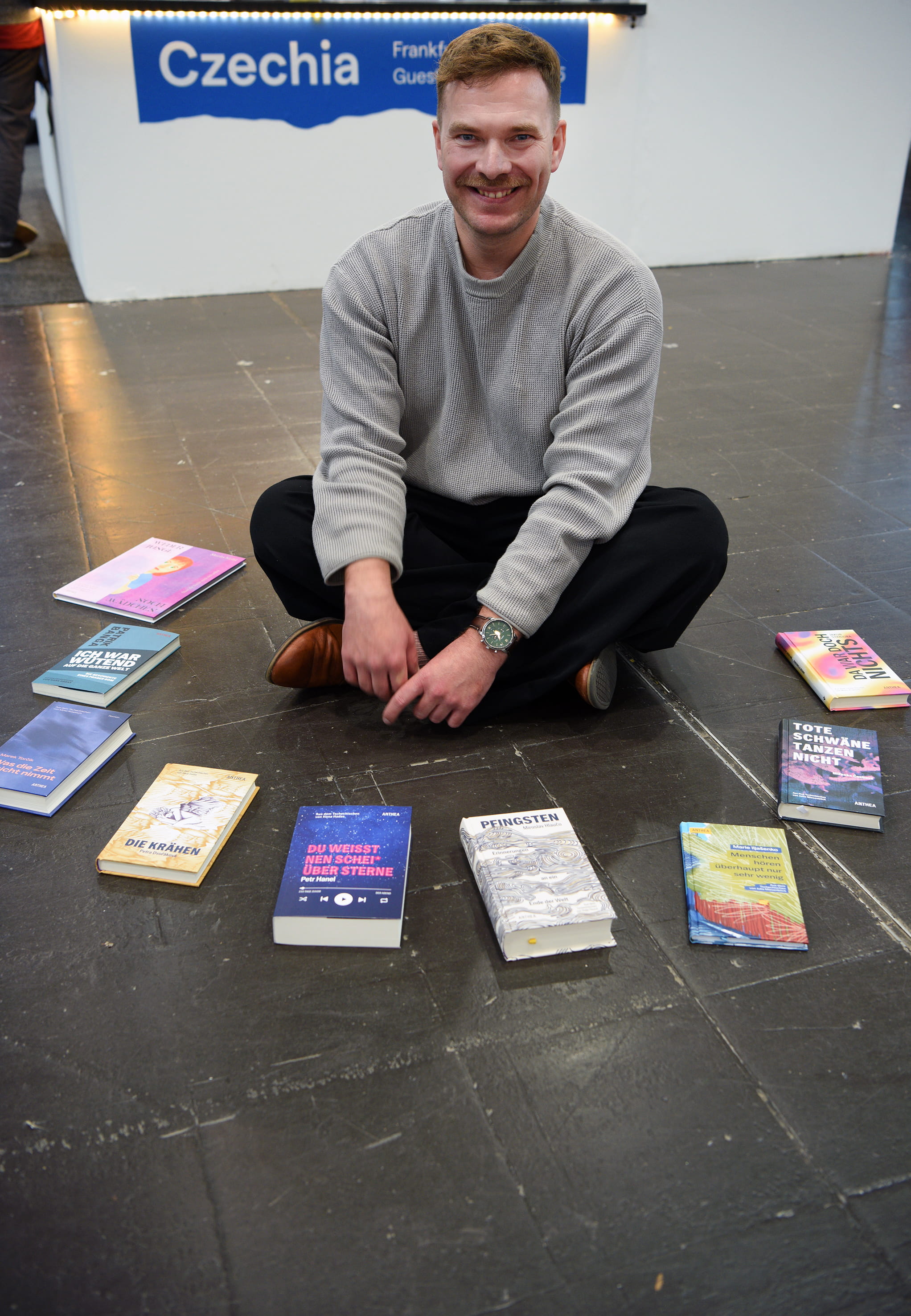
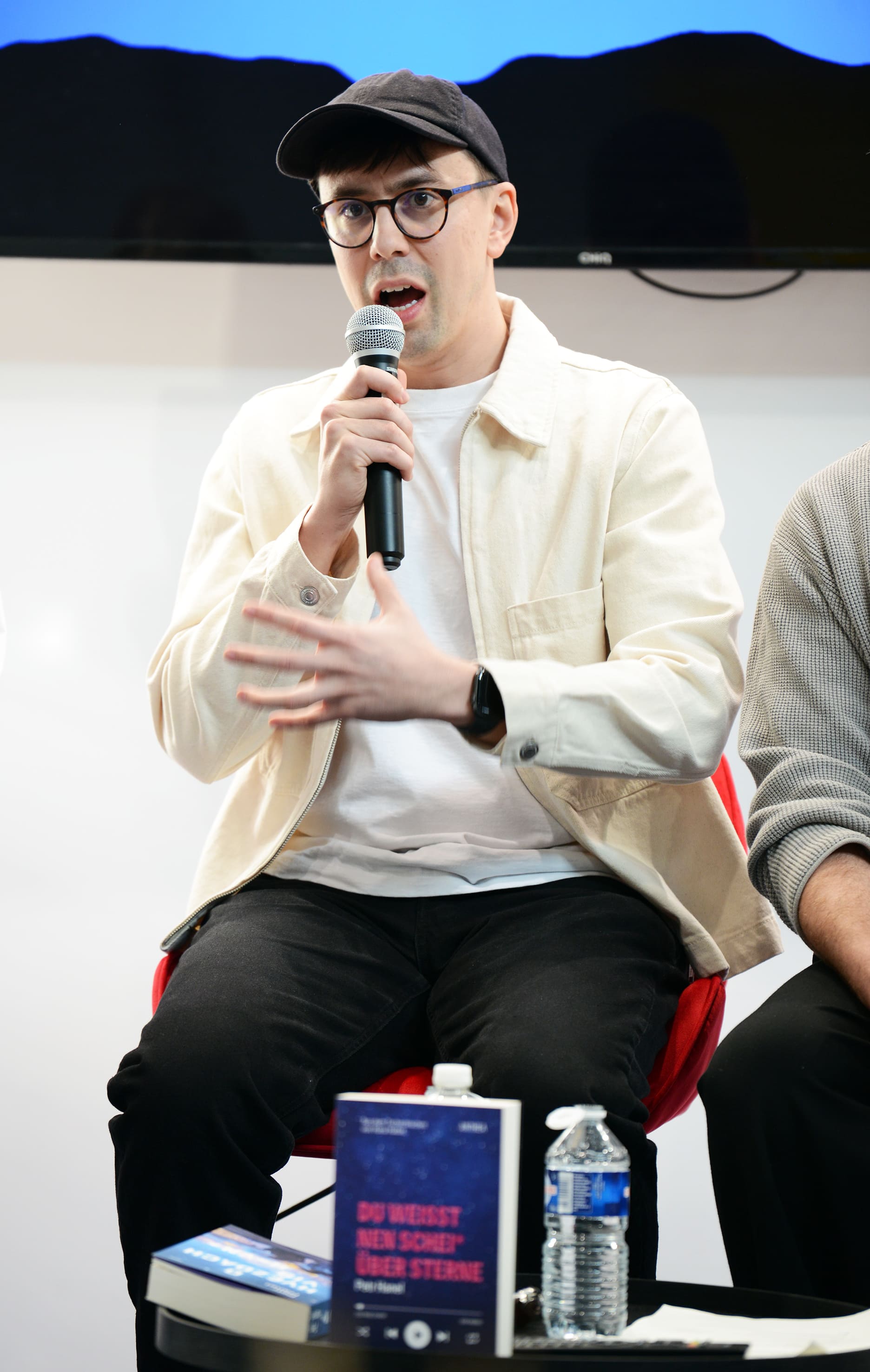
Two books were presented at the Czech National Stand: First, Petr Hanel introduced his novel You Don’t Know Shit About Stars (Anthea Verlag, translated by Hana Hadas), a brutal coming-of-age story about masculinity and the search for one’s identity in the age of the internet. Marie Iljašenko then followed with her poetry collection People Hear Very Little (Anthea Verlag, translated by Julia Miesenböck), which captures the urban space inhabited by both humans and animals. The discussion was moderated by Ruben Höppner, with translation by Nella Nitrová and Michala Čičváková.

Petra Dvořáková and Michal Ajvaz made their appearances in the impressive setting of the Leipzig Passagen at the Mädler Art Forum. Petra Dvořáková presented The Crows (Anthea Verlag, translated by Hana Hadas), a poignant novella about coming of age, painful family relationships, and the generational divide. Christina Frankenberg moderated the evening, and Steffi Böttger read from the book. Michal Ajvaz then spoke about his novel Passages Under Glass (Allee Verlag, translated by Veronika Siska), whose plot unfolds in the Leipzig Passages into a multi-layered, imaginative narrative. Maximilian Mengeringhaus moderated the discussion, and Steffi Böttger also gave the reading.

Pictures: Sabine Felber/Literaturtest

Photo Report: Leipzig Book Fair, Day One

We are delighted that the Czech Republic was part of this year’s Leipzig Book Fair, which welcomed a record 313,000 visitors and once again confirmed its important role on the European literary scene. From March 19 to 22, the fair featured more than 3,000 events at over 300 venues throughout Leipzig and brought together 2,044 exhibitors from 54 countries. The Czech participation was thus part of an exceptionally strong edition that demonstrated just how vibrant and inspiring the contemporary book world is.

The grand opening of the Czech national pavilion was attended by Fair Director Astrid Böhmisch, Jiří Čistecký, Ambassador of the Czech Republic to the Federal Republic of Germany; Tomáš Kubíček, Director General of the Moravian Library; Martin Krafl, Director of the Czech Literary Center; Gabriele Goldfuss, Head of the International Cooperation Department of the City of Leipzig; and Juergen Boos, Director of the Frankfurt Book Fair.

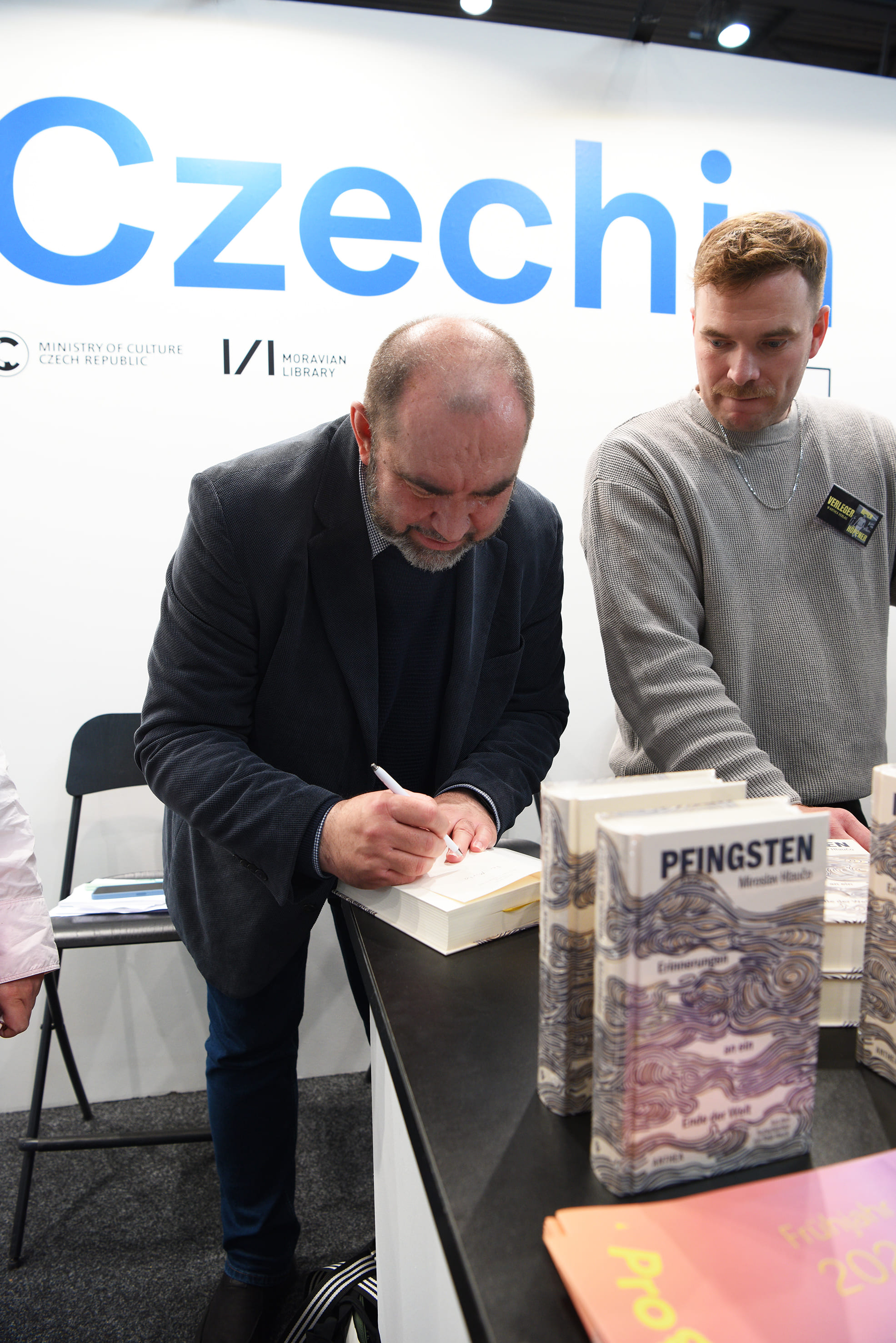
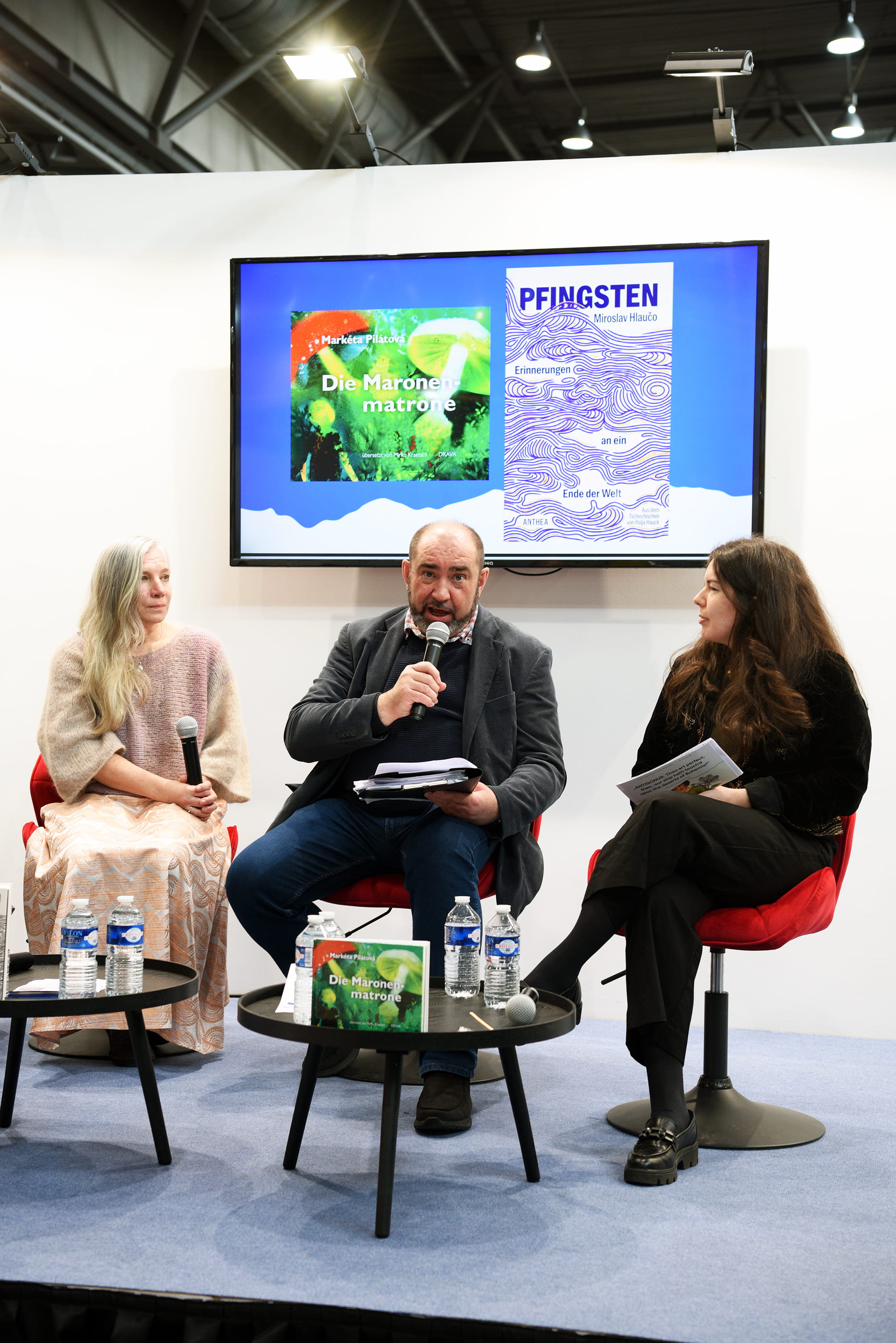
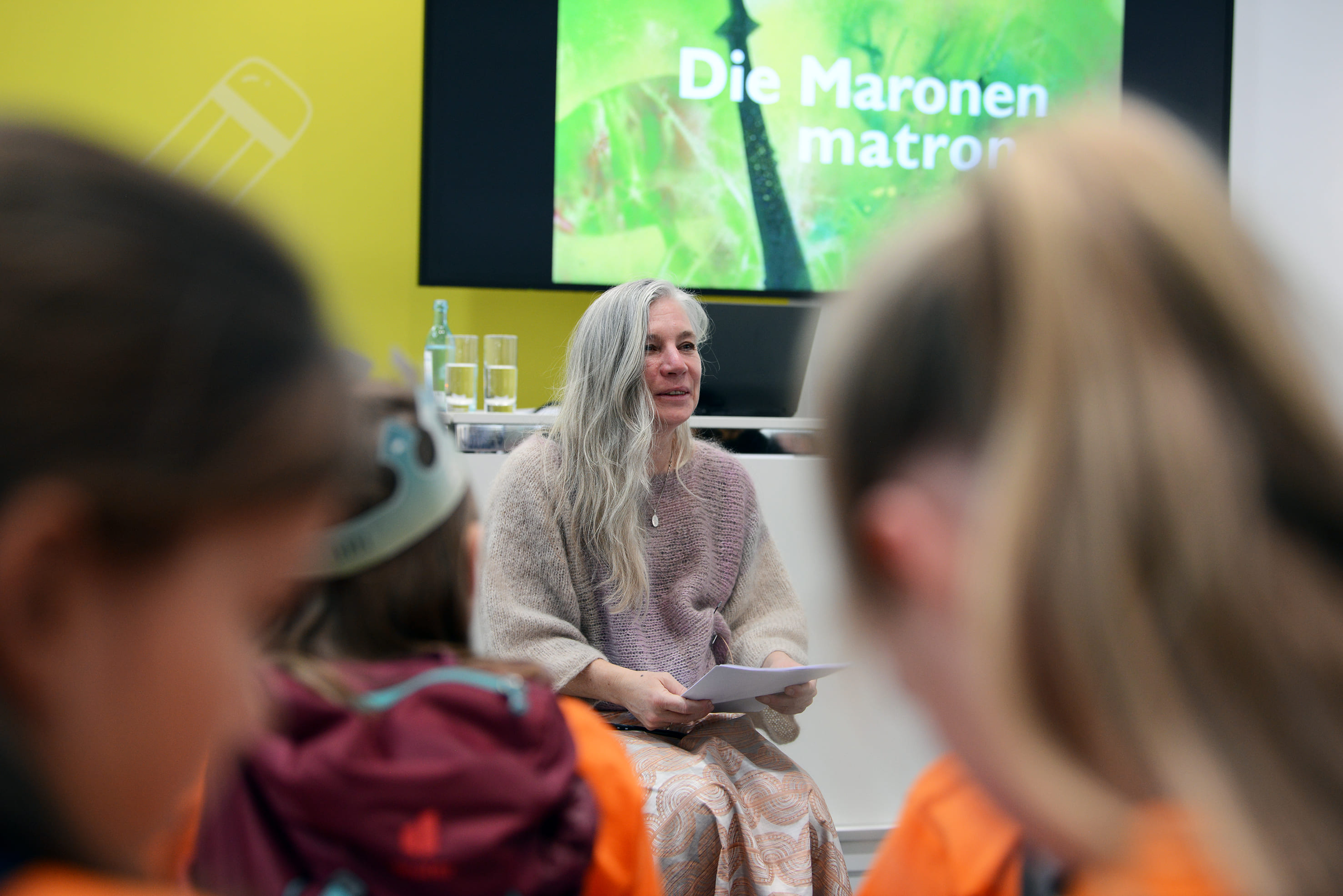
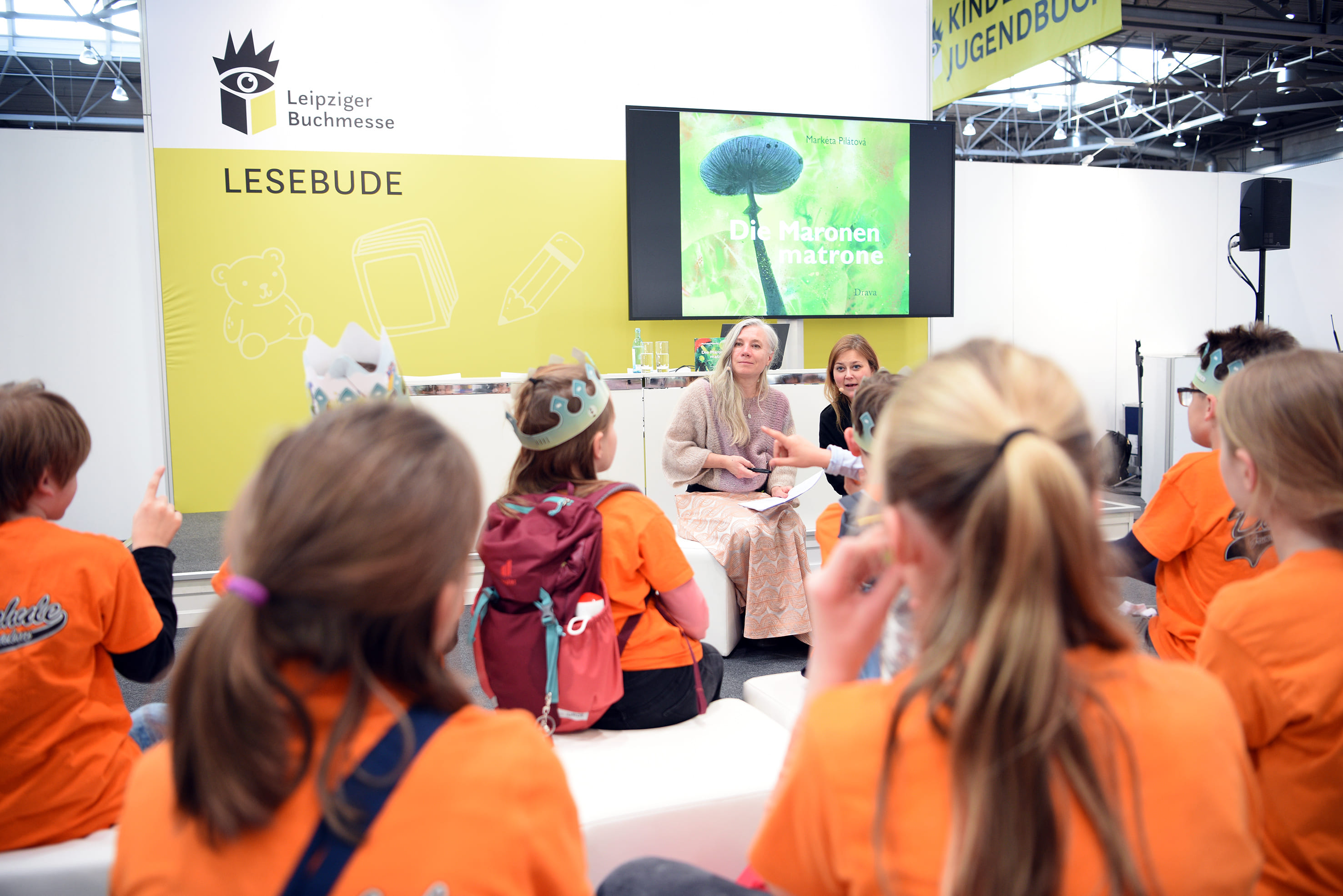
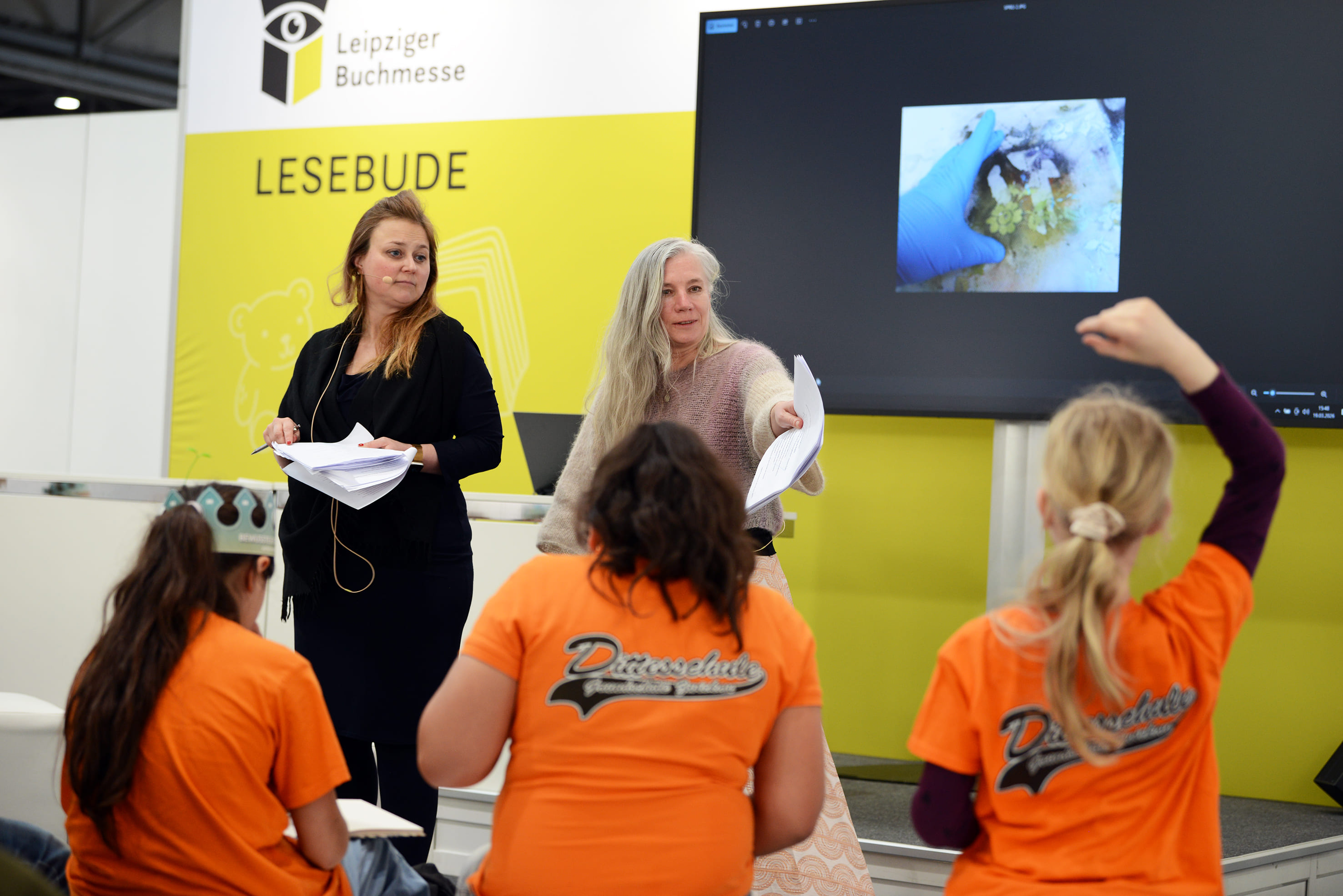
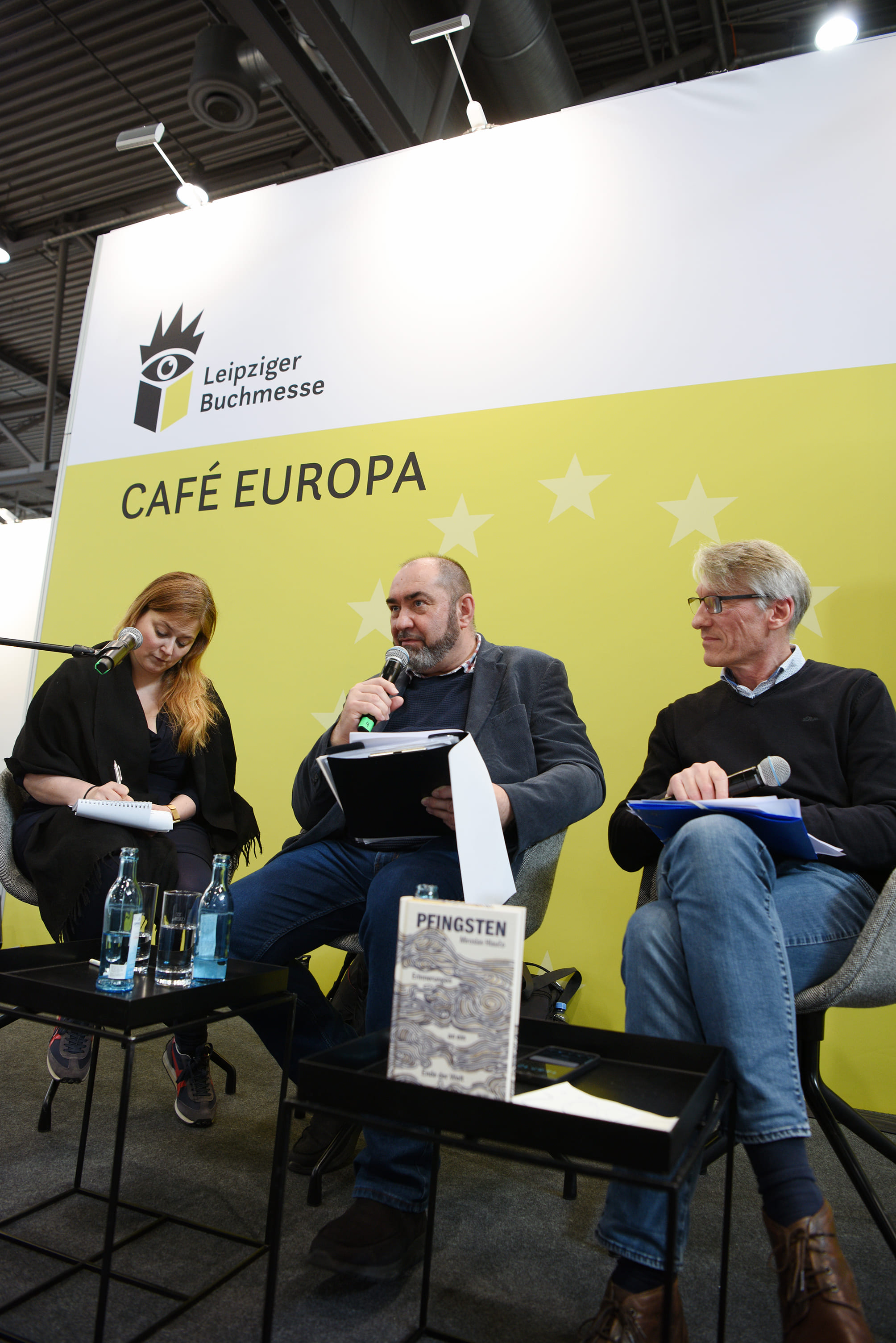
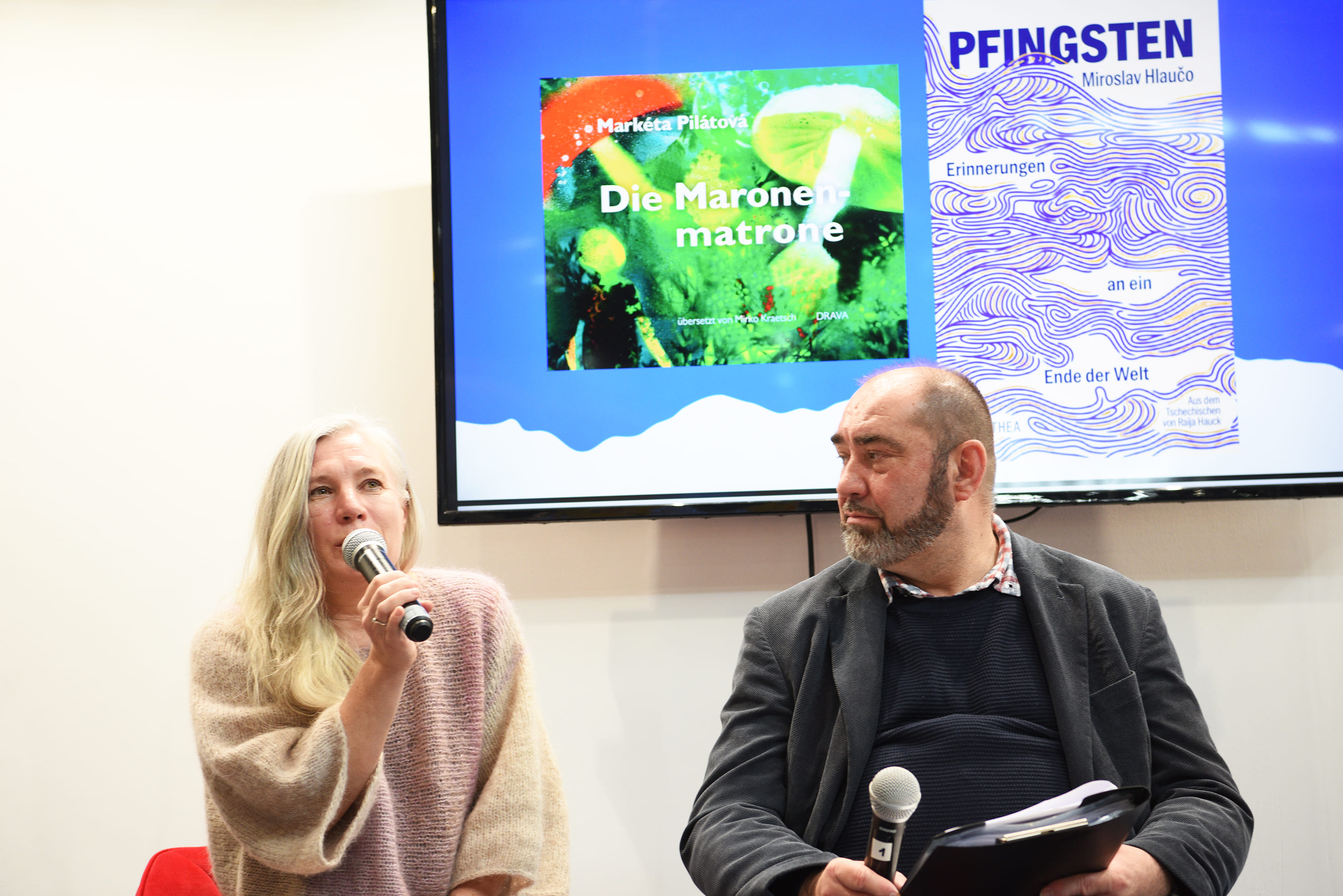
Markéta Pilátová presented her book Bába Bedla at the fair; it was recently published in German under the title Die Maronenmatrone by Drava Verlag, translated by Mirko Kraetsch. Illustrator Martina Trchová also contributed to the book. Miroslav Hlaučo presented his debut novel “Letnice,” which has won the Magnesia Litera Prize twice in the Czech Republic. The book, which is classified as magical realism, has now been published in German under the title “Pfingsten” by Anthea Verlag, translated by Raija Hauck. Further international editions are in preparation. The discussions were moderated by Mirko Schwanitz, with Bianca Lipanská providing interpretation.

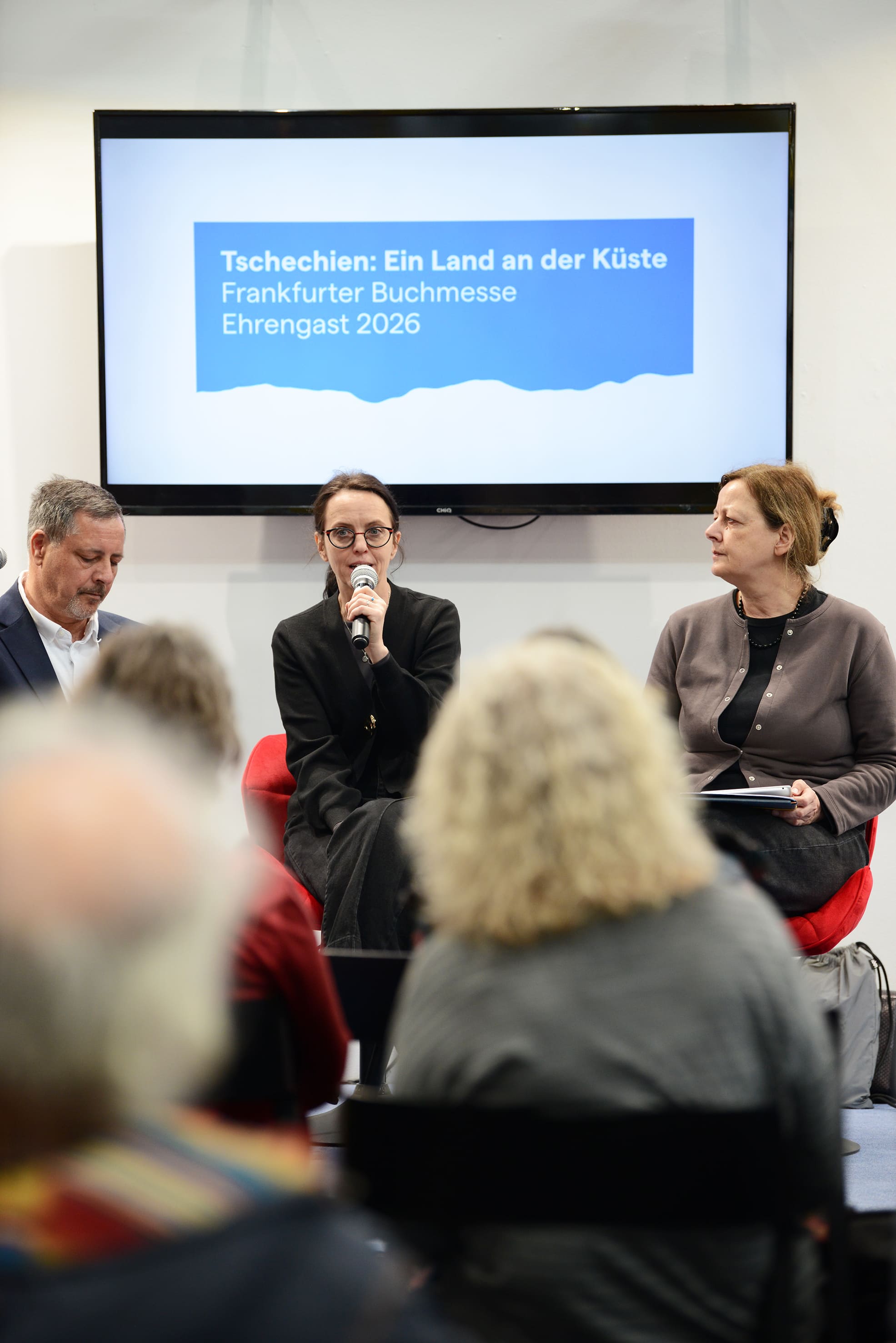
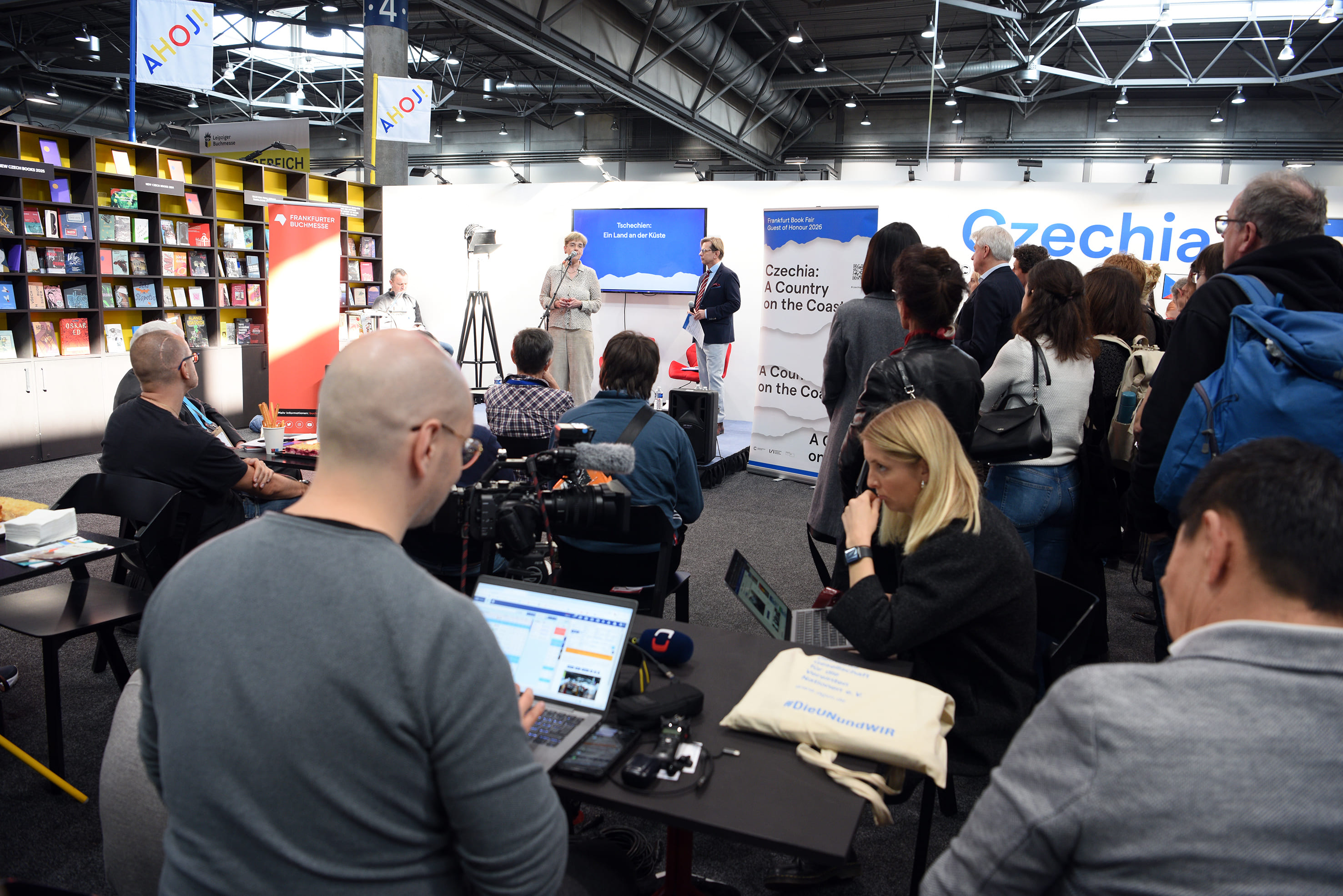
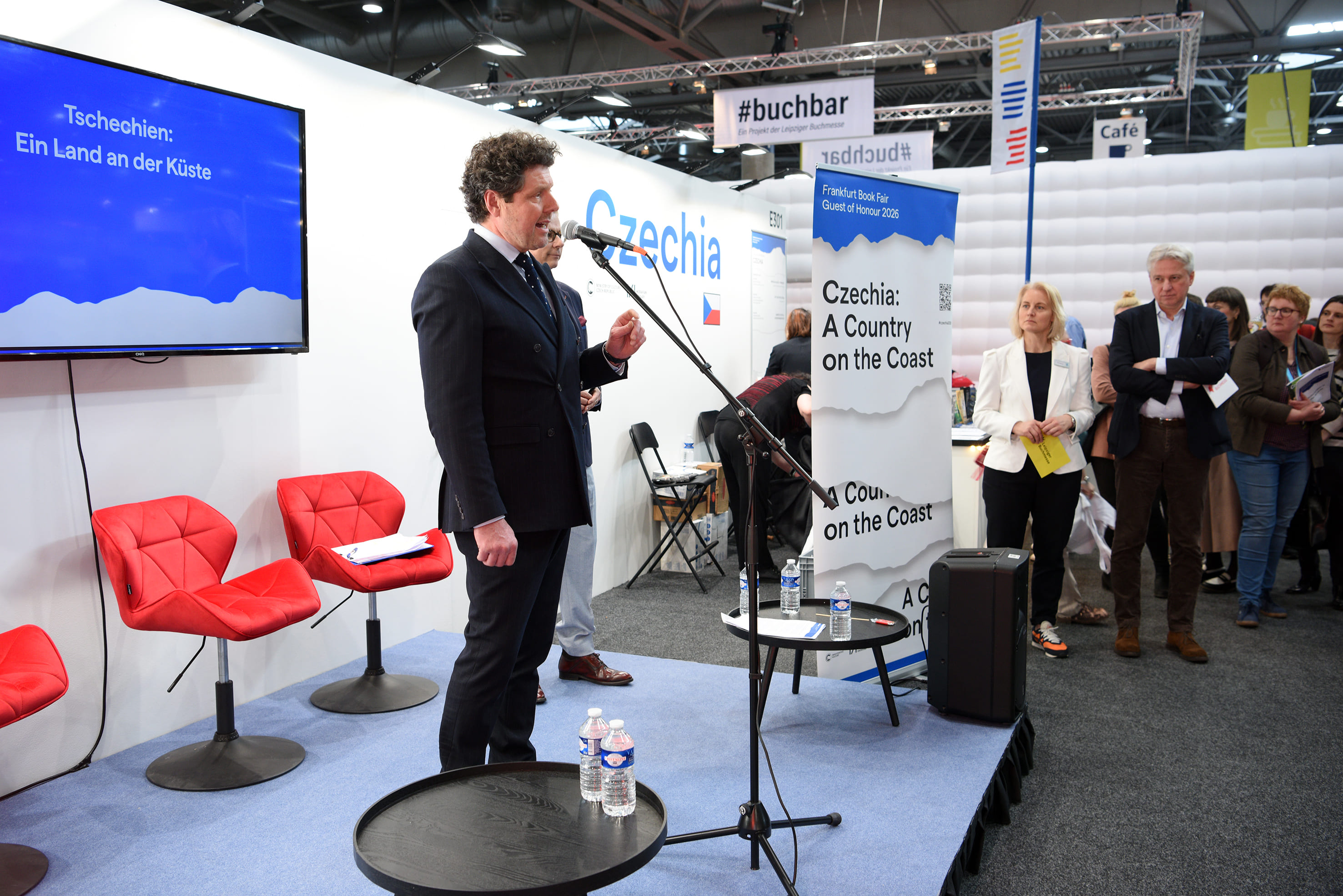
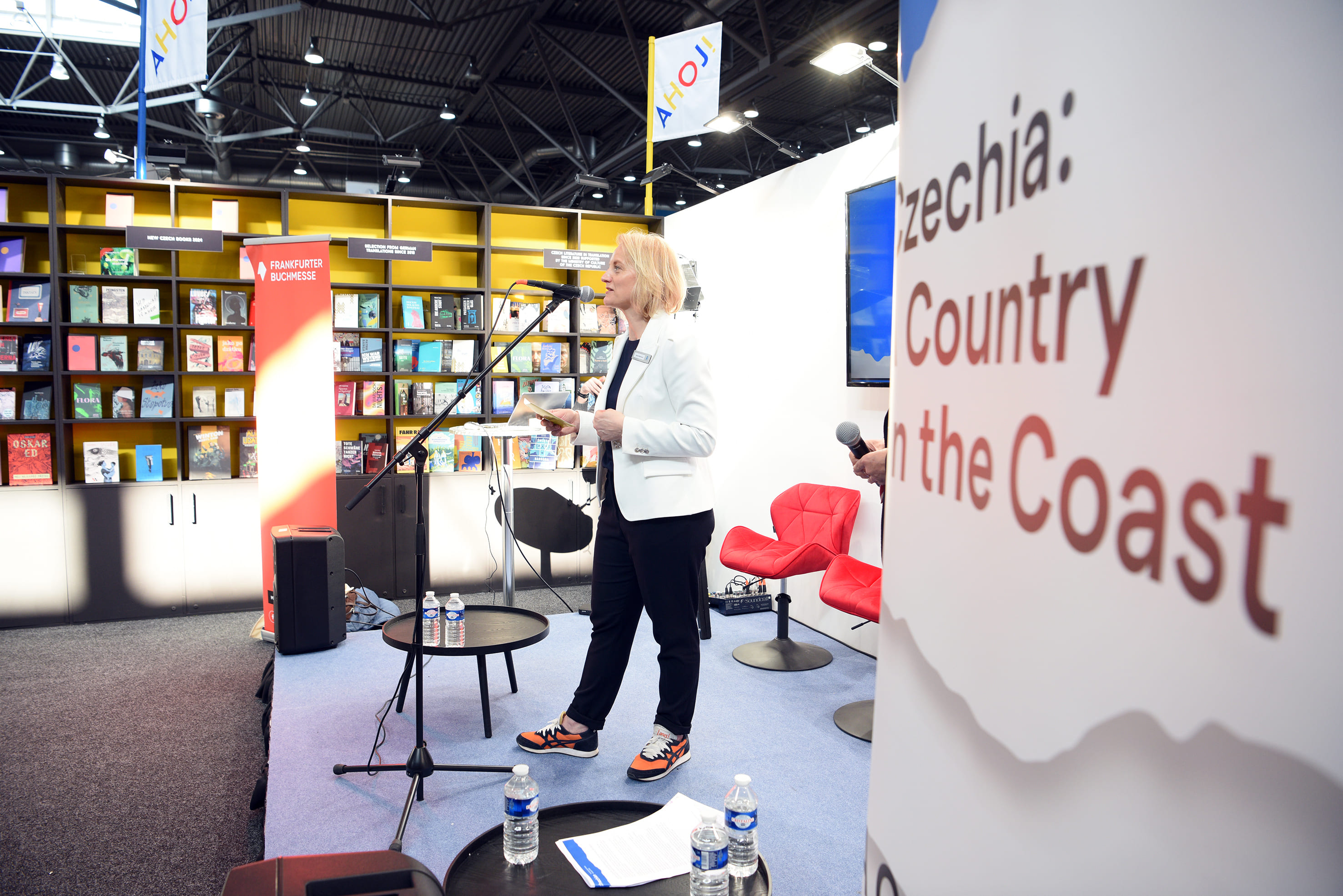
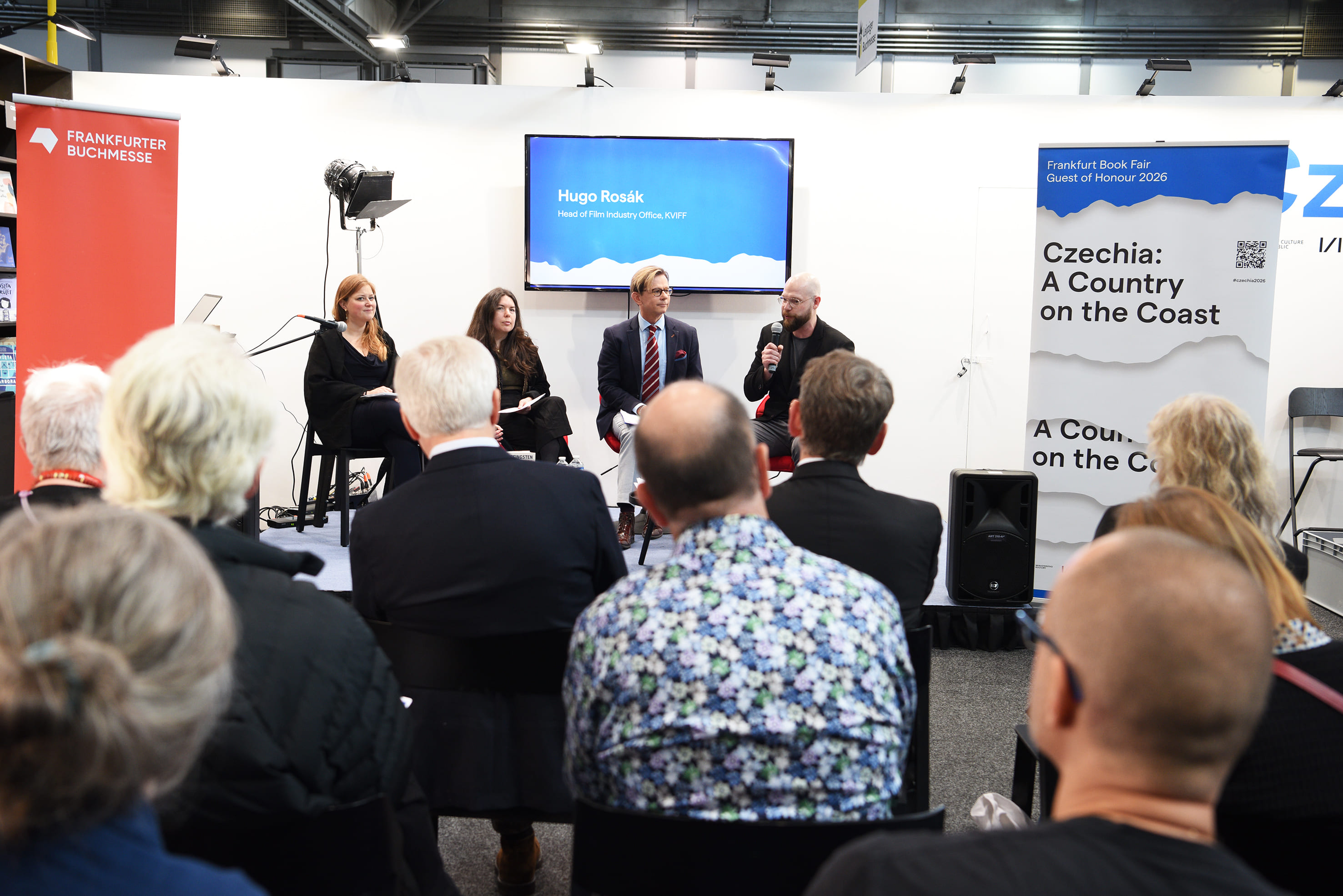
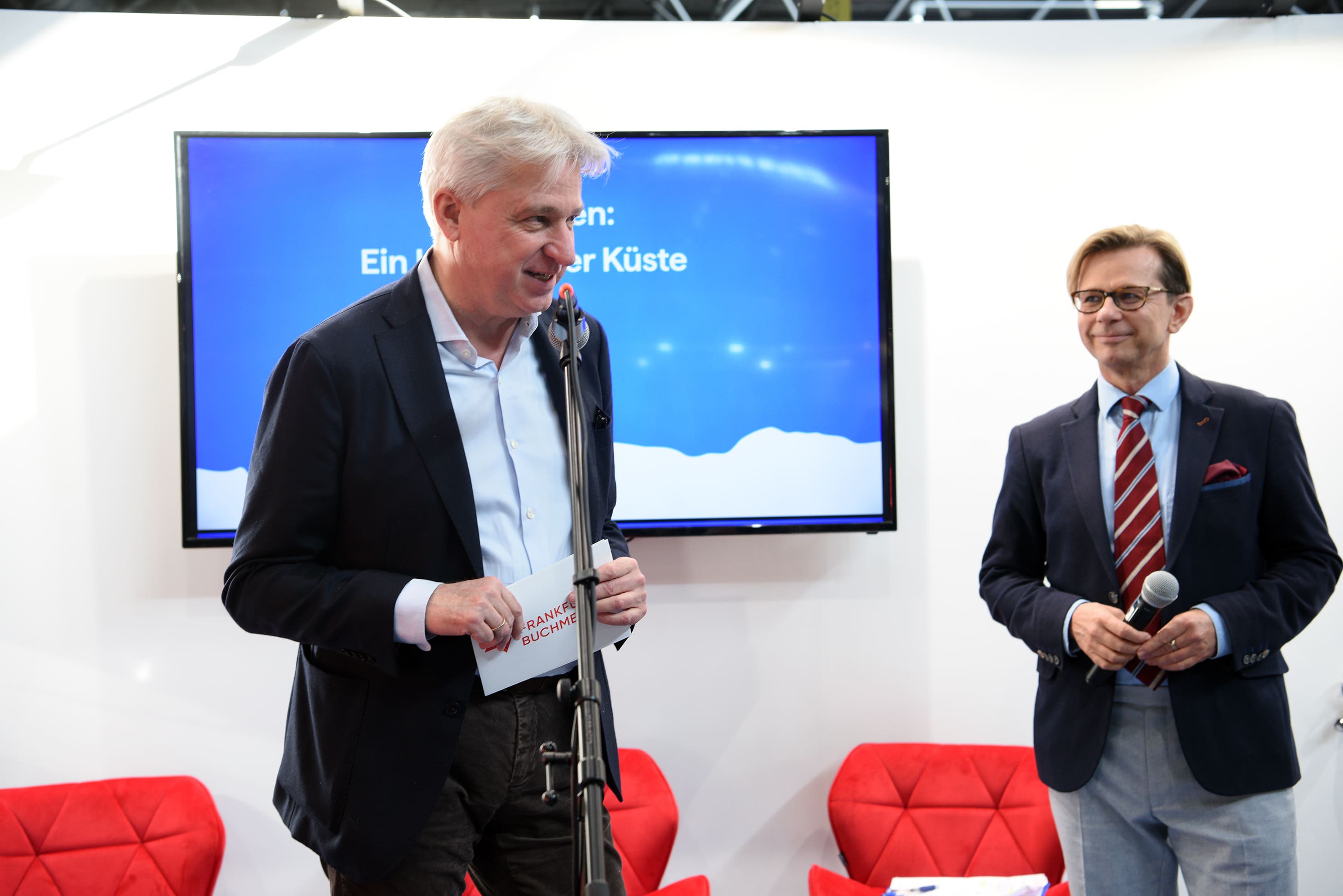
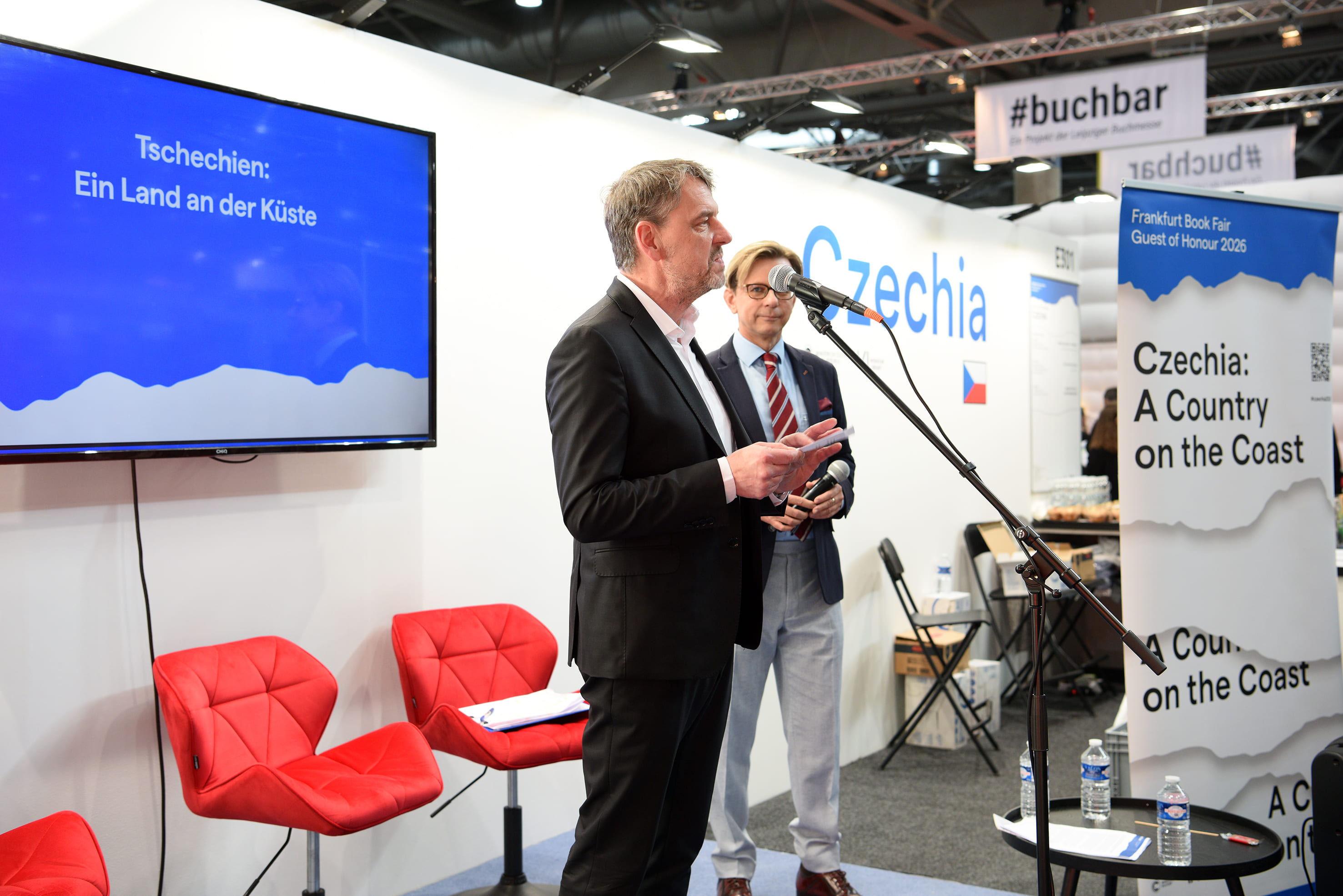
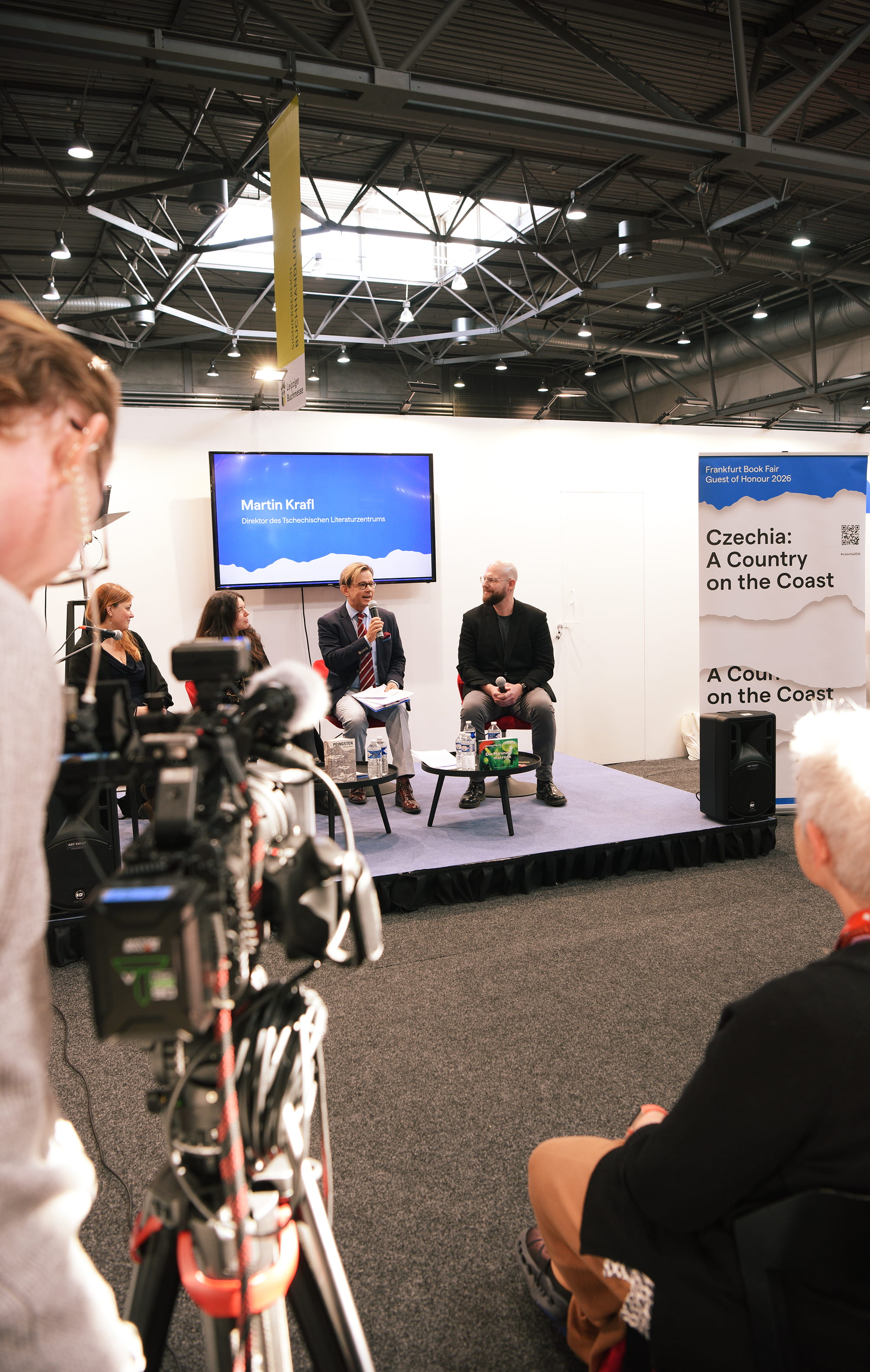
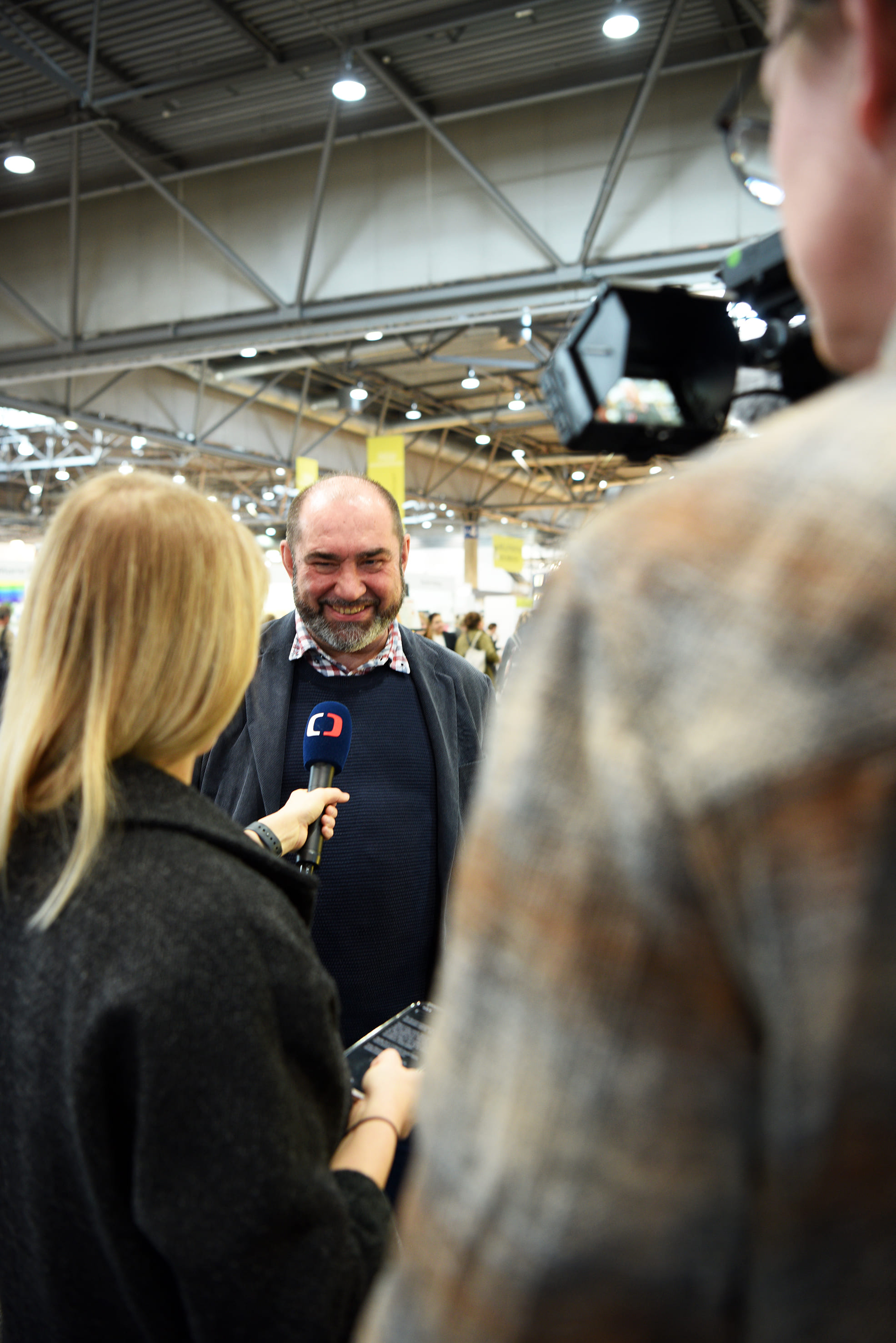
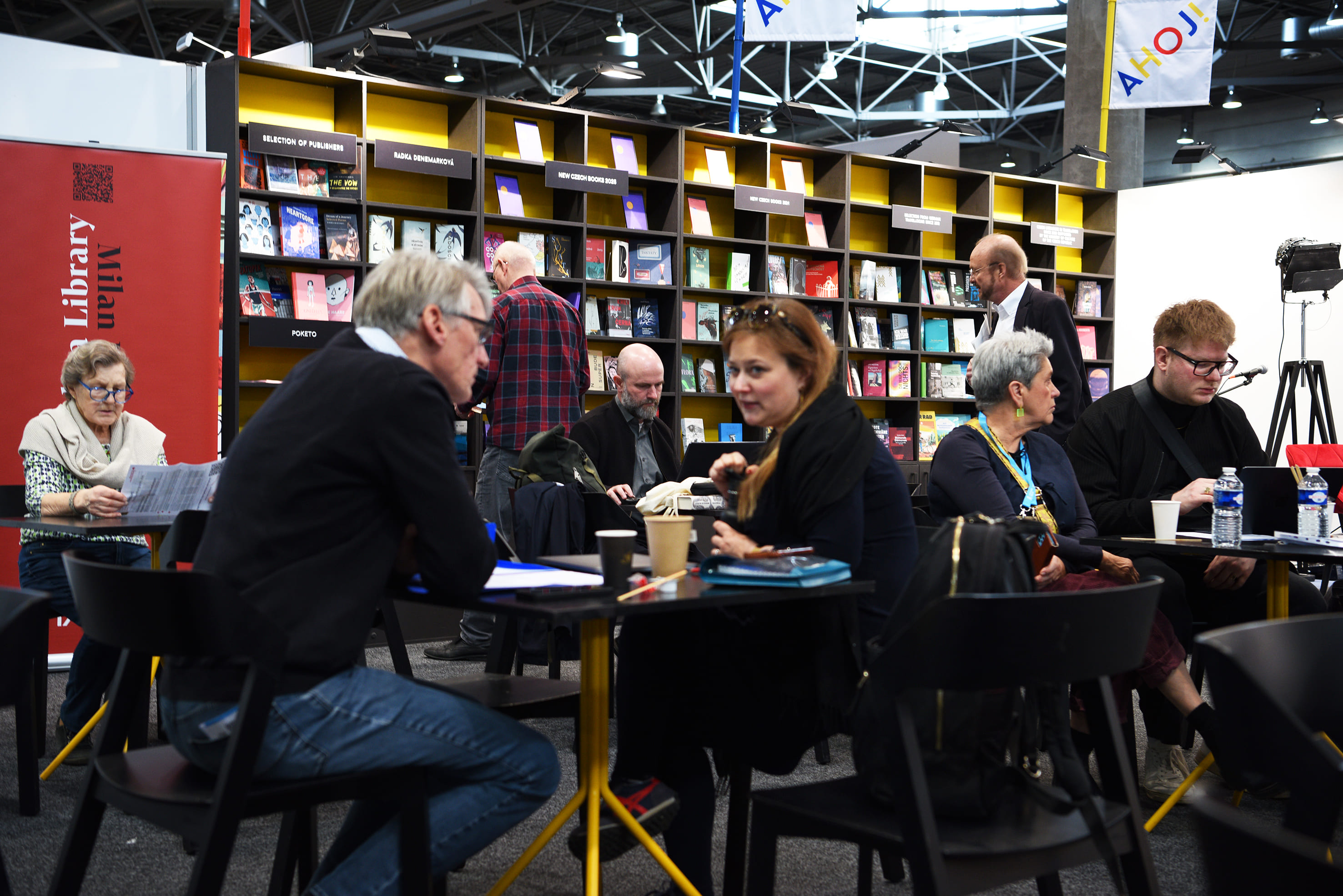
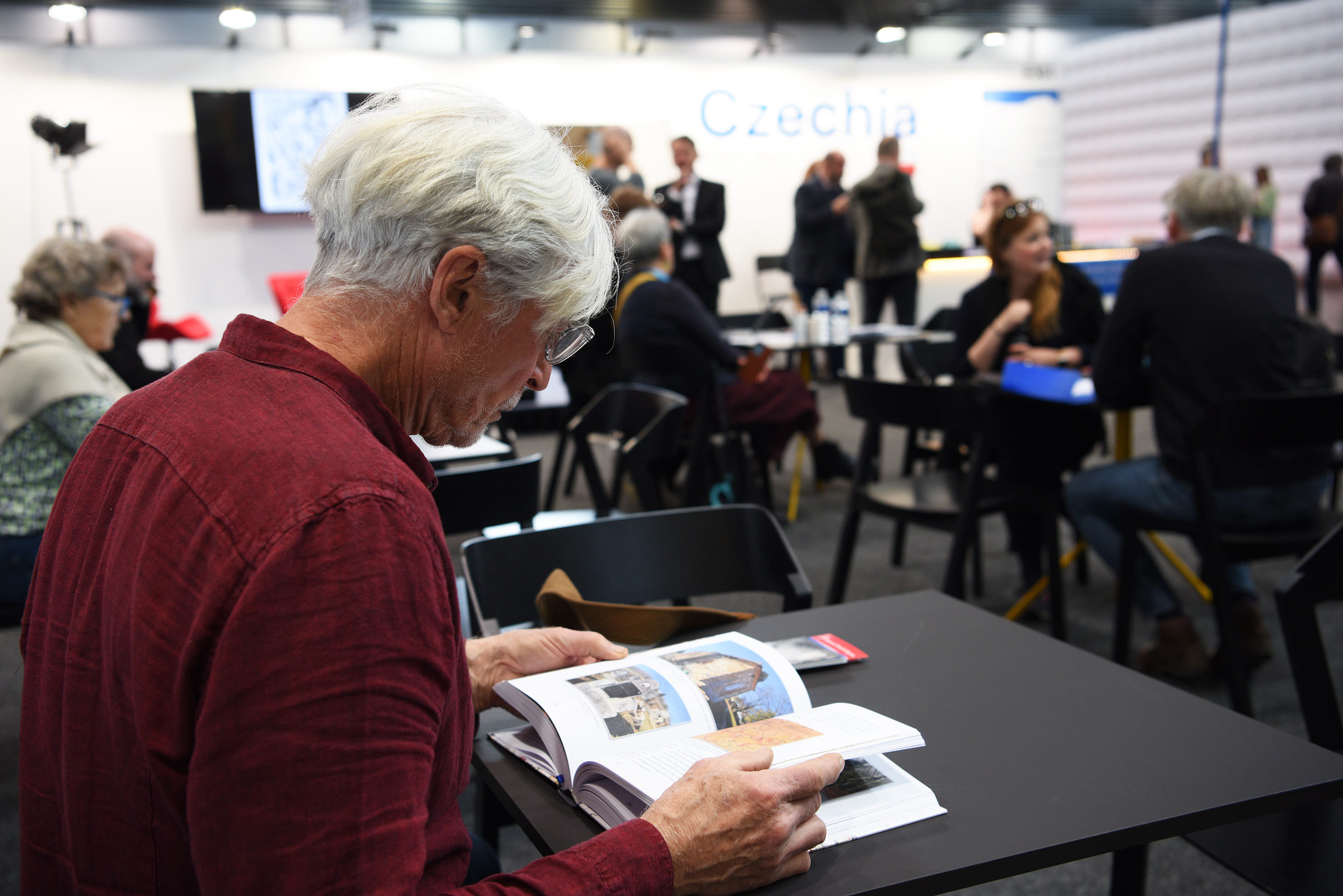
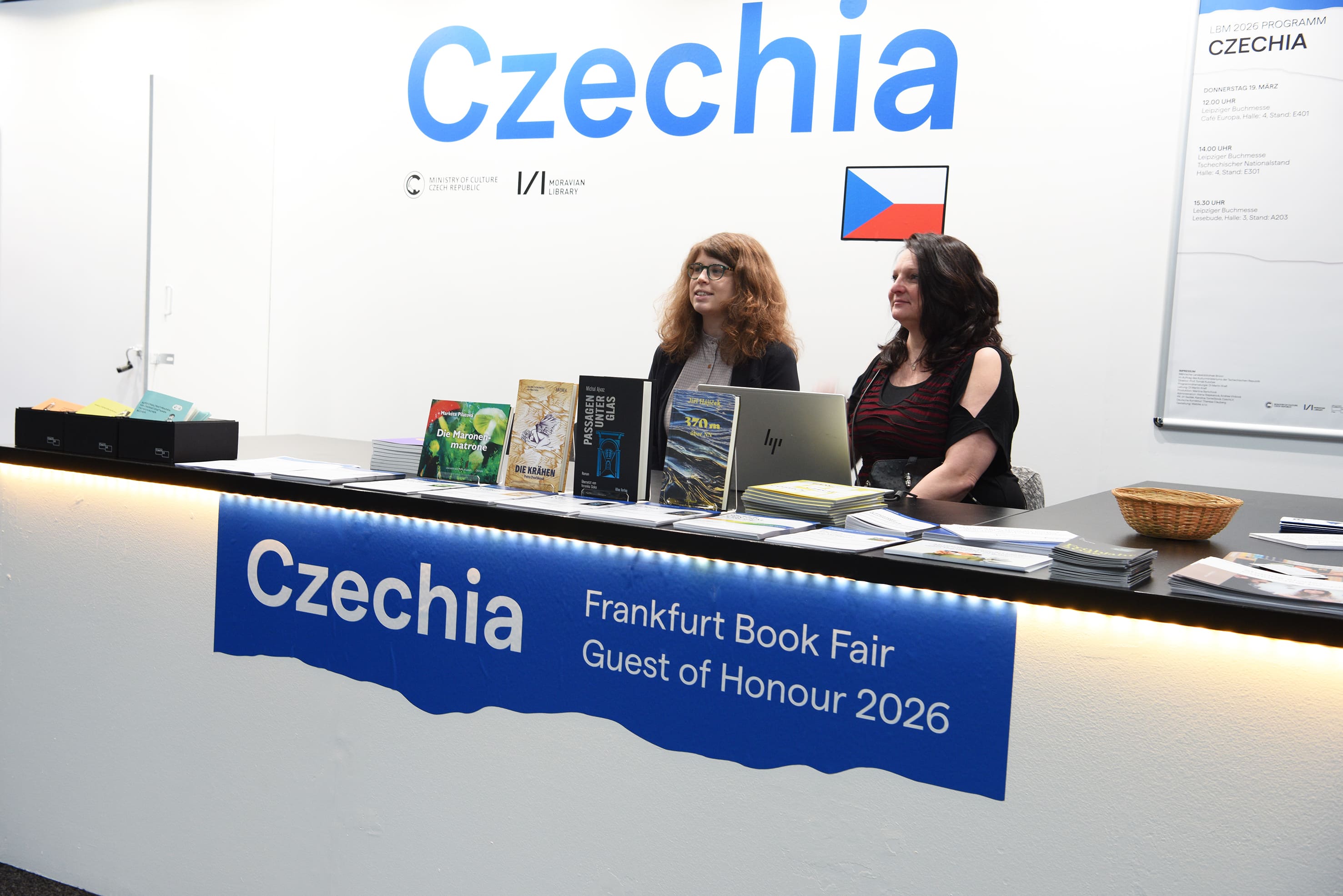
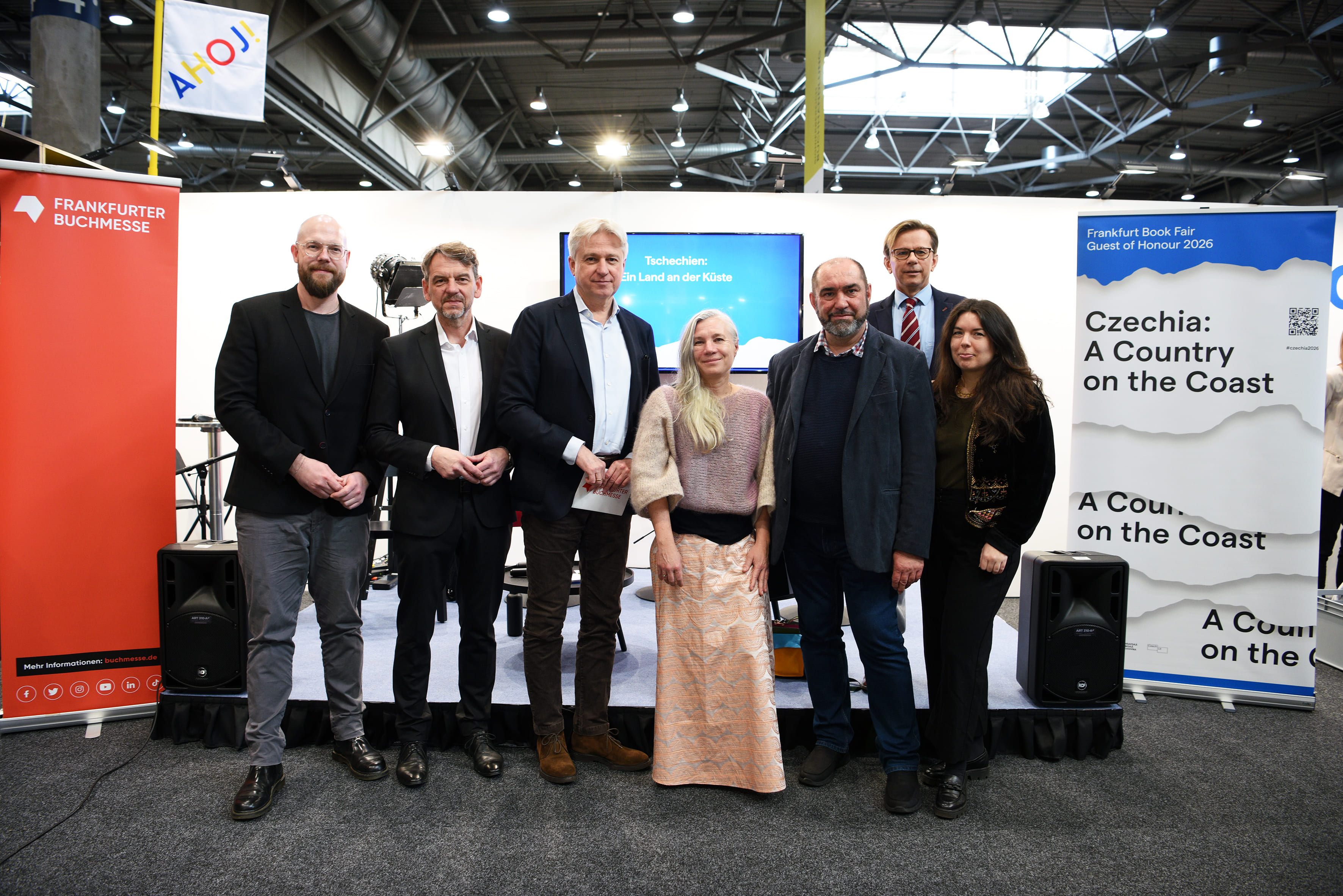
The press conference was attended by Jürgen Boos, Director of the Frankfurt Book Fair; Tomáš Kubíček, Director General oWhat was the atmosphere like at the booth and during the press conference for journalists? Take a look at these snapshots from the fair. Speakers at the press conference included Juergen Boos, Director of the Frankfurt Book Fair; Tomáš Kubíček, Director General of the Moravian Provincial Library and Director of Czechia 2026; Martin Krafl, Director of the Czech Literary Center and Program Director of Czechia 2026; Hugo Rosák, Head of the Film Industry Office at KVIFF; writer Markéta Pilátová; and writer Miroslav Hlaučo. The event was moderated by Annika Grützner, with interpretation provided by Bianca Lipanská.

Pictures: Sabine Felber/Literaturtest

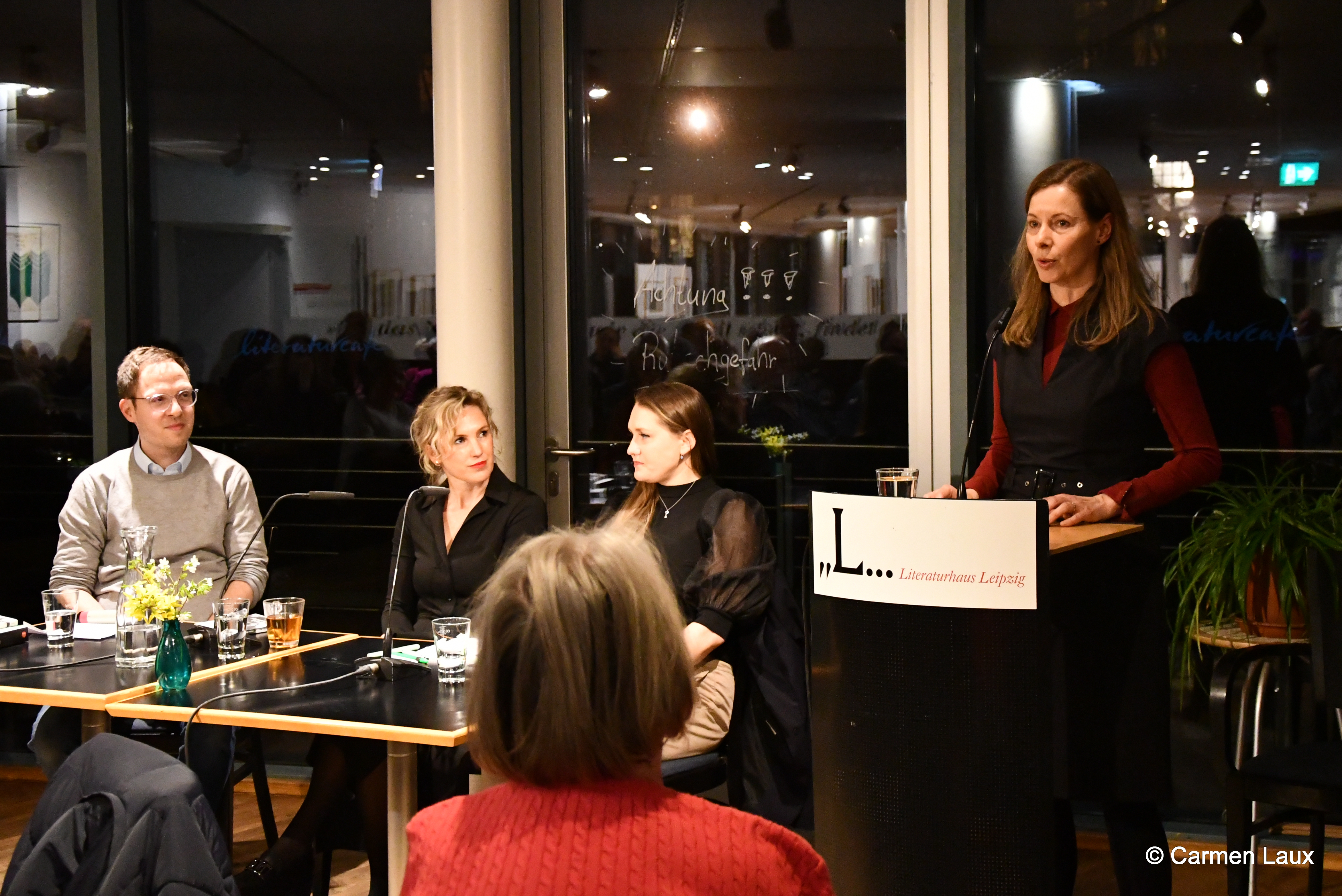
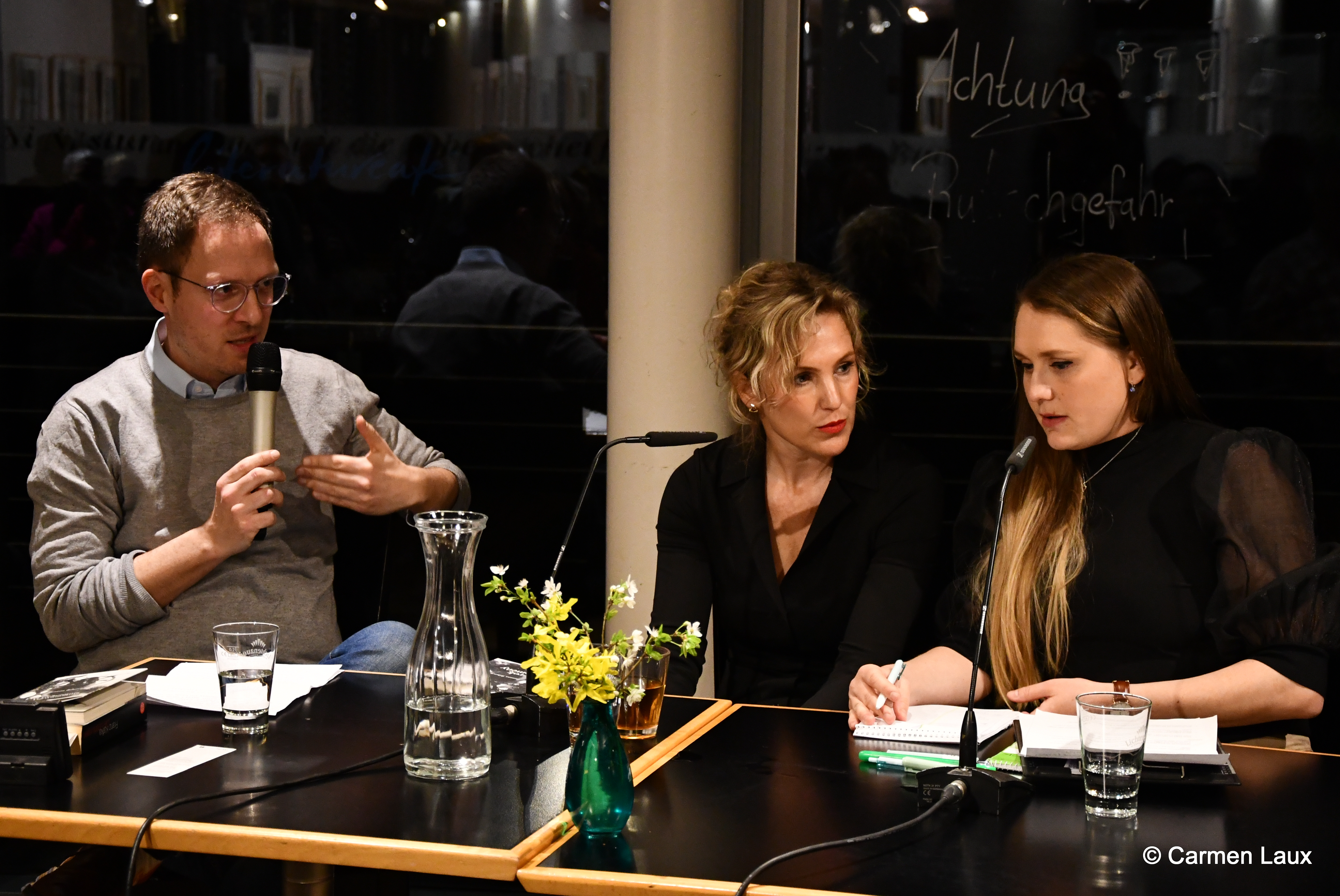
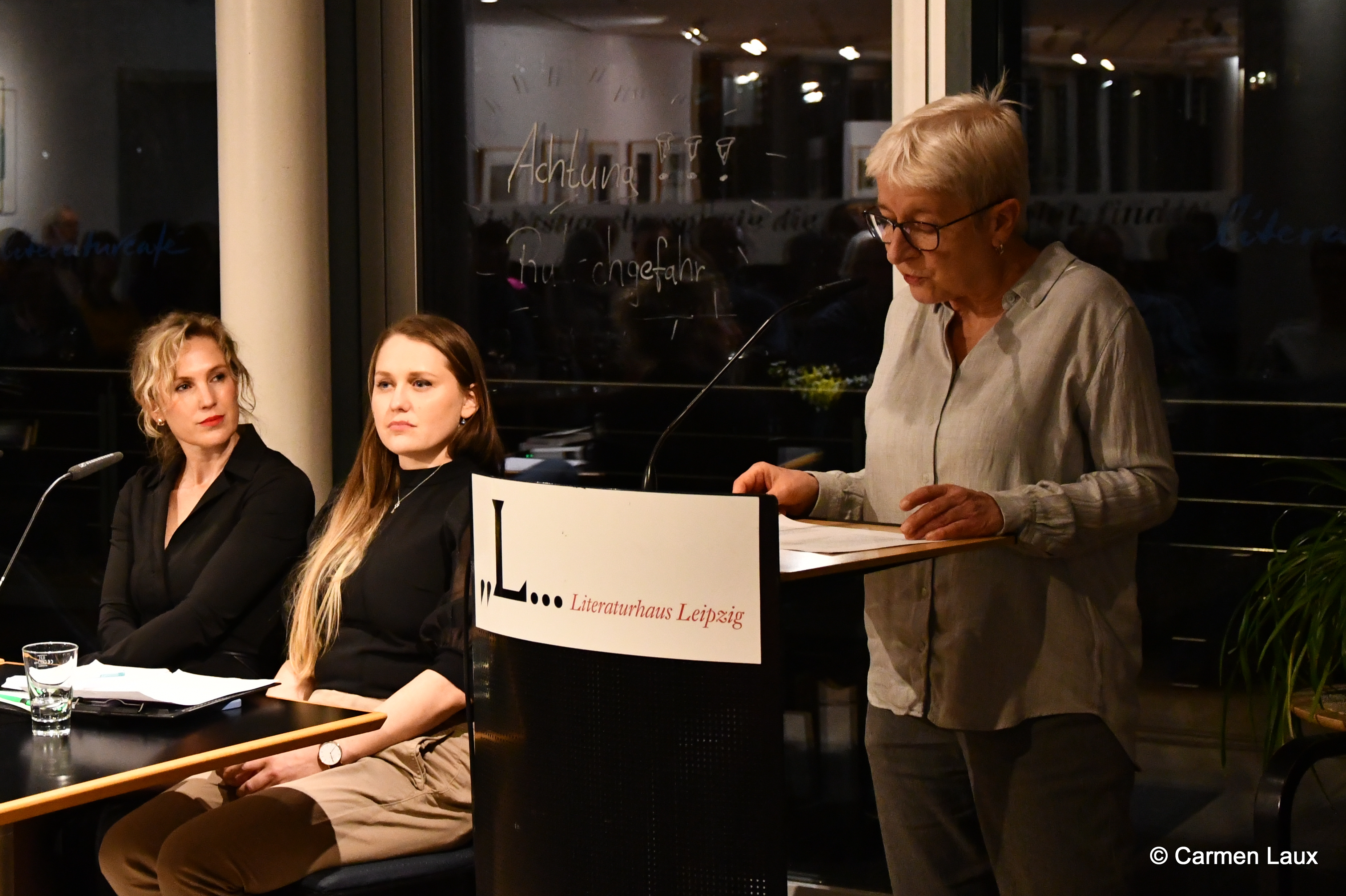
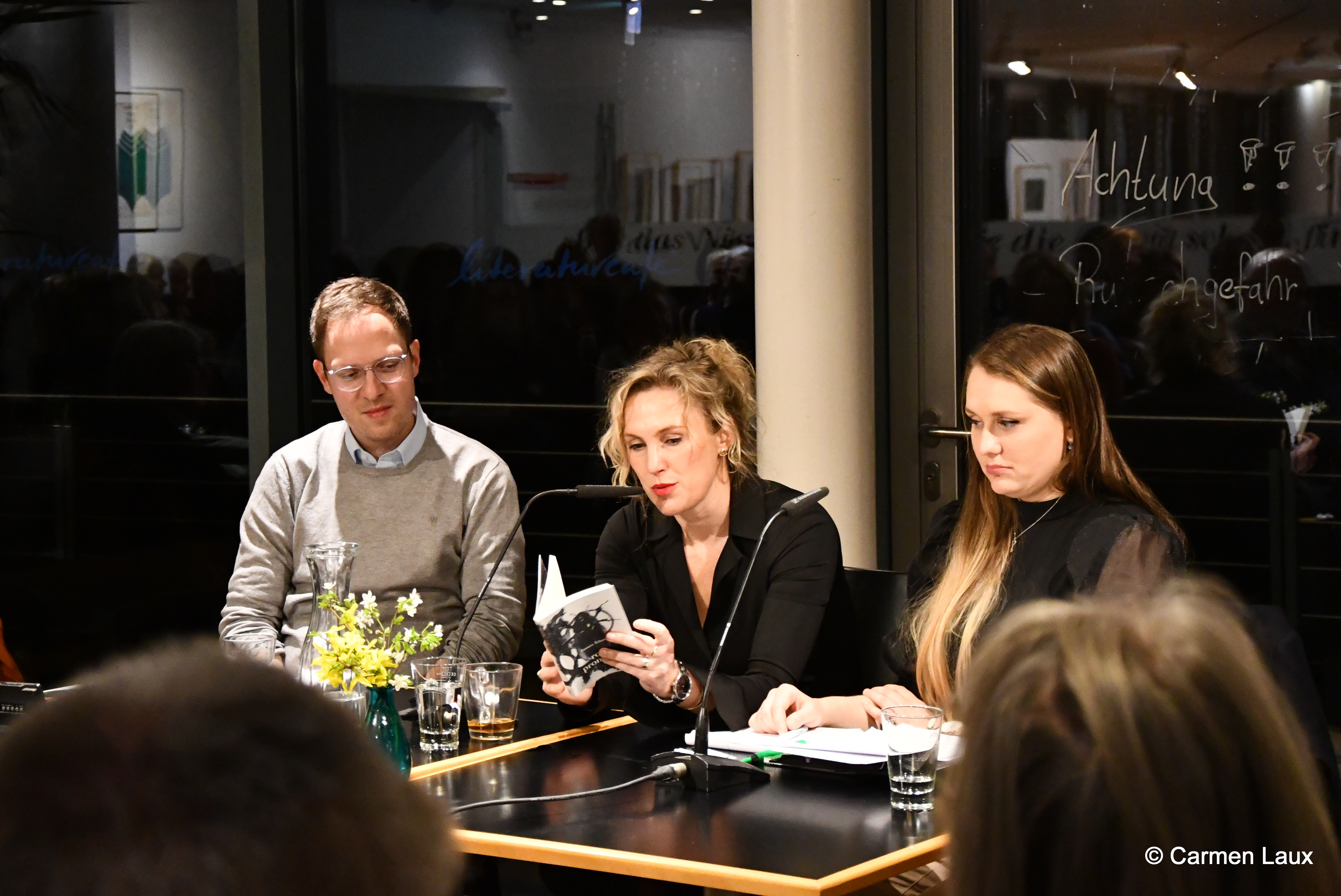
Photo Report: Zuzana Říhová at Literaturhaus Leipzig

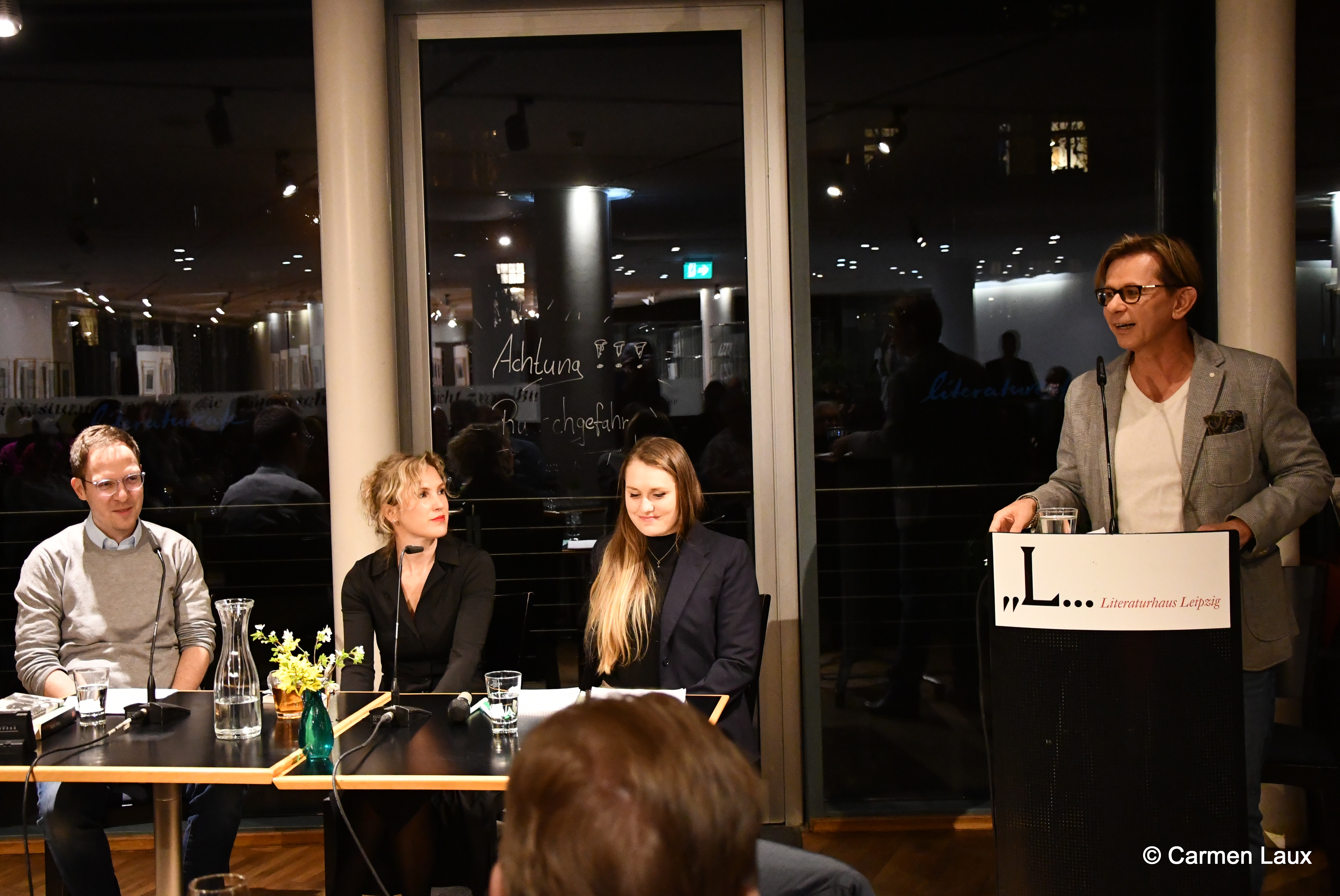
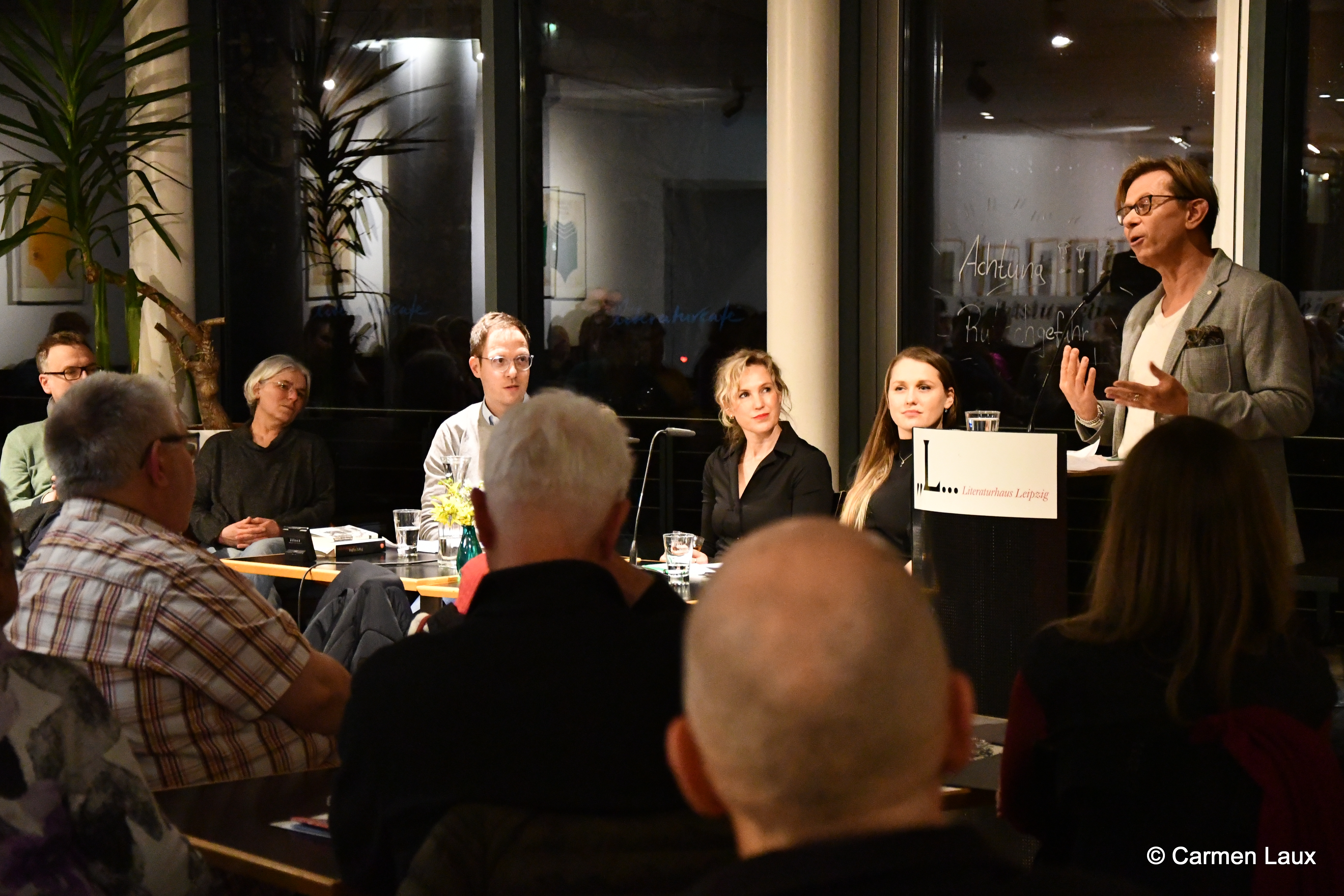
The AHOJ MONTAG event drew 90 visitors to the Haus des Buches and offered a wonderful, warm atmosphere. The event was hosted by Tino Dallmann, with actress Steffi Böttger reading excerpts from the book and Nella Nitrová providing interpretation. Special thanks also go to Ivona Valhová, Consul General of the Czech Republic in Saxony, and Thorsten Ahrend, Director of the Literaturhaus Leipzig.

Foto: Carmen Laux

From Book to Film: KVIFF’s New Book-to-Screen Project Opens the Door to Literary Adaptations

Starting March 19, 2026, publishing houses and literary agencies from Central and Eastern Europe that own film rights may submit titles with strong cinematic potential to the Book-to-Screen at KVIFF project. In exceptional cases, entities based outside this region may be considered if they submit a book by an author from one of these countries.

From the submitted entries, an international jury composed of representatives from the organizing organizations will select 5–10 works. These will be presented on July 7, 2026, during Industry Days at this year’s Karlovy Vary International Film Festival to domestic and international producers. In addition to book presentations, the program will also feature a panel discussion focused on film adaptations and a networking event for all participants.

The deadline for book submissions is April 30, 2026; the application form and all terms and conditions can be found here.

When creating Book-to-Screen at KVIFF, the organizing organizations were inspired by a similar project, Books at Berlinale, which has been successfully organized since 2006 by the Berlinale Co-Production Market and the Frankfurt Book Fair.

“The PPF Foundation was established in 2019 to help Czech talent find and open up paths to the world. Three years ago, we were there at the inception of the CEE Book Market program section at the Book World Prague literary festival, which today plays an irreplaceable role in the international trade of works by Czech authors. At the same time, we supported the Czech Republic’s participation in the Frankfurt Book Fair, which we view as a unique opportunity to present Czech literature and culture in general to a German-speaking audience. And because we believe it makes sense to create and support synergies between projects in which the PPF Foundation is involved, while also drawing inspiration from best practices abroad (in this case, the collaboration between the Berlinale film festival and the Frankfurt Book Fair), we have also supported a new initiative by the Karlovy Vary International Film Festival dedicated to film and television adaptations of literary works. I am delighted that in this collaboration, we all see the potential for new opportunities and benefits for Czech and Central European culture,” says Jana Tomas Sedláčková, a member of the PPF Foundation’s Board of Directors, describing the origins of the Book-to-Screen at KVIFF program.

Industry Days KVIFF_ilustrační foto_foto_Film Servis Festival Karlovy Vary

“Literature is one of the most important sources of inspiration for cinema, television, and streaming platforms. With the Book-to-Screen project at KVIFF, we are creating another meeting place for publishers, agencies, and filmmakers where they can discover new stories for film and TV series adaptations. At the same time, we want to raise the profile of literary voices from Central and Eastern Europe and give them a platform in the international film context. Together with our partners, we look forward to further deepening the dialogue between the book and film industries in Karlovy Vary,” says Juergen Boos, Director of the Frankfurt Book Fair.

“We are pleased to be a part of the launch of this project, which, thanks to all the organizations involved and the support of the PPF Foundation, has the potential to become the most significant event of its kind in our region. This has succeeded in connecting the book and film industries, thereby opening up new avenues not only for Czech authors to reach international audiences but also beyond the literary sphere,” emphasizes Tomáš Kubíček, Director General of the Moravian Library in Brno, which is organizing the Czech Republic’s Guest of Honour appearance at this year’s Frankfurt Book Fair.

“Thanks to the new Book-to-Screen at KVIFF project, film producers will have another opportunity to discover new stories, acquire rights to carefully selected titles, and establish relationships with publishers and literary agencies from across the Central and Eastern European region. Such a collaboration makes sense to us and perfectly complements the mission of our Film Industry section,” says Kryštof Mucha, Executive Director of the Karlovy Vary International Film Festival.

Book-to-Screen at KVIFF – Basic Information:


Photo: Film Servis Karlovy Vary Film Festival

“A sense of belonging and community should definitely not be overlooked,” emphasizes Iryna Zahladko

Iryna, in your penultimate collection, “Jak se líčit v nemoci“—which was nominated for the Magnesia Litera Award and won the Literary Critics’ Award—you revisit, among other things, the traumas of war and the experience of serious illness. Now your new collection, “Propaganda“, is being published. What themes do you explore in it, and how does it differ from your previous book?

"Propaganda" is a word we use when talking about politics and social issues. That is exactly what this collection is about, and so it can be said that it follows on from the previous book, where one of the central ideas was that the personal is political. The poems in “Propaganda” were written between 2023 and 2025 and were mostly reactions to very specific events and situations, whether social or from personal life.

Do you see “Propaganda“ as an activist book?

It’s socially engaged poetry, and I consider it a form of activism through art. I stand by that and don’t shy away from it, even though I sometimes hear that the word “activist” isn’t appealing to Czech citizens. The word “propaganda” probably isn’t either, but I wanted to play with that concept. I want to show that I also have something to promote—for example, my values or reflections on uncomfortable topics.

But the book also has a second part that shifts “propaganda” to the realm of personal experiences, particularly erotic ones. And more precisely—queer eroticism. So I’m actually doing what traditionalists and right-wing radicals would call “promoting gender ideology,” “gay propaganda,” or “the depravity of the corrupt West.” Such rhetoric fascinates me, and fighting against it with a straight face is simply impossible.

“Jak se líčit v nemoci“ is set to be published in German. What stage is the translation currently in, and when is it expected to be released? How do you explain the book’s popularity abroad?

The book will be published at the end of summer, and work on the translation is currently underway. The visual design is already known, however—it will be essentially identical to the Czech edition. Together with the publisher, we are preparing promotional materials for the Leipzig Book Fair; these will be simple yet beautiful fold-out leaflets with information about the book.

I owe the interest abroad to the Literary Critics’ Award and the Czech Literary Center, which promote titles that have gained recognition in the Czech Republic. In two out of four cases, the credit for the translation goes to my translators, who saw the book’s potential after reading it. I am also aware of that potential. These are themes that can be relatively easily transferred to the context of another country. The form also helps, especially the presence of diary entries. Genres such as confessional poetry and autofiction in prose are now very popular on the Western literary scene, especially among readers.

I also realize that my background—having moved to another country and begun writing in a new language—may be of interest to the audience. Moreover, I am an author from Ukraine. I’m not judging whether this is good or bad, but it is true that nowadays an author’s background can add value to their work—and sometimes diminish it.

Iryna Zahladko, foto: Tomáš Vodňanský

The body and physicality are very much present in your poetry, often in a very direct, even unflinching way. Do you ever feel vulnerable when you “put yourself out there” like that in front of strangers? Or can it actually be liberating?

I felt vulnerable both before the release of “Jak se líčit v nemoci“and “Propaganda“. I was worried whether I was doing the right thing for myself by writing about such personal and physical topics. With the first book, it was especially challenging because it dealt with illness and, at times, purely physical suffering. I was afraid of insensitive questions people might ask me after its release.

Some questions—especially in media interviews—actually surprised me with their insensitivity. I used to send them to a friend and ask if she thought they were insensitive too. Sometimes I felt like I couldn’t adequately judge what was still okay and what wasn’t. Over time, however, I learned to answer anything in a way that didn’t make me feel hurt—so sometimes I answer a bit harshly and in a way that makes the interviewer uncomfortable. That’s precisely where the liberation lay, which I now feel in connection with “Propaganda” as well.

You studied theoretical physics. Are you still involved in science? Does the theme of science find its way into your literary work in any way? Have you ever been tempted to poeticize science?

No, just as I’ve never been tempted to “scientize” poetry. These two worlds intersect in the process of my literary work, but not in the texts themselves. I’m able to work systematically, reflect on my creative process, notice certain patterns, and plan. That in itself strikes me as quite a scientific approach.

I’m not currently involved in science, but I use my knowledge to explain various interesting physics concepts to my friends. People are really interested in things like Schrödinger’s cat, black holes, or the fact that the universe is constantly expanding. Sometimes, though, I’ve also explained how magnetic resonance imaging or a cell phone signal works. Science has always interested me and always will.

In “Jak se líčit v nemoci“, you address a number of very painful experiences. Did you write those pieces while you were going through them, or rather with the benefit of hindsight? And isn’t revisiting these topics sometimes retraumatizing for you?

It isn’t retraumatizing, perhaps because it wasn’t a single event, but rather an ongoing process that I was able to reflect on as it unfolded. Or perhaps because I still don’t feel like it’s all behind me. In a way, I’m still living through it: the war is still ongoing, and in 2022 I was diagnosed with depression, which was later reclassified as an anxiety-depressive disorder. However, this diagnosis is not solely the result of the war and the illness I’ve experienced. Added to this is significant minority stress—I am a migrant, I am queer, and I live in a world and on a continent where fascism is slowly blossoming once again. The painful experience continues.

And what does the title actually mean: are we supposed to “put on a face” when we’re sick? Can makeup hide what we’re going through—or is it more of a crutch that can help us get through a difficult situation? How did the title come about?

It’s a line from a poem in the collection. The working title, however, was “I Don’t Put on a Face“, because I wanted to tie in with my previous collection, “Putting on a Face”. And I think I succeeded in doing so anyway. Bizarre fact: the description at one online bookstore says that the book thoroughly explains how to properly apply makeup while sick. But I think the book actually shows the opposite. It’s true that you can use a crutch, but you can’t hide the crutch itself. Of course, I mean this metaphorically—a crutch can also be a smile or a manner of behavior that hides one’s true feelings.

What do you personally enjoy reading in contemporary Czech poetry, and what inspires you? Is it the young poets you accompanied to a recent event in Berlin?

I’m inspired by how dynamic the poetry scene is in the Czech Republic. I enjoy following emerging authors, though they don’t necessarily have to be queer. It wasn’t until I was sitting in the hall listening to them that I realized most of those who read in Berlin were queer. So it wasn’t intentional. The concept of that evening was to introduce the German audience to Czech poets who have so far published only their first collection.

What do you think shouldn’t get lost in today’s highly competitive environment—whether it’s authorship, specific books, or a particular style of writing?

A sense of belonging and community definitely shouldn’t get lost. The poetry scene isn’t as competitive as the prose scene. What is there to compete for, anyway? The few thousand the publisher gives you for copyright? A two-thousand-crown honorarium including travel expenses? Participation in a free one-hour interview? We’re more like allies in the unfortunate situation of an underfunded cultural landscape than competitors. Things have certainly changed a bit now thanks to the Czechia 2026 project and the upcoming Frankfurt Book Fair. As a community and a literary circle, we naturally expect the selection committee to make decisions that will benefit the Czech literary scene and showcase the diversity of its personalities and themes. But this isn’t about competition; rather, it’s about shared concerns and a bit of mistrust.


Photo: Tereza Škoulová, Tomáš Vodňanský
The interview with Iryna Zahladko was conducted by Karolína Tomečková.

Books as a Safe Space for Children Searching for Their Own Identity: An Interview with Marita Kelbl

Marita, why do you think your book has garnered attention in Germany despite today’s fierce competition?

I think one reason might be that queer themes for children and young adults are underrepresented in literature, yet society is ready to gain a deeper understanding of trans experiences.

Germany may have a slight head start over the Czech Republic in terms of destigmatization and the more systematic exploration of social issues. At the same time, however, I don’t think the Czech Republic is “behind” in terms of the human dimension of the issue. Here, too, there are many people striving to create a safe and open space for children—whether they are teachers, booksellers, librarians, or artists. It is thanks to them that important topics find their way into schools, libraries, and families.

Based on my experience with extracurricular education, I can say that in Italy, for example, there are more books, resources, and institutions with a similar focus. However, the differences between countries are often not just a matter of the range of available titles, but rather a matter of systemic support. If there is room for improvement, I believe it lies primarily in long-term support for the people doing this work—so that they have sufficient resources, methodological materials, and social recognition.

In your opinion, is there anything that Czech books in particular can offer to young readers abroad?

I find novels and comics by Czech creators such as Štěpánka Jislová, Marek Torčík, and Jakub Stanjura appealing, as they draw on personal experiences set in the present day. In my opinion, they can easily resonate, at least in Europe.

In your portfolio, I was struck by the fact that you completed internships in Porto, Chicago, Paris, and Rome. What did these experiences give you, and how have they influenced your current style?

During all my internships, I naturally met people involved in literature and the arts, and I’d say they helped me think more broadly. In Porto, I spent time with young illustrators; in Paris, thanks to the artist Gérard Lo Monaco, I learned how to combine playfulness and professionalism; and in Rome, I discovered how to work with books and their themes.

In your book, you address the topic of the lives of non-binary and trans people. Do you think this topic is still underrepresented in Czech literature?

Absolutely. I’d love to be surrounded by local books, comics, and zines that tell diverse queer stories. There are plenty of those stories out there, but few have been brought to life.

You work with colorful illustrations, often in pastel shades. Have you experimented with other artistic approaches (such as more minimalist, black-and-white ones)? What do you enjoy about the playful, colorful illustrations that are typical of your work?

Those colors just come to me. I choose them based on my feelings, which tell me how the project should come across. Drawing is minimalism to me. I create a solid foundation with a dark or black line, and then I play with the rest.

I’ve created perhaps only one original book in black and white; I really enjoyed it, and I can imagine coming across a project again where I’ll be able to forgo color.

Your book offers children a space to explore identity without the pressure of unambiguous answers. How do you think children grapple with the question “who am I” when society often offers them only two boxes to fit into? And how can literature create a safe space where a child can allow themselves not to know?

Children grapple with the question “who am I” exactly as you described. They choose from specific options. I believe that not only they, but everyone deserves the opportunity to transform themselves at any age and try out different aspects of what life has to offer.

What kind of feedback have you received about the book—from younger readers as well as from parents?

Above all, I feel a sense of appreciation that a book like this about trans people exists. Younger readers find confirmation of their place in society through these stories, and parents and everyone else who educates children have a tool to help them introduce queer topics.

Have you ever received a reaction like, “This is exactly what I needed”?

Sometimes I get a nice message from teenagers on Instagram or from parents and siblings of queer children. For example, I was delighted when the book inspired someone to try using a new name or nickname, or helped give them the courage to confide their wishes to one of their parents.

And what about your future plans: what topics do you want to continue exploring in literature and illustration?

I’d say I’m still interested in what shapes a person’s character, and one of those things is relationships—with parents, friends, partners, or even a neighbor. That’s what I’d like to focus on, at least as an illustrator.


Photo: Nikola Uhle
The interview with author Marita Kelbl was conducted by Karolína Tomečková.

Marek Torčík on his novel "Rozložíš paměť": “We are hungry for stories that reflect the full spectrum of human experience.”

Marek, your debut novel, which is largely set in Přerov, Moravia, is heading for the German market and the Leipzig Book Fair. How do you feel about that? Did it occur to you while writing that the novel might garner international attention?

I think that the specific features of the city, as well as some of its problems that appear in the novel, aren’t unique to it. The problem of housing affordability, abandoned and decaying industrial complexes, and places overgrown with new wilderness aren’t limited to Přerov or the Czech Republic. Personally, I enjoy reading texts set in specific places, moving through the pages in a space I can imagine, even if I haven’t visited it yet. I don’t know if I’ve managed to achieve something similar, but I’d like to think I have.

Your novel is currently one of the most translated in the Czech Republic. How do you explain this success? And what are the reactions across different countries? How does the experience of Moravian Přerov translate, for example, into Spanish?

That’s more of a question for the publisher, and more specifically for the translator. I tend to think it’s primarily the work of Pavlína Juráčková, my literary agent, who handles foreign rights for the Paseka publishing house. I believe literature is an entire ecosystem. An individual author can write the best book imaginable, but without the work and enthusiasm of others—whether editors, translators, agents, and so on—the book may never reach readers. This is all the more true when it comes to literature from smaller languages, which are at a huge disadvantage compared to English. Personally, I’m fascinated by how carefully translators read and what I can learn from them in the process.

Přerov doesn’t exactly have the best reputation in the Czech Republic. Still, do you enjoy going back there? Does the city have anything to offer?

Yes, I do. Přerov fascinates me; it’s an industrial city in the heart of Haná, surrounded by unique natural scenery. It even follows the curve of the Bečva River, and I’m naturally drawn to cities dominated by rivers. For me, it’s a city where I can pinpoint the pressure points of contemporary society. Whether it’s the growing separation of people from nature, loneliness, or the widening gap between the poorest and richest residents. It’s a city-laboratory or a city-showcase. I think the problems it faces are general, structural, and systemic: they’re related to the outflow of jobs and educated people from the regions, or perhaps to neglect from the center.

More novels with queer themes are being published today than ever before. How can a new text capture readers’ interest when certain motifs are repeated? And what does the rise of this literature say about our times?

But many non-queer novels are also being published, and we don’t ask what new they can offer readers; we don’t dwell on recurring themes, but consider them universal expressions of human experience. That’s what these “queer” novels are too—we just haven’t learned to read them through that lens yet. My novel is half the story of a single mother, but for some reason, the narrator’s queer experience overshadows everything. For me, as a queer person, this aspect of my novel wasn’t particularly crucial; my aim was to describe a class experience, to show that the feeling of otherness and exclusion doesn’t have to be limited to sexual identity, but can also stem from class. I think this increase is primarily a matter of demand: we are hungry for stories that reflect the full spectrum of human experience, not just one limited slice.

What has the public’s reaction to the book been? Has anyone told you that the book gave them the courage to open up about their identity and gender with those around them?

They vary, and that’s fine. I enjoy it. And yes, people have reached out. But what pleases and surprises me most is when people with completely different life experiences read the book and manage to take away what I was primarily aiming for—some reflection on their own memory and the impossibility of truly understanding the experiences of others.

Marek_Torčík_Was die Zeit nicht nimmt_Webcover

When you were going through what "Rozložíš paměť" is about, what helped you realize what you were going through at the time? Where did you look for information, inspiration, or a “lifeline”? Did literature play a role in that—whether your own or others’?

"Rozložíš paměť" is not my autobiography. The novel works a little differently, and although I deal with a lot of things from my own life in it, I work with them quite freely. But what has helped me my whole life are other people’s books; I find solace in them—not in the sense of comfort and understanding, but rather in the relief of experiencing the world differently for a moment, through the eyes and language of strangers, and knowing that I’m not the only one here…

In the novel, you tackle several very difficult topics—such as bullying, domestic violence, or alcoholism. I can imagine that it can be challenging to talk about such things, especially in front of people you don’t know. What helps you talk about these topics publicly in a way that feels safe and manageable for you, rather than retraumatizing? And does it ever bring you positive emotions?

Yes, but everything is perceived through the prism of memory—and memory tends to return everything to us amplified by the rule of stronger memories. While writing, I kept returning to Chris Marker’s short film La Jetée; I was curious whether a single violent image could foreshadow an entire person’s life. That’s why the often gray, featureless days fade away; what remains are those distinct “notches.” They’ll be distorted, exaggerated, and inaccurate, yet at the same time, they’ll shape who we are. I didn’t want to write a safe book; I don’t believe in literature as a safe place, even though I think it is a medium of empathy. But the path to empathy leads precisely through shared pain, through the fact that we see others, even if perhaps not in a flattering light.

In reviews, you’ve been compared to the French writer Édouard Louis. Which other authors do you feel close to, whether in terms of subject matter, writing style, or anything else?

There are quite a few. I like it when books engage in a conversation with one another, even when they contradict each other. I feel close to the poetry of Anne Carson, and to the novels of Virginia Woolf, W. G. Sebald, Ann Quin, and Clarice Lispector. When writing, I generally return much more often to poetry and theory than to prose as such.

In addition to prose, you also write poetry and contribute commentaries on social and political topics to the media (such as Respekt or Druhá směna). Do you feel that you have found your calling in journalism? And in what way is it different for you than writing a novel, where you also address issues such as class inequalities, just in a different way and on a larger scale?

I write journalism because I live in the world. I’m not an extrovert; I’m afraid of crowds, but I feel the need to at least somehow fight against rising fascism, against growing inequalities, and against the increasingly frequent attacks on human rights and civil liberties. And so all that’s left for me is to write. But poetry and prose are slower media for me. They work on the basis of imagery and narrative; they are much more about the nature of language, about its power and when it loses it. They have completely different goals than journalism, even though they may occasionally overlap.

What are you working on now? What brings you joy (not only) in literary terms?

I’m finishing my second novel, tentatively titled Sudden Changes in the Weather. It’s about something I’ve been thinking about for a long time—namely, the growing sense of loneliness, isolation, and a kind of inability to step outside my own head. It’s a bit about microbiology, about cloud seeding, a lot about the weather, and also about the ends of the world. Both the private ones and the societal ones.


Photo: Paseka
The interview with author Marek Torčík was conducted by Karolína Tomečková.

A lecture in Leipzig will showcase the life’s work of the Šalamouns

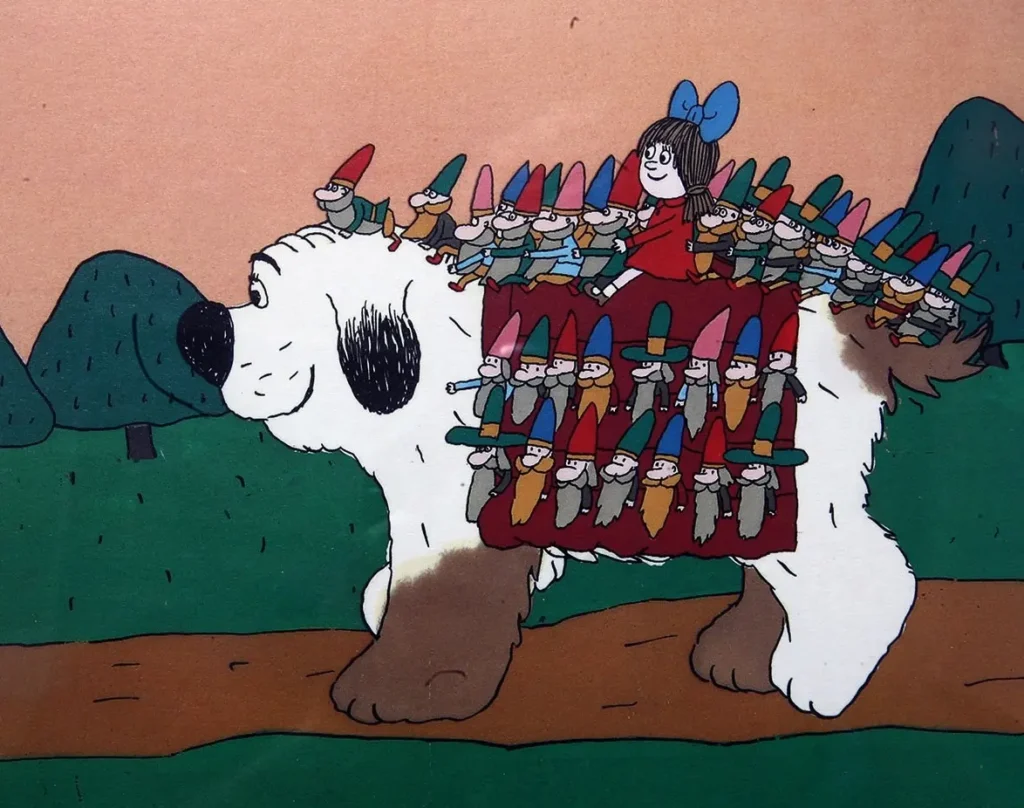
In a report for Czech Radio, you said: “Dad used to say that the character of Maxipes Fík was like his Lolita. On the one hand, he can’t live without her, and on the other, it’s crazy.” What relationship did you yourself have with Maxipes Fík—and how did that relationship change over time?

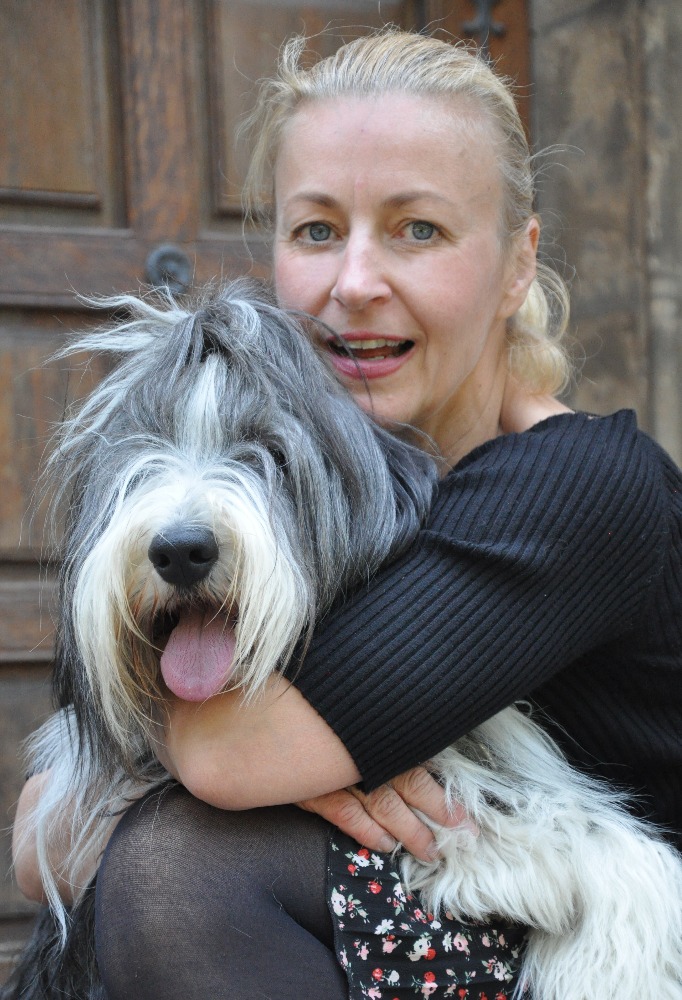
Maxipes Fík filled only a certain part of my childhood, not the one you might expect. Just before he entered the world of children in 1976, I finally got the puppy I’d so desperately wanted. In my opinion, there are no coincidences—he looked exactly like Fík. I chose him myself. And Dad probably couldn’t say no, because it was exactly the breed Fík was based on—a bobtail. Of course, ours wasn’t quite that big, but when he came home, Mom fainted. She didn’t expect a four-month-old puppy to be as big as an old money chest.

We didn’t have a TV at home, so I only saw a few episodes of “Maxipes Fík” at our neighbors’ house. It wasn’t until later that I got to know him better, and today I can say he’s a great guy alongside a sweet and good-hearted little girl. It’s one of the few children’s series where no one takes revenge on anyone or bullies anyone. And that is something I find deeply relatable and endearing.

Your father is best known to the public for his illustrations of Maxipes Fík. But his body of work is much broader; he illustrated, for example, “The Hobbit”, “Mr. Tau”, and “The Pickwick Papers”. What would you highlight from it—and is there any illustration of his that is personally closest to your heart?

My father illustrated many books, and I think they’re all wonderful. Of course, there are some that truly stand out, but the essence of his work is that he sought to grasp each one in his own way and always found new solutions. The aforementioned “The Pickwick Papers”—featuring pen-and-ink drawings with colored ink, sometimes supplemented with watercolor or tempera—and the realistic settings and characters depicted therein, simplified in a Solomonic manner, are quite different from the illustrations in “The Last of the Mohicans” (which, incidentally, was voted the second most beautiful Czech book of the 20th century last year), in which as many as four artistic approaches alternate, ranging from utterly realistic maps or descriptive details—such as a cannon or a dragoon’s uniform—to simplified, brutal ink drawings of Native Americans.

The complete opposite is the little book “Tracy’s Tiger” by William Saroyan, with its strangely contorted characters made up of various small parts—something entirely different. Only that certain roughness remains the same. A different approach every time, and yet always Šalamoun.

Your mother was also a graphic designer. What was it like growing up in such a creative environment?
Like my father, my mother created very beautiful lithographs. But she was primarily an illustrator of children’s books, both for Czech and German audiences. At the same time, for over 20 years—initially together with my dad—she was the graphic designer for the magazine “Film a doba”, whose visual style they conceived together. They included a section on animated film, to which my mom often contributed with information from various major animation festivals, such as those in Annecy or Solothurn.
When you’re a child and you’re constantly immersed in it, it doesn’t seem exceptional at all. On the contrary, sometimes you feel desperate because you’d like to do something ordinary, like what others do. But the environment itself was nice. I met a lot of interesting people who worked together and then, in their free time, came up with funny skits for their colleagues. The birthday parties at the lithography workshop on Říční Street—the oldest printer of this graphic technique in our country—were legendary. During the time I was there, it was run by two men, Tomáš Svoboda and Jiří Lípa. It was always a lively place, just like at the exhibition openings that artists would occasionally host for one another.
Of course, everything influenced me. I often drew with my dad in his studio on Pařížská Street. Sometimes he’d have me trace his drawings and watch how I handled it as a child, and I think that inspired him as well.
Was Fík inspired by your bobtail, which you insisted on getting from your parents when you were a child? To what extent did you put yourself into the character of the protagonist, Ája?

No. Fík was inspired by a bobtail that my dad once saw in England. The fact that we had him at the same time that Fík appeared in Večerníček was—and perhaps wasn’t—a coincidence. The literary model for Ája was the daughter of the author of the text, Mr. Čechura. But recently, I heard directly from my father’s own mouth in an interview—which can be found in the Czech Television archive—that Ája’s visual appearance is based on me, except for the bow. No wonder, since I was a cheerful, nice girl (laughs).

When you look at contemporary book illustration: what has caught your attention most in today’s work—and what do you think would also appeal to your father?

That’s a very difficult question. I think today’s work varies greatly in quality, because it includes people who aren’t professional artists and don’t even know how to draw. And the commercial side of things forces talented artists to draw in a way that appeals to all readers, regardless of their taste or willingness to engage with a particular artistic vision. I think this isn’t just true for us. There are also small publishers trying to forge their own paths, but even here it sometimes seems to me that these paths have been growing increasingly similar lately.

You’re following in your parents’ footsteps. Were you ever drawn to other professions or fields? And are you glad today that you ultimately stuck with the visual arts?

I had my own ideas. As a child, I was very drawn to horses; for a while, I even considered an apprenticeship program in Kladruby. Unfortunately, I never learned to ride them.

From the very beginning, and to this day, I’ve been interested in the world of detectives. I seriously considered becoming a criminal investigator. I wanted to know what drives people to take such terrible steps and commit such acts, and because I’m a socially minded person, I felt that this profession had meaning—that it would at least help victims find justice. According to my father, that wasn’t possible at the time without joining the Communist Party. I’m not so sure about that, but the opportunity is gone.

Later, during high school, I really enjoyed feature films and considered studying film production. At the same time, I’d been a fan of comic books and animated films since childhood, and I was a very frequent visitor to the cinema at the former Children’s House on Příkopy, where they ran on a loop every weekend. In the end, I did study animation, but I work across a broader spectrum of visual arts. I enjoy searching and discovering. I’m not the type of person who works in just one direction my whole life.

You also teach illustration. What do you think characterizes the upcoming generation of Czech illustrators? How are they different from before—and do we have something to look forward to?

I haven’t been teaching since 2019, so to be honest, I don’t really have a complete picture of the situation. It’s also because I’m currently immersed in sorting through my parents’ estate, which is enormous and keeps me busy 80% of the time. I try to devote the rest of my time to workshops or my own work.

But during my active teaching career, I had a number of talented students. However, as I’ve already mentioned, in today’s book market, there’s less emphasis on a distinctive personality and more on appeal. It’s quite painful for me that the appearance of a book, especially the cover, can be determined by marketing people who go by what’s “in” on the market. It’s like carrying coals to Newcastle. I still believe that the artist should guide the reader, and not the reader determine what will be drawn. Imagine telling a surgeon how to hold the scalpel and where to make the incision, just because you want it your way.

The second, in my opinion, complexity of today’s book market is that too many art schools have been established and continue to be established, and not all of them maintain a high standard. As a result, there is an oversupply of people who then struggle to make a living. We are not a large country, and that needs to be taken into account.

In an interview with Czech Radio, you also mentioned that your father drew practically all the time. How about your own creative work? Do you always carry a sketchbook and pencil with you too?

Yes, but now I mostly write down my ideas or observations. I don’t draw on the spot as much anymore, because my dog Alma runs around with me everywhere, and it’s pretty hard to do that with her.
You’ll soon be presenting your father’s work at the Leipzig Book Fair. Do you think he would have been pleased? What was it like for him to step out of his studio, where he spent most of his time alone, and go out among people to talk about his work? And how are you experiencing this event?
Definitely. He loved Leipzig very much; after all, he studied there as a “Meisterschüler” at the Hochschule für Buchgestaltung. In fact, he felt a close connection to all of Germany. He often worked there, both as an illustrator and on juries or at exhibitions. He even received the Gutenberg Prize from the city of Leipzig for his contributions to book illustration.
Unlike me, my father was able to spend hours in his studio alone with his work. That’s how I saw him as a child. Now, as I come across his various diaries, I read that he gladly traded this solitary part of his work for social life, working in a group—such as on the aforementioned Maxipes Fík or while creating his lithographs—or simply by going out to a pub with friends. He probably talked about his work among his peers, but otherwise he wasn’t the type to talk only about himself all the time. That’s what I appreciated about him. He was interested in others, in their lives and work.

Now, with age, I actually cope with solitude better, perhaps thanks to my dog. Not that I’ve stopped being sociable. I thoroughly enjoyed working with students, and I still enjoy teaching now, even though I never wanted to pursue this profession.


Photo: Barbara Šalamounová’s archive
The interview with illustrator Barbara Šalamounová was conducted by Karolína Tomečková.

From southern Bohemia to the Leipzig Book Fair. About the novel "Rybí krev" and more with Jiří Hájíček

Jiří, your novel “Rybí krev”, which you will be presenting at the Leipzig Book Fair, was published fourteen years ago. Since then, you have written several other works of prose, as well as haiku, for example. How do you feel about “Rybí krev” today, and how do you talk about it with the benefit of hindsight? Can you still "empathize" with it, or are you, as the author, "somewhere else" now?

I have a somewhat sentimental relationship with this novel. The story takes place at the turn of the 1980s to 1990s in villages around Temelín and is set in an authentic time frame when the construction of a nuclear power plant was beginning. I knew the stories of the local people, as I once lived in one of the villages affected by the construction. Five villages in the area disappeared, people were evicted, and that is a powerful theme for any era. In my opinion, the specific stories of the people in the novel are still understandable today. But as the author, I am of course somewhere else now.

More than ten years after the book’s publication, it seems like a good moment to take stock. Would you do anything differently today?

There are a few things I would do differently today. But I think the stories of the people and villages around Temelín still work in the novel, even after all these years. After all, the book has been available in Czech bookstores since its publication in 2012. So it hasn't completely sunk without a trace.

What, specifically, would you change?

I write more economically now, so the novel might be shorter.

For the last two years, you have been working intensively on the screenplay for the film adaptation of “Dešťová hůl”. What stage is the project at now? I noticed that you are already looking for a cast. How did writing the screenplay differ from writing prose and poetry? And what can you reveal about the upcoming filming?

The miniseries “Dešťová hůl” is currently being filmed. I worked on the screenplay continuously for about three years. The director is Bohdan Sláma. Some of the plot lines from the original novel were not suitable for the film adaptation, while others I added and deepened some of the characters. I am curious myself to see how the story will look on screen.

You already have one film adaptation under your belt – “Zloději zelených koní” (Thieves of Green Horses). What convinced you to do it again? How is the creation of the new film different from the last one?

I didn't write the screenplay for “Zloději zelených koní”, I let the filmmakers adapt the novel in their own way. Now I'm in the role of screenwriter and I bear more responsibility for the result.

Is the reason you're writing the screenplay yourself because the result of the previous film didn't match your vision?

I imagined the film about moldavite hunters as a slow, balladic story that would make greater use of the possibilities offered by the novel on which it is based. But one of the reasons why I wrote the screenplay myself this time is that Bohdan Sláma is mainly an auteur filmmaker. He writes his own screenplays and doesn't like to adapt other people's works. He offered me the role of screenwriter.

"Dešťová hůl" concludes the so-called trilogy of moral unrest, but I have the feeling that in a certain sense you are continuing this theme in your latest novel, “Drak na polní cestě“(Dragon on the Country Road), where, among other things, you deal with property restitution and privatization in the countryside. Is social criticism something that is typical of your prose? Does literature serve as a way for you to formulate a critical view of society?

I work in the genre of social novels, I am a realist prose writer by nature, so a certain analysis of society is part of it. My latest novel could be classified as part of the aforementioned loose rural trilogy. In a sense, it follows on from the novel “Selský baroko” (Rural Baroque). It follows the further fate of a small village estate and the descendants of former farmers. Today, there is another reshuffling of property and capital in the agricultural business, and that is what the novel is about, among other things.

Did you know from the beginning that you wanted to write this type of prose? Or did you come to it while writing? And isn't "pigeonholing" rather restrictive?

I don't see it as pigeonholing; as a reader, I don't shy away from other genres, but I enjoy writing realistically. I feel strongest in that genre.

Your books are often set in the South Bohemian countryside. In an interview for Hospodářské noviny, you said that you are not offended by the label “South Bohemian writer.” What is it about the South Bohemian landscape that captivates you? And what does it still give you, even after so many years, both as an author and as a person?

My perspective is strongly local, as are the settings of my novels. I don't consider a certain locality – thematic, historical – to be a disadvantage. I try to transcend this by telling stories about people and places where I come from, and I always hope that stories from South Bohemia will also appeal to readers from other places with different experiences.

Do you also like reading local stories? What has caught your attention in recent fiction?

I follow my colleague and neighbor Jan Štifter, who also explores southern Bohemia.

“Rybí krev” (Fish Blood) returns to the turn of the 1980s to the 1990s, to the time of debates about the construction of the Temelín nuclear power plant, and addresses the resistance that arose against the project. How relevant is the book today?

The theme of village displacement seems timeless to me; it is still happening today, only under different social and economic circumstances. Leaving one's home is always a powerful theme for writers. Back in the 1980s, the villagers had little chance of defending their cottages, and in the end they found that even the political upheaval did not help them preserve the villages slated for demolition.

How does this experience translate into the German context? To what extent is the theme universal, communicable?

I would be interested to know that too. Several reviews of the novel have appeared in German and Swiss newspapers, focusing mainly on the general human story behind the Iron Curtain at that time. So it's probably a bit exotic for Western audiences. I have several presentations in Germany coming up this year, and I'm curious to see how readers react.


Photo: David Peltán
The interview with author Jiří Hájíček was conducted by Karolína Tomečková.