

Petra, we last spoke shortly after „Vrány“ was published in German. What has changed since then—what has the response been like? How is the book doing on the German market?
Just a few days ago, I came across a discussion among German readers about „Vrány“ on the internet, and that's always extremely important to me—especially when I see that the book is prompting reflection on hidden violence in families. Although I don't know the exact figures yet, since the book was published I've collected quite a few nice responses from German readers. I've even exchanged a few words with some of them.
You mentioned last time that there is a Polish sequel to „Vrány“. What stage is it at now – and can you say when and where it will be published, including in the Czech Republic?
The sequel to „Vrány“ was published in Poland at the end of last year and the book is very successful there. In the Czech Republic, it should be published this fall under the title „Rány“ (Wounds) and will visually follow on from the first part. I must say that it is a completely different experience in the sense that I am coming to the Czech Republic with a book that I already know has been successful abroad. Of course, that doesn't guarantee anything, but the starting point is different and in many ways more pleasant.
Leipzig awaits you. Is this a big event for you?
Absolutely extraordinary, I'm really looking forward to it. On my first visit to Germany, I really liked the fact that the discussion was almost exclusively about the subject of the book. Because that's what I really want to talk about – the situation of children who live a life similar to that of my heroines in „Vrány“. They fall through the cracks of the welfare system and often remain in a painful and hopeless situation.
You recently published the novel „Návrat“ (The Return) and the children's book „Až vyjde první hvězda“ (When the First Star Comes Out). Do you already have another idea in mind that you would like to turn into a book?
I've actually been on quite a rollercoaster ride in recent weeks, because I've been writing my dream feel-good novel on the side, and in the end, Host and I agreed to publish it now, at the end of spring. It will be called „Ordinace“ (The Doctor's Office), with the subtitle: „A soft heart (and high weight) can only be cured with humor“. It's a story from the office of a general practitioner, a kind-hearted guy who would love to get married and have a family. But he has a few problems—his mother is his nurse, he struggles with obesity, and things aren't ideal with his patients either. I won't reveal any more, but I've wanted to write something lighthearted and entertaining for a long time, and the doctor's office setting itself offers quite a comical panopticon. What's more, I simply enjoy and am interested in healthcare, and sometimes it's nice to see the world through the eyes of healthcare professionals, who have their own perspectives. For example, how difficult it is for a doctor to recommend that a patient lose weight when he himself weighs 150 kilograms.
Your book portfolio includes novels, short stories, children's books, and a book of interviews. Is there any genre you wouldn't dare to try?
I admit that I don't dare to write historical prose. I have extreme respect for the interpretation of dramatic experiences from history. I am convinced that we will always only be able to look at some things from the outside and never fully imagine what it was really like on the inside. I am an author who is drawn to exploring the inside, which is why I write mainly in the first person. And I am afraid that here I am on the edge of what is possible, to speak through the characters about their inner selves, about "what it was like."
What about dramatic adaptations of books? Some notable Czech titles have been adapted for the stage. Have you ever received a similar offer? Would you be interested in adapting one of your books for the stage?
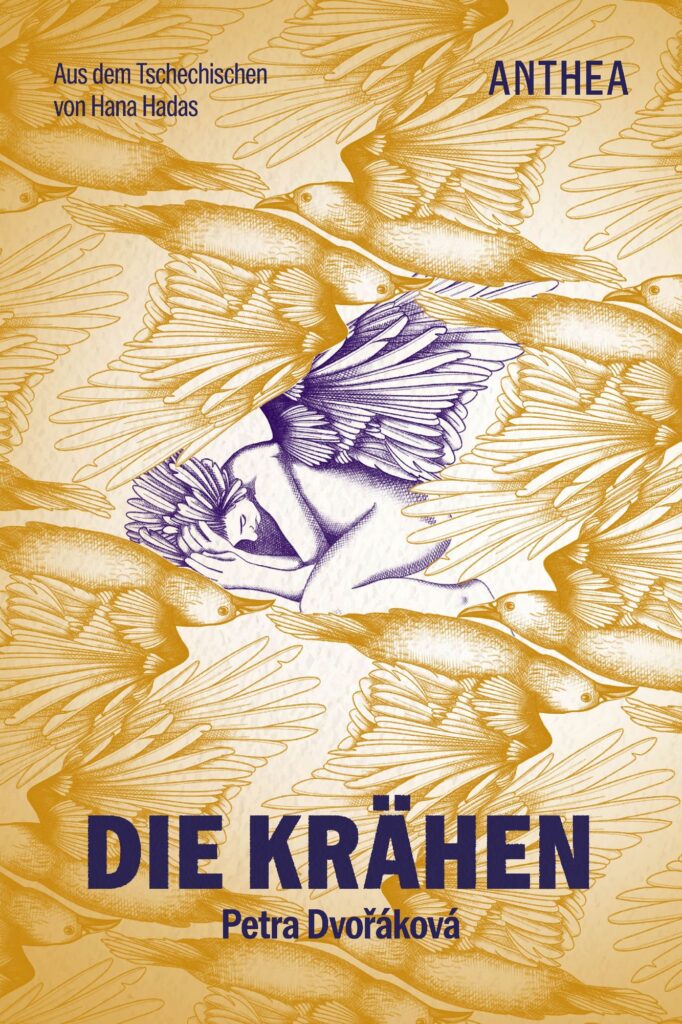
There hasn't been any major dramatic adaptation yet, but there have been a few nice things, such as a staged reading from „Proměněné sny“ (Transformed Dreams) or the children's play „Flouk a Líla“ (Flouk and Lila). Occasionally, I also hear from regional theater companies or schools where young people are performing „Vrány“. Lately, I've been enjoying watching another aspect of this – cosplayers. Especially in Poland, I see girls dressing up as the girl with wings in her hair who is on the cover of my book. This isn't common in fiction, and I think they're trying to express their situation, their identification with the main character.
What about a film adaptation – have you received any offers yet?
The script for „Vrány“ is currently being written, but it's still in the very early stages, and especially in the world of audiovisual media, everything takes many years and there is a great deal of uncertainty as to whether the film will ever be made. At one point, we worked on a screenplay for „Dědina“, but in the end we didn't like the proposal at all, so Host and I backed away from it. Having written screenplays myself for many years, I realize how completely different the worlds of books and films are, and I'm not very convinced that what works in a book will necessarily work in a film.
What brings joy and meaning to your life?
Overall, I feel like a happy and contented person, which doesn't mean that I'm immune to the usual trials and tribulations of life. Good relationships bring me joy and meaning – with my sons, with friends, with family. I'm one of those people who wake up in the morning and usually appreciate what they have. I have learned a lot about living in the here and now, because that is the only thing we really have.
In addition to writing, you are involved in a number of other activities – you work as an editor, also in the IT field, and you support children with cancer. Where do you find the time and energy for literary creation? Are you able to stick to a fixed schedule?
What I enjoy most about my life is the opportunity to switch between all these different things. I like being in touch with everyday life and the working world. The life of a writer is quite lonely, and you always have to play a role. When I work at the IT company I mentioned, I enjoy being just a cog in the wheel, part of a team. Sometimes I go to work for a few days as a nurse, which is my original profession, and I enjoy being in contact with ordinary people, for example from villages around Znojmo. And then there's pediatric oncology—I feel like I owe something back to society, so I try to do that... I know it may seem like I don't have time to write, but I guess I have a gift for working quickly and efficiently, sticking to a routine, and not procrastinating too much... And of course, I also have the freedom not to do those things. That's always nice.
That sounds like a lot of activities, which can sometimes be overwhelming. What helps you to stop and relax?
Actually, for quite some time now, I've been strictly adhering to having at least one day a week completely off. It's a time when I switch off from all activities that could even remotely be related to work. I used to do a lot of things because I had to earn money for my family and I couldn't take into account whether it was too much, whether I was working on weekends or whether I had no vacation time. It took me a long time to realize that I didn't have to do that anymore. I devote time to exercise, watch TV series or various sports in a completely ordinary and unpretentious way, and make little things, such as a dollhouse for my nieces. This clears my head beautifully.
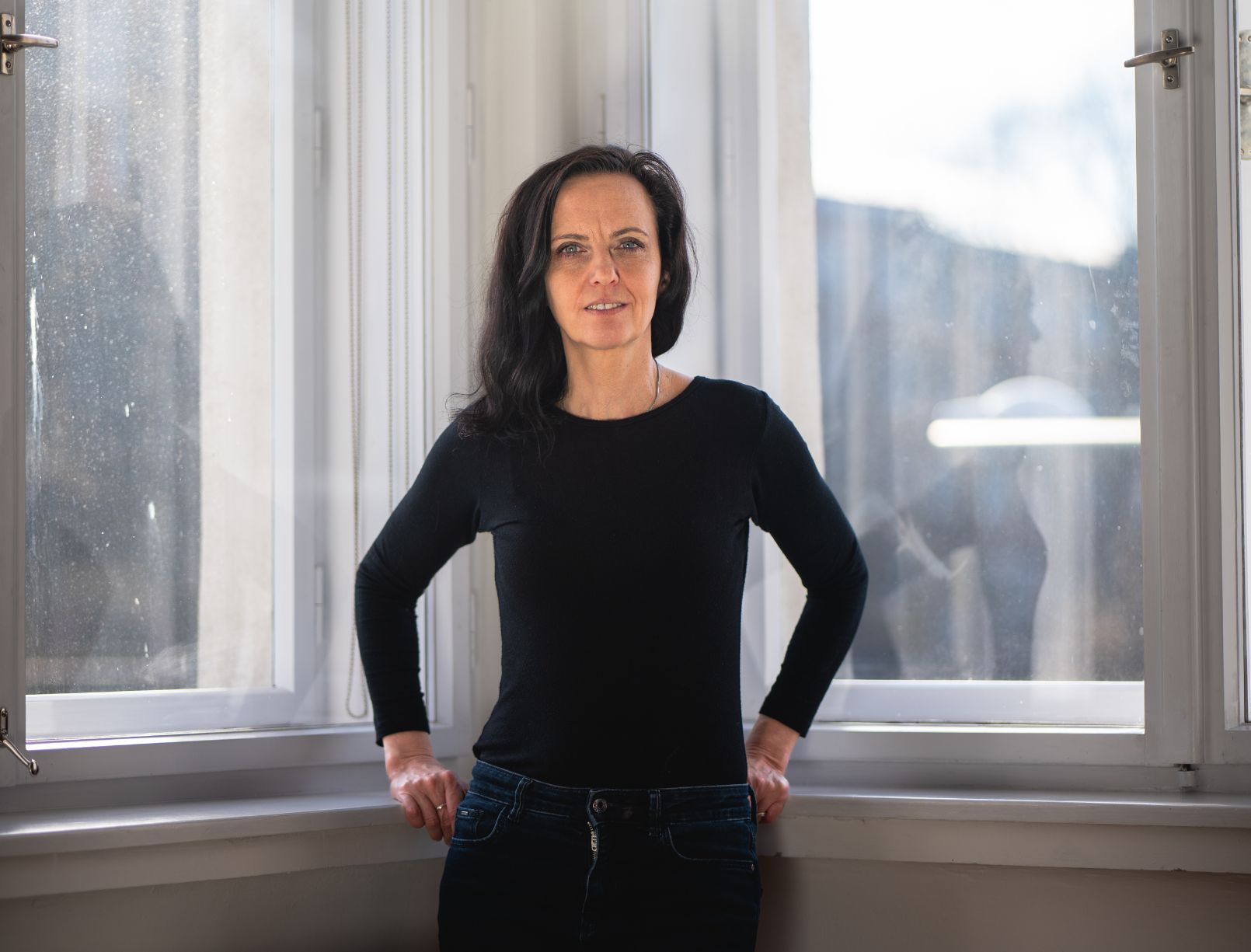
Photo: Věra Marčíková
The interview with author Petra Dvořáková was conducted by Karolína Tomečková.