

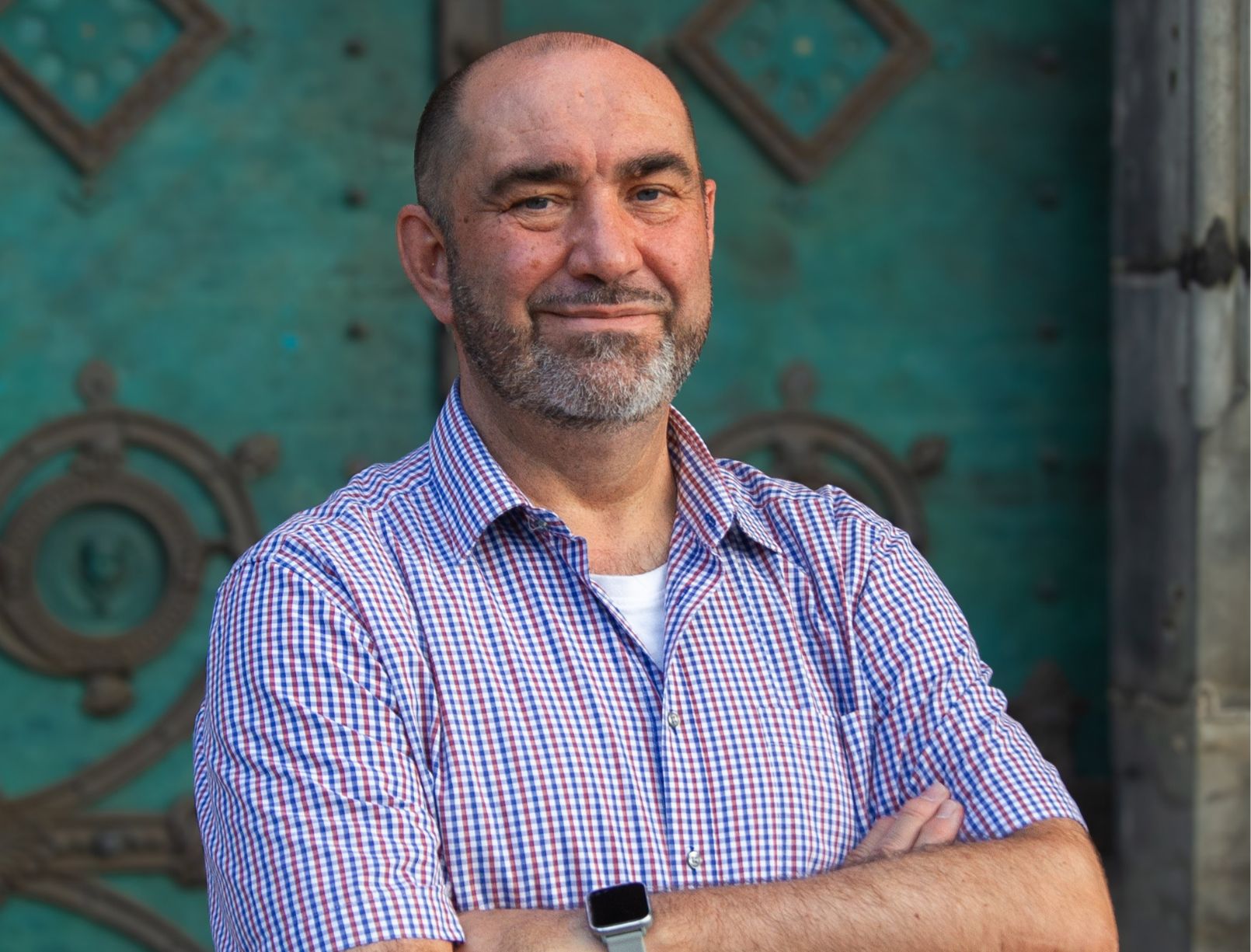
Miroslav, your debut novel „Letnice“, which won the Magnesia Litera award, has now been published in German translation and has been met with excellent responses from literary critics and readers alike. Did you imagine it would be so well received when you were writing it?
I am a fairly humble person and don't like to jump to conclusions, but I admit that it did occur to me, because I felt that, without it being my primary goal, I had written something a little different from what is commonly found in contemporary Czech literature, but I didn't take it too seriously. After the initial reactions, however, I thought to myself that if I had known what the response would be like, I would have written it better. I must admit with some embarrassment that I wrote the book intuitively, in one go, without even reading it over afterwards. I relied on everything falling into place and didn't play around with the style, form, or content. Today, I would shorten some parts, omit others, and perhaps rewrite some.
What specifically?
To avoid any misunderstanding, I don't think there was "anything extra" in „Letnice“, I would just perhaps write it differently – but that's probably normal. I came up with many possible changes when I was editing „Letnice“ for Czech Radio and had to cut it by 30% due to broadcasting time. I quite enjoyed it, but I didn't enjoy it as much as the writing itself.
You talk about miracles in connection with literature. Is the success of your debut novel also a miracle?
Yes. It is a miracle in a way, because there are always many circumstances, coincidences, and concurrent events that influence how a work is perceived, and the author himself often cannot influence them. But in the universe, all coincidences and non-coincidences sometimes meet in the right place. And in this case, it worked out.
Your work is often classified as magical realism. Did you consciously draw inspiration from this genre while writing, or did you only realize this in retrospect? How would you describe your novel in your own words?
I have always been drawn to magical realism, but I – and I think this is true of every author – did not primarily write something that was meant to look like magical realism. I came up with a theme, and that theme demanded a certain form, language, and style. And in this case, it was a style close to magical realism, a slightly archaic and more poetic language, a little fantasy and unrealistic ideas confronted with reality. My novel is a joyful fairy tale about worlds that come and go, and we don't know where they will end up.
When I was reading reviews and excerpts from your book, the Norwegian writer Jostein Gaarder came to mind at times. Do you know him? Could he have been an inspiration to you in some way? Or who else has been and is an inspiration to you? It doesn't necessarily have to be literature.
I admit that I haven't read anything by Jostein Gaarder yet – I'll remedy that. But he could certainly be an inspiration to me, like almost everything I've read and finished reading. When it comes to inspiration, I'll be totally cliché and name some embarrassingly well-known names: Márquez, Alejo Carpentier, Allende, Doctorow; from the Czech and Slovak writers, Vančura, Čapek, Jaroš, but I also get a lot of inspiration from movies, so maybe Buñuel, Fellini, Tarantino, Tarkovsky. You collect lots of atoms from different stars that you encounter along the way... Of course, I also read contemporary Czech literature. I greatly admire Kateřina Tučková, Jiří Padevět, and Pavel Kosatík, even though I write in a completely different style.
In an interview for Lit on Radio Wave, you said: “Literature is also a miracle. It helps heal, helps people be better, calmer, and reflect on themselves. I consider it a kind of therapy.” What does literature mean to you? How does it help you? What do you want your book to “radiate”?
Literature is a source of joy for me, a way to experience other worlds and lives, to model possibilities, material for developing imagination and knowledge. And I hope that my book is something similar for its readers. I wanted to put the joy of writing into it, which will hopefully turn into the joy of reading, as well as hope and kindness. Maybe I succeeded.
You have had a rather unusual career path: you studied clinical pharmacy in Bratislava, then directing at DAMU and film studies at the Faculty of Arts in Prague, and now you work in medical research and cellular biotechnology development. How do these worlds come together in your writing? Do you see any similarities between science and literature—and do you draw on your own work when writing, or do you keep them separate?
I only have one head, so of course these worlds meet in it—or rather, they intertwine, because I think that they are not two worlds at all, but one viewed from different angles. They use slightly different tools, but they are constantly striving towards the same goal – to understand, describe, and express the truth.
Can you imagine your book being made into a movie? Would you enjoy writing the screenplay?
Several production companies were interested in filming it. I chose one. We have agreed that I will not name it for the time being, nor will I name the co-producers, but given that the book is written like a film that unfolds before the reader's eyes, I can of course imagine an audiovisual work based on the theme. The screenplay will be written by a professional screenwriter who will have the necessary distance from the original work, which is good, but I am looking forward to collaborating on it; I would not want to miss out on such an adventure. In September, a dramatization based on my book, written by Jan Šotkovský and directed by Stan Slovák, will premiere at the Municipal Theater in Brno. „Letnice“ has also had a very successful 20-part radio adaptation, which was listened to by more than 420,000 listeners, as well as a nice audiobook.
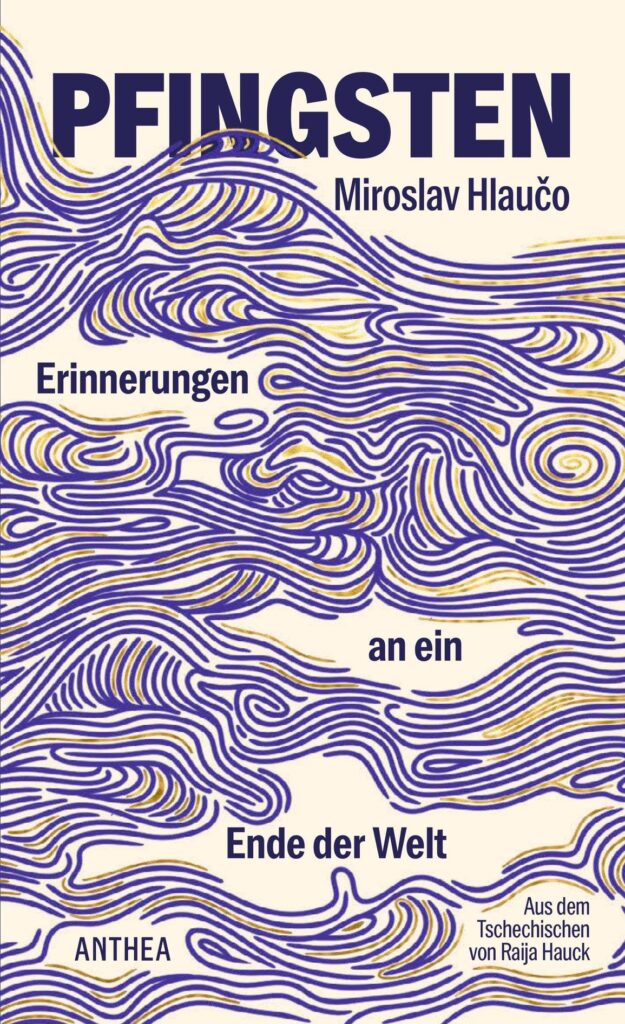
The book is now being published in German. How did the collaboration on the translation go?
The collaboration with translator Raija Hauck was excellent—even though all we needed was a few emails. From those, it was clear how responsibly and carefully she approached the translation. Another 13 translations are on the way, which will be published gradually over the next two years. This year, there will be Polish, South American Spanish, Arabic, and Slovenian.
You are making your debut at almost 60 years of age. Did the decision have to mature in you, or was there a specific impulse? Had you thought about making your debut before? How long did it take to mature in you?
I've been writing my whole life. But at one point, I decided to send it to a publisher. It was that simple. Yes, maybe I've matured a bit, and maybe not. Who knows what my debut would have looked like twenty years ago; maybe it wouldn't have been that different. I have several unfinished and even completed projects of various genres in my notebooks, drawers, and other storage places, and it's quite possible that I'll eventually prepare one historical novel and one crazy sci-fi novel for publication. In fact, I put together the book I want to finish this year, a contemporary novel with the working title „The House That's Easy to Leave“, in my head many years ago.
Leipzig will be your first major international appearance, is that right? How do you feel about it? What are your expectations for the fair?
It's my first appearance abroad at a major book fair, although I've already had about six appearances in Slovakia, one teleconference discussion with Slovak readers and compatriots in Berlin, and one discussion in London. Last year, I did more than 50 different readings and discussions in the Czech Republic, both small ones in libraries and bookstores and large ones at literary festivals. Of course, participating in a major international fair is another pleasant milestone. I would like to help my German publisher promote the book and also present the book to others who might be interested in publishing it. I also hope that through this fair, „Letnice“ will represent Czech literature and Czechia in general in a dignified manner.
Photo: Paseka
The interview with author Miroslav Hlaučo was conducted by Karolína Tomečková.