

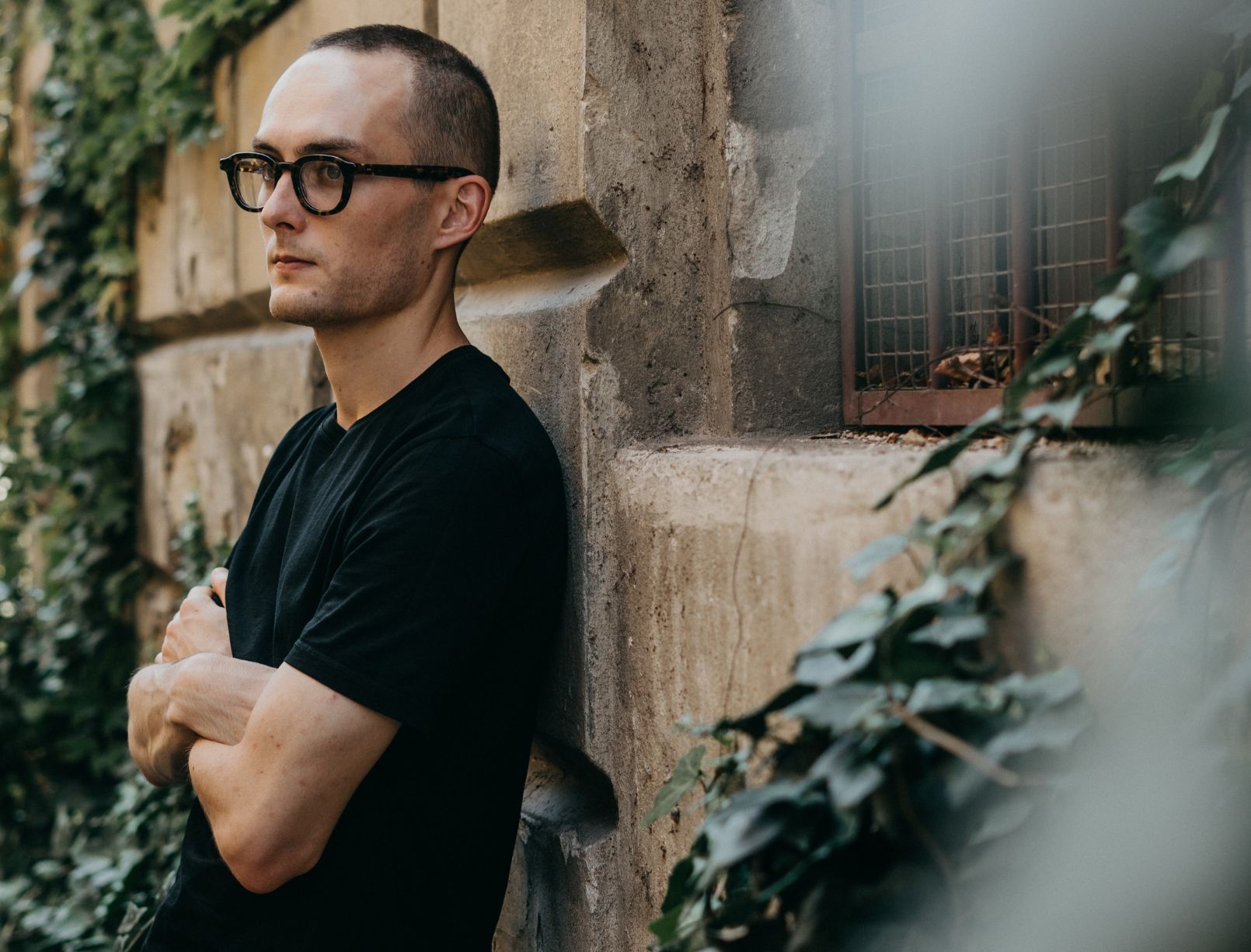
Marek, your debut novel, which is largely set in Přerov, Moravia, is heading for the German market and the Leipzig Book Fair. How do you feel about that? Did it occur to you while writing that the novel might garner international attention?
I think that the specific features of the city, as well as some of its problems that appear in the novel, aren’t unique to it. The problem of housing affordability, abandoned and decaying industrial complexes, and places overgrown with new wilderness aren’t limited to Přerov or the Czech Republic. Personally, I enjoy reading texts set in specific places, moving through the pages in a space I can imagine, even if I haven’t visited it yet. I don’t know if I’ve managed to achieve something similar, but I’d like to think I have.
Your novel is currently one of the most translated in the Czech Republic. How do you explain this success? And what are the reactions across different countries? How does the experience of Moravian Přerov translate, for example, into Spanish?
That’s more of a question for the publisher, and more specifically for the translator. I tend to think it’s primarily the work of Pavlína Juráčková, my literary agent, who handles foreign rights for the Paseka publishing house. I believe literature is an entire ecosystem. An individual author can write the best book imaginable, but without the work and enthusiasm of others—whether editors, translators, agents, and so on—the book may never reach readers. This is all the more true when it comes to literature from smaller languages, which are at a huge disadvantage compared to English. Personally, I’m fascinated by how carefully translators read and what I can learn from them in the process.
Přerov doesn’t exactly have the best reputation in the Czech Republic. Still, do you enjoy going back there? Does the city have anything to offer?
Yes, I do. Přerov fascinates me; it’s an industrial city in the heart of Haná, surrounded by unique natural scenery. It even follows the curve of the Bečva River, and I’m naturally drawn to cities dominated by rivers. For me, it’s a city where I can pinpoint the pressure points of contemporary society. Whether it’s the growing separation of people from nature, loneliness, or the widening gap between the poorest and richest residents. It’s a city-laboratory or a city-showcase. I think the problems it faces are general, structural, and systemic: they’re related to the outflow of jobs and educated people from the regions, or perhaps to neglect from the center.
More novels with queer themes are being published today than ever before. How can a new text capture readers’ interest when certain motifs are repeated? And what does the rise of this literature say about our times?
But many non-queer novels are also being published, and we don’t ask what new they can offer readers; we don’t dwell on recurring themes, but consider them universal expressions of human experience. That’s what these “queer” novels are too—we just haven’t learned to read them through that lens yet. My novel is half the story of a single mother, but for some reason, the narrator’s queer experience overshadows everything. For me, as a queer person, this aspect of my novel wasn’t particularly crucial; my aim was to describe a class experience, to show that the feeling of otherness and exclusion doesn’t have to be limited to sexual identity, but can also stem from class. I think this increase is primarily a matter of demand: we are hungry for stories that reflect the full spectrum of human experience, not just one limited slice.
What has the public’s reaction to the book been? Has anyone told you that the book gave them the courage to open up about their identity and gender with those around them?
They vary, and that’s fine. I enjoy it. And yes, people have reached out. But what pleases and surprises me most is when people with completely different life experiences read the book and manage to take away what I was primarily aiming for—some reflection on their own memory and the impossibility of truly understanding the experiences of others.
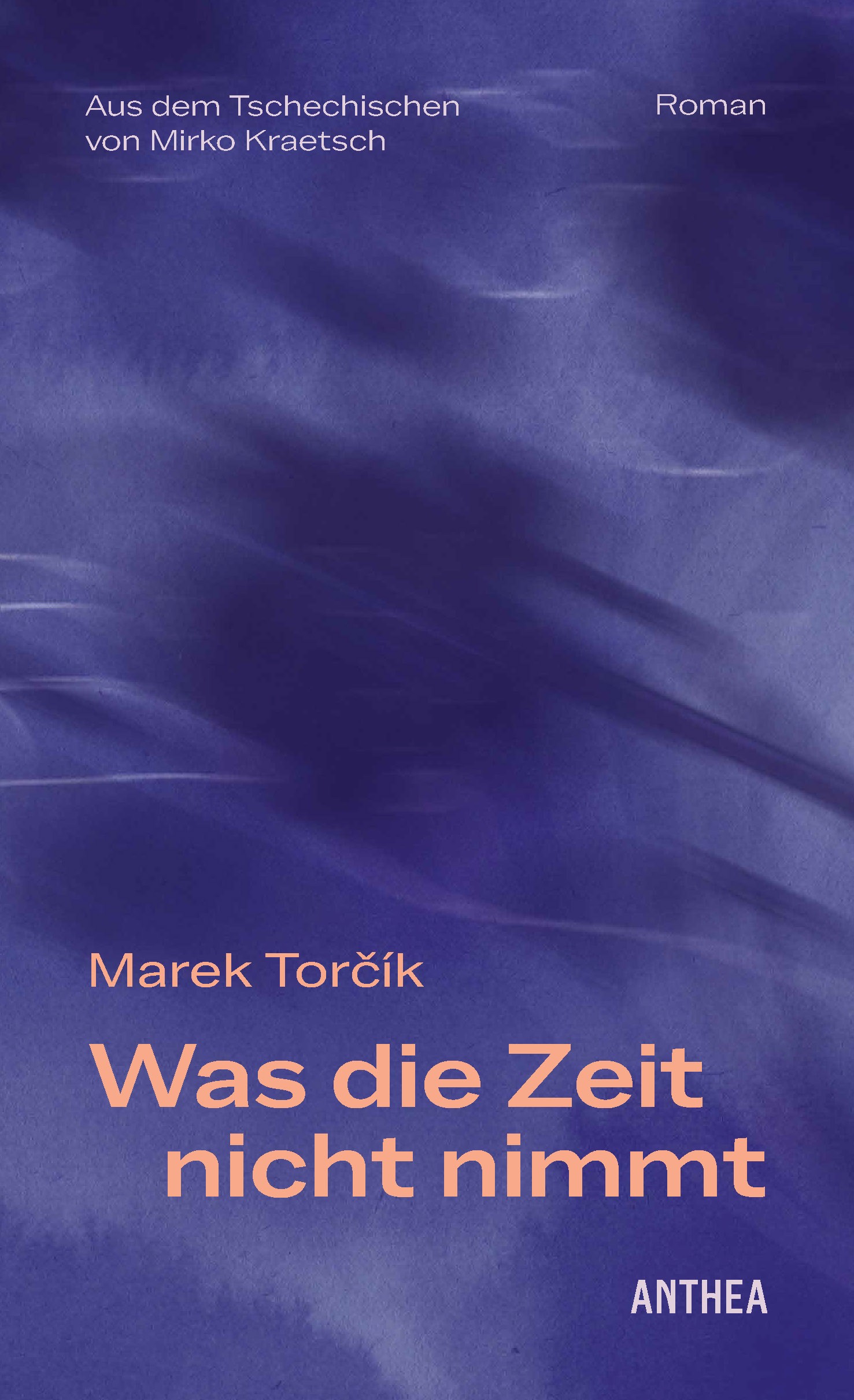
When you were going through what "Rozložíš paměť" is about, what helped you realize what you were going through at the time? Where did you look for information, inspiration, or a “lifeline”? Did literature play a role in that—whether your own or others’?
"Rozložíš paměť" is not my autobiography. The novel works a little differently, and although I deal with a lot of things from my own life in it, I work with them quite freely. But what has helped me my whole life are other people’s books; I find solace in them—not in the sense of comfort and understanding, but rather in the relief of experiencing the world differently for a moment, through the eyes and language of strangers, and knowing that I’m not the only one here…
In the novel, you tackle several very difficult topics—such as bullying, domestic violence, or alcoholism. I can imagine that it can be challenging to talk about such things, especially in front of people you don’t know. What helps you talk about these topics publicly in a way that feels safe and manageable for you, rather than retraumatizing? And does it ever bring you positive emotions?
Yes, but everything is perceived through the prism of memory—and memory tends to return everything to us amplified by the rule of stronger memories. While writing, I kept returning to Chris Marker’s short film La Jetée; I was curious whether a single violent image could foreshadow an entire person’s life. That’s why the often gray, featureless days fade away; what remains are those distinct “notches.” They’ll be distorted, exaggerated, and inaccurate, yet at the same time, they’ll shape who we are. I didn’t want to write a safe book; I don’t believe in literature as a safe place, even though I think it is a medium of empathy. But the path to empathy leads precisely through shared pain, through the fact that we see others, even if perhaps not in a flattering light.
In reviews, you’ve been compared to the French writer Édouard Louis. Which other authors do you feel close to, whether in terms of subject matter, writing style, or anything else?
There are quite a few. I like it when books engage in a conversation with one another, even when they contradict each other. I feel close to the poetry of Anne Carson, and to the novels of Virginia Woolf, W. G. Sebald, Ann Quin, and Clarice Lispector. When writing, I generally return much more often to poetry and theory than to prose as such.
In addition to prose, you also write poetry and contribute commentaries on social and political topics to the media (such as Respekt or Druhá směna). Do you feel that you have found your calling in journalism? And in what way is it different for you than writing a novel, where you also address issues such as class inequalities, just in a different way and on a larger scale?
I write journalism because I live in the world. I’m not an extrovert; I’m afraid of crowds, but I feel the need to at least somehow fight against rising fascism, against growing inequalities, and against the increasingly frequent attacks on human rights and civil liberties. And so all that’s left for me is to write. But poetry and prose are slower media for me. They work on the basis of imagery and narrative; they are much more about the nature of language, about its power and when it loses it. They have completely different goals than journalism, even though they may occasionally overlap.
What are you working on now? What brings you joy (not only) in literary terms?
I’m finishing my second novel, tentatively titled Sudden Changes in the Weather. It’s about something I’ve been thinking about for a long time—namely, the growing sense of loneliness, isolation, and a kind of inability to step outside my own head. It’s a bit about microbiology, about cloud seeding, a lot about the weather, and also about the ends of the world. Both the private ones and the societal ones.
Photo: Paseka
The interview with author Marek Torčík was conducted by Karolína Tomečková.