

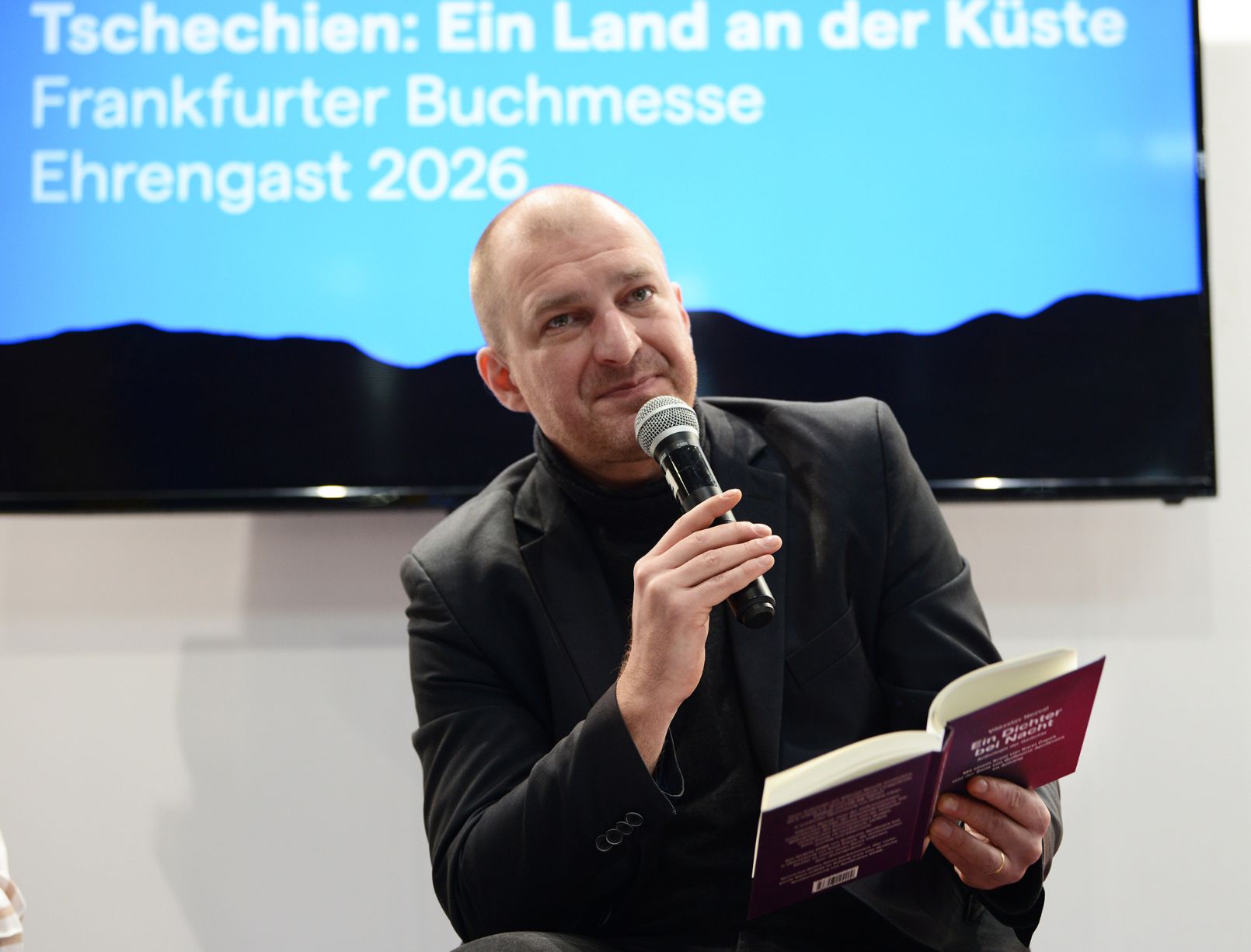
At the Leipzig Book Fair, you presented several titles from Kétos publishing house. How do you select the Czech books you want to introduce to audiences in German-speaking countries?
Kétos publishing house is directly focused on Czech literature. We concentrate on works and movements that make Czech literature exceptional. On the one hand, we are gradually publishing a cross-section of Czech literature that is interesting from the perspective of Poetism: that is, what inspired the Poetists, from Mácha through the Symbolists, then the Czech Poetists and Surrealists themselves, and then everything possible that was influenced by Poetism or is in any way related to it, whether in the underground or in contemporary works. At the same time, we place great emphasis on all possible side paths and distinctive mavericks who may have been forgotten even here at home. Among them are, for example, Váchal, Kocourek, Nevšímal, etc.
What specific titles did you present in Leipzig? Can you briefly explain why you chose these particular ones?
We have invited poets Iveta Ciprysová and Radka Rubilina to our events in Leipzig. Iveta Ciprysová is a young poet who is not afraid of formal verse or clear references to poets such as Nezval or Hlaváček, which fits perfectly into our program. Radka Rubilina, director of the Czech Center in Sofia, combines ancient mythology with the subjective, contemporary fate of her poetic self. Her use of abbreviations and similes reminds us of Ingeborg Bachmann. These are precisely our other major interests: antiquity and the interconnection of German and Czech culture. We will also present Josef Kocourek’s novella “Jensen und Lilie”, which complements our program of surrealist and adventure novels, and finally, my new collection of poetry.
Kétos publishing house focuses heavily on poetry. What attracts you to this particular area of Czech literature?
I don’t need literature to retell a story: artificial intelligence or a TV documentary can do that too. Poetry is interesting in that it ideally draws on all the possibilities of language to intensify, visualize, and set to music that pure narrative. Czech poetry—in the Mácha and Poetist traditions—excels in this regard. It is, however, particularly challenging to translate, as it makes maximum use of the specificities of the Czech language. But that is precisely what attracts and inspires me, even when writing in German.
Poetry in the Czech Republic is not among the most widely read genres. What is the situation in Germany and in the German-speaking world in general? And how is Czech poetry received there—do you think it has a chance of reaching a wider audience?
Poetry has been a popular genre in the Czech Republic for much longer than in German-speaking countries. In Austria and Germany, poetry is hardly read even in high schools, because it is essentially no longer required for the final exams. In German-speaking countries, the situation for poetry is far worse than in the Czech Republic. And on top of that, we have the problem that over the past century, Russia has managed to establish itself as the only cultural nation east of East Germany. Yes, since 2022, contemporary Ukrainian authors have also been read, which is a good thing. But almost no one in the German-speaking world knows the basics of either Ukrainian or Czech literature. Yet it was precisely Czech literature that—despite all the major differences—was closely intertwined with German literature until the rise of the Nazis. In short: reaching a broader German-speaking audience with Czech poetry is a long-term endeavor, but in my opinion, it is more important and beneficial for both sides than writing novels for export tailored to current German tastes.
In addition to your current work, you also publish older texts. How do you select them, and in what ways might they be relevant to today’s readers?
We all live in the present, which, like every era, is subject to trends. Paradoxically, if we want to find something new, something surprising, we’ll have better luck looking to the past, which wasn’t subject to today’s trends. I studied Ancient Greek and Latin and read novels from a time when the genre was completely new and uncharted. For me, literature is something like natural science: in different languages and different eras, the servants of the Muses arrived at various insights—for example, regarding rhythm, onomatopoeia, or imagery—that can inspire us today in our own language so that we don’t come across as clueless.
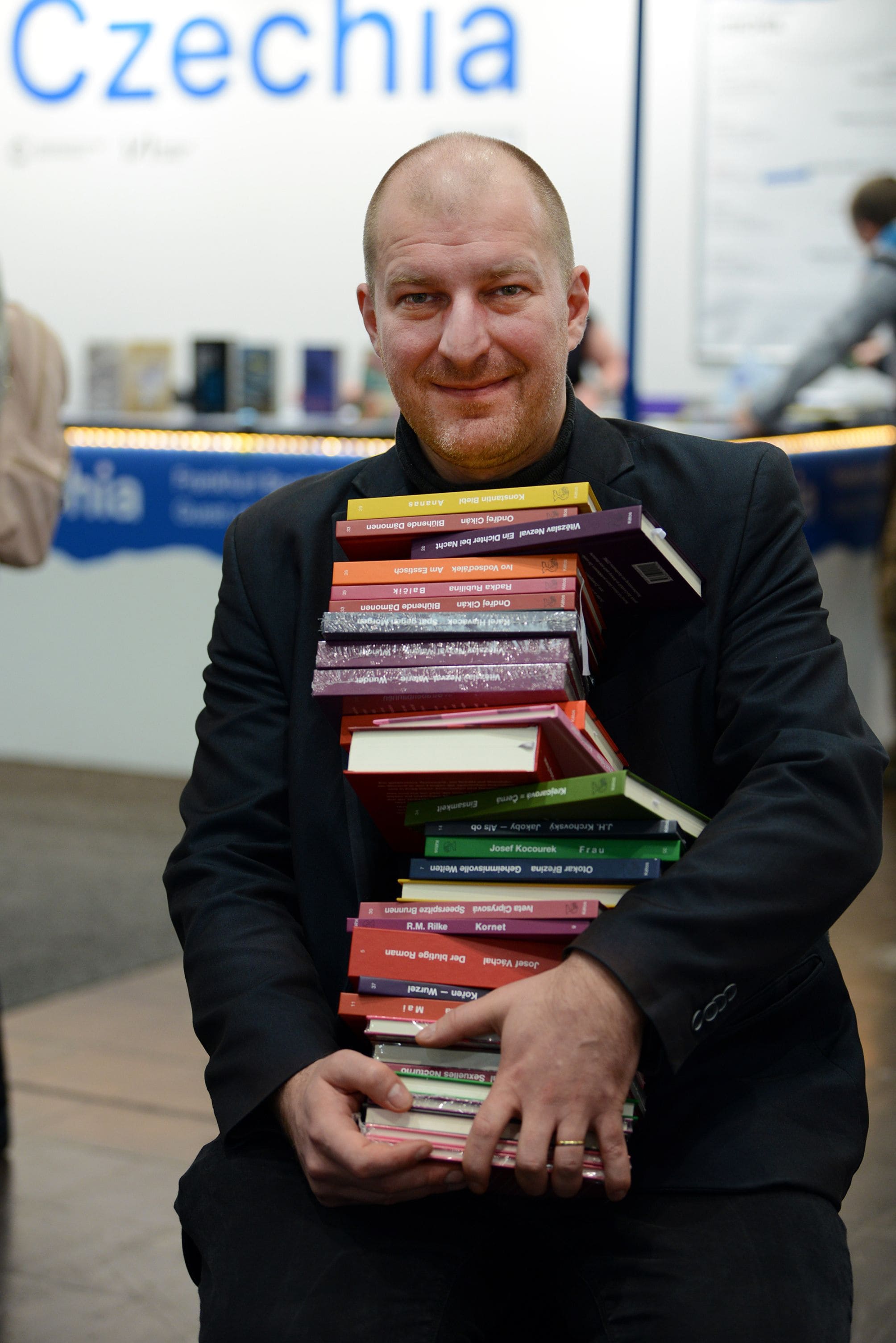
You work as a translator, publisher, and author. How do you manage to balance these roles—and in what ways do they enrich each other (or perhaps even get in each other’s way)?
Translation is an inspiration for writing, and writing is practice for translation. Translation and publishing take time away from my own creative work, but on the other hand, I don’t know how I would write on my own if I didn’t practice through translation. At the same time, translation is a certain obstacle to my own creative work in the sense that I’m happy to talk about new translations and answer questions, but I don’t mention my own new poems. So, to be clear: I’m writing a Czech collection in various metrical forms, because the ability to use meter is a specific feature of the Czech language, and I need to explore that meter. In German, my collection “Die Kinder der Riyun” has just been published by Limbus publishing house. It’s influenced by Japanese manga and is about a timeless battle against demons. It’s also very much about Prague.
Do you ever find that some Czech texts “come across” differently in German than in the original? Have you ever been surprised by the reactions of German-speaking readers?
Absolutely. And in certain cases, it’s necessary to anticipate this and write appropriate afterwords. An extreme example is Egon Bondy and Ivo Vodseďálek, who compared the Red Army to the Wehrmacht and celebrated the Wehrmacht in exactly the way Stalinist propaganda wanted the Red Army to be celebrated. It’s a brilliant joke that we Czechs understand immediately, but Germans find alarming.
How important do you think public readings, book fairs, and festivals are in helping the audience discover translated literature?
At readings and book fairs, I have the opportunity to infect readers with my own enthusiasm. I can also read in both languages to show how beautiful both—Czech and German—are and how compatible they actually are. German doesn’t exactly have a reputation as a melodious language in the Czech Republic—and the same goes for Czech in a German-speaking environment. The beauty of a language must be heard.
What are you currently working on?
I’m currently working on a translation of Jan Křesadlo’s epic “Astronautilia”. It’s a monumental work: a sci-fi epic of nearly 7,000 verses, which Křesadlo wrote in 1994, originally in ancient Greek hexameter. It’s precisely these kinds of flights of fancy that make Czech literature so exceptional. And since I’m a classical philologist who also happens to know Czech, I just had to dive into it. The work will be published in three languages—the Czech and Greek originals with a German translation—and will run to approximately 900 pages. We’ll be publishing the Greek original as a critical edition, on which Georg Danek, a specialist in Homeric epics from the University of Vienna, is currently working.
Do you have a personal favorite among contemporary Czech authors?
If I were to mention individual contemporary Czech authors, I’d probably upset the others. My favorites are simply those we publish at Kétos. And we publish them because they write in a way that is unusual for German-language literature. But I could probably mention one author, because he is so strange and unknown that I won’t offend anyone by doing so: It’s Erwin Fellner, a security technology specialist from a Czech family originally from Trieste, who, between military trade fairs where he presents drones and missiles and lobbies for support for Ukraine, has put together a rather erotic and at the same time parodic collection of poetry—in German, of course. We publish Czechs like that, too.
Photo: Sabine Felber, Literaturtest
The interview with publisher and translator Ondřej Cikán was conducted by Karolína Tomečková.