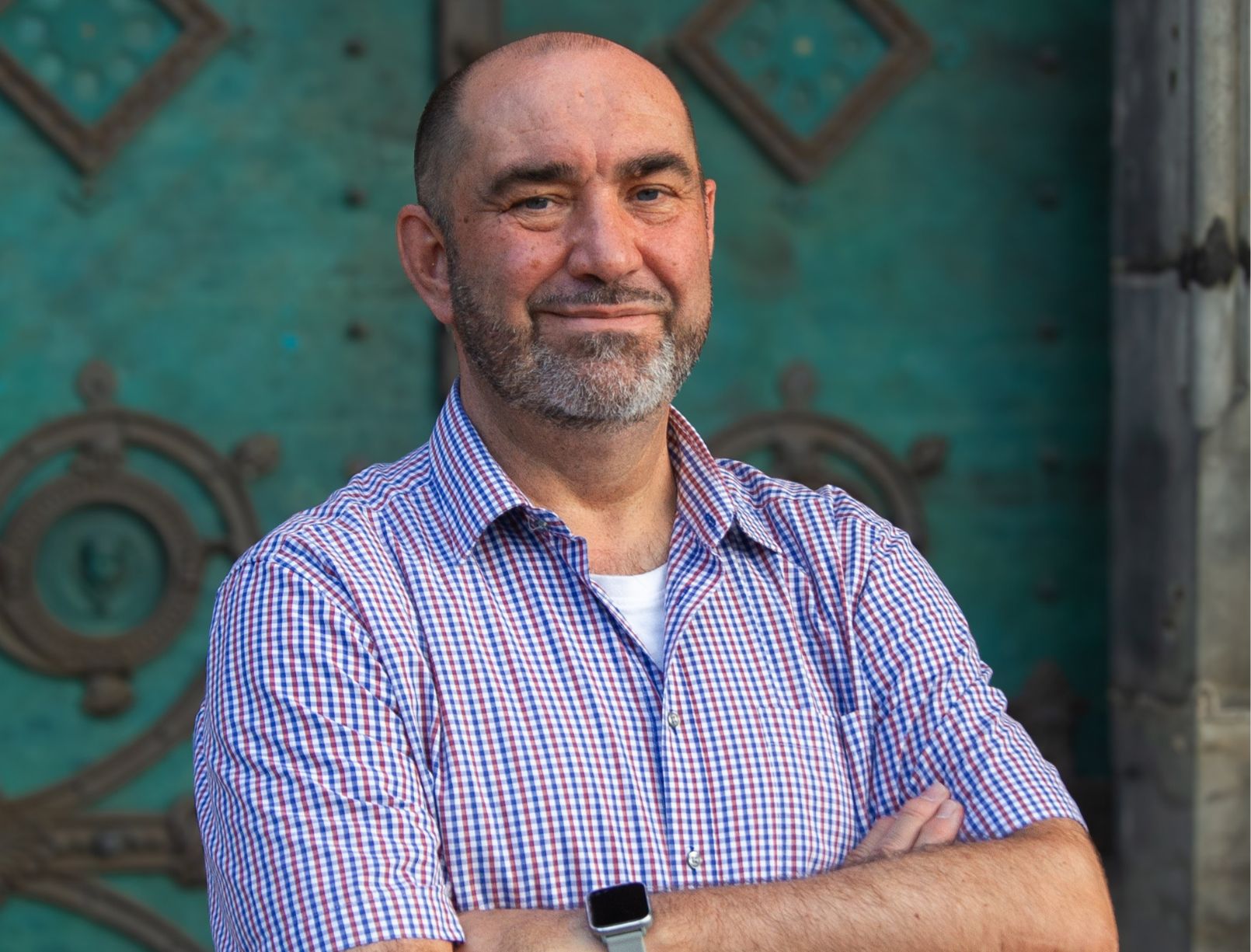
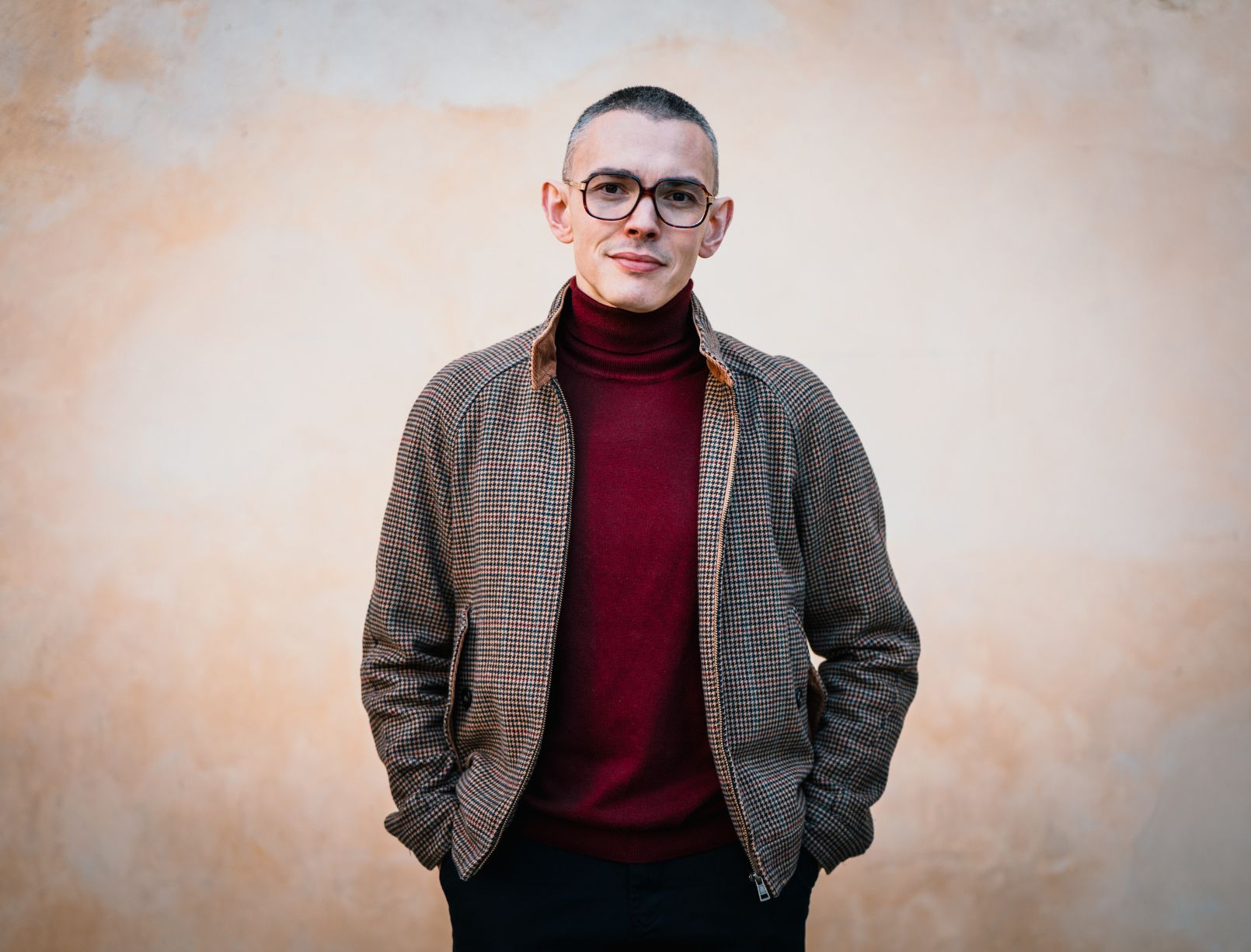
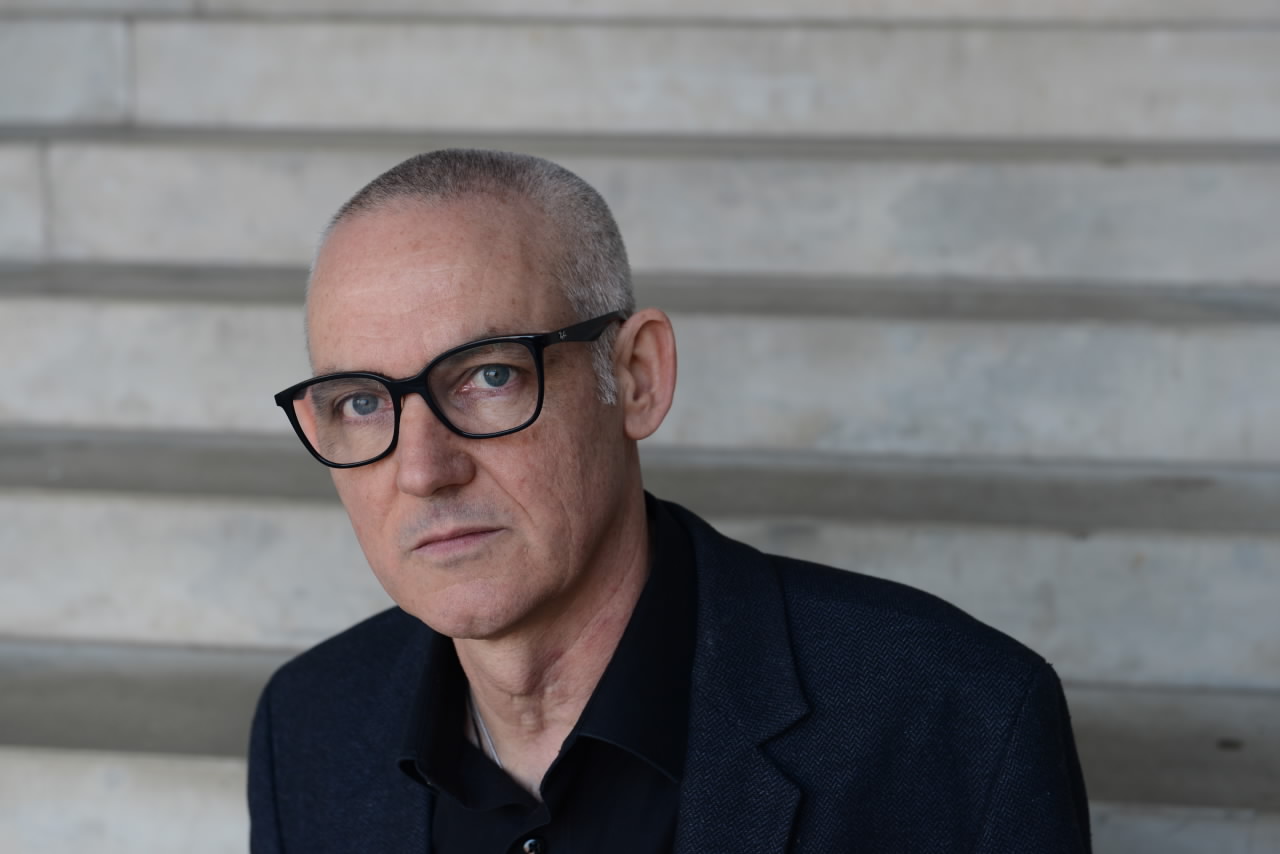
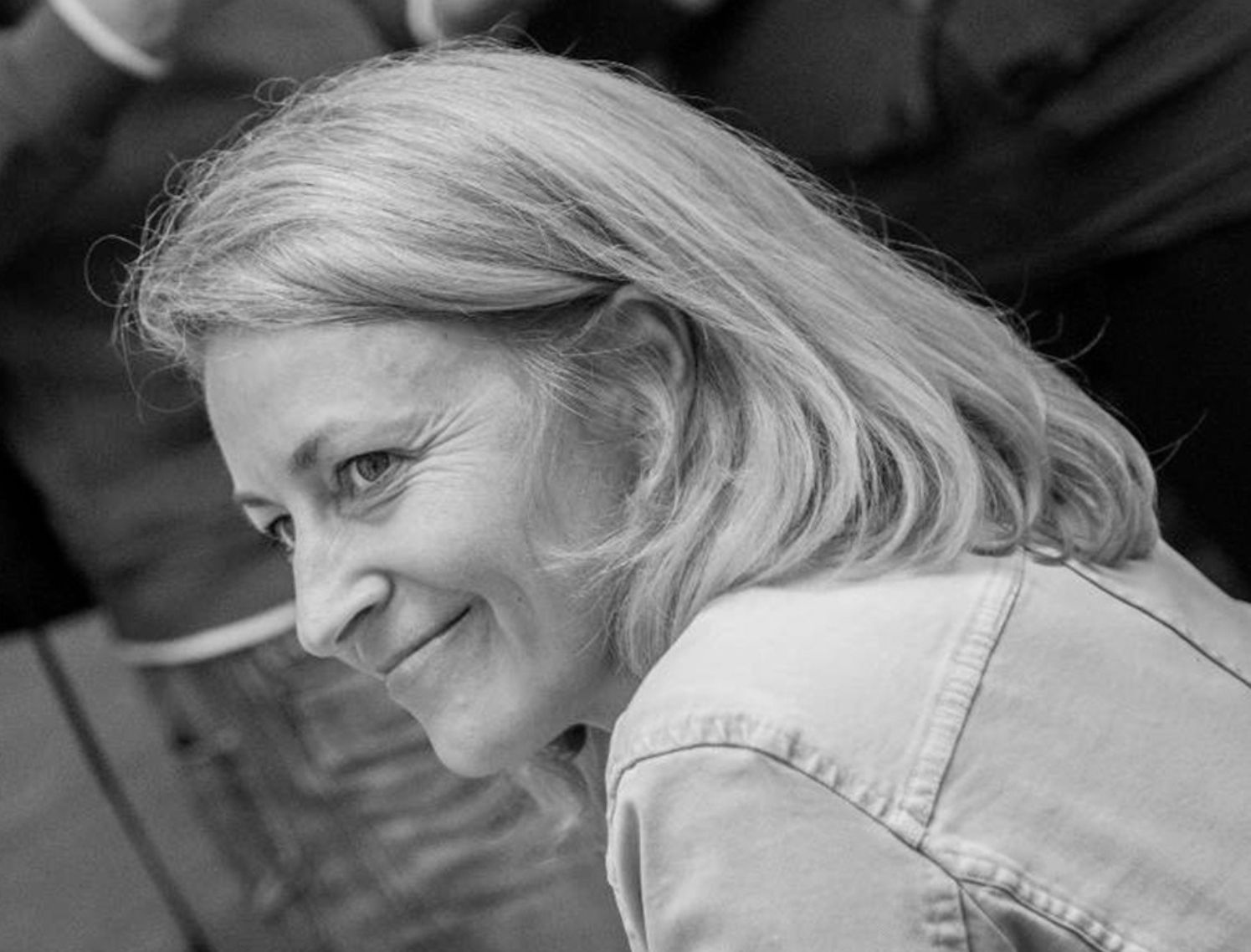
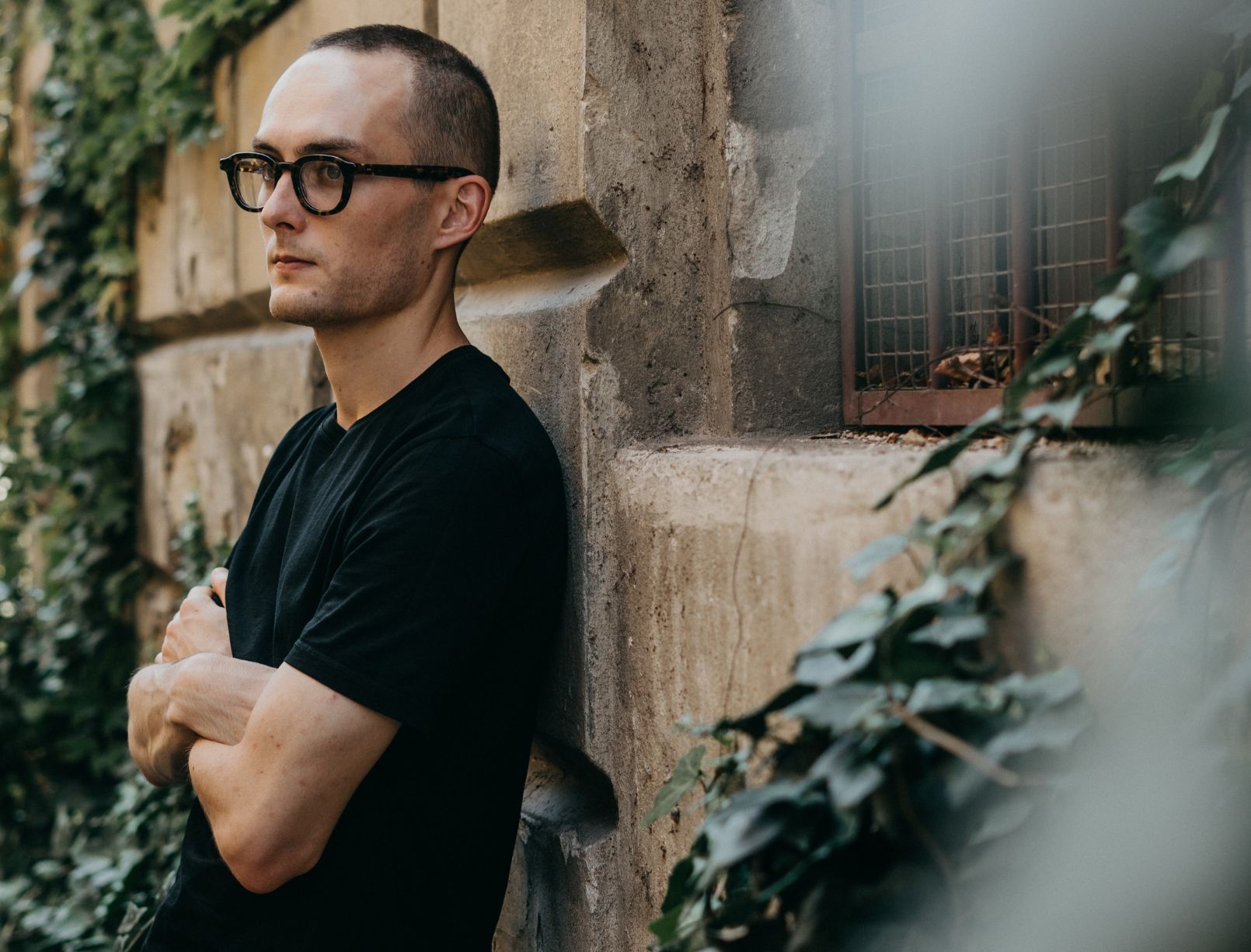
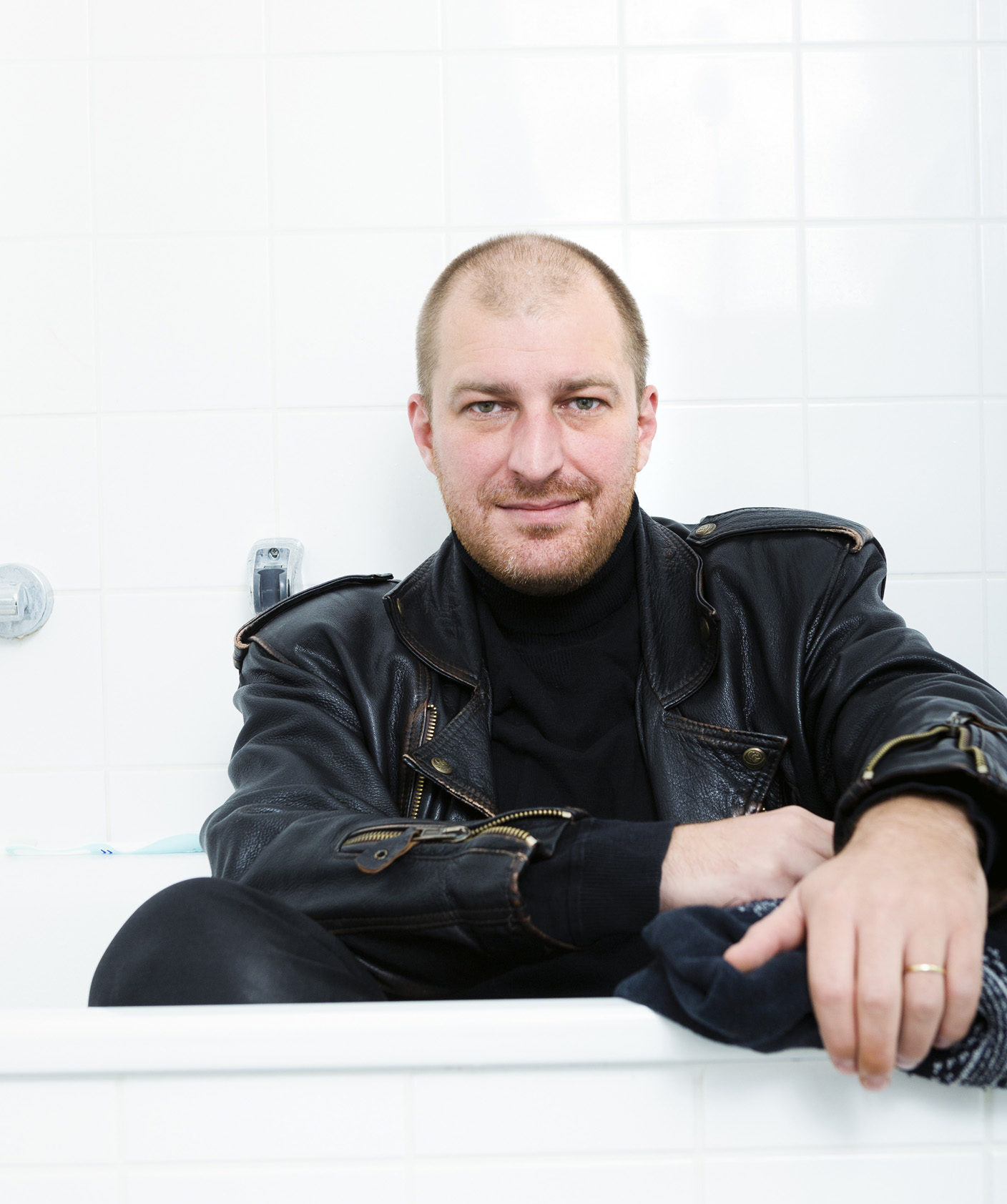
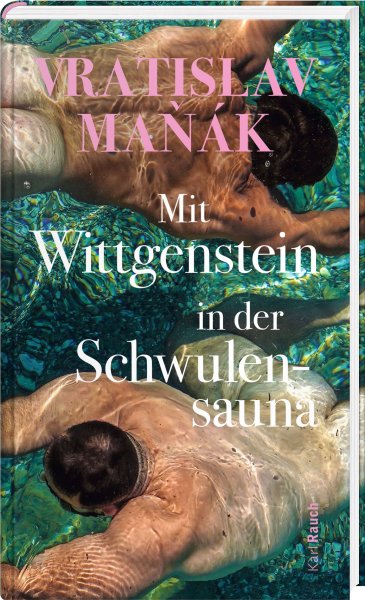
Vratislav Maňák on his book With Wittgenstein in a Gay Sauna: "This time, I'm not building the text around a story, but around an idea."

Vratislav, the title of your new book is quite bold. Did you know right away what it would be? How did it come about? Were there other options discussed?

The combination of Wittgenstein and gay saunas is obviously contrasting, but I didn't intend it as a provocation for its own sake. It is primarily meant to capture the tension that the book conveys: the tension between language and the body, between what we usually articulate and what happens without words. And because in all the texts I examine male homosexuality in Central Europe, the title also functions as an economical shorthand. The sauna refers to gay culture and its sexual dimension, while Wittgenstein also serves as a substitute symbol for the region under examination and the author's chosen approach.

Why Wittgenstein in particular? What attracted you to him in particular among all the philosophers?

I wouldn't overestimate his importance in the book; he is just one of a number of thinkers who accompanied me while I was writing—others included Eva Illouz, Byung-Chul Han, and Jacques Lacan. Together, they helped me answer the questions I was asking myself.

Which ones were they?

What is the appeal of Berlin clubs? And under what circumstances do we allow ourselves to be pathetic? And although Central European gay culture led me to these questions, their significance is no longer unique to homosexual men—and the philosophical and sociological arsenal helped me to understand what the book wants to convey to readers. In Wittgenstein's case, it is specifically about thinking about how we experience our own physicality.

Wittgenstein says that what cannot be spoken about must be passed over in silence. When we apply this to the environment of a gay sauna: what is actually talked about there? Is it a space where we can finally be ourselves, or is it a place where even our thoughts remain hidden under a towel?

To be honest, there isn't much talking in a gay sauna. It mainly offers a non-verbal experience, because it focuses a person on experiencing their body, or rather on experiencing their body reaching pleasure. And as for those thoughts… rather than under a towel, they are stored in lockers at the entrance, and even the towel itself is often a nuisance here.
It seems that this is your first book that deals more extensively with the topics of sexual and gender identity. Why did you decide to tackle them now?

It was more about the author's evolution than a revolution, because I already worked with gay themes in the novella O Žitovi (About Žita) in the short story collection Smrt staré Maši (The Death of Old Maša) and I also addressed them in my essayistic prose Goethe v Mariánských Lázních (Goethe in Mariánské Lázně). The change seems significant mainly because with the new book I am moving to non-fiction, and moreover without historical background – and because this type of writing requires a stronger personal experience than classical prose, I could only embark on it when certain experiences became articulable. However, I would not like these words to give the impression that the book is a personal confession. I don't need to confess anything, it's just that this time I'm not building the text around a story, but around an idea.

You will be discussing the book at the Leipzig Book Fair. How do you feel about talking about these topics publicly in front of an unfamiliar audience?

Intimacy in literature is not the same as intimacy in life. When I try to name a certain phenomenon or experience, I give it shape and structure, and I use the written word to create distance. The public debate is then no longer a confession, but a reflection on the text. Nevertheless, I understand what you are asking. Of course, talking about intimacy can be sensitive, especially when it comes to minority intimacy. At the same time, however, it is quite liberating—when the word homosexuality is used so often in the public sphere, it is appropriate to look at what the word actually means. And if we talk about it in a civilized manner, it is a relevant part of public discussion.

In the book, you combine personal testimony with reportage and, at times, philosophical reflections. This may make it a more demanding read—who is the book intended for? Who might it appeal to?

With Wittgenstein in a Gay Sauna combines reportage, essay, and personal reflection, which can indeed make it more demanding – but at the same time, it fits the theme. Sexuality, language, and identity are neither simple nor one-dimensional. I think it will appeal to those who like to seek out literature as a space for thought, and not just for exciting stories.

You have also previously published collections of short stories, Smrt staré Maši (The Death of Old Maša) and Šaty z igelitu (Plastic Dress), for which you won the Jiří Orten Award. Are these shorter formats – whether short stories or reportage – something that is close to you literarily?

Short stories, reportage, and essays have something in common: concentration. They don't offer much room for verbosity, because every sentence has to convey a precise meaning, and this style of writing suits me at the moment. What's more, the spectrum of short genres is very diverse, which makes it possible to seek out new combinations, stylistic fusions or, in other words, new forms of storytelling.

This isn't the first time you've appeared before a German audience. Do you feel a little bit at home there now?

I am a Czech author, I write in Czech and I think in Czech, so home is too strong a word. But it is certainly true that I feel more confident in German-speaking countries every year – thanks in large part to the translator Lena Dorn and the trust of my German publisher Karl Rauch Verlag. German is also a natural medium of learning for me, and I much prefer to read fiction and non-fiction texts that have not been translated into Czech in German rather than English – and this does not only apply to titles that were originally written in German. Translations here have undergone a selection process that can be trusted because the local perspective is culturally close to ours. And on top of all that, there is Germany itself. You see... any Czech who likes to look at the world from a broader, let's say historical perspective, cannot ignore Germany. Its regional reach is enormous, its culture has been extremely influential for hundreds of years, and our connection due to geographical proximity is unbreakable. That's why I like to visit Germany and Austria—every trip is an opportunity for me to understand the local identity and, thus, the region in which I live.


Photo: Věra Marčíková
The interview was conducted by Karolína Tomečková.
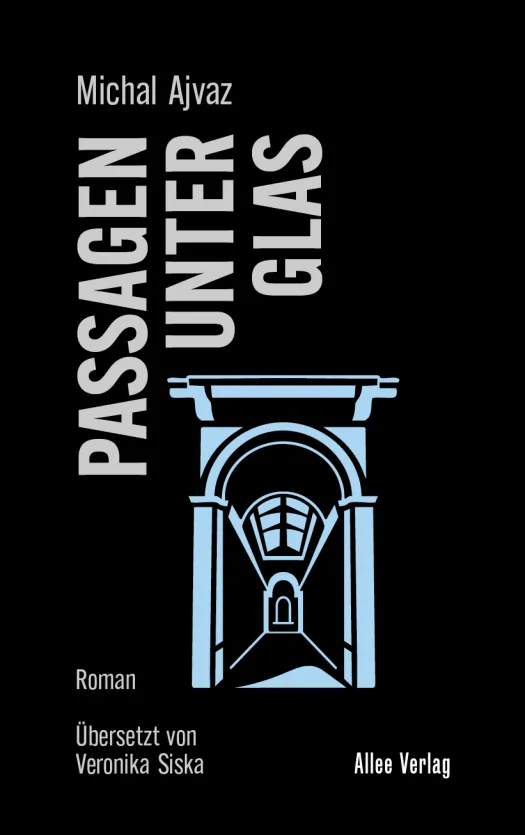
The Leipzig arcades became the setting for Michal Ajvaz's new novel

In your latest novel, "Pasáže", which you will soon be presenting at the Leipzig Book Fair, part of the story takes place in Leipzig's arcades. Why did you choose them as the setting? What attracted you to them?

Most of my novels began with an encounter with a place that I felt could be the setting for a story. That was also the case in Leipzig. When I walked through the place where three arcades met, I had the feeling that it was a place ready for two people to meet, approaching each other from opposite sides, while a third person watches them from another arcade, and that this initial situation could develop into the plot of a novel.

Your descriptions of the city are very detailed and accurate. Do they come from direct observation of specific places or from your imagination?

Sometimes I write about fictional cities, but if the story takes place in a real city, it is always a city I know from my own experience.

Do you already know where you will go next in your writing? Or is it too early to ask that question?

Currently, I am not writing fiction, but theoretical work. If I do get back to writing fiction, it is quite possible that it will again be based on an experience in a foreign city. Given that ninety-nine percent of all the cities I have visited were as a result of invitations to various readings, the starting point for my next book will probably depend on where I am invited.

Your novels are often classified as magical realism, philosophical novels, or fantasy. Which of these "labels" is closest to you? And how would you describe your work in your own words?

I don't think I need any such label, but if I had to choose, I would like surrealism the most. I feel a particular affinity with the work of Julien Gracq and André Pieyre de Mandiargues, without wanting to compare myself to these masters of writing in any way.

Your books are translated into German and published by Veronika Siska. How did this collaboration begin?

Veronika offered my books to various German publishers, but none of them wanted to publish them, so she decided to start her own publishing house. However, she also publishes books by other authors.

In an interview with Štěpán Kučera, you said that "every book is a statement about reality, even about historically determined reality." What statement about today's world are you trying to capture and convey in your books, consciously or unconsciously?

Images that are creations of the imagination and are not based on any predetermined idea express the experience from which they matured, and because that experience is an experience in a specific historical, social, and political environment, they also express that environment in a certain way. To do so, they do not need to be an explicit realistic image of it – the fruit of an apple tree is not a small apple tree, but an apple that does not resemble it at all. I think it is not difficult to find a level in the stories of my books that refers to the historical moment when the books were written, often even before these phenomena became truly relevant. For example, in the novel "Cesta na jih", the storyline, which takes place in the imaginary city of Parka, shows how falsehoods systematically spread in society for a certain hidden purpose can create an urgent fictional reality that has the power to radically change the life of a community; the South American episode in the same novel deals, among other things, with a dilemma that is particularly relevant today, namely the dilemma of deciding whether to join forces with allies who are not entirely righteous in the fight for a just cause, or to keep one's hands clean even at the cost of defeat; the story about a robot in "Pasáže" relates to the question of whether artificial intelligence will truly compete with the work of artists. The story of the Stone family in the novel "Města" concerns the historical transformation of technology 1.0 into technology 2.0, etc.

You have experienced several stages in the development of Czech literature. What do you think of the current one? Does it have anything to offer the world?

I think that a writer's job is not to offer something to the world, but to write as best they can about what is important to them.

What is important to you personally? What themes and values do you want to convey through your books?

I don't plan the themes of my novels in advance; they gradually reveal themselves as the novel takes shape. Through my books, I would like to convey above all the joy of reading.

Until 1994, you made a living doing various manual jobs – from hall worker at the Municipal House to night watchman and caretaker to water pump operator at Vodní zdroje. How did this experience influence what you write and how you write it?

I don't think it's particularly significant. A lot of my experiences from that time are reflected in my books, but I think that if I had done something else, different experiences would have been reflected in them.

You made your literary debut relatively late, in 1989, with the title "Vražda v hotelu Intercontinental". Did you write before that – perhaps for your own pleasure? And what made you decide to publish for the first time?

Although I tried my hand at writing in high school, I didn't really start writing until relatively late, sometime after I turned 35, in the mid-1980s. At that time, I was writing purely for myself, but in 1988, when I had written enough to fill a book, there was a certain relaxation in the culture, in a kind of imitation of Gorbachev's "perestroika," to such an extent that I decided to compile the texts into a book, put it in an envelope, and send it to a publisher. The book was published in the week when the "Velvet Revolution" began.

When I read the reviews, I noticed that your novels seem to some readers like one long, gradually unfolding story. Is this intentional, or rather a side effect of how you think about the world and characters? And if you are working on another novel, where would it fit into this "whole"?

As I said, my books begin with a feeling, often connected to a real place. Because nothing is planned in advance, the plot develops from this formless beginning, and in the course of writing, various archetypes come to the fore (such as the relationship between form and formlessness, or the relationship between the substance of a sign and its meaning), which are personal but also shaped by historical experience, and these then ensure the unity of all the books. As for the connections between the individual books, they are not planned; I only realize them once the book is finished. For example, I realized later that the books "Prázdné ulice", "Cesta na jih" and "Města" form a kind of trilogy about journeys, in which the plot concerns the past in the first case, the present in the second, and the future in the third.

In Germany, you have had several literary appearances in a relatively short period of time recently. How do you feel about performing in front of a German audience? And what has been the prevailing reaction to the book in Germany so far?

I like meeting readers because I often learn about interpretations of my books that I didn't think of when writing them, but which I find so good that I accept them as my own (in Bulgaria, for example, I learned that the book "Cesta na jih" deals with Georg Cantor's set theory). In Germany, I sensed curiosity about a previously unknown author, and I also had the feeling that the reception of the book reflected a weariness with the flood of autofiction and similar works. (When a writer is consistently conservative, there comes a time when he becomes an innovator.)


Photo: David Konečný
The interview with author Michal Ajvaz was conducted by Karolína Tomečková.
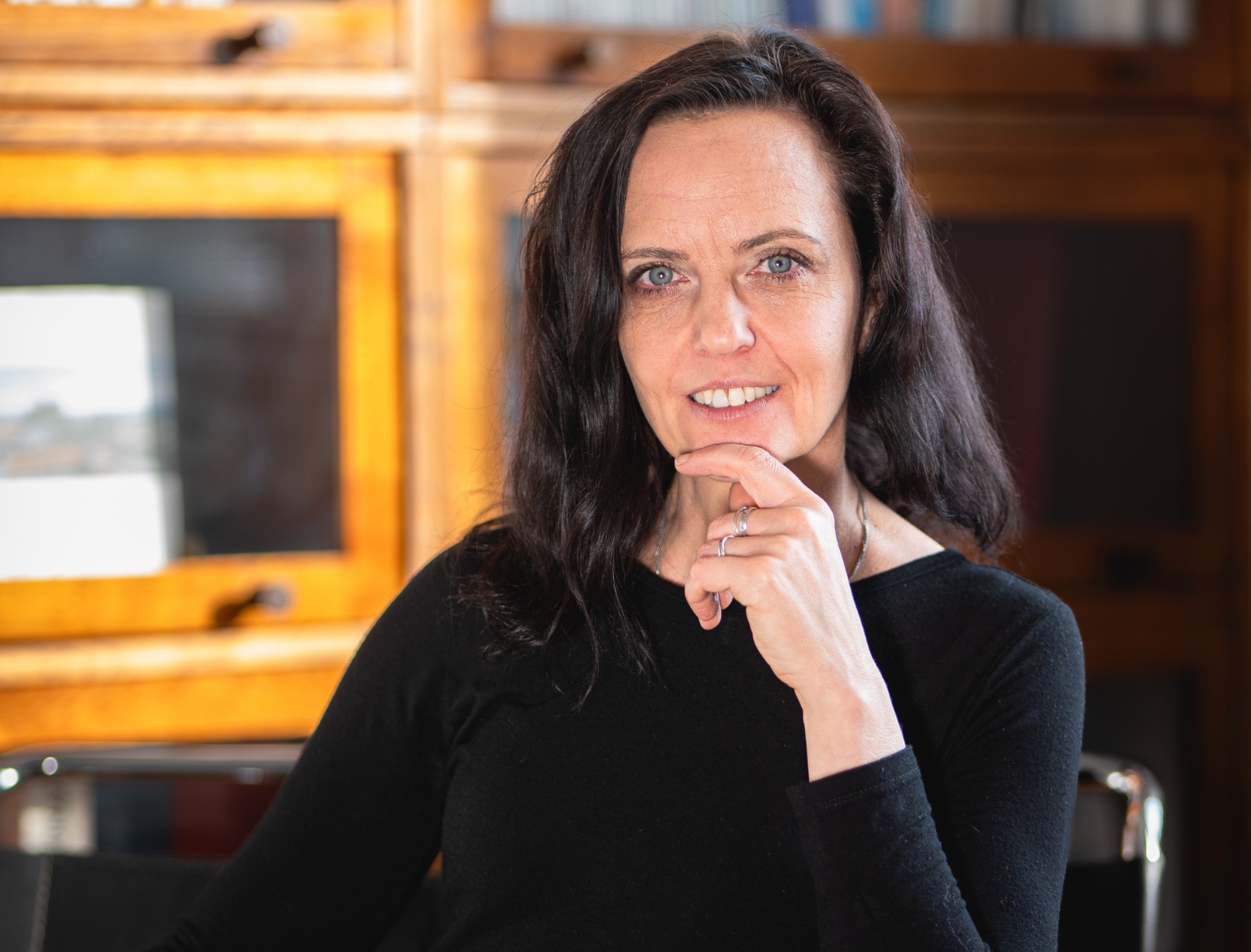
"I've learned a lot about living in the here and now, because that's the only thing we really have," says writer Petra Dvořáková

Petra, we last spoke shortly after "Vrány" was published in German. What has changed since then—what has the response been like? How is the book doing on the German market?

Just a few days ago, I came across a discussion among German readers about "Vrány" on the internet, and that's always extremely important to me—especially when I see that the book is prompting reflection on hidden violence in families. Although I don't know the exact figures yet, since the book was published I've collected quite a few nice responses from German readers. I've even exchanged a few words with some of them.

You mentioned last time that there is a Polish sequel to "Vrány". What stage is it at now – and can you say when and where it will be published, including in the Czech Republic?

The sequel to "Vrány" was published in Poland at the end of last year and the book is very successful there. In the Czech Republic, it should be published this fall under the title "Rány" (Wounds) and will visually follow on from the first part. I must say that it is a completely different experience in the sense that I am coming to the Czech Republic with a book that I already know has been successful abroad. Of course, that doesn't guarantee anything, but the starting point is different and in many ways more pleasant.

Leipzig awaits you. Is this a big event for you?

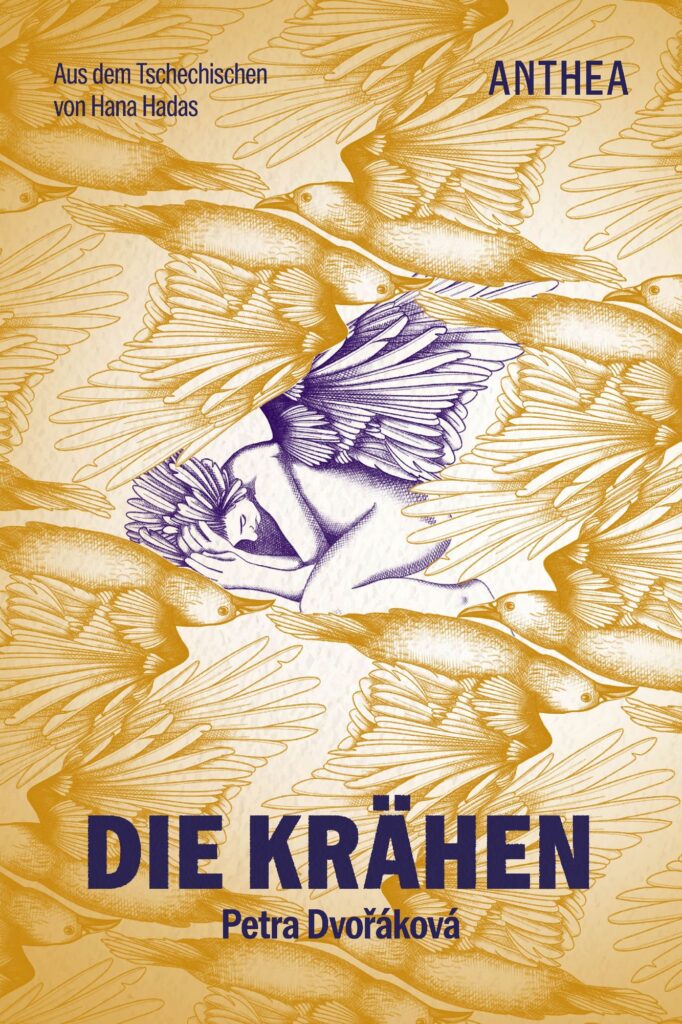
Absolutely extraordinary, I'm really looking forward to it. On my first visit to Germany, I really liked the fact that the discussion was almost exclusively about the subject of the book. Because that's what I really want to talk about – the situation of children who live a life similar to that of my heroines in "Vrány". They fall through the cracks of the welfare system and often remain in a painful and hopeless situation.

You recently published the novel "Návrat" (The Return) and the children's book "Až vyjde první hvězda" (When the First Star Comes Out). Do you already have another idea in mind that you would like to turn into a book?

I've actually been on quite a rollercoaster ride in recent weeks, because I've been writing my dream feel-good novel on the side, and in the end, Host and I agreed to publish it now, at the end of spring. It will be called "Ordinace" (The Doctor's Office), with the subtitle: "A soft heart (and high weight) can only be cured with humor". It's a story from the office of a general practitioner, a kind-hearted guy who would love to get married and have a family. But he has a few problems—his mother is his nurse, he struggles with obesity, and things aren't ideal with his patients either. I won't reveal any more, but I've wanted to write something lighthearted and entertaining for a long time, and the doctor's office setting itself offers quite a comical panopticon. What's more, I simply enjoy and am interested in healthcare, and sometimes it's nice to see the world through the eyes of healthcare professionals, who have their own perspectives. For example, how difficult it is for a doctor to recommend that a patient lose weight when he himself weighs 150 kilograms.

Your book portfolio includes novels, short stories, children's books, and a book of interviews. Is there any genre you wouldn't dare to try?

I admit that I don't dare to write historical prose. I have extreme respect for the interpretation of dramatic experiences from history. I am convinced that we will always only be able to look at some things from the outside and never fully imagine what it was really like on the inside. I am an author who is drawn to exploring the inside, which is why I write mainly in the first person. And I am afraid that here I am on the edge of what is possible, to speak through the characters about their inner selves, about "what it was like."

What about dramatic adaptations of books? Some notable Czech titles have been adapted for the stage. Have you ever received a similar offer? Would you be interested in adapting one of your books for the stage?

There hasn't been any major dramatic adaptation yet, but there have been a few nice things, such as a staged reading from "Proměněné sny" (Transformed Dreams) or the children's play "Flouk a Líla" (Flouk and Lila). Occasionally, I also hear from regional theater companies or schools where young people are performing "Vrány". Lately, I've been enjoying watching another aspect of this – cosplayers. Especially in Poland, I see girls dressing up as the girl with wings in her hair who is on the cover of my book. This isn't common in fiction, and I think they're trying to express their situation, their identification with the main character.

What about a film adaptation – have you received any offers yet?

The script for "Vrány" is currently being written, but it's still in the very early stages, and especially in the world of audiovisual media, everything takes many years and there is a great deal of uncertainty as to whether the film will ever be made. At one point, we worked on a screenplay for „Dědina“, but in the end we didn't like the proposal at all, so Host and I backed away from it. Having written screenplays myself for many years, I realize how completely different the worlds of books and films are, and I'm not very convinced that what works in a book will necessarily work in a film.

What brings joy and meaning to your life?

Overall, I feel like a happy and contented person, which doesn't mean that I'm immune to the usual trials and tribulations of life. Good relationships bring me joy and meaning – with my sons, with friends, with family. I'm one of those people who wake up in the morning and usually appreciate what they have. I have learned a lot about living in the here and now, because that is the only thing we really have.

In addition to writing, you are involved in a number of other activities – you work as an editor, also in the IT field, and you support children with cancer. Where do you find the time and energy for literary creation? Are you able to stick to a fixed schedule?

What I enjoy most about my life is the opportunity to switch between all these different things. I like being in touch with everyday life and the working world. The life of a writer is quite lonely, and you always have to play a role. When I work at the IT company I mentioned, I enjoy being just a cog in the wheel, part of a team. Sometimes I go to work for a few days as a nurse, which is my original profession, and I enjoy being in contact with ordinary people, for example from villages around Znojmo. And then there's pediatric oncology—I feel like I owe something back to society, so I try to do that... I know it may seem like I don't have time to write, but I guess I have a gift for working quickly and efficiently, sticking to a routine, and not procrastinating too much... And of course, I also have the freedom not to do those things. That's always nice.

That sounds like a lot of activities, which can sometimes be overwhelming. What helps you to stop and relax?

Actually, for quite some time now, I've been strictly adhering to having at least one day a week completely off. It's a time when I switch off from all activities that could even remotely be related to work. I used to do a lot of things because I had to earn money for my family and I couldn't take into account whether it was too much, whether I was working on weekends or whether I had no vacation time. It took me a long time to realize that I didn't have to do that anymore. I devote time to exercise, watch TV series or various sports in a completely ordinary and unpretentious way, and make little things, such as a dollhouse for my nieces. This clears my head beautifully.


Photo: Věra Marčíková
The interview with author Petra Dvořáková was conducted by Karolína Tomečková.
Lucky on the first try. Miroslav Hlaučo's award-winning debut novel "Letnice" is being published in German, and there is also interest in a film adaptation

Miroslav, your debut novel "Letnice", which won the Magnesia Litera award, has now been published in German translation and has been met with excellent responses from literary critics and readers alike. Did you imagine it would be so well received when you were writing it?

I am a fairly humble person and don't like to jump to conclusions, but I admit that it did occur to me, because I felt that, without it being my primary goal, I had written something a little different from what is commonly found in contemporary Czech literature, but I didn't take it too seriously. After the initial reactions, however, I thought to myself that if I had known what the response would be like, I would have written it better. I must admit with some embarrassment that I wrote the book intuitively, in one go, without even reading it over afterwards. I relied on everything falling into place and didn't play around with the style, form, or content. Today, I would shorten some parts, omit others, and perhaps rewrite some.

What specifically?

To avoid any misunderstanding, I don't think there was "anything extra" in "Letnice", I would just perhaps write it differently – but that's probably normal. I came up with many possible changes when I was editing "Letnice" for Czech Radio and had to cut it by 30% due to broadcasting time. I quite enjoyed it, but I didn't enjoy it as much as the writing itself.

You talk about miracles in connection with literature. Is the success of your debut novel also a miracle?

Yes. It is a miracle in a way, because there are always many circumstances, coincidences, and concurrent events that influence how a work is perceived, and the author himself often cannot influence them. But in the universe, all coincidences and non-coincidences sometimes meet in the right place. And in this case, it worked out.

Your work is often classified as magical realism. Did you consciously draw inspiration from this genre while writing, or did you only realize this in retrospect? How would you describe your novel in your own words?

I have always been drawn to magical realism, but I – and I think this is true of every author – did not primarily write something that was meant to look like magical realism. I came up with a theme, and that theme demanded a certain form, language, and style. And in this case, it was a style close to magical realism, a slightly archaic and more poetic language, a little fantasy and unrealistic ideas confronted with reality. My novel is a joyful fairy tale about worlds that come and go, and we don't know where they will end up.

When I was reading reviews and excerpts from your book, the Norwegian writer Jostein Gaarder came to mind at times. Do you know him? Could he have been an inspiration to you in some way? Or who else has been and is an inspiration to you? It doesn't necessarily have to be literature.

I admit that I haven't read anything by Jostein Gaarder yet – I'll remedy that. But he could certainly be an inspiration to me, like almost everything I've read and finished reading. When it comes to inspiration, I'll be totally cliché and name some embarrassingly well-known names: Márquez, Alejo Carpentier, Allende, Doctorow; from the Czech and Slovak writers, Vančura, Čapek, Jaroš, but I also get a lot of inspiration from movies, so maybe Buñuel, Fellini, Tarantino, Tarkovsky. You collect lots of atoms from different stars that you encounter along the way... Of course, I also read contemporary Czech literature. I greatly admire Kateřina Tučková, Jiří Padevět, and Pavel Kosatík, even though I write in a completely different style.

In an interview for Lit on Radio Wave, you said: “Literature is also a miracle. It helps heal, helps people be better, calmer, and reflect on themselves. I consider it a kind of therapy.” What does literature mean to you? How does it help you? What do you want your book to “radiate”?

Literature is a source of joy for me, a way to experience other worlds and lives, to model possibilities, material for developing imagination and knowledge. And I hope that my book is something similar for its readers. I wanted to put the joy of writing into it, which will hopefully turn into the joy of reading, as well as hope and kindness. Maybe I succeeded.

You have had a rather unusual career path: you studied clinical pharmacy in Bratislava, then directing at DAMU and film studies at the Faculty of Arts in Prague, and now you work in medical research and cellular biotechnology development. How do these worlds come together in your writing? Do you see any similarities between science and literature—and do you draw on your own work when writing, or do you keep them separate?

I only have one head, so of course these worlds meet in it—or rather, they intertwine, because I think that they are not two worlds at all, but one viewed from different angles. They use slightly different tools, but they are constantly striving towards the same goal – to understand, describe, and express the truth.

Can you imagine your book being made into a movie? Would you enjoy writing the screenplay?

Several production companies were interested in filming it. I chose one. We have agreed that I will not name it for the time being, nor will I name the co-producers, but given that the book is written like a film that unfolds before the reader's eyes, I can of course imagine an audiovisual work based on the theme. The screenplay will be written by a professional screenwriter who will have the necessary distance from the original work, which is good, but I am looking forward to collaborating on it; I would not want to miss out on such an adventure. In September, a dramatization based on my book, written by Jan Šotkovský and directed by Stan Slovák, will premiere at the Municipal Theater in Brno. “Letnice" has also had a very successful 20-part radio adaptation, which was listened to by more than 420,000 listeners, as well as a nice audiobook.

The book is now being published in German. How did the collaboration on the translation go?

The collaboration with translator Raija Hauck was excellent—even though all we needed was a few emails. From those, it was clear how responsibly and carefully she approached the translation. Another 13 translations are on the way, which will be published gradually over the next two years. This year, there will be Polish, South American Spanish, Arabic, and Slovenian.

You are making your debut at almost 60 years of age. Did the decision have to mature in you, or was there a specific impulse? Had you thought about making your debut before? How long did it take to mature in you?

I've been writing my whole life. But at one point, I decided to send it to a publisher. It was that simple. Yes, maybe I've matured a bit, and maybe not. Who knows what my debut would have looked like twenty years ago; maybe it wouldn't have been that different. I have several unfinished and even completed projects of various genres in my notebooks, drawers, and other storage places, and it's quite possible that I'll eventually prepare one historical novel and one crazy sci-fi novel for publication. In fact, I put together the book I want to finish this year, a contemporary novel with the working title “The House That's Easy to Leave", in my head many years ago.

Leipzig will be your first major international appearance, is that right? How do you feel about it? What are your expectations for the fair?

It's my first appearance abroad at a major book fair, although I've already had about six appearances in Slovakia, one teleconference discussion with Slovak readers and compatriots in Berlin, and one discussion in London. Last year, I did more than 50 different readings and discussions in the Czech Republic, both small ones in libraries and bookstores and large ones at literary festivals. Of course, participating in a major international fair is another pleasant milestone. I would like to help my German publisher promote the book and also present the book to others who might be interested in publishing it. I also hope that through this fair, “Letnice" will represent Czech literature and Czechia in general in a dignified manner.


Photo: Paseka
The interview with author Miroslav Hlaučo was conducted by Karolína Tomečková.
"Bába Bedla" comes to Leipzig: A story that strengthens children's empathy and creates space for discussions about war

Bába Bedla was published in Czechia in 2021. Can you “get in the mood” for this book again today – and do you read it with different eyes now than you did when it was first published?

My book was published shortly before Russian troops invaded Ukraine. When I wrote it, I had no idea that I would often read it aloud to Ukrainian children who had to flee the war and come to us and attend Czech schools. There is a character in the book, a young Russian deserter who no longer wants to fight in the war, which gives the story greater significance in the current situation, something I could not have known when I wrote the book. Since it is a war story, parents and teachers have started buying the book for their children to explain to them what is actually going on around us, even though it is a story from World War II. I couldn't have known that when I was writing the book. It's great and interesting that I've been going to schools several times a month with the book for five years, now also to German schools.

Competition abroad is fierce. How do you think Czech books can appeal to young readers abroad?

We are a country where several cultural traditions have always converged; we have both Western and Eastern influences. Perhaps that is why we have a very special sense of black humor, irony, and the grotesque. Both have a long tradition in our literature, which is also reflected in current Czech books—for example, in the books by Jaroslav Rudiš, the comics by Lucie Lomová, or the novels by Jáchym Topol and Marek Toman. A sense of humor, especially black humor, is always irresistible.

The artistic design of the book is by Martina Trchová. How was it working with her? Are you considering another joint project?

Working with Martina is great because we are close friends and don't need to explain things to each other at length. We are on the same wavelength, which is a huge advantage. We are currently working on a comic about a little boy and his robotic doppelganger living together, but unfortunately it is very difficult to find time to work on the comic together because it is different from illustrating a book that has already been completed. I really hope it all works out. I also have the third part of “Bába Bedla” in mind, which will be called “Bába Bedla and the Child in the Net” and will be set in Japan.

The Maronenmatrone deals with the topic of war, among other things. Do you feel that readers interpret the book differently in today's social and political context than they did when it was first published?

I believe that the story is much more relevant today due to the war in Ukraine. And when I read from the book in a class with children from Ukraine, it is often very emotional. At first, I was afraid of how they would react, whether it might traumatize them when a young Russian soldier shouts “Hands up!” in the book, but the opposite is true: they often ask questions and are happy when someone talks to them about their experiences.

In your experience, can books—especially those for children and young readers—strengthen empathy? Do you sense this, for example, in discussions at readings or in the feedback you receive on your books?

Books certainly strengthen empathy, but above all they can heal pain or at least alleviate its intensity by transporting you to a world completely different from your own. With the help of a story, they can convey certain experiences that otherwise could not be conveyed. Lately, I've been getting the best reactions to my books from kids in Ukraine again – they really identify with one of my heroines, for example, the little Japanese girl Kiko, who lives in the Czech Republic, doesn't speak Czech, and has to deal not only with the Czech language but also with Czech reality, which isn't easy for her. Today's children also travel much more and are more open to things that go beyond the Czech context; they are more open to otherness as such. I have the feeling that children find and appreciate this stepping outside the Czech environment in my books.

Last year, you were a guest at a literary scholarship program in Berlin. What did you gain from this experience? Has it had any impact on your writing or on the topics that currently interest you?

I am currently particularly interested in the Berlin area, where part of my new novel Ukradený Bauhaus (The Stolen Bauhaus) is set. It's about the photographer Lucie Moholy, who came from Prague but worked in Germany and England. That's why my stay in Berlin had a big influence on me and helped me to clarify the structure of the novel. When I write, I have to live in the environment where the novel is set for a while; I can't just write about something from my desk.

Magical realism is clearly present in your book and also appears in your latest novel, Hnízda (Nests). What appeals to you about this style of storytelling?

I don't think I'm capable of simply accepting reality as it is. I always feel that there's something more behind it, something we can't quite decipher, but which we know is there. And that's what interests me most about writing books—uncovering the mysterious, the enigmatic that surrounds us, that comes from reality but at the same time isn't quite real.

You are extremely active in the literary field. Can you tell us what you are currently working on?

I am currently working on the novel Ukradený Bauhaus (The Stolen Bauhaus), which I mentioned earlier, but whenever I write a novel, I also work on a children's book at the same time. So by the end of the month, I will be submitting a book that deals with the subject of death. It will be titled Loď, opička a kukátko (The Ship, the Monkey, and the Binoculars) and is set in the largest Czech cemetery in the world, located in Chicago.


Photo: David Konečný
The interview with author Markéta Pilátová was conducted by Karolína Tomečková.
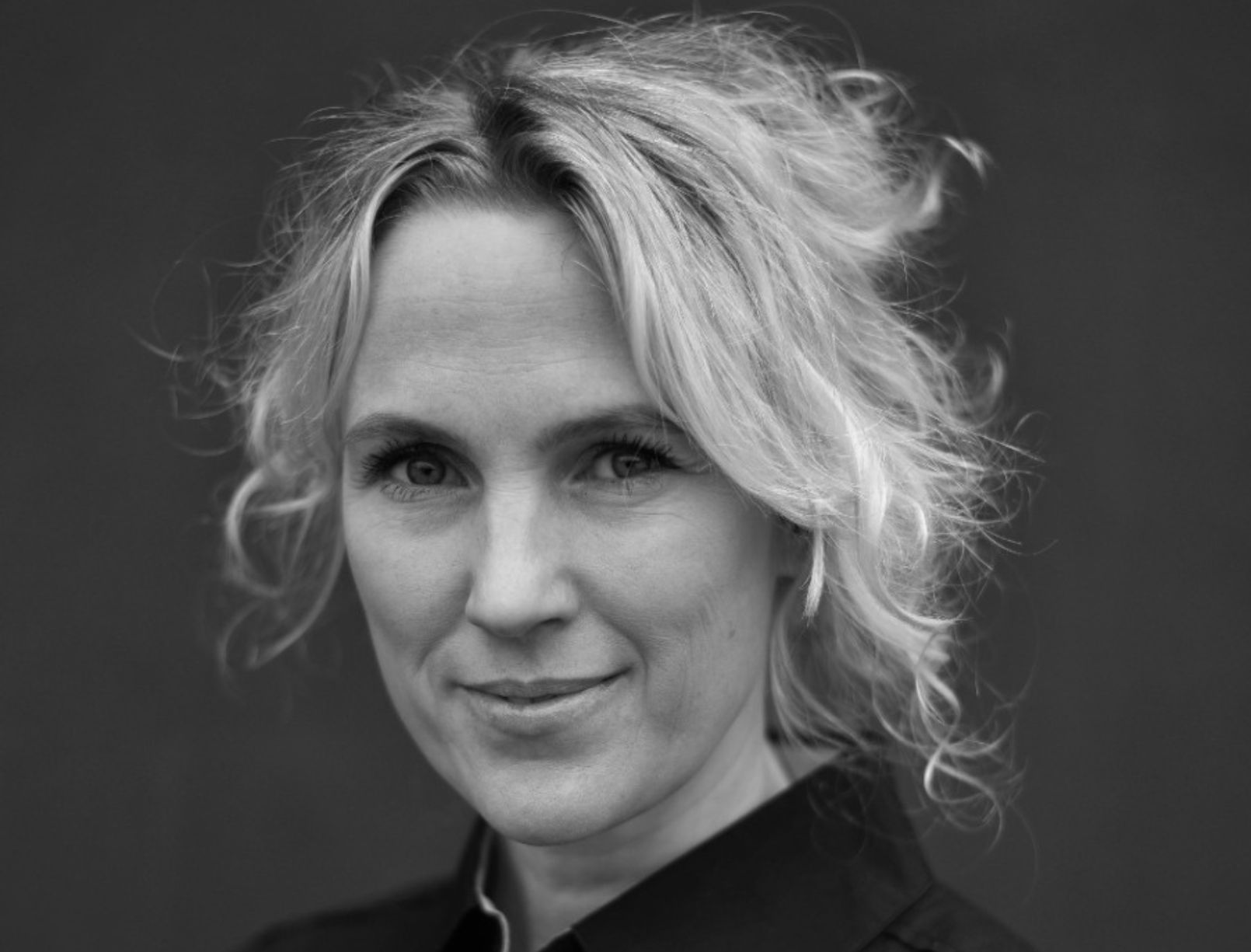
"We are attracted to him as a concept, not as an author whose texts move the world." About Kafka with Zuzana Říhová

Let me start with a somewhat provocative question: who does Franz Kafka "belong" to?

To readers. I understand that you are referring to the long-standing dispute between the Czech and German sides, but I think it is important to read Kafka's texts, and that is not really happening. Everyone knows that Gregor Samsa wakes up one day as a giant beetle, but who has read "The Metamorphosis"? People know the story of his will, but the students I teach today are unfamiliar with Kafka's novels and short stories and, with a few exceptions, have never read them.

Why does Kafka still attract us so much even after more than a hundred years?

I don't know if he attracts us; I'm afraid not. Kafka is more like a picture of Švejk in every other pub in the city center. We don't read Hašek either, and we go to see Kafka more to look at his bust near Národní třída. He attracts us as a concept, not as an author whose texts move the world.

Much has already been created about Kafka: films, books, academic works, exhibitions... How is "Rok proměny" different – what does it bring that is new?

I don't know if literature necessarily has to bring something new; on the contrary, I perceive it as powerful in examining the old. I hope that the book differs from other artistic statements on a similar theme in its intimacy. The book is an insight into the author's mind a few months before he wrote what is probably the best short story of the twentieth century. I sought to listen to the author with the support of diaries and historical materials.

The blurb says, "A fresh take on The Metamorphosis." What exactly should readers expect?

It's not just a story about a writer who can't write. And about the world and his father. And maybe it is, but in a different way. That's where the freshness lies, I hope: not in a scandalous story that everything was different, but in an unobtrusive insight into a familiar story in an expected setting.

The word "Kafkaesque" is associated with Kafka. Have you ever experienced an absurd situation where you felt like you were in one of his novels?

I think it's a somewhat overused term. Absurdity is all around us from morning to night, I don't limit it to situations and I don't perceive it as something negative. I think absurdity is great fun, necessary and welcome in life.

In your opinion, what makes Kafka most relevant today?

The theme he discovered for literature, namely the relationship, or rather the tension, between institutions and individuals. For me, this is more powerful in today's world than it was a hundred years ago.

The German translation of "Rok proměny" was published last year—what was the reaction like? Was it different from the Czech reaction?

Abroad, there is a different tradition of discussions with authors, so the reaction is different in that respect. People still want to talk to me. But the book was not published by a large publishing house and did not, or rather has not yet, received such a response. There is one difference, however: the Czech environment seems a little oversaturated with Kafka, while Germans still want to hear and read more and more about Kafka.

What did you draw on and how did you work with the material?

The preparations were a bit like preparing for a lecture—detailed reading of artistic texts, knowledge of the historical context and secondary literature—and then imagination could come into play. Whenever I work with correspondence or diaries, I feel a sense of shyness. Perhaps that feeling helped me with the delicacy of the text; I was very careful not to commit any vulgarity in the sense of abusing, exploiting, or ridiculing such personal statements.

Is there any other literary figure you would like to "immerse" yourself in similarly?

No, Kafka was an exception. I circled around him both scientifically and as a reader, then I somehow explored him in the fictional world, and that's enough. I just finished a novel based on the preserved letters of a girl imprisoned in Terezín. Now I am consciously and necessarily taking a break from real stories and real personalities. From now on, I will only be making things up.

What are you working on now?

Right now, I'm happily, freely, and wonderfully inventing. I have two chapters of a new text, and I feel incredibly comfortable in this fictional world—in the evenings, I can't wait to immerse myself in it. And that's a good sign, let's not jinx it. Maybe in a few years, it will turn into something tangible, with page numbers, we'll see.


Introductory photo: Miloš Urban
The interview with author Zuzana Říhová was conducted by Karolína Tomečková.
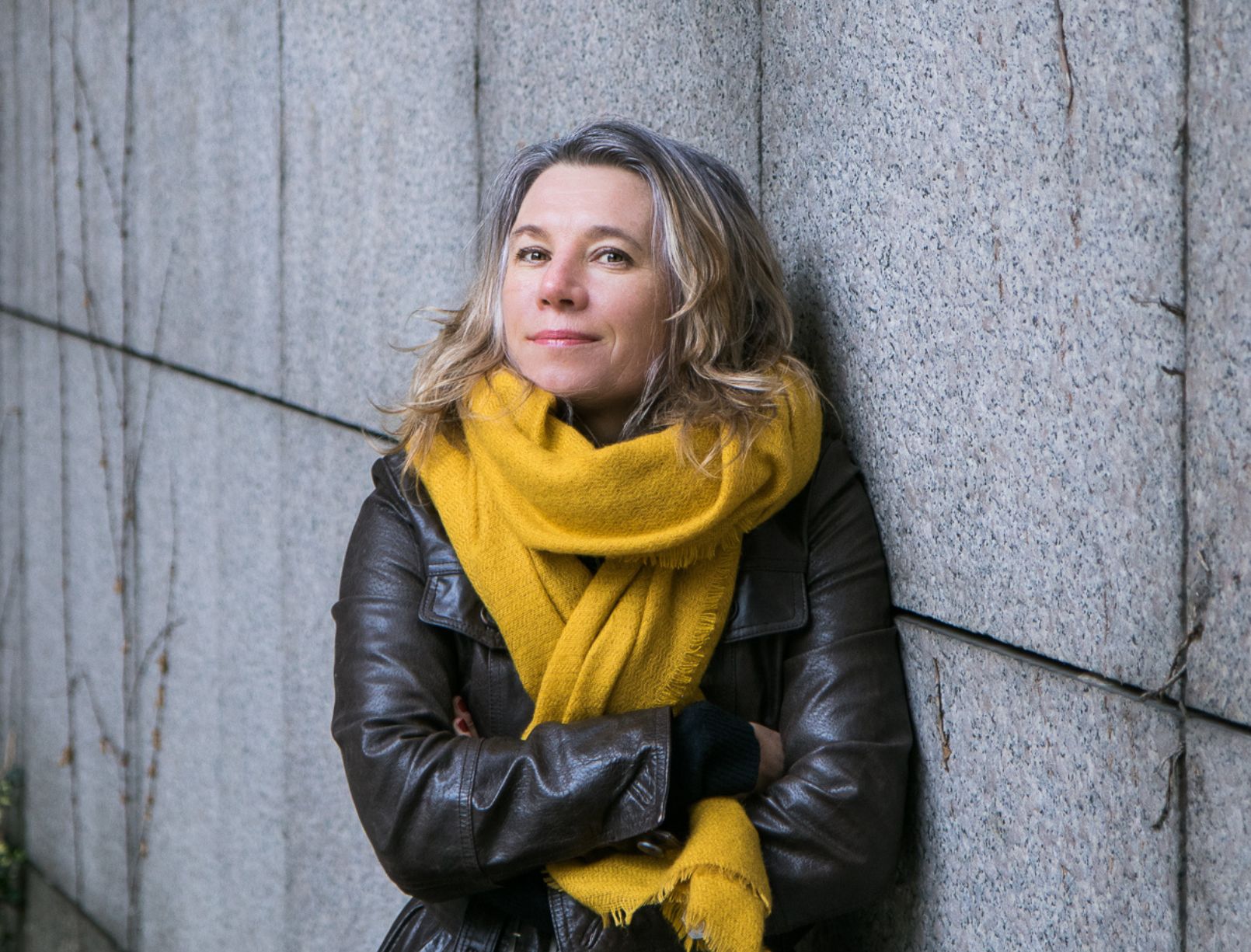
Our translators: Christina Frankenberg

When translating, do you think more in images, meaning, or words?

When translating prose, conveying meaning is definitely the most important thing. When it comes to spatial descriptions, I want to understand exactly how things are arranged in space, so I have to visualize them in order to be able to describe them in German. The same images should arise in the minds of German readers as in those of Czech readers. Rhythm and sound also play a role in translation.

How has translating changed your own German?

I'm not aware that translating has changed my German, but when I'm working on a translation, I listen and read more actively than usual, with all my senses on high alert, so to speak. And sometimes it happens that the radio plays exactly the word I've been searching for the whole time. Sometimes I feel like I'm on a treasure hunt, and the German words are the treasures I'm looking for.

What do you love about Czech that you miss in German?

Czech is more flexible than German; sometimes just one or two letters in a word are enough to change the part of speech or create new meanings. German is usually a bit more cumbersome in that respect.

What are you currently working on and what will your next project be?

I am currently working on the adaptation of Jan Novák's novel “Děda,” which is inspired by the author's childhood. In the 1950s, a little boy experiences his constantly grumpy grandfather, the “děda,” and learns from his mother what happened to his grandfather during the collectivization of agriculture, when his fields and animals were taken away from him. And he sees the former farmhand whip his grandfather. The boy decides to avenge his grandfather, but of course it doesn't work out as easily as he had imagined. The novel tells of a difficult time full of injustice, but it is written with a great deal of wordplay and a sense of absurd humor. Because perhaps there are more than enough absurdities, especially in difficult times.

Christina Frankenberg studied Bohemian Studies at Humboldt University in Berlin and Charles University in Prague and earned her doctorate with a thesis on “The Image of Germans in Czech Prose after 1945.” As deputy director of the Czech Center Berlin, she is responsible for the cultural institute's program, particularly in the areas of literature, film, and Bohemian studies. She translates contemporary prose and texts from the genres of literature, art, and history. Her translations are published in book form and in magazines. She regularly moderates author readings and discussions for book fairs, film and literature festivals, and other events.

The interview was conducted by Annika Grützner.

Bigger national stand at Leipzig Book Fair

This year's exhibition features collections of Czech literature of all genres in translation, particularly into German, current award-winning and critically acclaimed book titles on the Czech market, as well as literature for children and young adults. There are also book titles from the Czech Literary Center's New Czech Books 2025 yearbook, which presents a professional selection of fiction titles, books for children and young adults, and new releases in both poetry and comics.

In cooperation with the Museum of Literature – Memorial of National Literature, the winning titles from the Most Beautiful Czech Books of 2024 competition are on display at the stand. The Milan Kundera Library in Brno will also be presented at the stand. Representatives of the Baobab, Euromedia Group, and Poketo publishing houses and the National Gallery in Prague will travel to Leipzig. Visitors to the fair will also be introduced to this year's edition of the Prague Book Fair.

The national stand will be officially opened on the first day of the fair in the presence of Astrid Böhmisch, director of the Leipzig Book Fair, Jiří Čistecký, Czech Ambassador to the Federal Republic of Germany, Prof. Tomáš Kubíček, Director General of the Moravian Library, Martin Krafl, Director of the Czech Literary Centre, Dr. Gabriele Goldfuss, Head of International Cooperation at the City of Leipzig, and Juergen Boos, Director of the Frankfurt Book Fair.

Picture: Pavel Němec

Czechia at the Leipzig Book Fair: 14 authors with 17 events

Every year, the Leipzig Book Fair is accompanied by the festival „Leipzig liest“, during which authors, translators, and publishers traditionally meet with German-speaking readers. There will be 2,000 events presenting new releases and trends in German-language literature, as well as works primarily from Central and Eastern Europe.

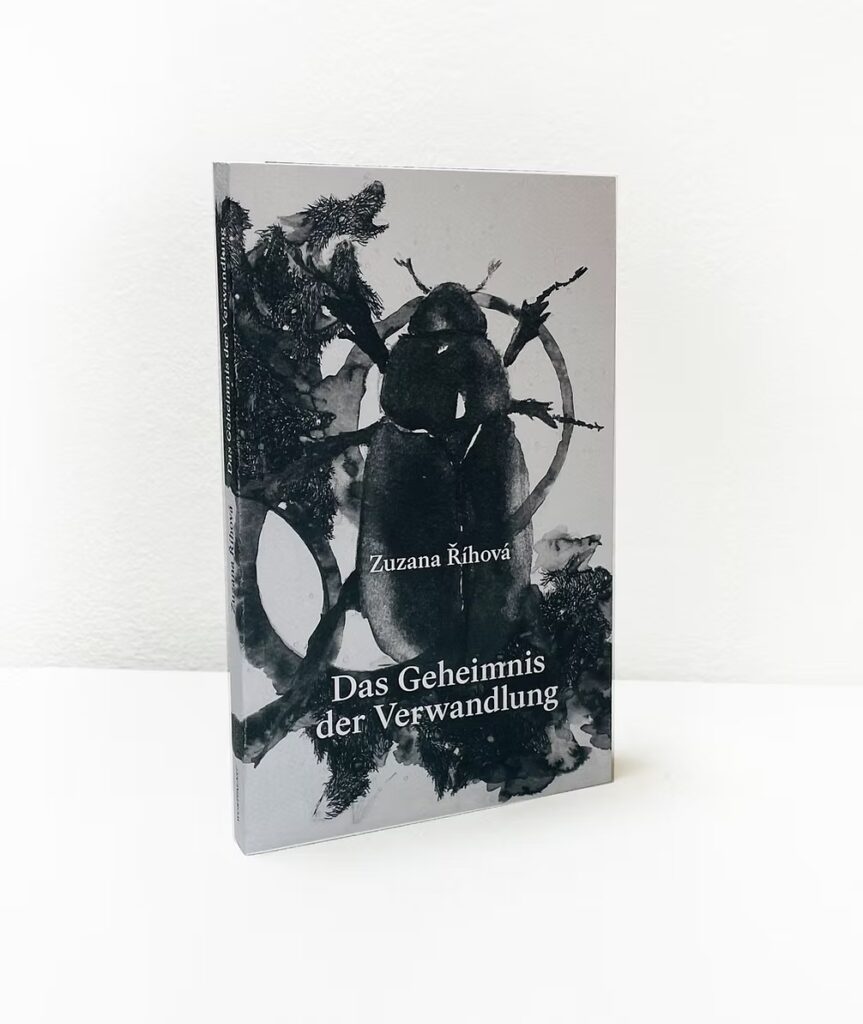
Twelve authors from the Czech Republic will participate in the reading festival. They will present their works in German during the fair week from Monday to Saturday: Zuzana Říhová (Das Geheimnis der Verwandlung; published by Wortpalast; translated by Kathrin Janka); Michal Ajvaz (Passagen unter Glas; published by Allee Verlag; translated by Veronika Siska); Petra Dvořáková (Die Krähen; published by Anthea Verlag; translated by Hana Hadas); Jiří Hájíček (370 m über NN; published by Karl Rauch Verlag; translated by Kristina Kallert); Miroslav Hlaučo (Pfingsten. Erinnerungen an ein Ende der Welt; published by Anthea Verlag; translated by Raija Hauck); Markéta Pilátová (Die Maronenmatrone; published by Drava Verlag; translated by Mirko Kraetsch); Marek Torčík (Was die Zeit nicht nimmt; published by Anthea Verlag; translated by Mirko Kraetsch); Vratislav Maňák (Mit Wittgenstein in der Schwulensauna; published by Karl Rauch Verlag; translated by Lena Dorn); Marita Kelbl (Weder Junge noch Mädchen; published by Anthea Verlag; translated by Barbora Schnelle); Iryna Zahladko (Wie sich in Krankheit schminken; published by Wortpalast; translated by Martina Lisa); Antonín Zhořec (Ich piekse den Sonnensturm; published by Wortpalast; translated by Markéta Blažejová and Thomas Stefflbauer); Marie Iljašenko (Menschen hören überhaupt nur sehr wenig; published by Anthea Verlag, translated by Julia Miesenböck).

Their events will take place not only on the exhibition stages at the fairgrounds, but also at the Literaturhaus Leipzig, the Mädler Art Forum gallery, and the Schaubühne Lindenfels theater, where a special evening of Czech literature entitled „Queer Central Europa: Körper, Worte, Saunen“ has been prepared.

The Schaubühne Lindenfels in Leipzig will also feature artist and illustrator Barbara Šalamounová, who was born in Halle, Saxony-Anhalt. She will recall the work of her Czech-German parents, artists Jiří and Eva Natus-Šalamounová, who are connected with Leipzig in Saxony. Her guest will be her Berlin colleague, artist Volker Schlecht. Visitors to the event can also look forward to a film screening of fairy tales about Maxipes Fík.

Markéta Pilátová will give a special performance for students at the Neue Nikolaischule grammar school in Leipzig.

Translator and publisher Ondřej Cikán (Kétos publishing house), winner of the Austrian State Prize for Translation into German, will join publisher Danuše Siering (Black Swan Media) at the national stand to embark on a journey through Czech and Czechoslovak literary treasures. They will discuss the current possibilities for publishing books.

Events featuring Czech authors will be moderated by literary translators Christina Frankenberg and Stefanie Bose; Libuše Černá, director of the globale Bremen festival; author and Germanist Daniel Schmidt; publicist Mirko Schwanitz; literary scholar Maximilian Mengeringhaus; MDR Kultur radio station editor Tino Dallmann; and Martin Krafl, director of the Czech Literary Center. Excerpts from German-language books will be read by actresses Steffi Böttger and Laura Richter and actor Stephan Wolf-Schönburg.

As part of the Czechia 2026 Author Mobility Program, five additional literary events organized by the publishing houses Das Wunderhorn, Allee, Anthea, and Kētos were supported for this year's Leipzig Book Fair. They will present further Czech works translated into German.


Title picture: Leipziger Buchmesse, Niclas Schmidt

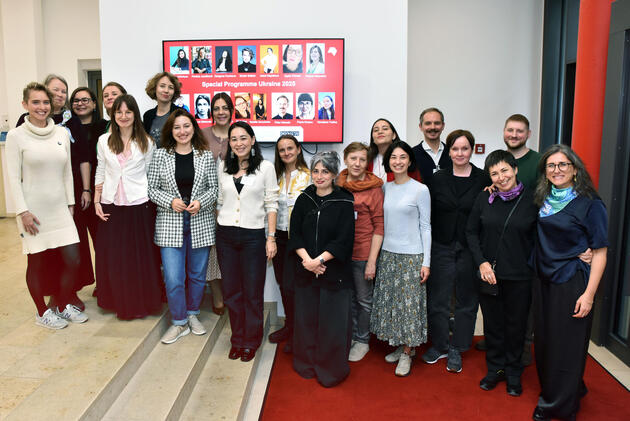
Volia: Special Programme for Publishers from Ukraine and Neighbouring Countries

The Special Programme for publishers from Ukraine and neighbouring countries is intended for professionals working in publishing – in editorial teams, in the field of foreign rights and licensing, as well as in literary agencies. Participants from Armenia, Bulgaria, the Czech Republic, Georgia, Hungary, Kazakhstan, Moldova, Poland, Romania, the Slovak Republic and Ukraine may apply; newly also from Lithuania, Latvia and Estonia.

The fifth edition is titled Volia (translated as “will” or “freedom”) and refers to the inner strength to overcome obstacles – a concept that reflects the essence of the Ukrainian philosophy of life.

Volia: Special Programme for Publishers from Ukraine and Neighbouring Countries

The programme includes seminars held online and in person in Frankfurt, book market presentations, matchmaking meetings and numerous networking opportunities during the Frankfurter Buchmesse. The initiative is supported by the Federal Foreign Office of the Federal Republic of Germany; curation and organisation are provided by Frankfurter Buchmesse GmbH in cooperation with the International Book Arsenal Festival and Goethe-Institut Ukraine.

A minimum of two years of professional experience in publishing with a focus on rights and licensing trade and a good command of English are required for participation. Selected participants commit to attending the entire duration of the programme; all scheduled activities are mandatory.

Application deadline: 10 April 2026
Programme dates: 4–10 October 2026 (arrival on Sunday, 4 October; end on Saturday, 10 October)

Further details and the application form can be found on the Frankfurter Buchmesse website.

Czechia will again be present at the London Book Fair this year

The CZECHIA national stand has been prepared and is being run by the Moravian Library in Brno on behalf of the Czech Ministry of Culture. Agency activities at the national stand will be handled not only by representatives of publishing houses, but also by literary agents and translators. The exhibition collection will feature a selection of translations of Czech literature into English, supplemented by information on grants provided by the Ministry of Culture of the Czech Republic to publishers and translators. The Czech Literary Center will present its New Czech Books yearbook for 2025 for the first time at the fair.

Visitors from the professional public will find the CZECHIA stand (45 m²) under the designation 1D 100 at its new location on the first floor of the Olympia main hall in Kensington, London. The stand aims to attract great attention from publishers, especially those from the Anglo-Saxon region, in connection with preparations for the Czech Republic's Guest of Honour appearance at the Frankfurt Book Fair in 2026. Karolinum Press, Albatros Media, and Euromedia Group will be present at the stand, joined by the FINIDR printing company.

The Czech Literary Centre, a section of the Moravian Library, is also organizing an agency and publishing trip to London with the aim of supporting publishers in promoting current Czech book productions and increasing the number of Czech books translated into other languages. The expert committee selected publishers and literary agencies that publish high-quality original Czech literature and are among the important players in the domestic literary scene. It took into account, among other things, the representation of books in New Czech Books in previous years, the export potential of productions, literary awards, and the ability of publishers to present their books in an international context. Representatives from Pluh Agency, Dana Blatná Literary Agency, and Prague Literary Agency and the publishing houses Argo, Wo-men, LABYRINT & RAKETA, Centrala, Paseka, PROSTOR, and Větrné mlýny will be traveling to London.

An accompanying event to the presentation of Czech literature and culture at the London Book Fair 2026 will be the participation of literary agent Edgar de Bruin (Pluh agency), who is also a translator from Czech into Dutch, in a panel discussion organized by the European Network for Literary Translation (ENLit), together with the Czech Literary Center (its director Martin Krafl is the president of the association), Literature Across Frontiers, the Polish Book Institute and CEATL. The topic of the discussion with Karolina Jaszecka, a literary agent and translator from Catalan and Spanish into Polish (KaBooks agency), and Francesca Novajra, President of the European Council of Literary Translators' Associations (CEATL), will be "Translators as agents: a solution for less translated literature?". The event will be moderated by Alexandra Büchler, director of Literature Across Frontiers.


Photo: The London Book Fair

Czech literature at the Munich Security Conference

Every year, the Munich Security Conference brings delegations from dozens of countries to Munich and serves as a platform for negotiations and discussions on important security issues. This year, representatives from 120 countries took part, including 60 prime ministers, presidents and more than a hundred foreign and defence ministers. The 62nd conference focused on transatlantic relations and Ukraine, as well as modern technologies, relations with China, rising populism, the Middle East and Iran.

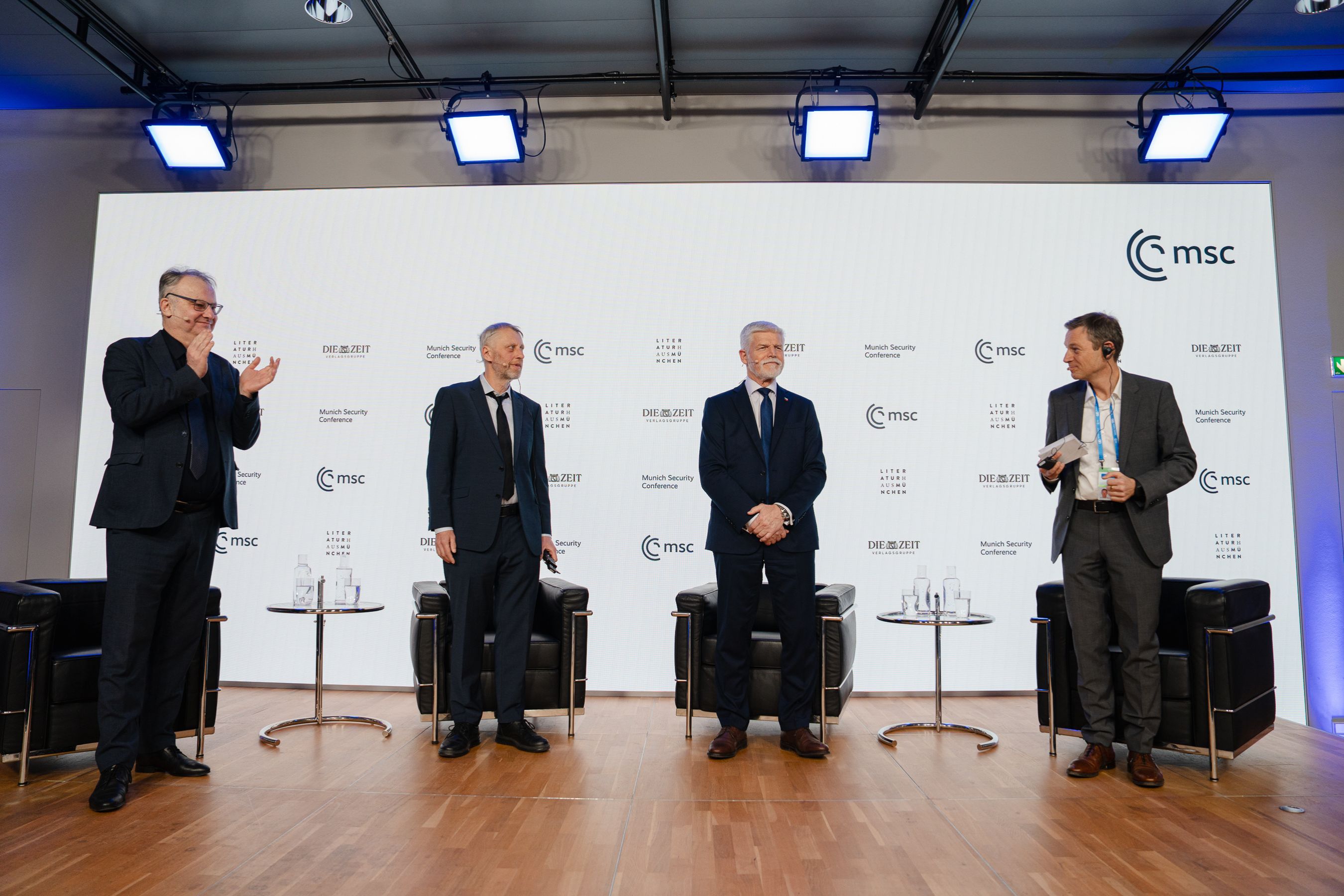
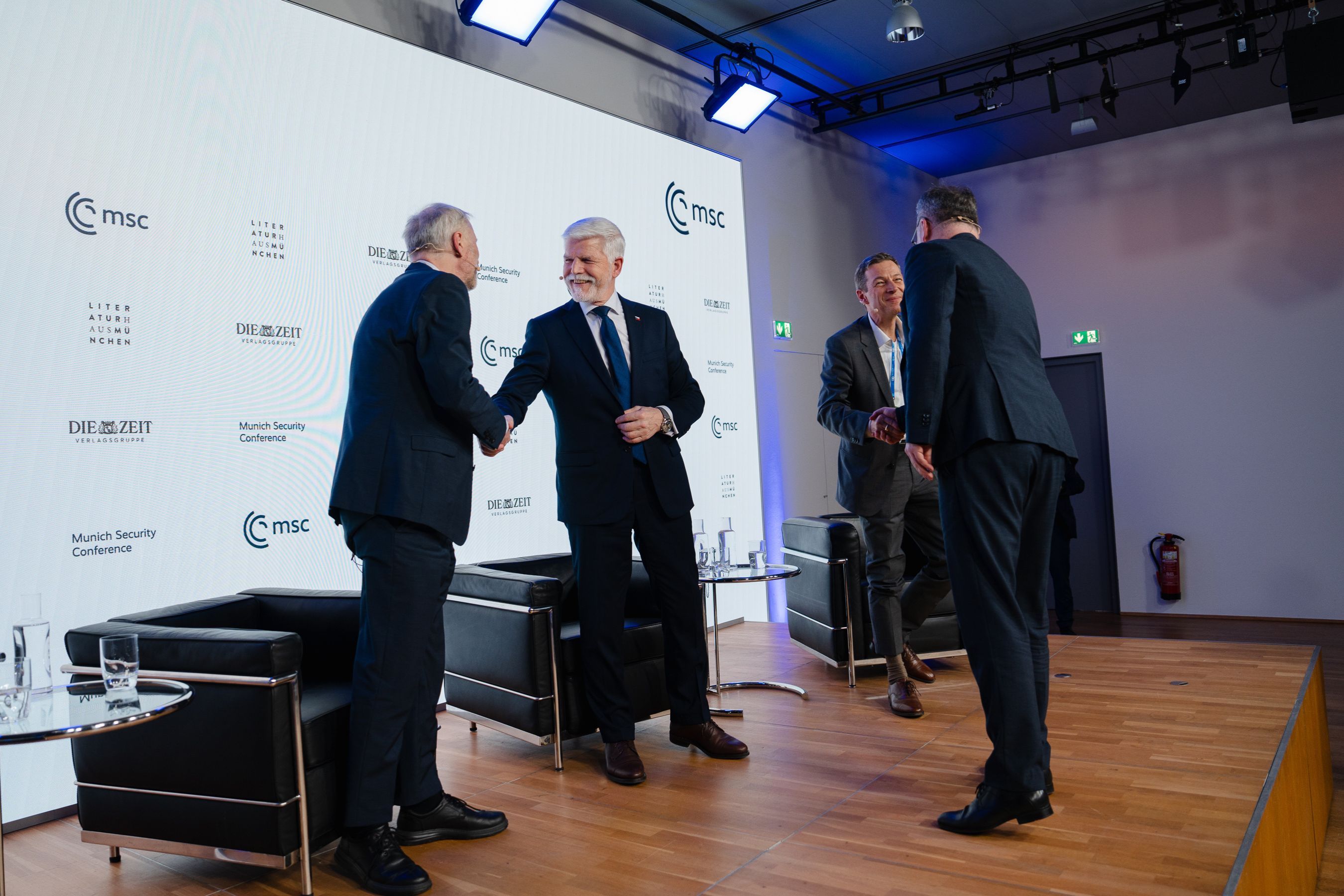
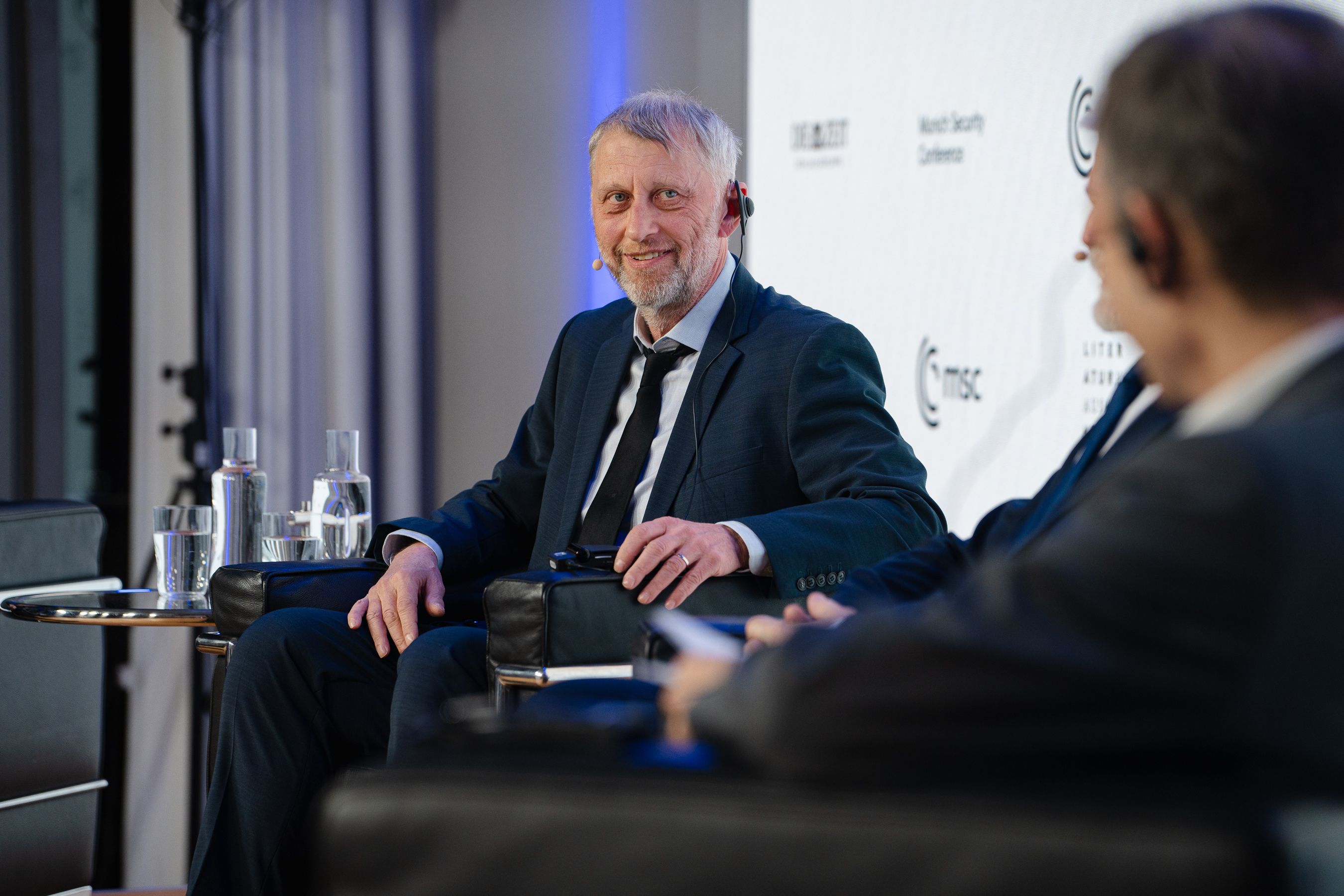
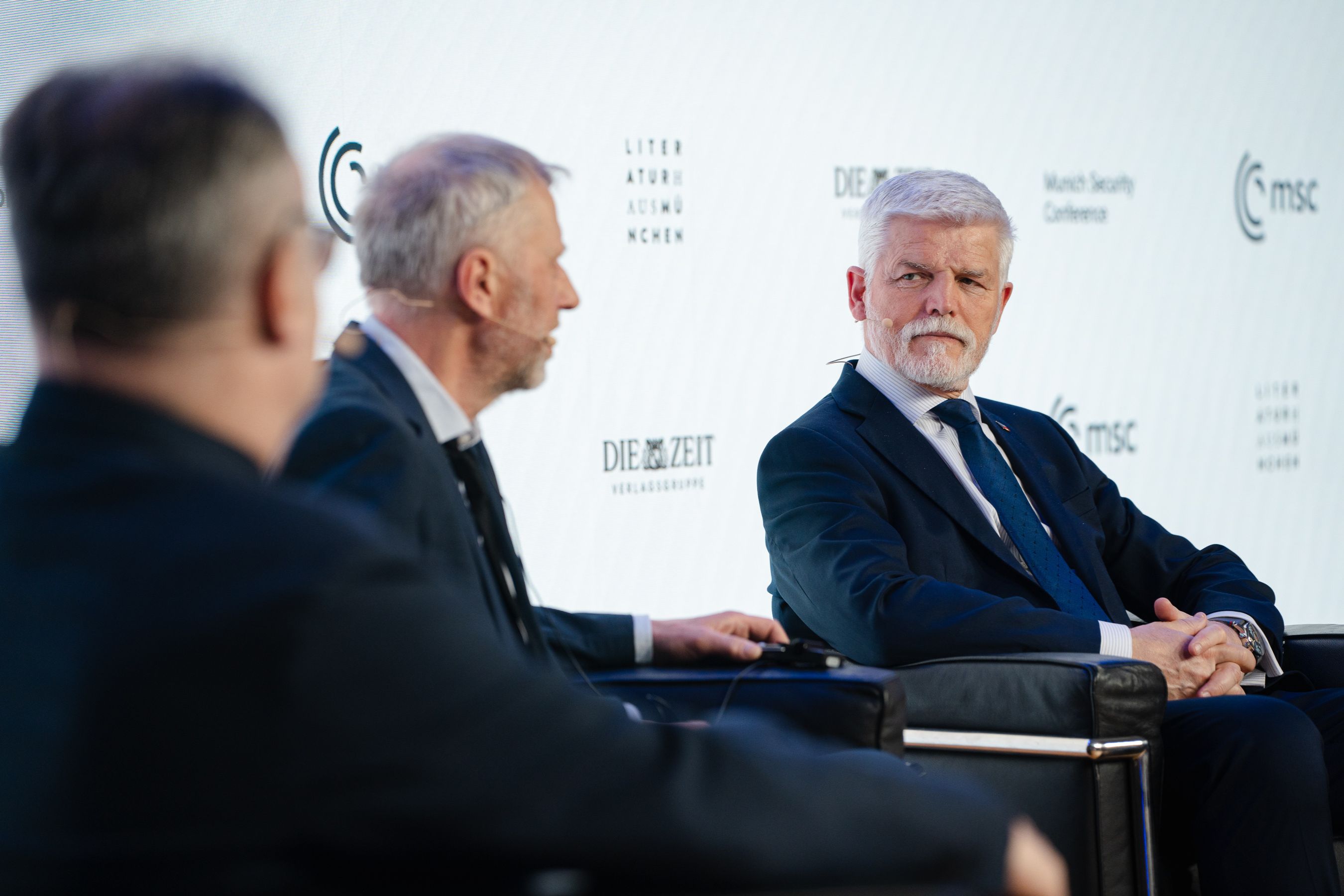
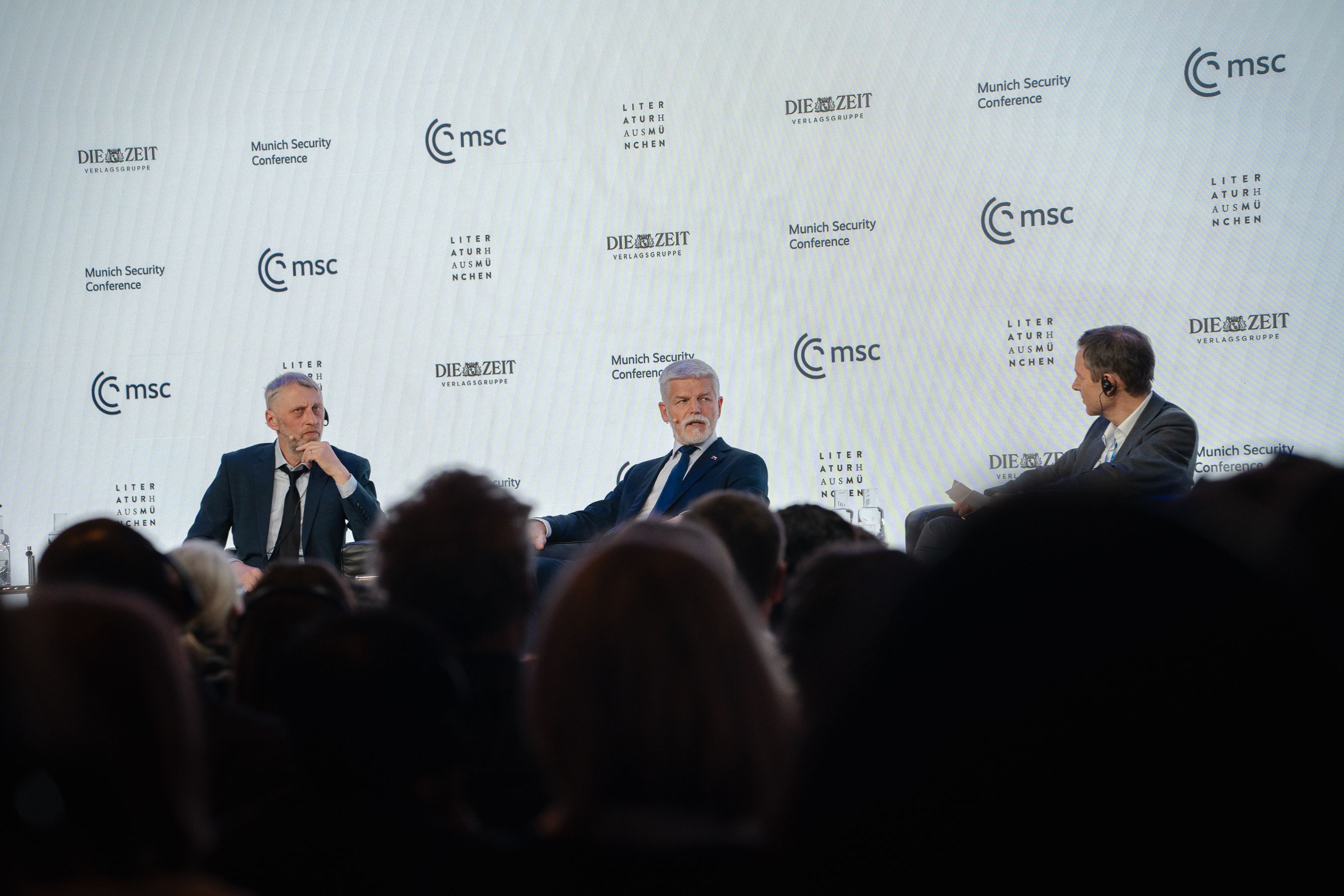
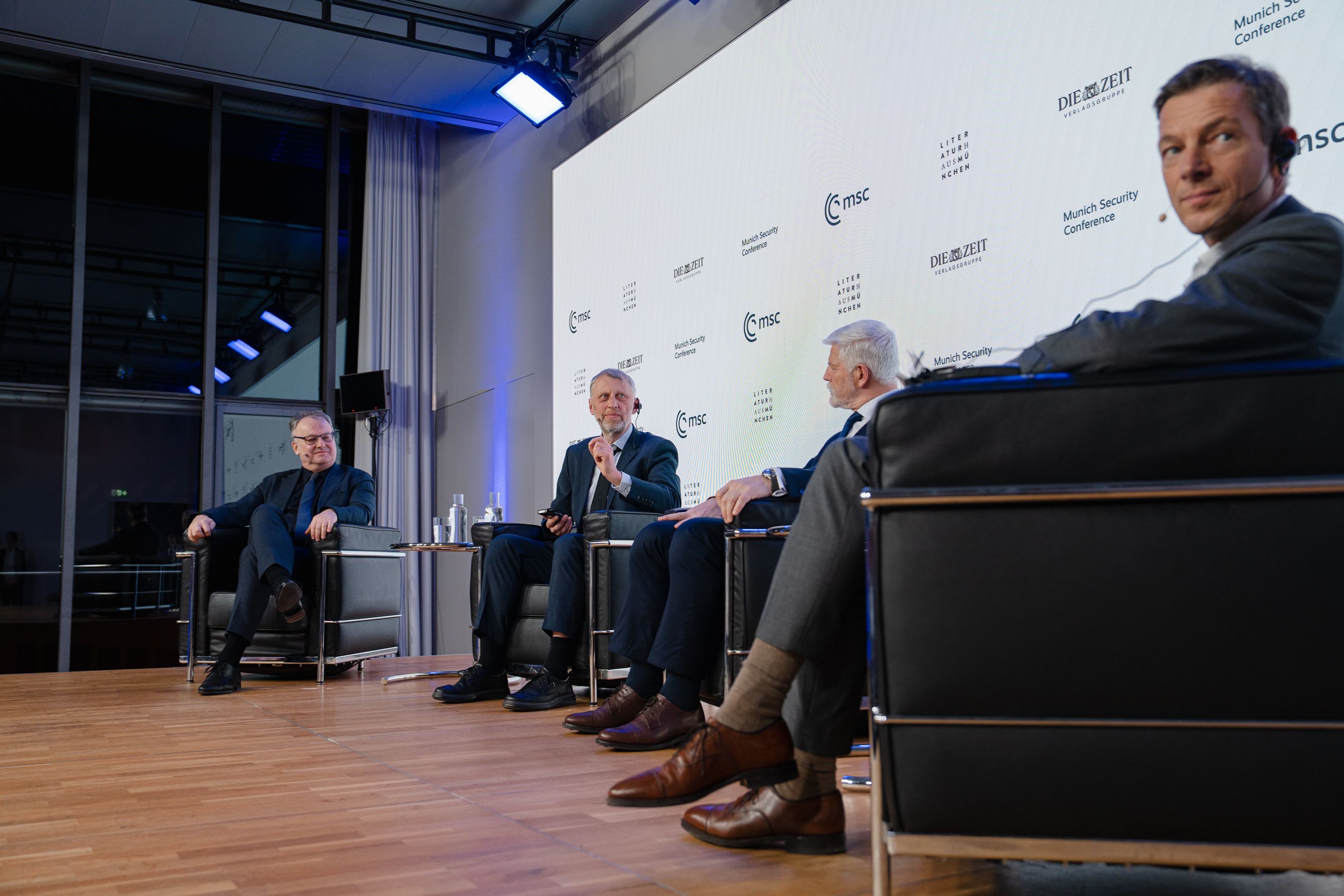
Czech literature also had its say at the conference, on Friday, 13 February, at the Literaturhaus München. The discussion focused on the role of literature in times of geopolitical tension and threats to democracy. President Petr Pavel spoke alongside authors Jáchym Topol and Tomáš Kafka. The debate was moderated by Holger Stark from the weekly newspaper Die Zeit.

The authors were selected in cooperation with the Czech Literary Centre and the Czechia 2026 project.


Pictures: Tomáš Fongus, KPR