

What kinds of things can be expressed in Czech that are difficult or impossible to express in German?
Czech is rich in diminutives, which allow for the nuanced expression of a whole range of emotions. This linguistic tool is only partially available in German.
Does a character’s personality change when you translate them from Czech into German?
The cultural and social background of the characters cannot be transferred one-to-one, and therefore the characters’ personalities and actions sometimes come across differently against the backdrop of German readers’ experiences.
When translating, do you tend to think in images, in meaning, or in words?
Alternately in all three categories, though meaning is probably the most important to me.
What is particularly difficult to translate from Czech humor into German?
To me, Czech humor has a greater sense of calm and relaxation than German humor, which can easily be misunderstood in translation.
Which Czech jokes don’t work at all in German?
Jokes that refer to current Czech circumstances or specific public figures.
What do you love about Czech that you miss in German?
I love the playful and whimsical nature of Czech, and I let it inspire my German.
How has translating changed your own German?
I have become more conscious of my language and am refining it as a tool for artistic interpretation.
What was the hardest decision you’ve ever had to make in a translation?
The realization that I can only approximate the meaning of a multilingual Czech poem, written in the spirit of the Austro-Hungarian Empire, for readers in Germany.
What are your favorite words in German and Czech?
Two terms of endearment. In German: Augenstern. In Czech: zlatíčko, little darling.
What are you currently working on, and what will your next project be?
I’m currently finishing a poetry translation, and my next project will be poetry again.
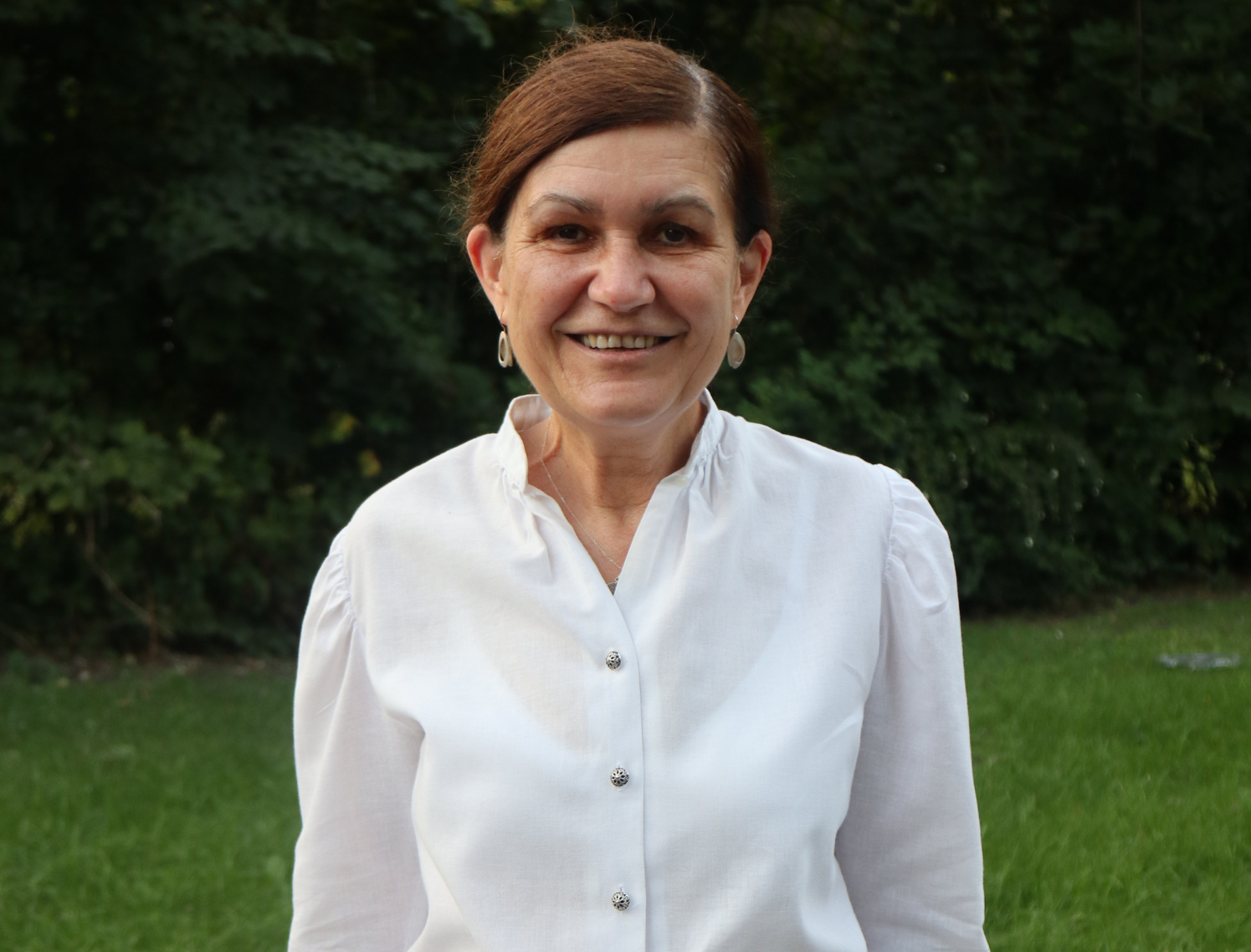
Photo: Thomas Heimerl
The interview was conducted by Nathalie Weber.