

What is particularly difficult about translating Czech humor into German?
Wordplay is always difficult to translate. Perhaps Czech humor is also a bit darker. For example, I’m not sure if a comic book like “Kapitán Chemo” (Captain Chemo)—full of jokes about the author’s blood cancer and cancer treatment—could be published in Germany, let alone win a comic book award (which the author, Albrecht Smuten, sadly was no longer able to accept).
What do you love about Czech that you miss in German?
Czech is so incredibly compact. A single word—just five letters—can be an entire sentence. “Nevím,” for example. In German: “Ich weiß (es) nicht.” Or “Netuším”—“Ich habe keine Ahnung.” That’s a huge challenge when you have to keep an eye on text length while translating. I often feel that when translating comics and graphic novels…
What are your favorite words in German and in Czech?
I don’t really have a favorite word in German, but every now and then I manage to slip a word that I particularly like into my current translation. There was the word “Schnarchnase,” for example, and recently “Schreckschraube.” It seems I have a fondness for sibilants. So Czech was definitely the right language for me. My favorite Czech word, however, doesn’t contain any sibilants at all. It’s “veverka,” which means “squirrel.”
What are you currently working on, and what will your next project be?
Right now I’m translating a really great children’s book by Lucie Lučanská about perception, and next I’ll be translating “Westnordwest” by Jindřich Janíček—a book beautifully illustrated by the author himself, with comic-style elements, about a journey through the American Northwest. It’s a bit wistful, but also full of enthusiasm for the landscape, architecture, and culture.
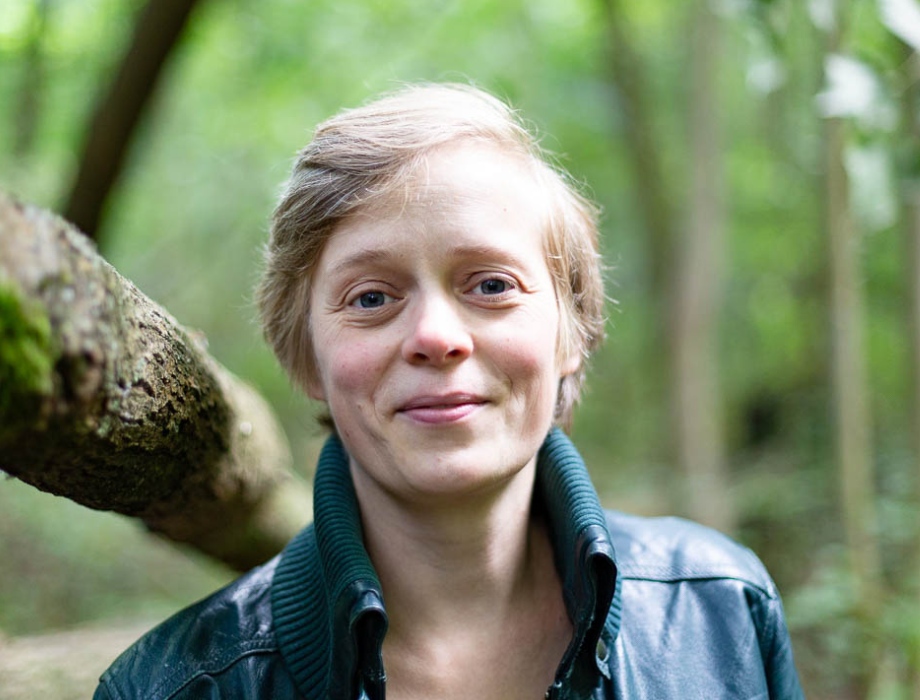
Photo: Antje Gildemeister Fotografie Leipzig
The interview was conducted by Nathalie Weber.