

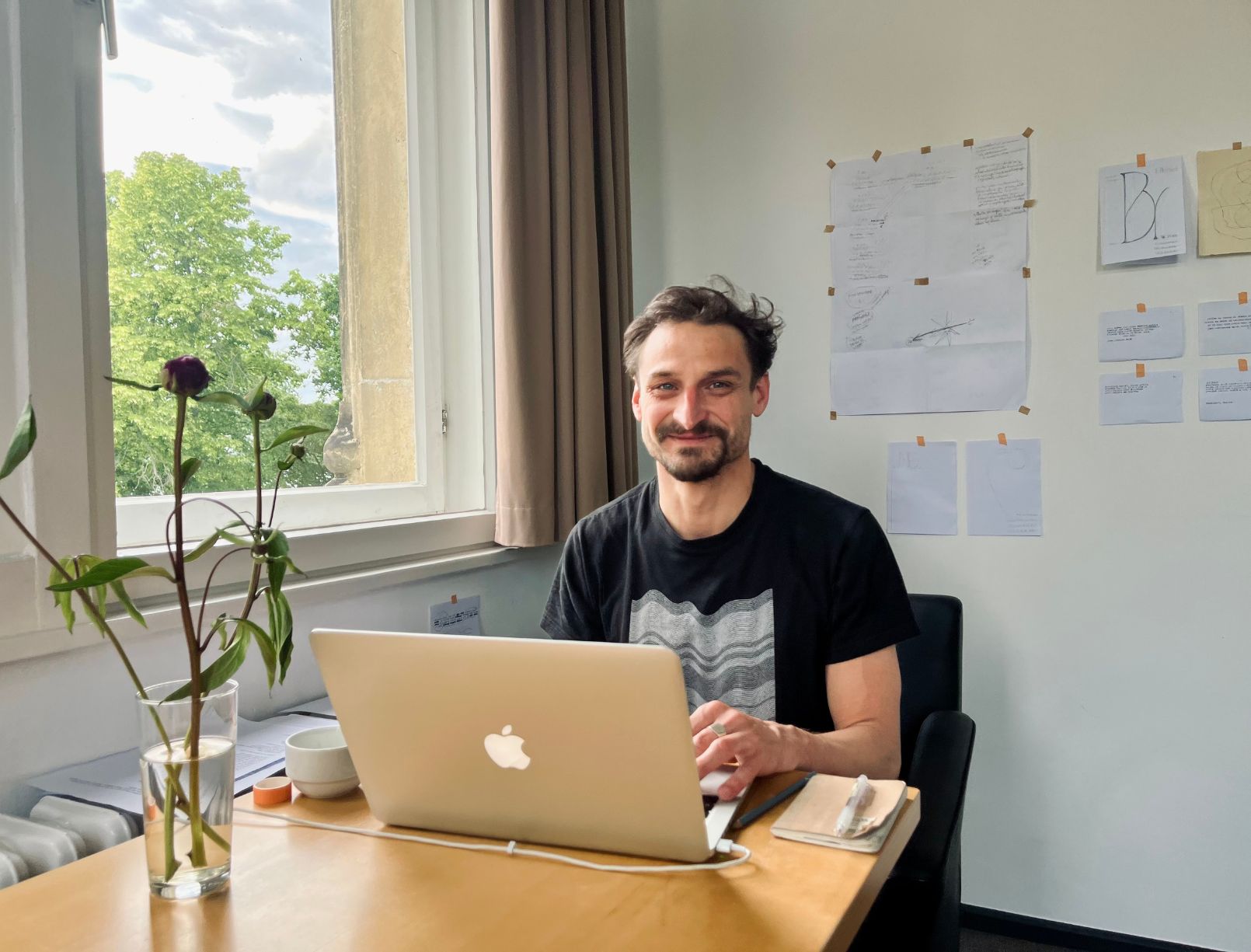
House of literature
I.
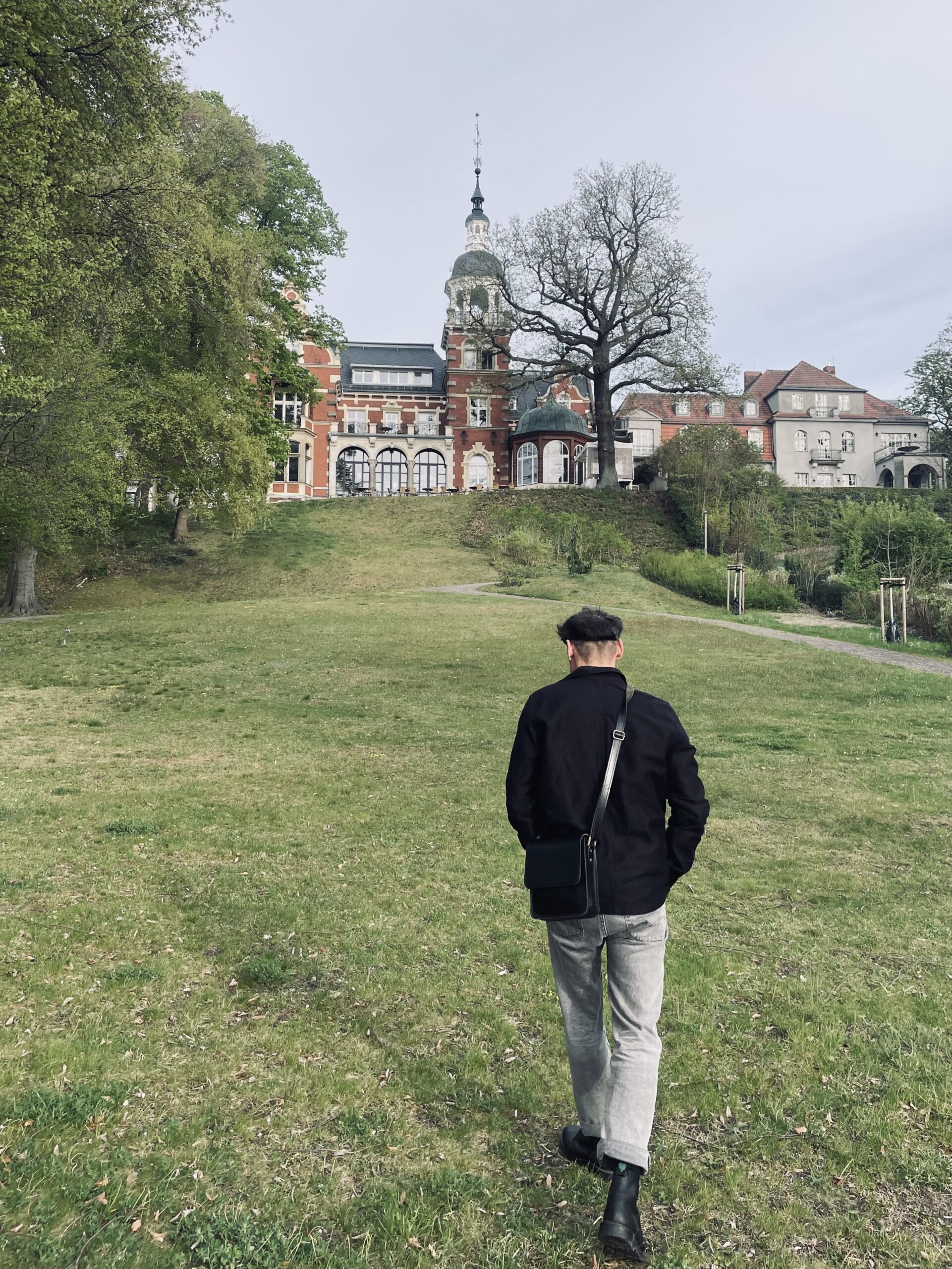
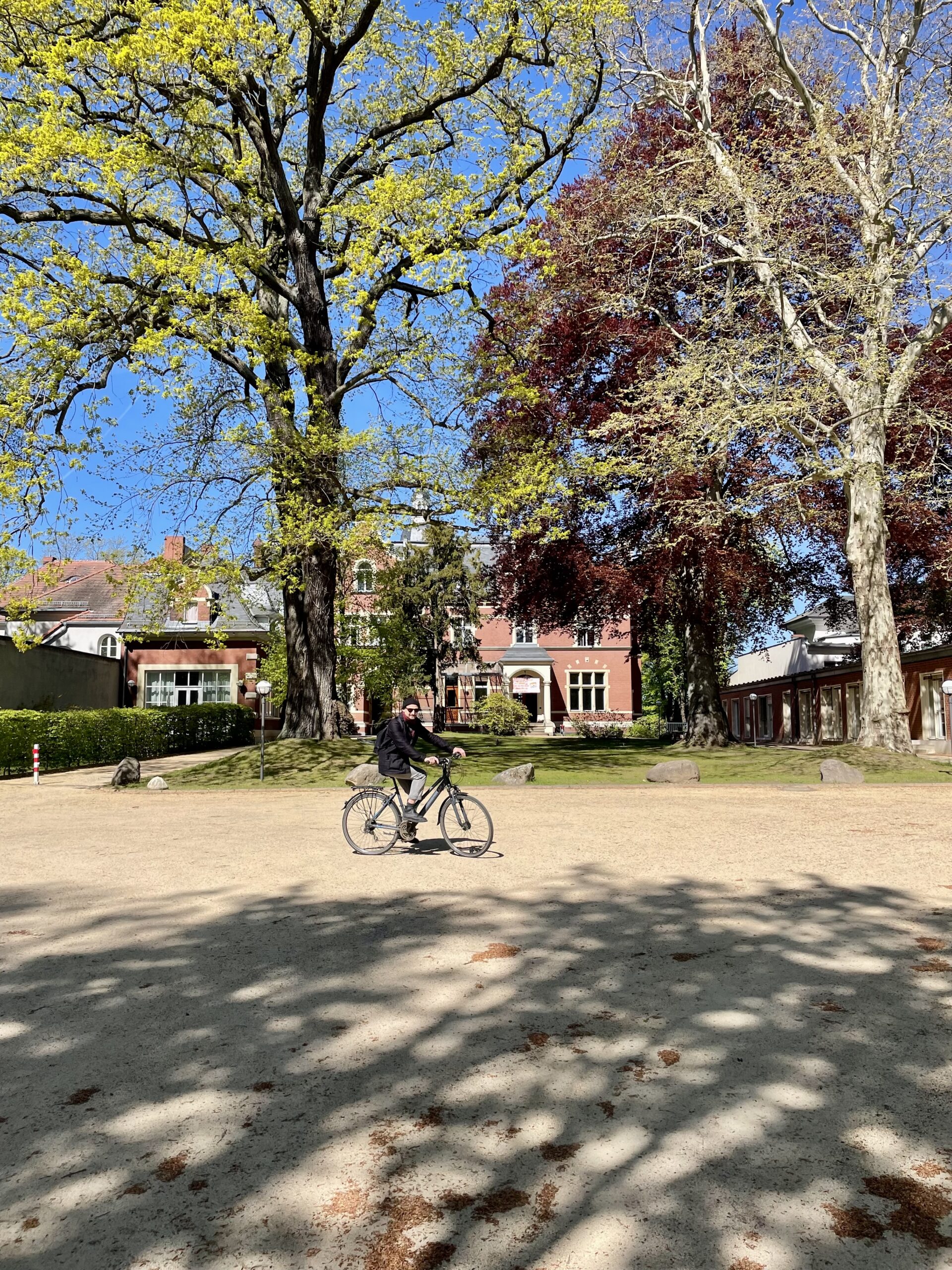
Starting at the Wannsee station, I’m a bit at a loss; it’s like trying to find a former factory owner’s villa by the lake amidst a cluster of former factory owners’ villas by the lake. After the factory owner, there was a casino here and who knows what else, and now, for sixty years, there has been a literary house here, the Literarische Colloquium Berlin. Romance, luxury, and grandeur blend here with a certain operational efficiency and also with the chaos of student shared apartments. Dishes pile up in the sink of the communal kitchen; somewhat lost souls move through the rooms—shy women and men with sad eyes, writers and translators from all corners of the world, each in their own circles—and even a fleeting greeting can snap one out of the creative mood. J. N. later tells of a famous poet who had just written what was surely the best poem of his life. But then someone knocked. He never finished writing it, his best poem. An email arrives: We’re repairing the showers; tomorrow, workers will knock on your door—please excuse the inconvenience.
II.
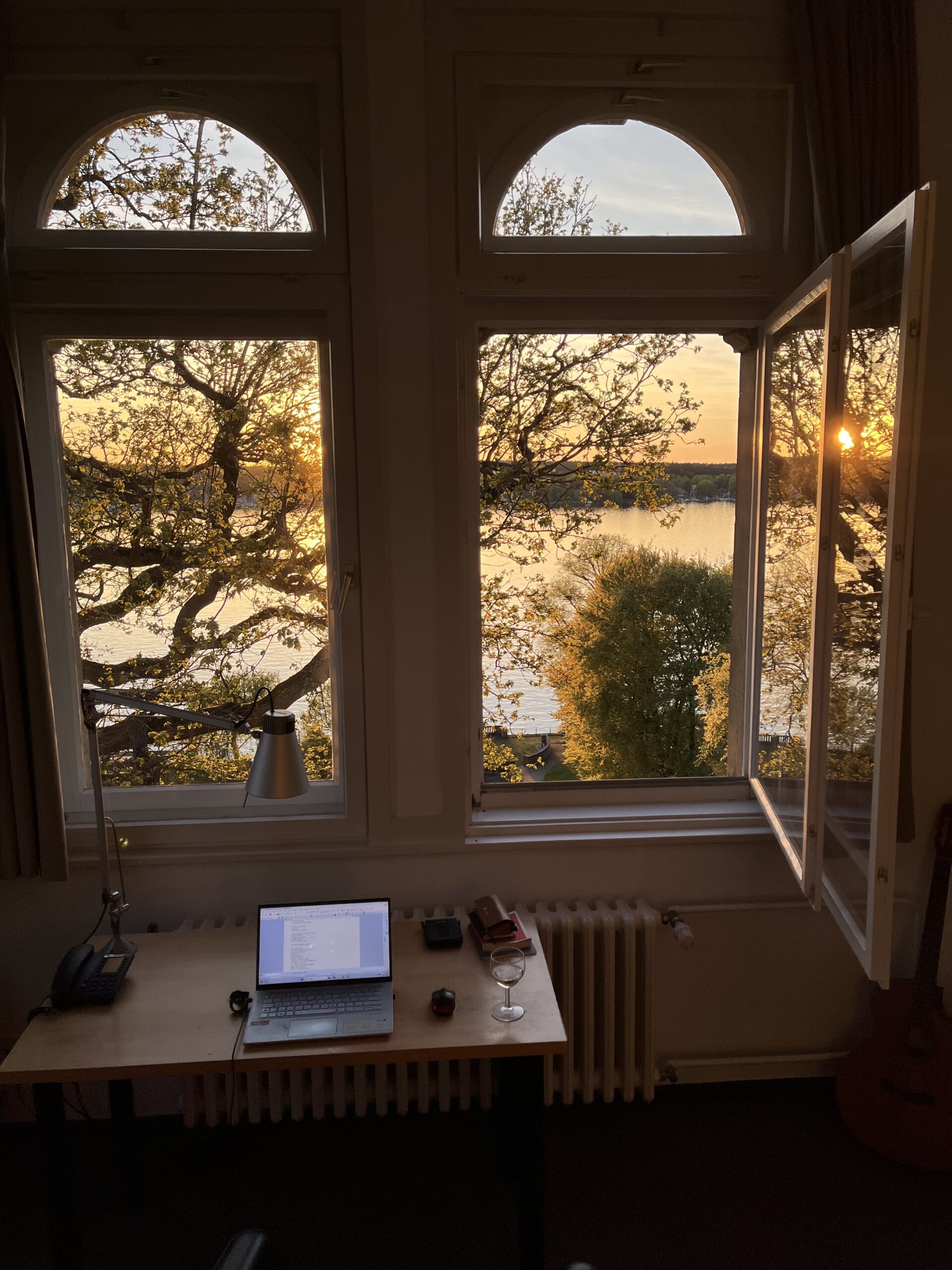
I’m lucky—I got the “Presidential Suite.” I’m probably the only one with a separate bedroom and a study in the villa’s tower, with large windows overlooking the garden and the lake. I should be writing, but the view pulls me away from the screen; I wander through the bushes along the lakeshore, which lie in the shade, but I forbid myself from going out—after all, I have to write. From my study, a staircase leads up into the tower, but it ends at a locked door. On behalf of the residents’ group, we ask the caretaker for a tour of the tower; about ten of us gather at my desk and wait to see which key fits. While we wait and fill the time with empty phrases, my colleagues’ eyes wander over my things, books, and notes on the table… I feel completely exposed. In the end, no key is found; the building manager shrugs. No one has been in the tower for years; the key is with one of the former employees, whom no one has seen here in years. Later I ask, “Why did you lock the tower in the first place?” “Because someone might jump down. It wouldn’t be good publicity for us if a writer were to kill himself here.” “But I just wanted to smoke up there,” I explain.
III.
My tower is haunted; I haven’t written a single word today, and what I wrote yesterday is useless—utterly useless! Where on earth does this need to write come from? I’d lead a pretty contented life if I didn’t have this urge to write; I might even be almost happy if I hadn’t set myself these literary goals! I jiggle the doorknob, trying to break open the door upstairs. Let me in!
IV.
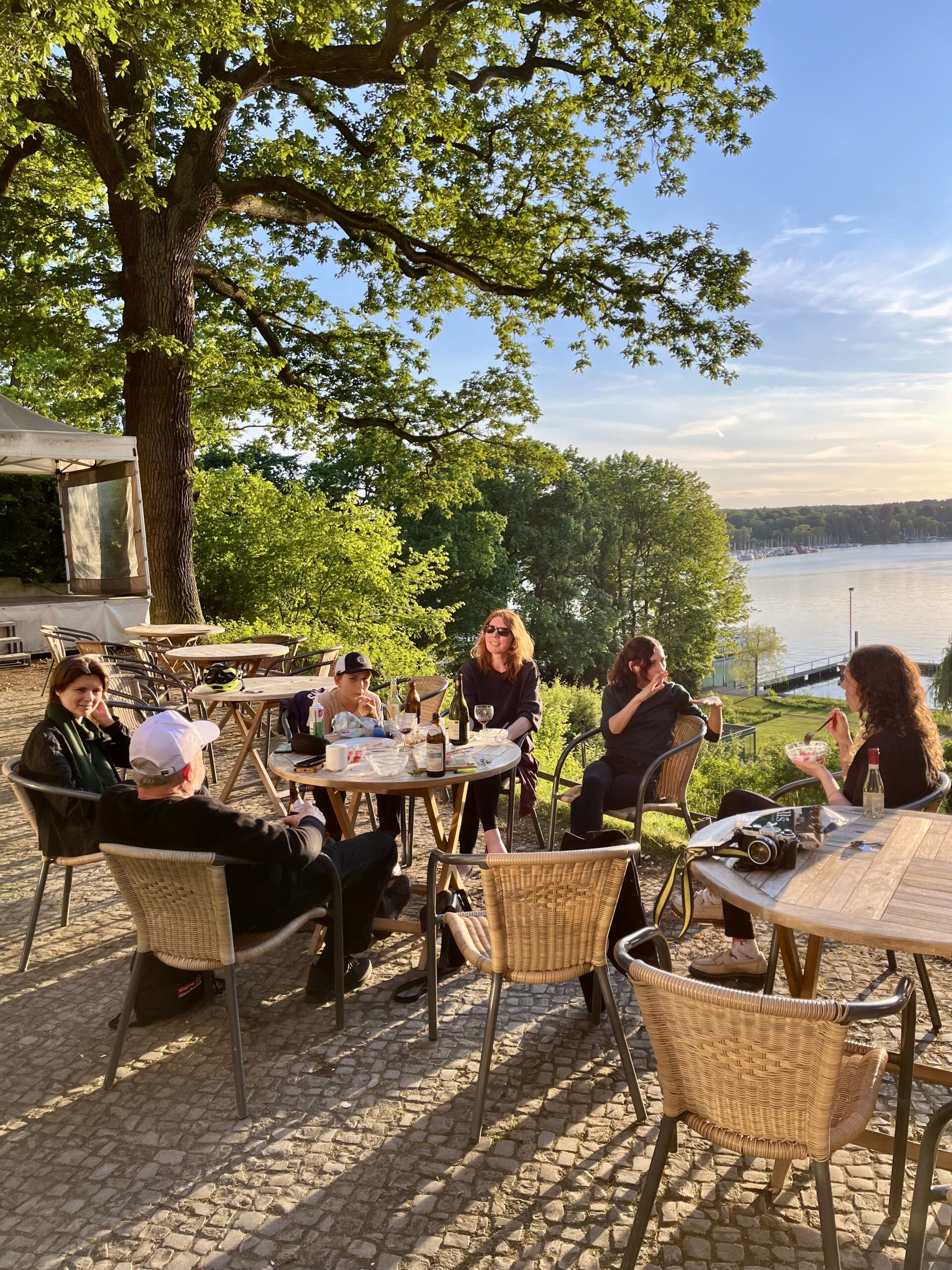
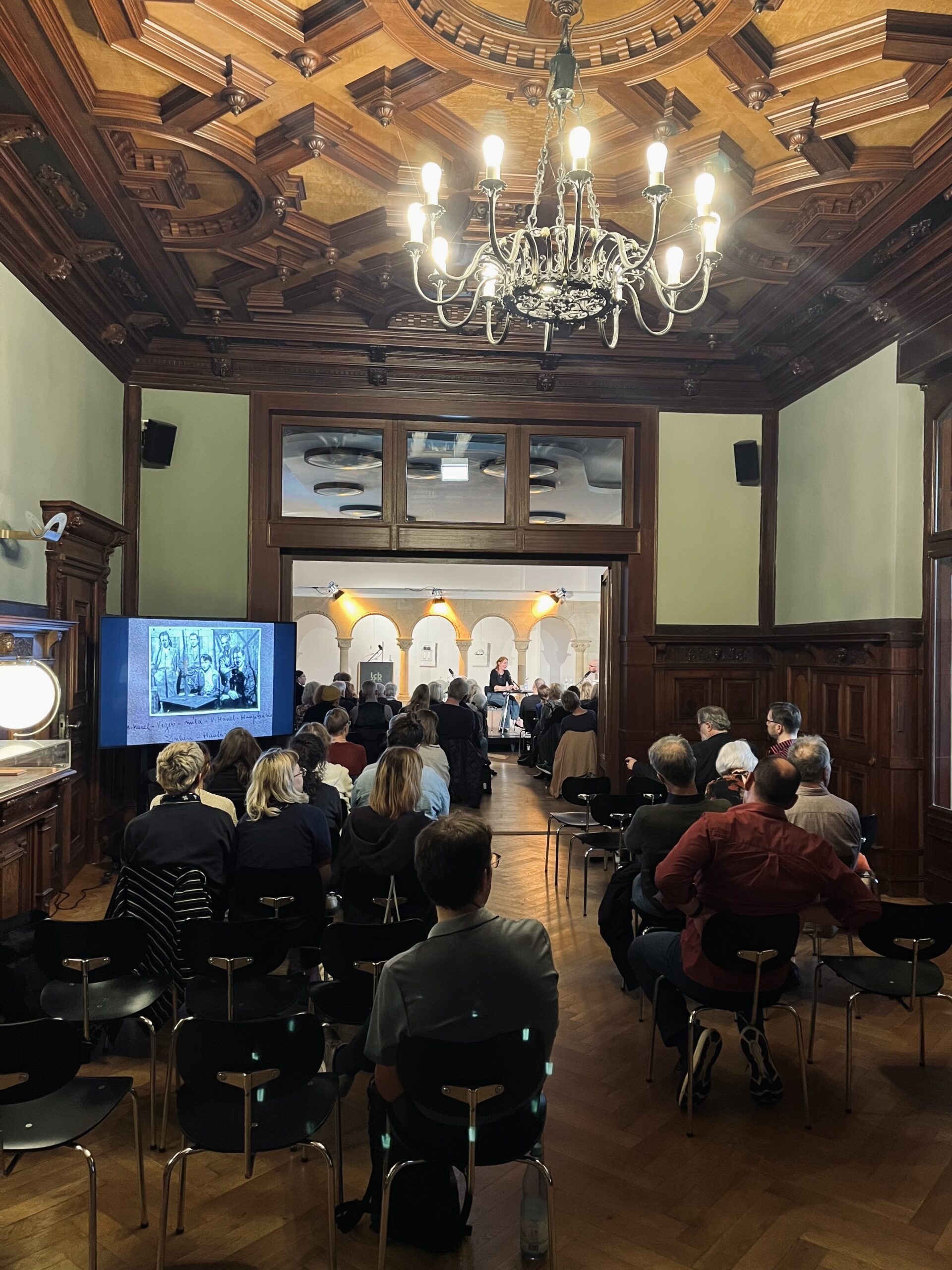
The Literaturhaus am See is bustling with life. Almost every day, a literary event takes place here—a reading for children or a seminar for students. This is where circles of translators and writers gather; literary banquets and “silent readings” are held—days dedicated to reading, during which everyone brings their own book and reads it in a conspiratorially quiet community. In September, a major literary festival takes place at the Kolokvium, where authors, publishers, critics, and readers gather. On this day, two thousand people are said to stream through the villa and the garden. People from out of town come here in the evening for the public events. The rooms where we used to have breakfast all by ourselves, the terrace facing the garden, the main hall—everything fills up with intruders who have come for readings and discussions. At first we feel it’s an invasion—hey, that’s my garden!—but eventually reconciliation sets in. Because the bar is opened for the visitors, and at the bar, we, the residents, have an open tab. “I have a photo of them taking a picture of Hrabal there,” says M. D. “It was his last trip abroad, here. Everything was getting on his nerves; he was ranting at everyone, but at the reading he pulled himself together, and apparently it was great. Then he got drunk, and they had to carry him up to the dorm on the first floor.” In the morning he woke up with a hangover, and again everything got on his nerves, and he ranted at everyone. Miłosz wrote here, Gombrowicz, probably just about everyone. They’ve been doing a good job here for a long time. If you do even the smallest things well and for long enough, it always ends up being something big, I tell myself.
V.
The return is drawing nearer. The return to a country without a literary center is drawing nearer. How is it even possible to live in a country without a literary center? In my country, not only is there no literary center, there isn’t even a small space dedicated to literature. In all of Prague, which boasts the title “UNESCO City of Literature,” there isn’t a single institution, not a single place, that is intensively dedicated to literary events and literary life. Sometimes libraries organize something, but who goes to readings in libraries? People don’t gather in libraries. Literary institutions are being replaced by cafés and general cultural spaces, but the whole thing is unsystematic; it lacks intensity and continuity. When the Writers’ Association was founded here, a literary center was one of the goals it sought to achieve. Today we no longer set such grand goals for ourselves; we hardly set any goals at all anymore; times are tough, we’re on the defensive, and the goal is simply to survive somehow. We no longer even dream of something as incredibly self-evident as the fact that Prague should have a literary center. Yet we all—the entire nation—really urgently need a literary center. It’s just that the vast majority of the nation doesn’t have the slightest clue about it.
The text originally appeared in the magazine “Host.”