We’re Basking in the Warmth at Wannsee
(a little something from the Berlin residency)
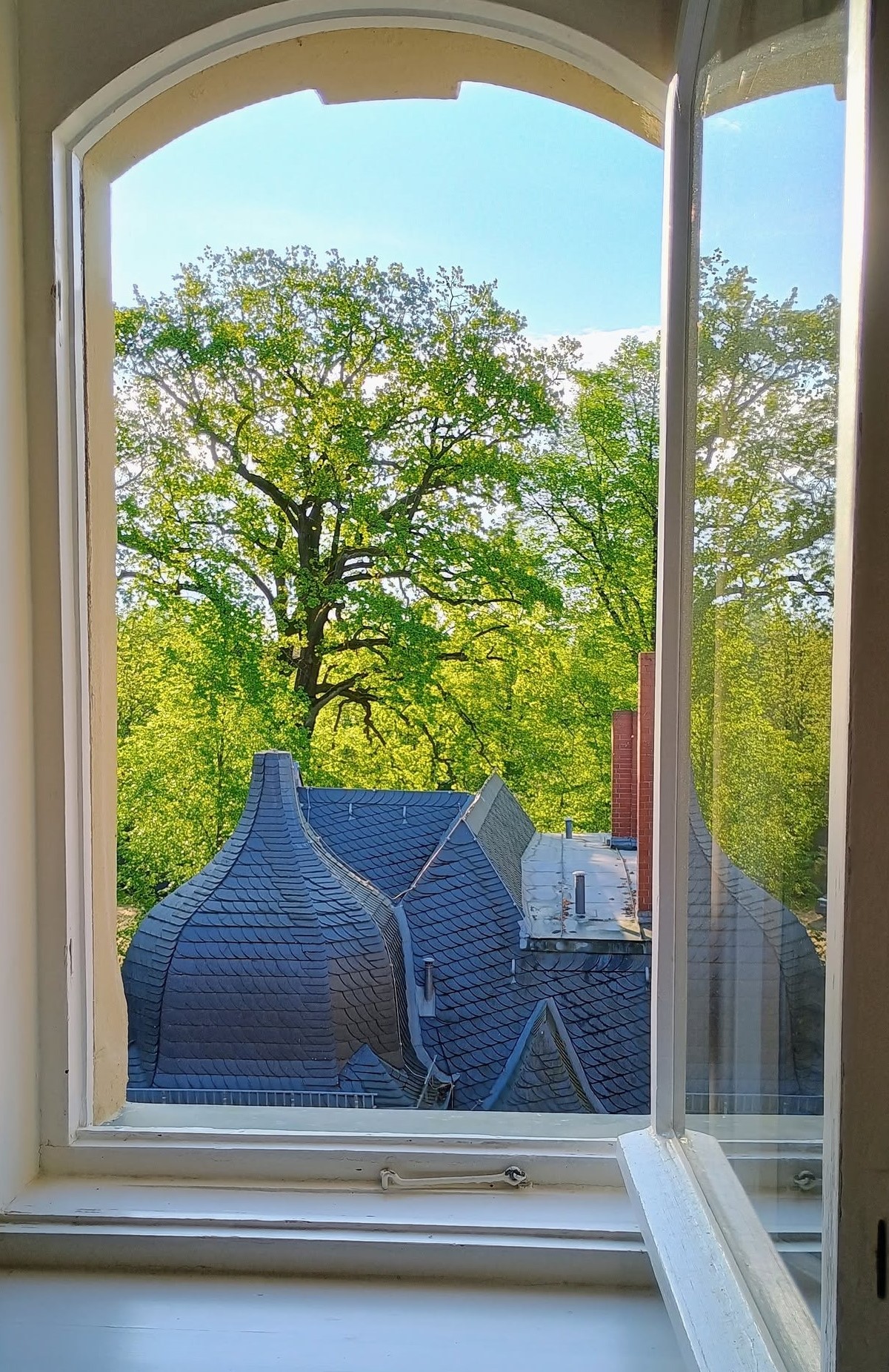
We’re spending the entire month of May at the Literarisches Colloquium Berlin with sculptor and illustrator Jakub Greco. A villa by the lake. Villas encircling the lake. Fortunately, our room has windows overlooking the courtyard and the treetops of beech and oak trees. Sun in the morning, coolness in the afternoon. The edge of the roof serves as a divider. Jakub and I communicate—since we live in rooms one above the other—by leaning out the window or using a bamboo stick we found by the trash cans. Jakub has a balcony. Jakub is like a Native American—when he smokes, the smoke signals to me that he’s available. From the window to the balcony, from the balcony to the window, we argue, discuss, and debate. We talk about nighttime visions and daytime dreams; we invite each other over for coffee; we share various scenes and images, which I type into my computer at the table. Not too loudly, not too much. One of the foreign writers—a fellow scholarship recipient—complains, however, that our conversation is disrupting her train of thought. We certainly don’t want to disrupt her train of thought. We switch to whispering and Morse code, which we tap out on a radiator pipe. This brings us back to the topic that brought us to Berlin—architect Vladimír Grégr, who was murdered at the Plötzensee execution site in Berlin for his participation in the anti-Nazi resistance in Prague. He awaited his execution for five months and, along with his comrades, sent messages over the wall—how else but in Morse code. Grégr—architect, Grégr—Scout, Grégr—urban planner, Grégr—athlete, Grégr—politician, Grégr—poet. We have brought part of his legacy with us—notebooks that were smuggled out of the Berlin prison. A box of items that the Germans sent from Berlin to Prague to Grégr’s family after his death: 14 packs of ordinary pencils, nine paper clips, one safety pin, six erasers, twenty-six buttons—one of which was a metal sailor’s button featuring an anchor and rope motif—thread, wire, a small stick used as a ruler…
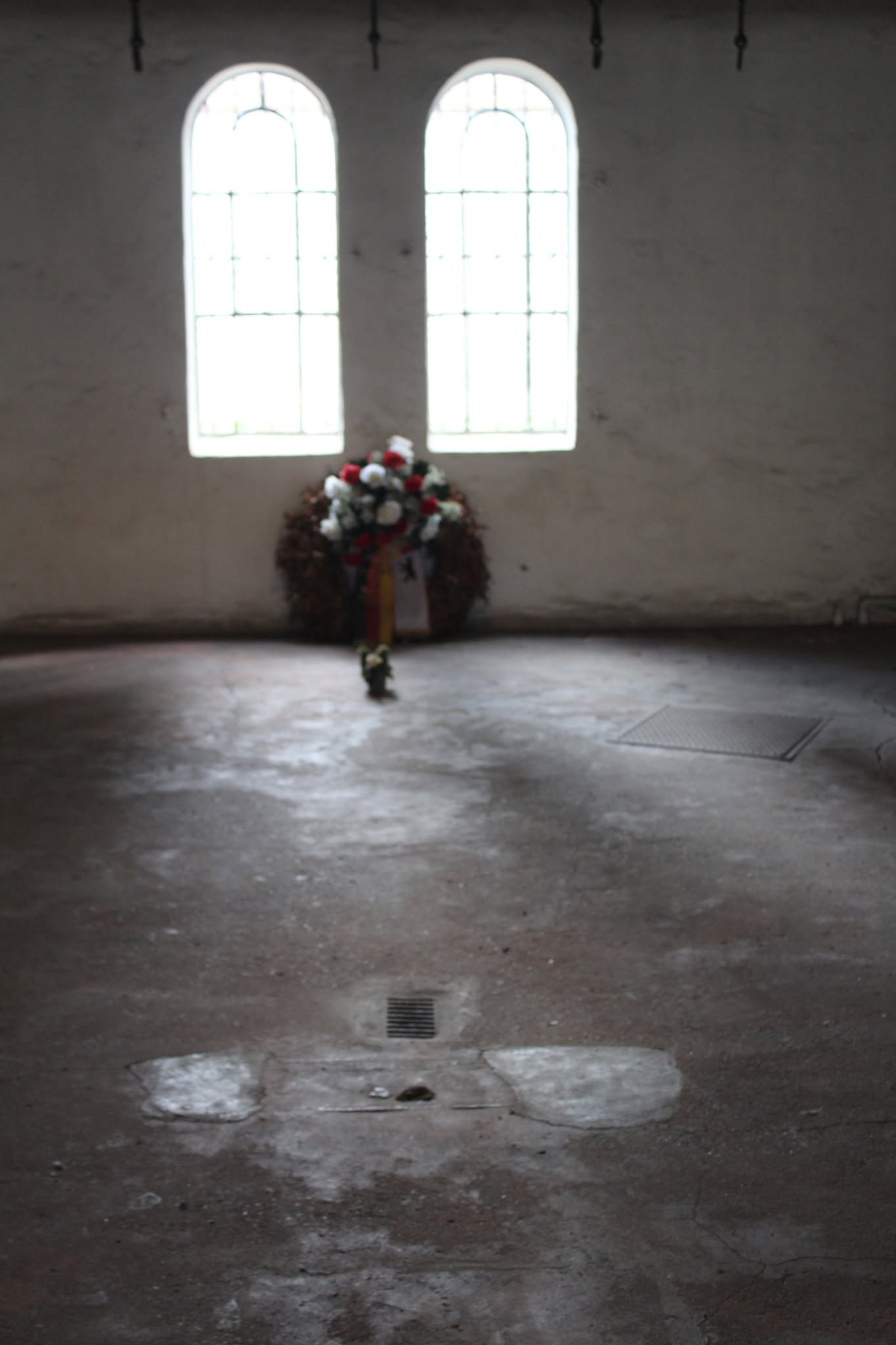
From Wannsee, we return once more to Plötzensee, a place so painfully linked to our history—during the war, 667 Czechoslovaks were murdered here. Today it has been transformed into a museum and memorial. The emptiness, with a small drain in the floor, speaks volumes. The murder weapon was taken to Brandenburg and hidden, presumably so it wouldn’t be on display for tourists here. Yes, there are photographs, faces, names, and numbers, but a certain kind of “softening” of the sharp edges of the past is evident.
In the morning I’m typing away at the computer; in the afternoon or evening, Jakub and I set out on our bikes to explore the area. We ride around. We search for places connected to history, personal stories, and poems. For example—the villa of the painter Liebermann, the house of Claus von Stauffenberg, the Bridge of Spies, the spot where the poet Georg Heym drowned, Sachsenhausen and Josef Čapek… Right in Wannsee, we bike past a small grove where the German playwright and poet Heinrich Wilhelm von Kleist committed a long-planned suicide. It was November 21, 1811. After a night of passion overlooking the lake, the couple carefully chose a secluded spot. The poet first shot his lover, Henrietta Vogel, and then himself. And it is very likely that their bodies still lie there to this day. Ivy and trees grow over them, and a small memorial and an information plaque mark the spot. And it is no coincidence that Bohumil Hrabal made his final journey from this world right here, to Wannsee, on November 14, 1996—almost on the anniversary of the death of the author of “The Broken Jug”. He had a reading and discussion scheduled that evening at the Literarisches Colloquium Berlin. He was accompanied by his guardian angels—Tom Mazal, Claudia Poeta, and Zuzana Rothová, who was to host the entire evening’s program. Before the reading, however, they made their way to the Kleist monument, where the master paid his respects and gathered his strength. On to the evening—and, in fact, to a daring leap of faith. Afterward, the group went to the nearby Loretta pub, where the master first had a bourbon to wet his appetite, a Jim Beam for courage, and then some Dortmunder Union beer and a white sausage. According to witnesses, the evening in the absolutely packed LCB hall was thrilling; Hrabal spoke about German literature, Europe, and poetry, weaving his way through the conversation with the virtuosity of a Pierrot on a tightrope, drinking beer and responding with short essays. He also reminisced about his first trip to Berlin, to the 1936 Olympics, when he rode his bike there. And he signed piles of books. In the end, just with the initials: BH. Then he collapsed, exhausted, into bed and slept through the entire morning. When, around 8:00 p.m. on November 15, the angels Mazal and Poeta dropped him off in Prague-Sokolnice, Hrabal said wearily, “So this was my last trip abroad. Thank you for being my guardian angels, but this really was the last time! Berlin, of course, was worth it—I wanted to see it one more time. And I succeeded. The Austrian soldier triumphed gloriously once again!” Bohumil Hrabal dared to die, taking that leap about two months later, on February 3, 1997.
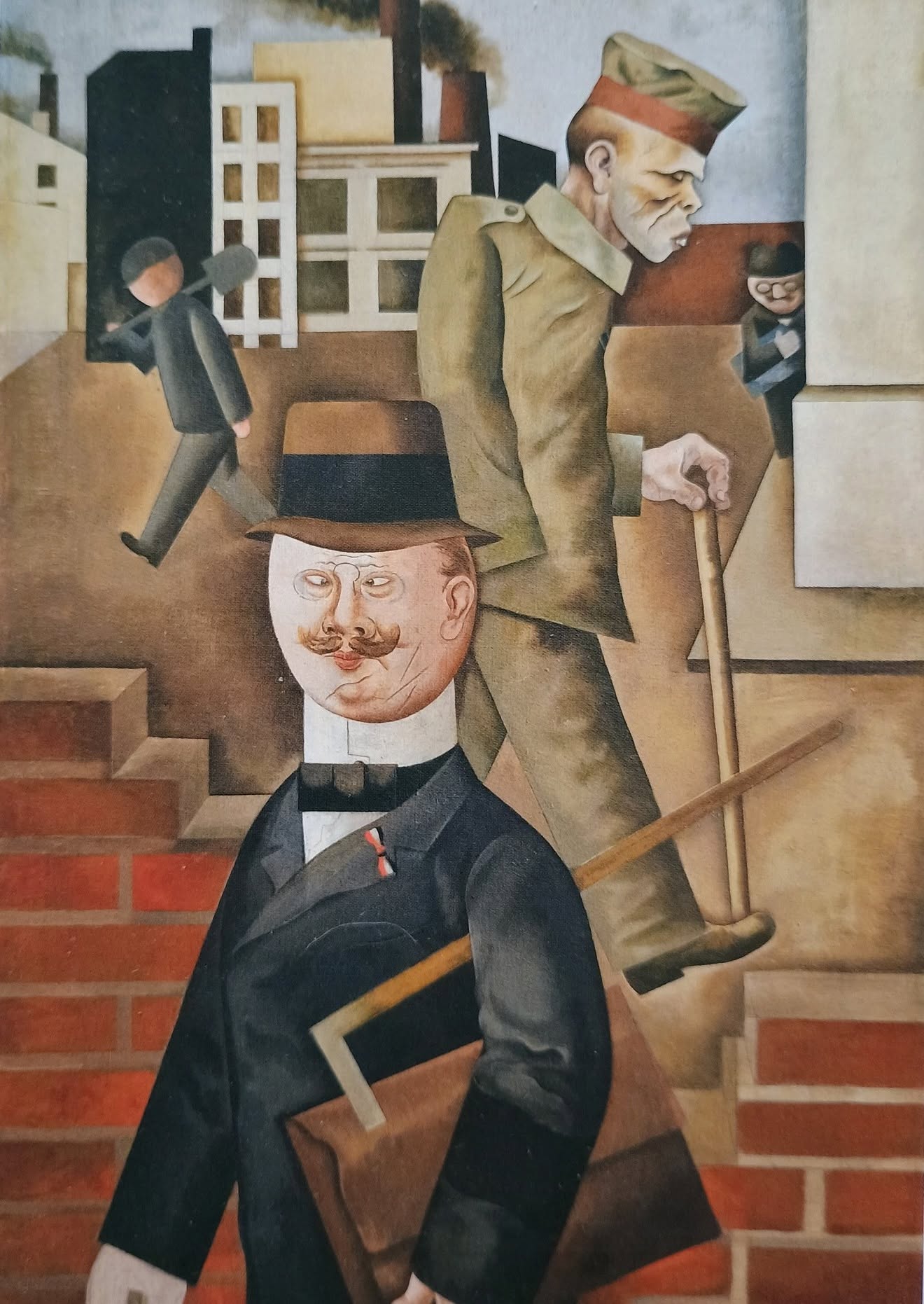
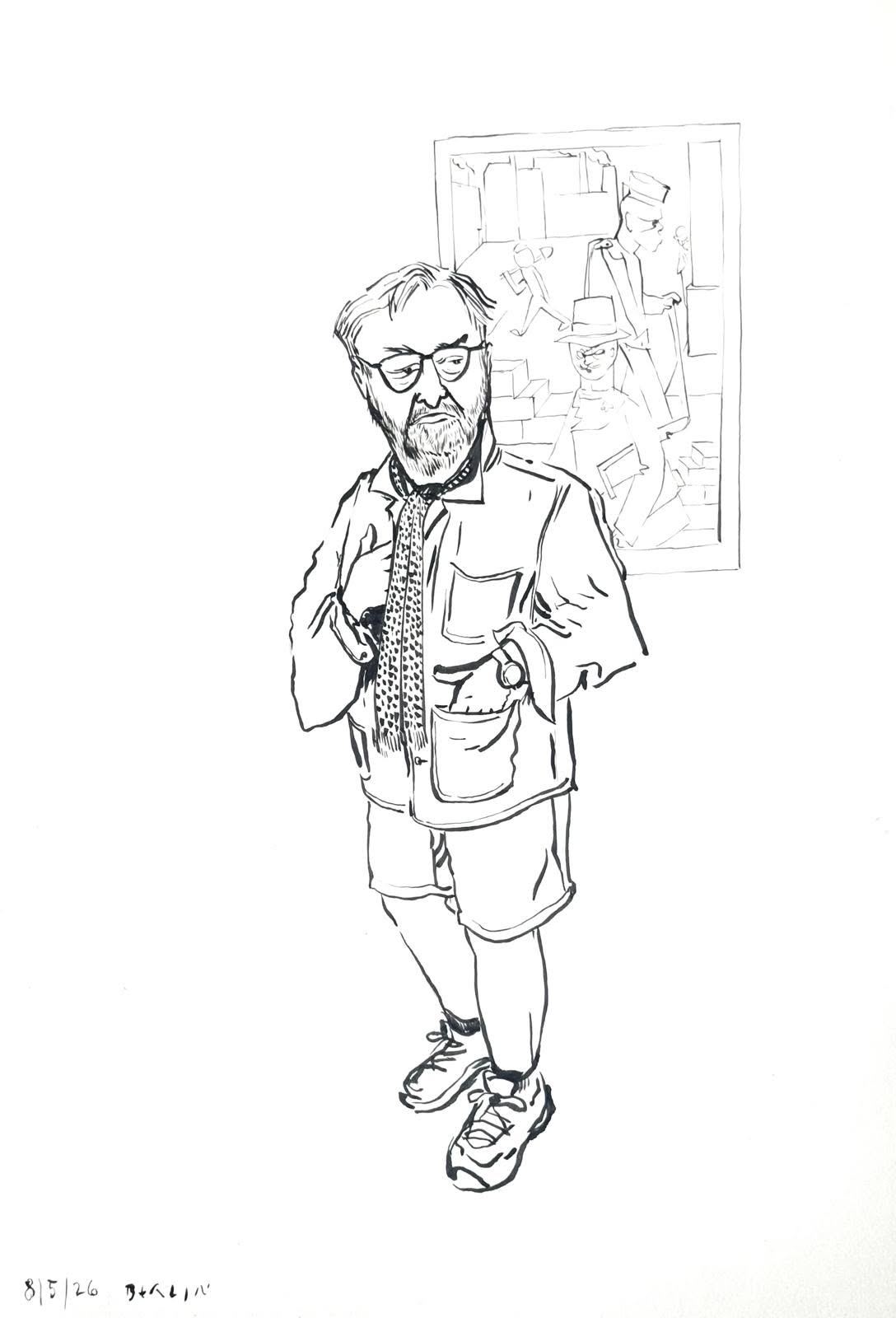
P.S.: In Jakub Grec’s drawing of Berlin, an image emerges behind the figure of the man (the author of these lines)—Georg Grosz’s painting “A Gray Day” (from 1921). Germany between the wars, worlds passing each other by, and the wall gradually rising between one and the other, between representatives of various professions, social classes, and fates. How relevant today.