

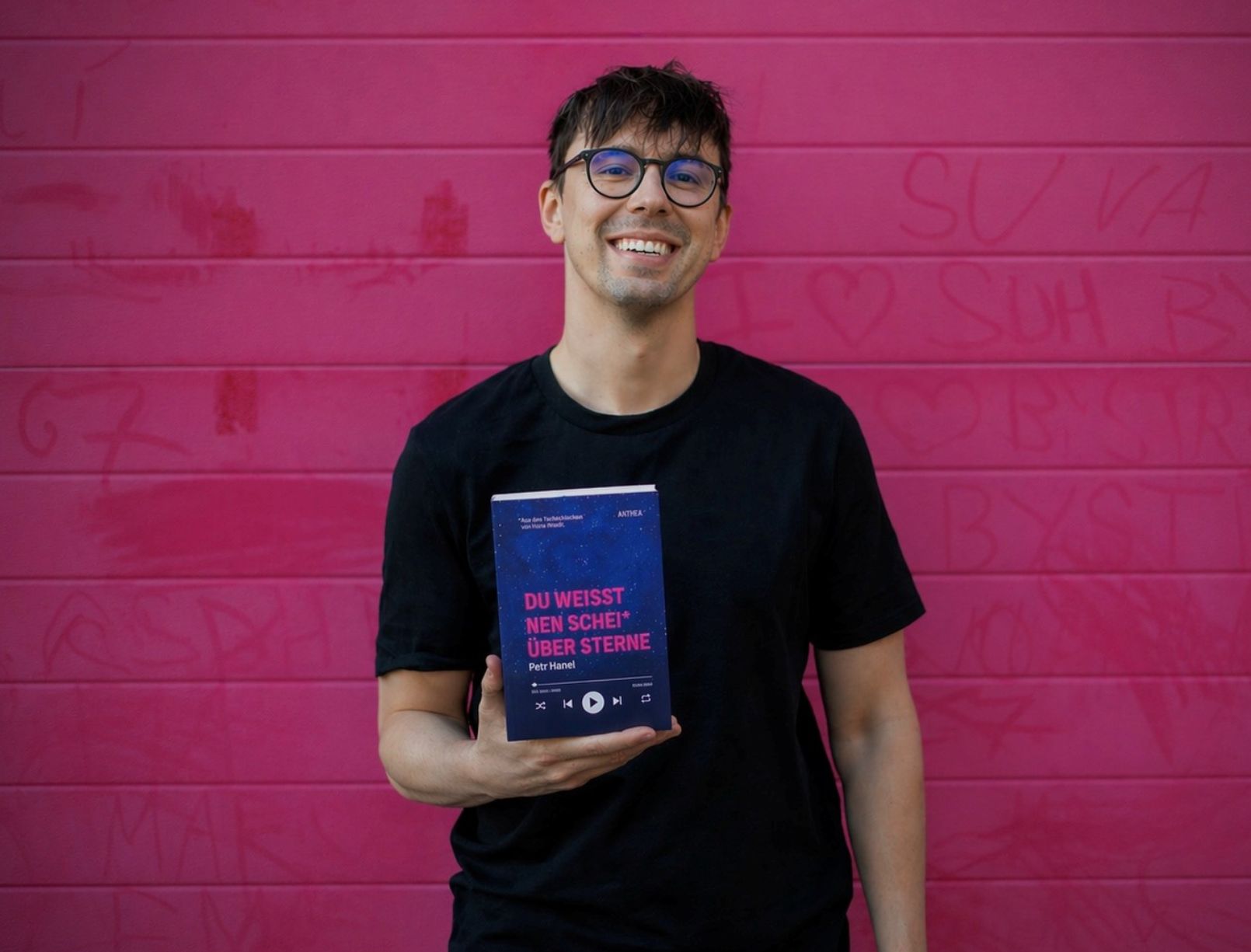
Petr, so what—has your debut already crossed that magical milestone of 10,000 copies sold and become a bestseller?
That’s right. When I confided last April that I’d like to reach that goal, people tapped their foreheads and told me to get back to reality. But the book had a tremendous finish last fall, a year and a half after its release.
I feel like the way you talk about the book plays a big part in its success. You’re very active on social media, on the Klub psáčů podcast, and in interviews. What led you to dive into it like this? And how do you actually feel about it? Especially on social media, which can be inspiring but also pretty exhausting. It’s easy to compare yourself to others there, and sometimes you even get some hate.
It’s definitely not just a feeling. Social media has played a big role. Interestingly, even when I was sending the manuscript to the publisher, I mentioned in the accompanying email that I planned to get involved in the marketing. I just probably didn’t really have a clue what I actually meant by that. But after those nine years of writing, I simply didn’t want to leave the book on its own. I didn’t want to accept that it would survive on the shelves for three months and then fade away.
I’ve been living off shooting reels for the past year, but not because they helped me promote myself. They also became a way for me to channel my filmmaking creativity. I learned to act, edit, work with sound, and master comedic timing. But in the end, the reels were consuming too much of my creativity. Every day, I came up with 2–3 scripts that I didn’t even have time to film. Plus, I felt that I’d rather channel my starving creativity into other creative work. That’s why I’ve slowed down with social media now.
Do you take anything from social media for yourself? Do they inspire you in any way? And what has caught your interest in literature lately?
If you want to create content for social media, you have to consume a lot of it too, to get a feel for how this medium works. That was exhausting for me. If a significant part of my work weren’t tied to Instagram, I’d probably delete my account. There are a lot of inspiring creators out there, but I feel like social media is more of a drain on me.
As for the world of books, I’ve recently been captivated by Jakub Stanjura, who writes in a fascinating style. And right now, a new book by Jan Hamouz is being published by Host, and he writes some of the best Czech fantasy.
What’s also interesting about your debut is that it’s a young adult book written from a boy’s perspective. Why did you choose this particular path? And how did you get inside the head of a teenage boy?
I myself missed having a book like this. And not just during puberty, but later on as well, whenever I felt lost in relationships or when trying to form them. I wish someone had come up to me back then and told me that everyone around me was just as confused, clumsy, and awkward—that relationships are simply like that. Whether we’re teenagers or in our thirties. (There were even readers in their thirties who had experienced similar things just recently.)
I believe that’s precisely why the book resonates so strongly even beyond teenagers. Many people find answers here to questions that have haunted them for years.
So the original intention was to show relationships without filters. I chose a boy’s perspective not only because it’s closer to me, but also because I felt its realistic portrayal was missing in literature. I didn’t want to romanticize anything or soften the edges; I wanted to show the uncensored reality that would be interesting not only to readers who are experiencing or have experienced it, but also to female readers, giving them a glimpse into our minds and experiences.
Getting inside the head of a teenage boy wasn’t that difficult. I searched my memory, my diary, or my ICQ archives… It wasn’t an easy read, but it reminded me of how I perceived the world back then.
Did you consult with anyone close in age to your protagonist while writing?
Over the years, the manuscript has been read by more than ten beta readers, a third of whom were the same age as the main characters. Some of them read the text multiple times, and given how long it took to write, they’ve even outgrown it in terms of age. Just before publication, however, I found two beta readers from the target demographic who performed a final “update” review.
In the book, you address, among other things, the topic of the manosphere. Do you perceive it as something that is truly present among high school students today?
As I write these answers, I’m on my way back from Pilsen, where I gave a talk on this topic for the Boy Scouts. They reached out to me to ask if I’d give such a talk because they’ve noticed misogynistic behavior among the boys in their troops. So I do perceive that the manosphere is very much present. To the point where it’s almost becoming mainstream. And not just among high school students, unfortunately.
Have you received any feedback from anyone saying that your book helped them change their perspective on this issue?
Some guys wrote about their experiences with the manosphere, while others wrote that the book helped them stay afloat when they were in a state of mind that these influencers most often prey on.
I also heard from girls who said the book helped them realize they weren’t in a healthy relationship. In several cases, it was with someone who was adopting the rhetoric of the manosphere.
And then there were parents who learned about the manosphere thanks to the book and realized they needed to start talking to their sons about this topic before they reached an age where any communication becomes more difficult.
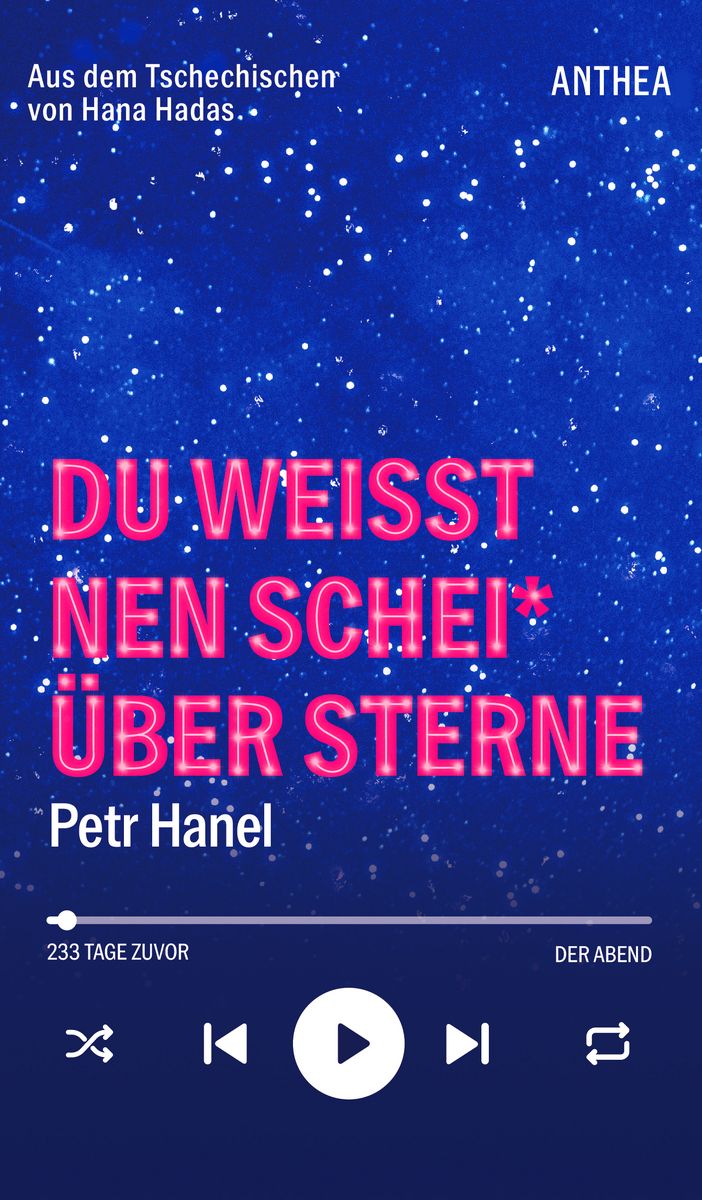
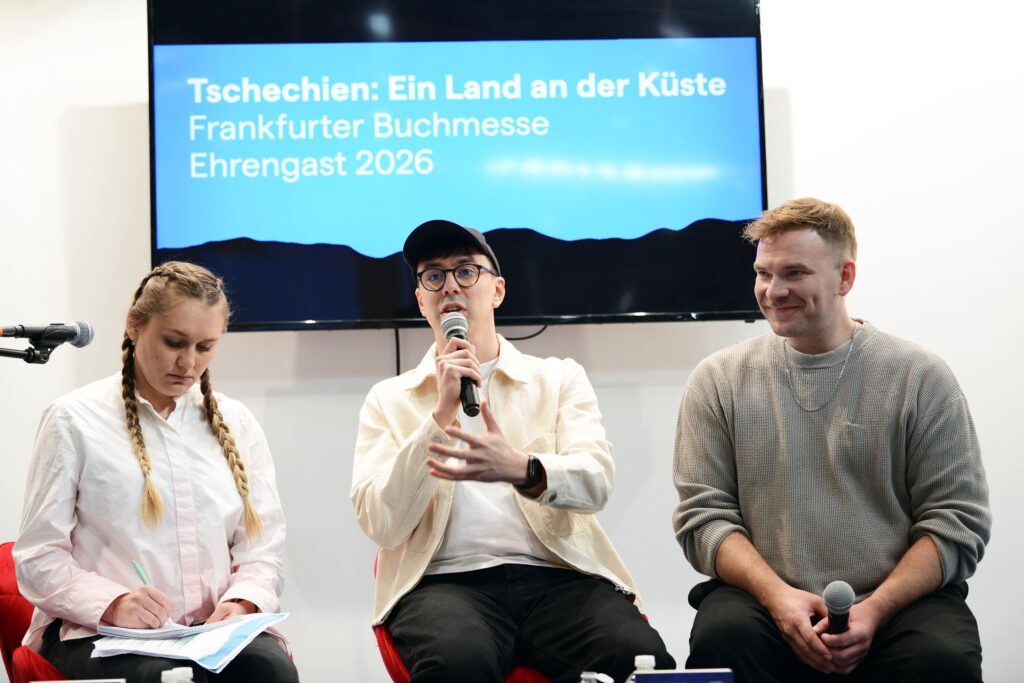
The book has now been published in German, and you presented it in Leipzig. What was that like for you? And have you received any initial feedback from German readers yet?
When I entered the first hall of the fair, it didn’t take long before I felt overwhelmed. The sheer number of people, the multitude of booths, and above all, the staggering number of books—often, at first glance, the flagship titles of leading publishers, presented with great fanfare. And right next to them, the unknown “O hvězdách víš h*vn*”.
I was reminded of book influencers’ complaints that their reading lists are endlessly long, and I wondered if the book could even make it onto them.
The near future will show how it turns out. The first reactions from German readers are already out; some are enthusiastic, some “just” positive. But I’m thrilled that Hana Hadas managed to convey all those emotions in the translation as well.
You’ve also shared a few funny stories on social media about the translation Hana Hadas worked on. Can you think of any others you’d like to share?
Sure, there were plenty. For example, with this passage from the book, Hana and I had to clarify the last sentence:
“Life is really strange. Have you ever thought about the fact that in no movie does the hero ever go to the bathroom? That Bella never holds her gas in front of Edward? That Harry and Ron never once opened a magical magazine with moving, lustful witches and felt a terrible urge to polish all the cutlery in the Hogwarts kitchen?”
As we can see, the world of film—where you worked for a time—is a major source of inspiration for you. How exactly did that influence the book’s style? And would you ever like to return to filmmaking?
I enjoy experimenting with literary form, and films served as an inspirational framework for that—whether it’s “cutting” between scenes or storytelling through imagery. To be more specific, that’s how a scene like this came about: I placed two protagonists in a confined space and tried to convey the romantic tension between them without dialogue or inner monologues, relying solely on descriptions of body language.
But my filmmaking ambitions haven’t left me; I believe that in the second half of the year, time will allow me to return to the set.
What new waters do you want to venture into next?
I had planned to dive into speculative sci-fi. That is, to take some slightly more advanced technology—in this case, a specific social network—and set it in today’s world. The story would not only concern Generation Z this time, but also millennials and topics relevant to both generations.
But my plans were derailed by director Robert Hloz, who is preparing another sci-fi film after “The Point of Renewal” and approached me to ask if I would write the screenplay for him.
Your love of music is also evident in the book. If you had to capture it in a single song, which one would it be and why?
I don’t know if I’d call it a hobby exactly. But when it comes to movies, for example, I’ve always been fascinated by music. The same shots can feel like a horror movie or a romance, depending on what soundtrack you add to them. That’s why I’ve always enjoyed the idea of connecting the world of music with the world of literature. What if I could amplify the emotions on the pages with the right song? That’s how the idea came about to create a soundtrack for the book with QR codes that let you play specific songs for specific scenes.
But if I had to express my relationship with music with just one song, I couldn’t do it. There would actually be two. “Best of You” by the Foo Fighters and “Sunshine (Adagio in D Minor)” by John Murphy. As for why I can’t really explain it—just listen to them and you’ll feel it for yourself.
Photo: Michaela Samiecová; Sabine Felber/Literaturtest
The interview with author Petr Hanel was conducted by Karolína Tomečková.