

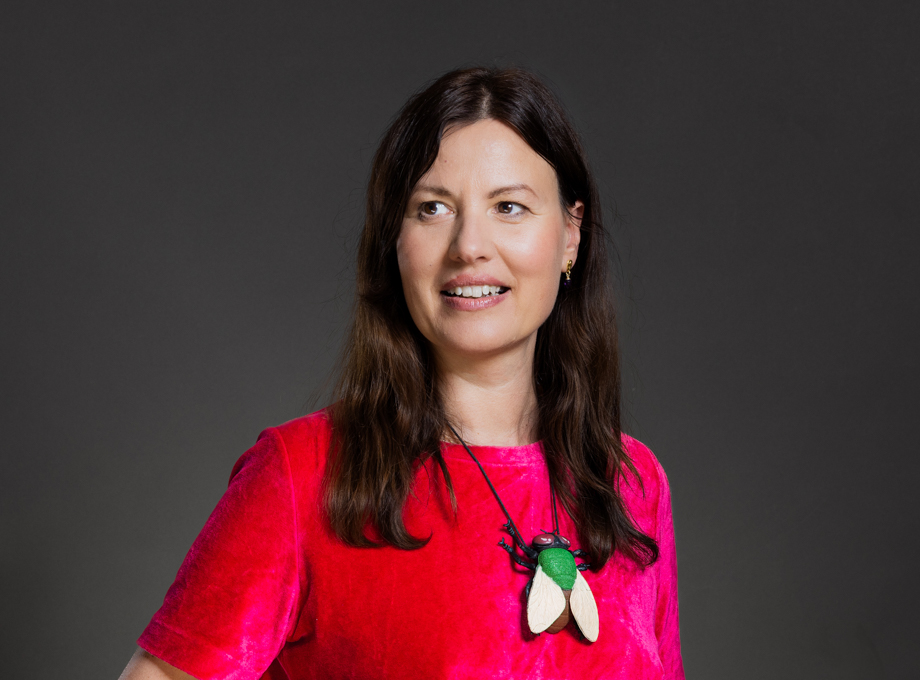
If you could be a fly for a day, would you do it? And if so, would you want to spend that day in Maribor?
While writing the novel, I was probably a fly at times—in my imagination. But I maintain a fairly reasonable, affectionate distance from the Maribor fly.
During a press trip for German journalists, you introduced yourself at your father, the author Zeno Kaprál’s apartment. What was it like to return to the place where you grew up, now as an established author? Did memories of your childhood come flooding back?
I’m constantly thinking about returning to this apartment; every now and then, this strange experience finds its way into my writing. There, I experience what the Maribor fly in my novel might be experiencing; I see things there that you probably wouldn’t see with the naked eye on Údolní Street.
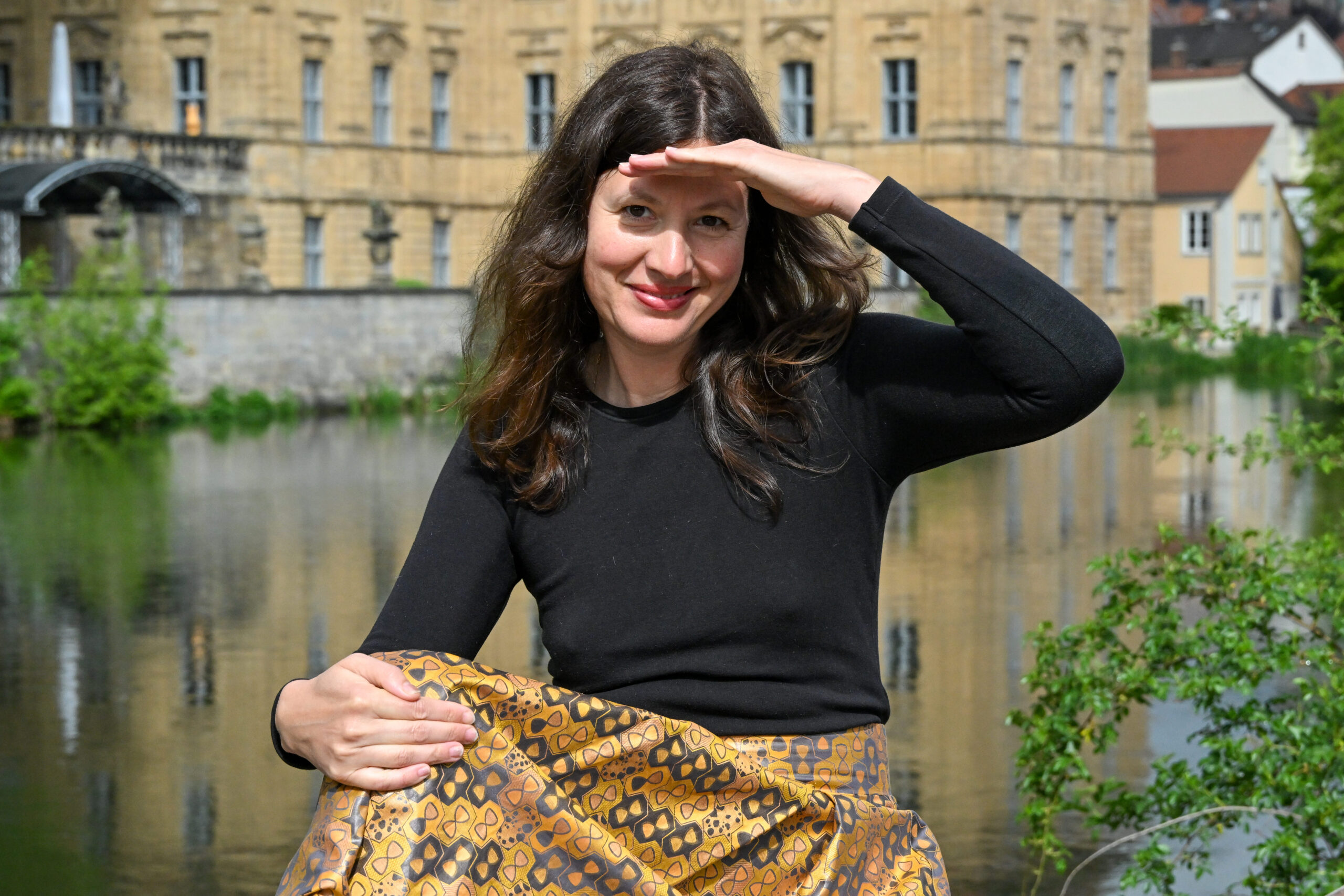
You’re currently on a one-year residency in Bamberg, Germany. How did you get this residency?
It was a complete surprise. It’s an eleven-month residency at the Villa Concordia art house in Bamberg, and artists cannot apply for this residency on their own. I was nominated by the Bavarian Ministry of Culture based on one of my books that had been translated into German and won an award in Bavaria. This year there are five other fellows here from the Czech Republic: composers Jiří Kadeřábek and Pavel Šabacký, translator Eva Profousová, sculptor Monika Immrová, and painter Karel Štědrý. There are also six fellows from Germany; it’s a generous program. Invitations for non-German countries come only once every seventeen or twenty years, so I really appreciate this stay here.
Have any ideas or texts started to take shape there yet that you could tell us more about? What’s Bamberg actually like? Isn’t it a bit boring compared to Berlin, where you live? And how do you spend your time besides writing?
I really enjoy being bored, and I’d be happy if I had more time for it. Besides writing, I spend my time on hot summer days jumping into the river.
How do you find living and creating alongside the other residents in Bamberg?
Great.
You have also been on residencies in places like Maribor or Mikulov—how did the individual residencies differ for you?
The residencies don’t really differ in almost any way. I soak up the genius loci of the place, try to let go and focus on what’s essential, and at the same time catch up on backlogs, because every such stay comes with the stress of not having finished something in Berlin before I leave…
In addition to the Magnesia Litera Award, “Mariborská hypnóza” also won the European Union Prize for Literature. Is this already reflected in interest from abroad? Are foreign publishers, media outlets, readers, and festivals taking more notice of you than before? Or is it still too early for such an assessment?
It’s certainly too early for such an assessment, but I think the book is doing quite well.
You studied dramaturgy and screenwriting at JAMU and have collaborated with the Husa na provázku theater company. Is theater still close to your heart today? Do you currently have any theater projects—or a desire to return to theater as a playwright or dramaturg in the future?
The theater is close to my heart, and I was truly grateful for that return to Husa na provázku. It was a dream come true. Theater is fleeting, but it’s worth it for the magic and enchantment that happen during rehearsals.
Could “Mariborská hypnóza” be adapted for the stage? Or is it too experimental for that?
“Mariborská hypnóza” has so far been adapted as a theatrical sketch as part of the Rozžij knihu project. It’s directed by the young Slovak director Daša Belková, and the piece is subversively beautiful. It’s performed primarily at Rezidence Café Kaprál, and the entire project falls under the umbrella of the exceptional theater company Mikro-teatro, which specializes in apartment theater.
While reading an article about you, I was intrigued to learn that you yourself work at the Mouse & Bear Books bookstore. Which Czech works do you most often recommend there? And what would you personally recommend to Czech readers?
In Germany, the Czech books I sell are mainly those that have been translated into German, such as “Já, chobotnice” by Magdalena Rutová. Otherwise, I happily read books published in German there to my heart’s content.
Do you already know who your next literary alter ego will be?
I have no idea.
And that’s perfectly fine. Good luck with your future work!
Photo: Connor Jandourek Photostudio; Ronald Rinklef © IKVC
The interview with Dora Kaprálová was conducted by Karolína Tomečková.